
Test 21 of 25 · 20 questions · Free 2026
KS Permit Practice Test 21
Jump to the test ↓A fixed 20 question set from the Kansas bank with answers and plain English explanations. The real KS exam is 25 questions, 80 percent to pass; take the full length version on the main practice page.
Question 1 of 20 · 0 right so far
All 20 questions in test 21
Every question below comes from the Kansas question bank on this page. Open a question to see the correct answer and the explanation. Nothing here is hidden behind a signup.
1. How long is a Kansas non-commercial Class C instruction permit valid, and how is it renewed?
- One year; it is renewed by passing the written exam again
- Six months; it is renewed by mail
- Two years; it renews automatically
- Until age 18; no renewal is needed
Show answer
One year; it is renewed by passing the written exam again. A Class C instruction permit is valid for one year from the date it is issued, and every instruction permit is renewed by retaking and passing the written examination. Six months is the period for non-commercial Class A and B permits, not Class C, and renewal is not handled by mail alone. There is no automatic two year renewal and no permit that lasts until 18.
Study this in the handbook: License tests, renewal and losing your license
2. A flashing yellow X appears over a reversible lane. What does it mean?
- You may use the lane for through travel
- The lane is closed to all traffic
- The lane's direction is changing, so move out
- The lane is for turning only
Show answer
The lane is for turning only. Reversible lanes carry traffic one way at some times and the other way at others, and overhead signals tell you how each lane may be used. A green arrow means you can use the lane beneath it, and a red X means the lane is not available. A flashing yellow X means the lane is for turning only. A steady yellow X means the lane's use is changing and you should move out of it as soon as it is safe. Drivers going the other way could enter the lane by mistake, so stay alert.
Study this in the handbook: Lane markings and special lanes
3. Flashing beacons activate over a Kansas school zone that is properly marked. What speed limit binds you inside it?
- 30 mph, since urban districts set the floor for all school zone speeds in Kansas towns during the school year
- 25 mph, splitting the difference between the school figure and the ordinary urban limit for driver convenience
- 20 mph while the zone marking applies
- The school limit binds only buses and parents during morning drop-off traffic around the school building entrance
Show answer
20 mph while the zone marking applies. Properly marked school zones and business districts carry a twenty mile per hour maximum unless another limit is posted. The school figure is not an average of neighbors and it binds every driver, not just buses and parents. When a School Speed Limit When Flashing sign controls the stretch, the reduced speed is required only while it flashes; otherwise the roadway limit resumes. Children justify the deepest common cut in Kansas speed law: at twenty, stopping distances shrink to ranges that forgive a child darting between parked cars.
Study this in the handbook: Kansas speed limits
4. Across the street from a Kansas fire station driveway, a legal-looking space sits 60 feet from the entrance. May you park there?
- No; opposite the entrance, parking must stay at least 75 feet away
- Yes; sixty feet easily clears the twenty foot rule that Kansas applies on the station side of the street itself
- Yes, if the station doors are closed and no apparatus appears likely to leave during your parking stay today
- The seventy five foot figure protects hydrants, so fire station driveways require only fifteen feet on both sides
Show answer
No; opposite the entrance, parking must stay at least 75 feet away. Fire station protection is lopsided by design. On the station side of the street, keep twenty feet from the driveway entrance. On the opposite side, the protected distance stretches to seventy five feet, because apparatus swing wide across the street when leaving at speed. Your sixty foot opposite space fails despite feeling generous. Closed doors promise nothing about the next alarm. These paired figures, twenty same side and seventy five opposite, reward memorization together rather than as isolated numbers to swap under pressure.
Study this in the handbook: Where not to park and parking on hills
5. Before changing lanes on a Kansas road, what size gap should you identify in the target lane?
- A 1 to 2 second gap in traffic
- A 4 to 5 second gap in traffic
- Any gap wider than your vehicle
- A 10 to 12 second gap in traffic
Show answer
A 4 to 5 second gap in traffic. Lane changes start with finding a four to five second gap in the lane you want. Check mirrors, look over your shoulder for blind spots, signal, and look again in the direction of the move before steering across. A car length opening vanishes too fast at road speed. Very large gaps are welcome when present but are not the standard to wait for. The measured gap gives both you and nearby drivers room to adjust.
Study this in the handbook: Safe speed and stopping distance
6. Your Kansas license requires corrective lenses and your glasses break on a trip. What preparation saves the drive?
- Keep an extra set of corrective lenses in your vehicle
- Drive slowly without lenses on familiar roads
- Borrow a passenger pair of sunglasses instead
- Lenses matter only at the vision screening for the license
Show answer
Keep an extra set of corrective lenses in your vehicle. Vision rules travel with the license. If your license says corrective lenses are required, driving without them is illegal even for a corner store run, and the standard behind it is at least twenty forty vision in one eye. Keeping an extra set in the vehicle turns a breakage from a stranded emergency into a pause. Avoid dark or tinted lenses at night, since they cut light your eyes need. Regular eye checks catch slow vision loss you might never notice yourself.
Study this in the handbook: Fatigue, distractions and driver responsibility
7. A vehicle ahead turns left slowly on a Kansas two-lane road. May you pass it on the paved shoulder?
- Whenever traffic behind yields plenty of room for you to reverse in
- No, never pass on the shoulder whether it is paved or not
- Yes, when the turning vehicle waves you by
- Only during daylight on rural highways
Show answer
No, never pass on the shoulder whether it is paved or not. Shoulder passing hides you exactly where the turning driver, and anyone pulling off the road, least expects a moving vehicle. The ban covers paved and unpaved shoulders alike, at any hour, waved permission or not. Wait behind the turner or pass lawfully on the left when sight and markings allow. A few seconds of patience replaces a maneuver that routinely produces sideswipes and head-on surprises. Even emergency style gaps in traffic do not rewrite this rule.
8. Why can shady spots stay icy on a cold, wet Kansas day when sunny pavement looks clear?
- Only to the vehicle directly ahead, even on open highway stretches
- Traffic avoids shady lanes in winter
- Shaded areas freeze first and dry out last
- Sunlight melts ice only on bridges
Show answer
Shaded areas freeze first and dry out last. Shade covered pavement holds cold longer than sunlit pavement. On cold wet days those spots can carry ice while the rest of the road looks clean, and they are the last places to dry afterward. Slow before shaded curves, bridges, and tree lined stretches whenever temperatures hover near freezing. A clear looking surface can still be black ice in shadow. Gentle steering and braking protect you when grip changes mid corner without warning.
Study this in the handbook: Safe speed and stopping distance
9. You are driving through a Kansas work zone and see this sign. What does it tell you?

- The road ahead stays open but becomes narrow
- A flagger is directing traffic through the zone
- Workers are present on the shoulder ahead
- Leave the normal route and follow the arrow
Show answer
Leave the normal route and follow the arrow. Work zone signs are orange with black letters or symbols, and they are generally diamond or rectangular in shape. Their warnings include workers ahead, reduced speed, detours, slow moving construction equipment, and poor or suddenly changing road surfaces. A detour sign with an arrow tells you the usual route has changed and shows which way to go. Follow the arrows, reduce your speed, and be prepared to stop suddenly as you pass through.
Study this in the handbook: Work zone, guide and incident signs
10. You exit a Kansas alley between stores in a business district. Where is your first stop owed?
- In the middle of the sidewalk where pedestrians can walk around you
- Only at the curb line after crossing the sidewalk completely over
- Immediately before driving onto the sidewalk or the sidewalk area across the alley
- Alley exits need no stop unless a police officer is present
Show answer
Immediately before driving onto the sidewalk or the sidewalk area across the alley. Emerging from an alley, driveway, or building in a business or residential district requires stopping immediately before driving onto the sidewalk, or the sidewalk area extending across the alleyway. After stopping, you yield the right-of-way to pedestrians and traffic beyond. Rolling onto the sidewalk to stop there parks your vehicle across the pedestrian path you were meant to protect. Curb-only stops come too late for a child walking the sidewalk line. The sequence protects the most hidden conflict first: feet crossing your exit.
Study this in the handbook: Right of way at intersections
11. Rain slicks a Kansas intersection where the signal flashes yellow your way. What does it require?
- Stop fully as though a stop sign faced your approach lane
- Speed up to clear the junction before cross traffic moves
- Ignore it, since flashing yellow is only a warning bulb test
- Slow down and proceed cautiously, ready to stop for entering traffic
Show answer
Slow down and proceed cautiously, ready to stop for entering traffic. Flashing yellow asks for respect without a halt: slow down, proceed with caution, and stay ready to stop for traffic entering the intersection. Rain stretches your stopping distance, so the caution deepens rather than relaxes. It never demands the full stop of flashing red, and sprinting through defeats its purpose entirely. Cross traffic may face flashing red and owe you a stop, but drivers err, which is why your readiness matters. Caution here is an active speed, not a shrug.
Study this in the handbook: Traffic lights and arrows
12. Sirens grow behind you on a Kansas two-lane road with an intersection just ahead. Where do you stop for the emergency vehicle?
- Stop exactly where you are in the lane, since moving right delays the emergency vehicle by several seconds today
- Pull into the intersection and stop where the emergency driver can steer around your vehicle more easily in traffic
- Drive to the right and stop clear of traffic without blocking the intersection
- Speed up to the next driveway a quarter mile ahead before yielding any space to the approaching sirens behind
Show answer
Drive to the right and stop clear of traffic without blocking the intersection. The emergency response has a geometry: immediately drive to the right and stop, parallel and close to the curb or edge, while always keeping intersections clear. Blocking the junction traps the very vehicle you are serving. Stopping in lane centers the obstacle. Driveways a quarter mile away waste the seconds the rule is built to save, and once the vehicle passes you stay at least five hundred feet behind it. Stationary emergency vehicles ahead get the companion courtesy: move a lane over or slow with due caution.
Study this in the handbook: Right of way at intersections
13. You drive an unposted Kansas state highway outside any town at night. What maximum speed applies unless a sign says otherwise?
- 75 mph, the limit on any separated multilane road
- 55 mph, the county and township road limit
- 65 mph, the limit on state and federal highways
- 30 mph, since unposted roads count as urban at night
Show answer
65 mph, the limit on state and federal highways. Unposted maxima sort Kansas roads into classes. State and federal highways outside towns carry sixty five miles per hour. The seventy five figure belongs only to designated, posted separated multilane highways, county and township roads default to fifty five, and urban districts run thirty at all hours. Darkness raises the need for judgment under basic speed law but never reclassifies the road. Matching the number to the road class is the memorization the exam repeatedly tests in rotated forms.
Study this in the handbook: Kansas speed limits
14. This yellow sign with a small stop symbol appears on a fast Kansas road. Why is it posted?

- To announce the stop sign was removed last year
- To warn that a stop sign ahead may require stopping, so prepare early
- It replaces the actual stop sign for through traffic
- Only school buses need to heed this advance warning
Show answer
To warn that a stop sign ahead may require stopping, so prepare early. Advance warning signs protect drivers from controls they cannot yet see. A yellow diamond carrying a smaller stop symbol means a stop sign or similar hazard waits ahead, possibly behind a hill or curve, and you should be preparing to stop. It supplements, never replaces, the actual octagon where the stop duty lives. Every driver heeds it, since late discovery at speed compresses braking. Similar advance versions exist for signals and yield signs, all buying the same commodity: time.
Study this in the handbook: Traffic lights and arrows
15. Your friend has been drinking at a Kansas gathering and reaches for car keys. What should you do?
- Take the keys and arrange a sober ride or a stay-over
- Let them drive slowly on familiar back roads
- Follow closely behind to watch for trouble
- Give them coffee and send them out in an hour
Show answer
Take the keys and arrange a sober ride or a stay-over. The rule for friends and relatives is absolute: never let them drive after drinking. Practical help includes taking their keys, arranging a driver who has not been drinking, calling a cab, or having them stay overnight. Following behind cannot steer their car, and familiar roads still demand the judgment alcohol removed. Coffee does not shorten the hour per drink the body needs. Intervention feels awkward for a minute; a preventable crash weighs on everyone far longer.
Study this in the handbook: How alcohol and drugs affect driving
16. Your engine died on a Kansas road and will not restart after you stop. What signals should you give?
- Pull sharply toward the blowout, exactly like a front tire failure does
- Raise the hood and turn on emergency flashers, then call for help
- Wave traffic around you from the roadway center
- Remove the license plates until help arrives
Show answer
Raise the hood and turn on emergency flashers, then call for help. Once stopped and a restart fails, advertise the breakdown. Raising the hood and switching on emergency flashers tell approaching drivers your vehicle is disabled, not merely slow. Then call for help and stay clear of traffic while waiting. A dark, unmarked vehicle over a hill or around a curve gets discovered by bumpers instead of eyes. The restart attempt itself comes first while rolling: neutral, steady braking, and off the roadway before troubleshooting begins.
Study this in the handbook: Emergency braking, skids and vehicle failures
17. What must a Kansas driver yield to inside a traffic circle or roundabout?
- Only motor vehicles with four or more wheels
- Circulating traffic, but never people on foot
- Nothing at all once your vehicle crosses the entry line of the circle
- Pedestrians and bicyclists, plus traffic already circling
Show answer
Pedestrians and bicyclists, plus traffic already circling. Entering a roundabout means yielding on several fronts at once. Traffic already circulating holds priority, and pedestrians plus bicyclists in the circle receive a yield as well. The duty does not expire the moment your tires cross the entry line; people crossing at exits still need your patience. Look for walkers before both entering and leaving. Slow approach speeds make these layered yields easy to honor without stopping unnecessarily.
Study this in the handbook: Driveways, yield signs and roundabouts
18. A side street sits between you and the intersection where you want to turn in Kansas. When should you start signaling?
- As early as possible, ideally several blocks before reaching the turn
- After passing the side street, so drivers there do not pull into your path
- Only after entering the intersection itself
- Side streets never affect signal timing
Show answer
After passing the side street, so drivers there do not pull into your path. The handbook says to signal as early as possible for the maneuver, at least 3 to 4 seconds before you make your move, so other roadway users can respond to your change in direction. It makes one exception. If there are streets, driveways, or entrances between your vehicle and where you want to turn, wait until the problem has passed prior to using the appropriate signal. A signal given before that opening could be read as a turn into it. The handbook lists cross streets, side streets, driveways, shopping center lanes and parking lot entrances as places where traffic flow merges or crosses.
19. You see this sign across a Kansas street. What does it mean?
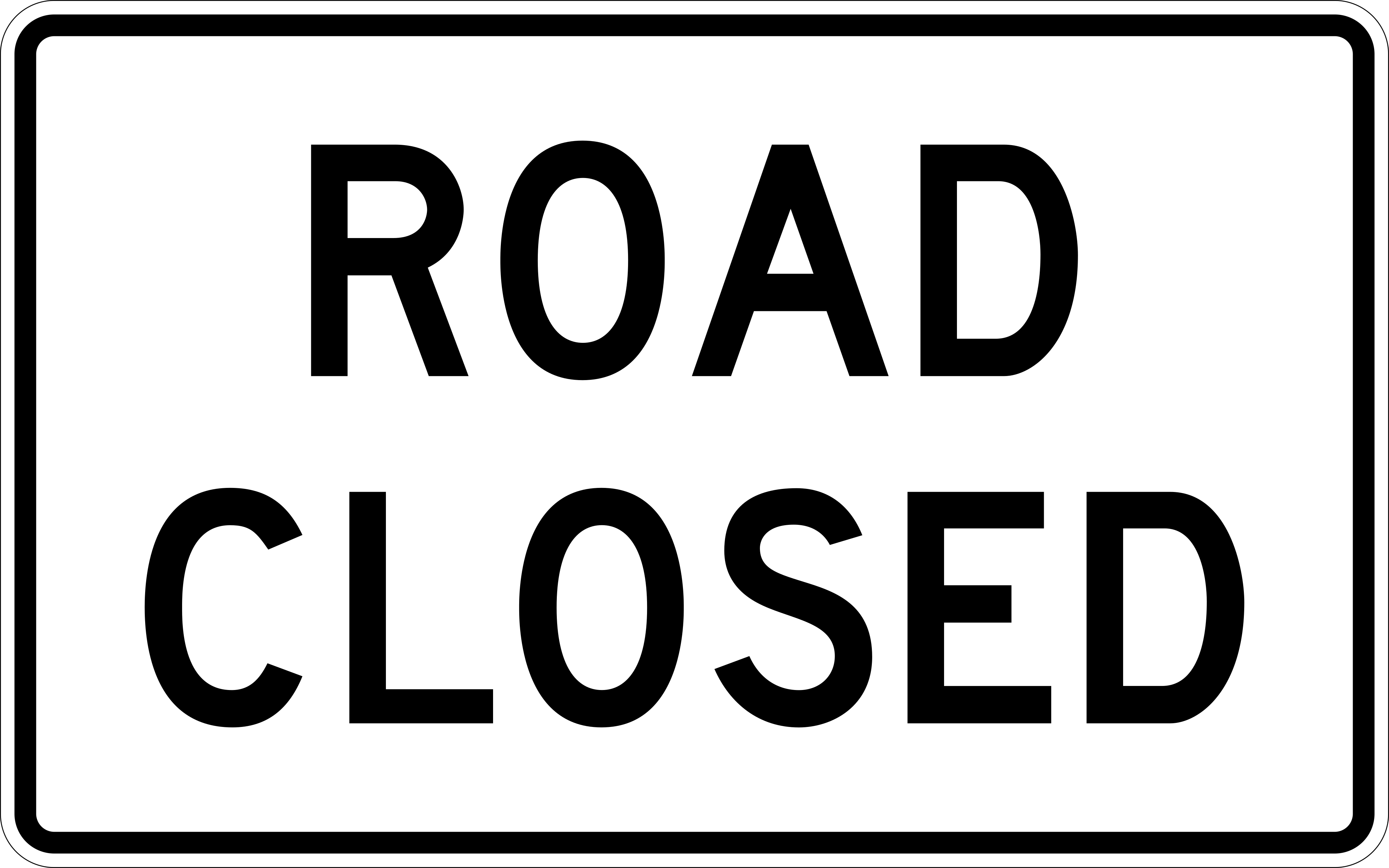
- Drivers may not enter this road
- Only local residents may continue
- The road is open but under repair
- Drivers must slow and proceed with care
Show answer
Drivers may not enter this road. Barriers such as drums, cones, and tubes keep traffic out of hazardous work zones, and they may be used to keep drivers from entering closed roads or other areas where it is dangerous to drive. A road closed sign works the same way: you do not go past it. Follow the signs and road markings that guide you through the work zone, such as a detour, instead of driving around the barrier to save time.
Study this in the handbook: Kansas speed limits
20. You are walking along a Kansas road that has no sidewalk. Where should you walk?
- On the left side of the street, facing the oncoming traffic
- On the right side of the street, with traffic coming from behind
- In the center of the lane so drivers can see you
- Wherever the shoulder is widest, in either direction
Show answer
On the left side of the street, facing the oncoming traffic. Pedestrians have the same responsibilities as motorists to obey traffic laws. The handbook says a pedestrian must walk where there is a sidewalk. If there is no sidewalk, the pedestrian should walk on the left side of the street facing the oncoming traffic, which lets the pedestrian see vehicles approaching and step aside. At night, carrying a flashlight and wearing light colored clothing and reflective material helps drivers see you easily.
Every question is written from the official Kansas Driving Handbook. Need paper? Printable KS practice test with answer key.
Last verified 2026-10-05. How we check every question · Study all 500 as flashcards
Frequently asked questions
How many questions are on this Kansas practice test?
This fixed set has 20 questions. It is test 21 of 25 from the 500 question Kansas bank. The real KS exam asks 25 questions and you need 20 correct.
What is the passing score for the real Kansas test?
You must score an 80% to pass the knowledge test That figure comes from the official Kansas source cited on the DMV facts page.
How does this fixed test relate to the full Kansas bank?
Each numbered test is a fixed set of questions in a fixed order, so you can retake the same test later and compare. Every test mixes road signs and the other topics in about the same proportion as the full bank. Tests 1 to 25 together cover every question in the Kansas bank once. The full practice page mixes the whole bank at random.
Last verified 2026-10-05. See the Kansas DMV facts page for sourced state details.