Every question below comes from the Illinois question bank on this page. Open a question to see the correct answer and the explanation. Nothing here is hidden behind a signup.
1. What Illinois vision result limits a driver to daylight only?
- Acuity of 20/40
- Acuity between 20/41 and 20/70
- Peripheral vision over 140 degrees
- Any use of corrective lenses
Show answer
Acuity between 20/41 and 20/70. Illinois requires minimum visual acuity of 20/40 with or without corrective lenses and at least 140 degrees of peripheral vision, which the Full explanation in Test 1
2. How long does a DUI conviction stay on an Illinois driving record?
- Five years
- Ten years
- Permanently
- Until the fine is paid
Show answer
Permanently. Illinois classifies DUI as a violent crime, and a DUI conviction remains on the driving record permanently. Full explanation in Test 2
3. An Illinois driver under 21 wants court supervision for a serious traffic offense. What is required?
- Paying double the fine
- Nothing, since supervision is automatic
- Attending traffic safety school
- Retaking the written exam
Show answer
Attending traffic safety school. Illinois allows a driver under 21 only one court supervision for serious traffic offenses. Full explanation in Test 3
4. What is the minimum revocation for a second DUI conviction within 20 years in Illinois?
- One year minimum
- Three years
- Five years
- Lifetime
Show answer
Five years. Illinois revokes driving privileges for at least one year on a first DUI conviction and at least five years on a second conviction within 20 Full explanation in Test 4
5. During the Illinois permit phase, how many passengers may ride with a teen driver?
- Any number, as long as an adult supervises
- One in the front seat and no more than the number of safety belts in the back seat
- None at all
- Two in the front seat and three in the back
Show answer
One in the front seat and no more than the number of safety belts in the back seat. In the Illinois permit phase, passengers are limited to one in the front seat and no more than the number of safety belts in the back seat. Full explanation in Test 5
6. What does an Illinois driver owe a pedestrian in an unmarked crosswalk on the driver's side when no signals control traffic?
- No duty unless the pedestrian is carrying a crossing flag
- A yield, including a complete stop when necessary
- Priority only if the roadway has painted crosswalk lines
- A horn warning, followed by immediate passage
Show answer
A yield, including a complete stop when necessary. Illinois requires a driver to yield when a pedestrian is in an unmarked crosswalk on the driver’s side and no traffic-control signals are op Full explanation in Test 6
7. During the Illinois permit phase, what nighttime driving restriction is listed for Sunday through Thursday?
- Driving is restricted from 8 p.m. until 5 a.m.
- Driving is restricted from 10 p.m. until 6 a.m.
- Driving is restricted from midnight until 5 a.m.
- No nighttime restriction applies during the permit phase
Show answer
Driving is restricted from 10 p.m. until 6 a.m.. For the permit phase, Illinois lists a Sunday-through-Thursday restriction from 10 p.m. to 6 a.m. Full explanation in Test 7
8. How long should an Illinois driver keep speed reduced after passing a disabled vehicle when a lane change was not safe?
- Only until the front bumper reaches it
- Until the next traffic signal
- Until well past the disabled vehicle
- For exactly 500 feet
Show answer
Until well past the disabled vehicle. When a safe lane change is unavailable near a disabled vehicle, Illinois tells the driver to reduce speed while approaching and passing. Full explanation in Test 8
9. What must an Illinois driver in the Initial Licensing Phase keep in order to move to full privileges at 18?
- A perfect school attendance record
- 100 logged practice hours
- A second driver education course
- A conviction free driving record for the six months before turning 18
Show answer
A conviction free driving record for the six months before turning 18. An Illinois teen in the Initial Licensing Phase must keep a conviction free driving record for the six months before turning 18. Full explanation in Test 9
10. What does an Illinois pedestrian crosswalk sign tell drivers to expect?

- A section where pedestrians are prohibited
- A crosswalk where pedestrians may be present
- A sidewalk that is closed to all users
- A lane reserved for bicycles only
Show answer
A crosswalk where pedestrians may be present. An Illinois pedestrian crosswalk sign tells drivers that a crosswalk is present. Full explanation in Test 10
11. A 19-year-old in Illinois is convicted of possessing alcohol while riding in a car. What is the minimum suspension?
- 30 days
- Three months
- No suspension, because the driver was a passenger
- Six months
Show answer
Six months. When a person under 21 is convicted of possessing, consuming, purchasing, or receiving alcohol while an occupant of a motor vehicle, Illinoi Full explanation in Test 1
12. An Illinois driver is convicted of driving without the required insurance. What follows?
- At least a three month loss of privileges and a $100 reinstatement fee, with no driving permit
- A warning for a first offense
- A one year suspension with a work permit
- Only a $25 fine
Show answer
At least a three month loss of privileges and a $100 reinstatement fee, with no driving permit. A mandatory insurance conviction in Illinois costs the driver's privileges for at least three months, requires a $100 reinstatement fee, and Full explanation in Test 2
13. When may a driver return to the right-hand lane after passing another vehicle?
- As soon as the front bumper clears the other vehicle
- Before the passed vehicle disappears from the driver’s side mirror
- Only after the passed driver flashes a courtesy signal
- After the entire passed vehicle is visible in the rearview mirror
Show answer
After the entire passed vehicle is visible in the rearview mirror. After passing on a two-lane highway, Illinois requires the driver to wait until the entire vehicle just passed is visible in the rearview mi Full explanation in Test 3
14. Where might an Illinois driver encounter a DO NOT ENTER sign?
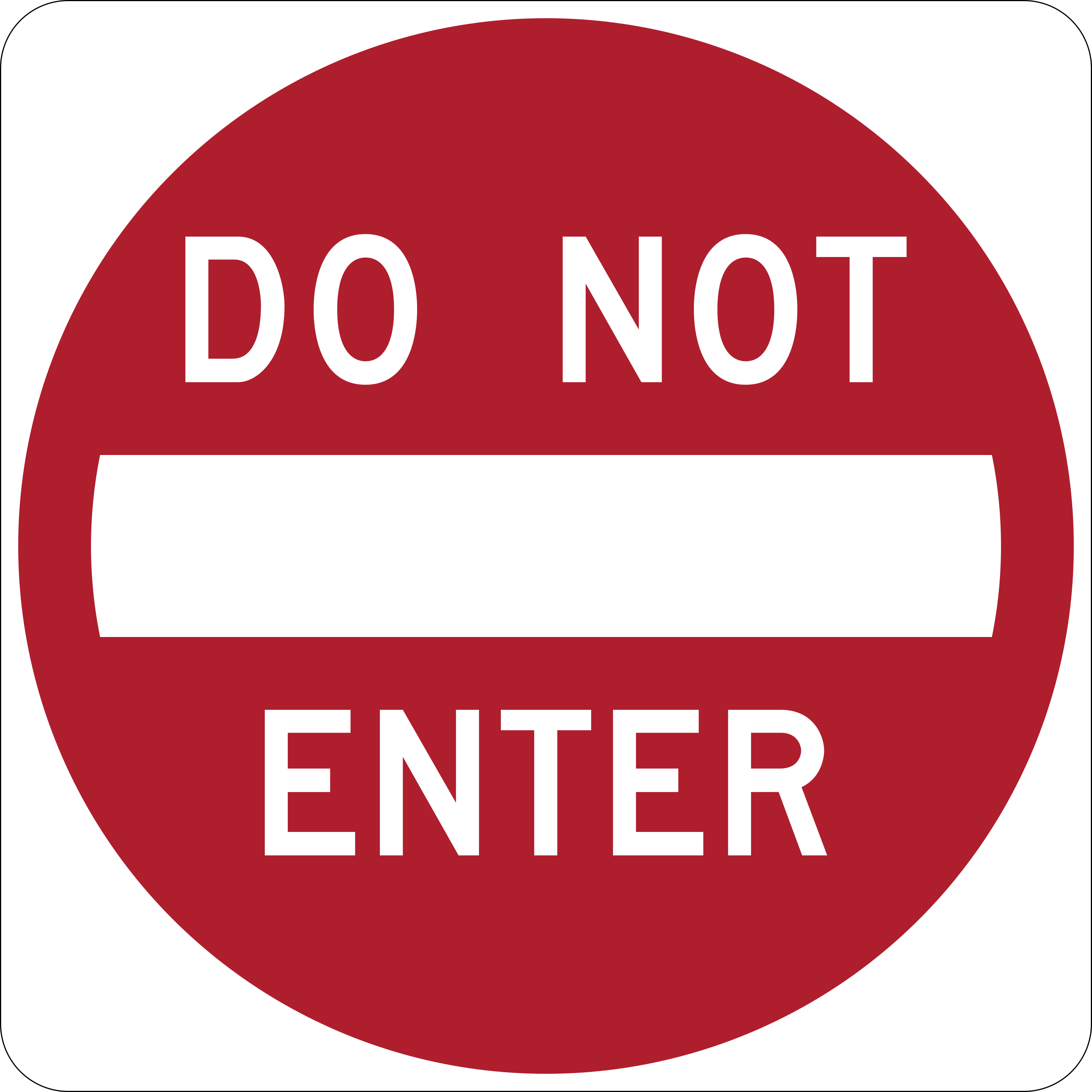
- At every legal entrance to a two-way residential street
- Only where parking is reserved for emergency vehicles
- At a one-way street or an expressway ramp entered in the wrong direction
- At a railroad crossing where trains have stopped
Show answer
At a one-way street or an expressway ramp entered in the wrong direction. Illinois uses DO NOT ENTER signs on one-way streets and other roadways where entry is prohibited. Full explanation in Test 4
15. What does the round railroad advance warning sign indicate?
- A circular traffic pattern begins
- A hospital entrance is nearby
- Passing is allowed in both directions
- A highway-railway crossing is ahead
Show answer
A highway-railway crossing is ahead. The round yellow sign with a black X and the letters RR warns that a highway-railway crossing is ahead. Full explanation in Test 5
16. After an Illinois DUI conviction, how long must the driver file Financial Responsibility Insurance?
- For six months
- For three years
- For one year
- For ten years
Show answer
For three years. An Illinois DUI conviction requires filing Financial Responsibility Insurance, the SR-22, for three years. Full explanation in Test 6
17. What distance between a driver and the air bag does the Illinois manual call desirable?
- 10 to 12 inches
- 2 to 4 inches
- 5 to 6 inches
- At least 24 inches
Show answer
10 to 12 inches. Air bags are lifesaving devices that work together with safety belts, but Illinois says special precautions should be taken in vehicles that Full explanation in Test 7
18. How many traffic violation convictions within 12 months can lead to suspension for an Illinois driver age 21 or older?
- Three
- Two
- Four
- Six
Show answer
Three. Illinois may suspend a driver's license after three traffic violation convictions during a 12 month period. Full explanation in Test 8
19. Who is exempt from the Illinois ban on drinking alcohol in a vehicle?
- Passengers in chartered buses for nonschool purposes, motor homes, and limousines
- Passengers in any car when the driver is sober
- Drivers stopped at a red light
- Passengers over 65
Show answer
Passengers in chartered buses for nonschool purposes, motor homes, and limousines. In Illinois it is illegal for anyone to drink alcohol in a vehicle, and both the driver and passengers can be cited. Full explanation in Test 9
20. How long is the temporary paper license Illinois issues at the facility valid?
- 10 days
- One year
- 30 days
- 90 days
Show answer
90 days. Upon payment and completion of any required testing, the Secretary of State issues a temporary, secure paper driver's license or ID card val Full explanation in Test 10
21. An Illinois driver under 21 is convicted of two moving violations within 24 months. What is the minimum consequence?
- A warning letter
- A 30-day suspension
- A 7-day suspension
- Permanent revocation
Show answer
A 30-day suspension. For a driver under 21, two or more moving violation convictions within 24 months bring a suspension of at least 30 days, and the length grow Full explanation in Test 1
22. Which cellphone use does Illinois prohibit while operating a motor vehicle?
- Using a handheld cellphone
- Using a cellphone while parked on the shoulder
- Using a cellphone while stopped because normal traffic is obstructed, with the vehicle in park
- Reporting an emergency
Show answer
Using a handheld cellphone. Illinois prohibits handheld cellphone use while a motor vehicle is operating. Full explanation in Test 2
23. Which device-use rule applies to a driver age 19 or older in Illinois?
- All cellphone use is prohibited regardless of age
- Texting is allowed when traffic is moving slowly
- Holding a phone is allowed if it is used for navigation
- Hands-free devices or Bluetooth technology is allowed, while handheld cellphone use and texting remain prohibited
Show answer
Hands-free devices or Bluetooth technology is allowed, while handheld cellphone use and texting remain prohibited. For people age 19 and older, Illinois allows hands-free devices or Bluetooth technology, but the general ban on handheld cellphones, texting Full explanation in Test 3
24. What do two solid yellow lines in the center of a roadway separate?
- Lanes moving in the same direction
- A parking lane from a curb
- A bicycle lane from a shoulder
- Traffic moving in opposite directions
Show answer
Traffic moving in opposite directions. Two solid yellow lines mark the center of a roadway where traffic travels in opposite directions. Full explanation in Test 4
25. How long is an Illinois license valid for drivers ages 81 to 86, and for drivers 87 and older?
- Eight years for both
- Four years for both
- One year for both
- Two years for ages 81 to 86, with annual renewal at 87 and older
Show answer
Two years for ages 81 to 86, with annual renewal at 87 and older. Drivers ages 81 to 86 receive a license valid for two years, and drivers 87 and older must renew annually. Full explanation in Test 5
26. What must a motorist do when encountering an organized funeral procession?
- Drive between procession vehicles to reach the next lane
- Join the procession to gain its right of way
- Pass every vehicle when a gap appears
- Yield to all vehicles in the procession
Show answer
Yield to all vehicles in the procession. Illinois gives priority to the vehicles in a funeral procession, so an approaching motorist must yield to all of them. Full explanation in Test 6
27. When making a left turn into oncoming traffic in Illinois, what is the driver's duty?
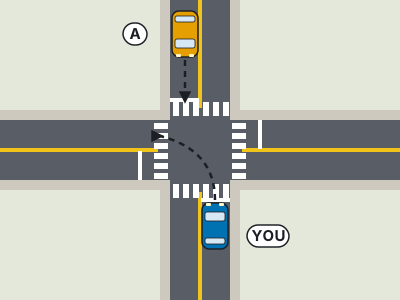
- Turn without yielding if the signal was green when entering
- Accelerate so the turning vehicle clears first
- Yield only to vehicles displaying hazard lights
- Yield to the oncoming traffic
Show answer
Yield to the oncoming traffic. A left-turning driver must yield to oncoming traffic. Full explanation in Test 7
28. When does an Illinois statutory summary suspension begin?
- On the 46th day from the notice date provided by the police officer
- On the 15th day after the court hearing
- After the driver receives a renewal notice
- Immediately when the traffic stop begins
Show answer
On the 46th day from the notice date provided by the police officer. Illinois does not start the statutory summary suspension on the day of the stop. Full explanation in Test 8
29. An Illinois driver's license is revoked for DUI. Where may the driver legally drive during the revocation?
- Anywhere outside Illinois
- Only in neighboring states
- Only on private roads in another state
- Nowhere; the driver may not drive a motor vehicle in any state
Show answer
Nowhere; the driver may not drive a motor vehicle in any state. When an Illinois driver's privileges are suspended or revoked for DUI, reckless homicide, or leaving the scene of a fatal or personal injury Full explanation in Test 9
30. On a freeway, what does a posted minimum speed sign mean?
- Driving slower than that minimum is illegal unless safety requires it
- The number is only a suggested speed for trucks
- The minimum applies only during daylight
- Drivers must exceed the number when traffic is heavy
Show answer
Driving slower than that minimum is illegal unless safety requires it. Illinois explains that signs on freeways and controlled-access highways may show maximum and minimum speeds. Full explanation in Test 10
31. How close to a STOP sign or traffic control signal may you park in Illinois?
- No closer than 10 feet
- No closer than 15 feet
- No closer than 20 feet
- No closer than 30 feet
Show answer
No closer than 30 feet. Illinois prohibits standing or parking within 30 feet of a STOP sign, YIELD sign, or traffic control signal. Full explanation in Test 1
32. What must a driver do at an Illinois YIELD sign before proceeding?
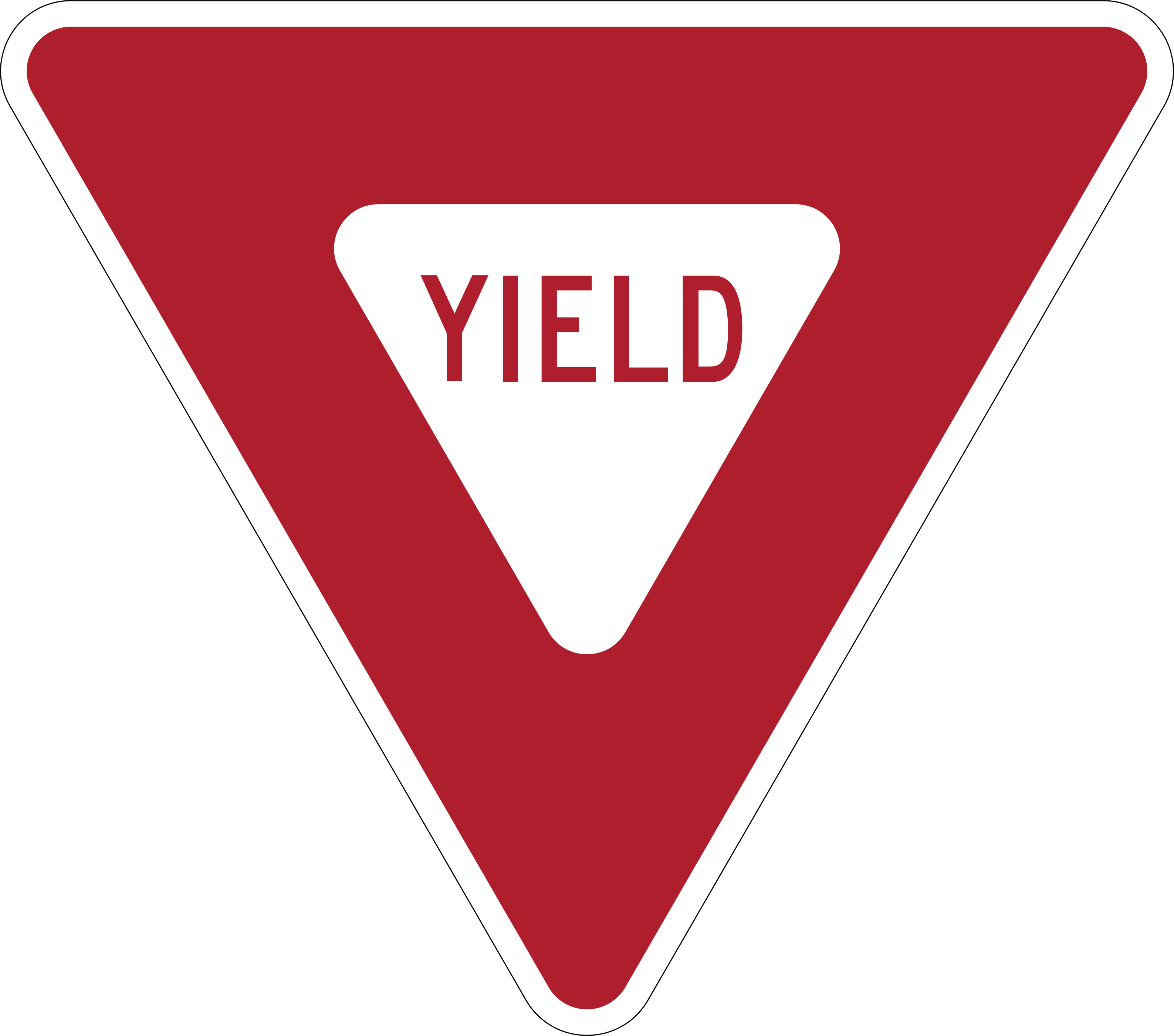
- Accelerate through the intersection before other traffic arrives
- Let all traffic and pedestrians go first, slowing or stopping if necessary
- Enter first whenever the driver is already near the sign
- Stop only when a police officer is directing traffic
Show answer
Let all traffic and pedestrians go first, slowing or stopping if necessary. The Illinois YIELD sign means you must let all traffic and pedestrians go before proceeding. Full explanation in Test 2
33. What minimum suspension applies when an Illinois driver under 21 has any trace of alcohol while operating a motor vehicle?
- A minimum suspension of three calendar months
- One month
- A half-year suspension
- No suspension unless BAC reaches .08 percent
Show answer
A minimum suspension of three calendar months. For a driver under 21, any trace of alcohol while operating a motor vehicle brings a minimum three-month suspension. The . Full explanation in Test 3
34. What does a constantly lit yellow arrow mean?
- A protected turn may continue without checking traffic
- The green arrow is ending or the light is about to turn red
- The driver must reverse before the signal changes
- The intersection is closed to all traffic
Show answer
The green arrow is ending or the light is about to turn red. A constantly lit yellow arrow warns that the protected green-arrow phase is ending or that the signal is about to turn red. Full explanation in Test 4
35. Where is the yellow triangular no-passing sign placed when a no-passing area begins?
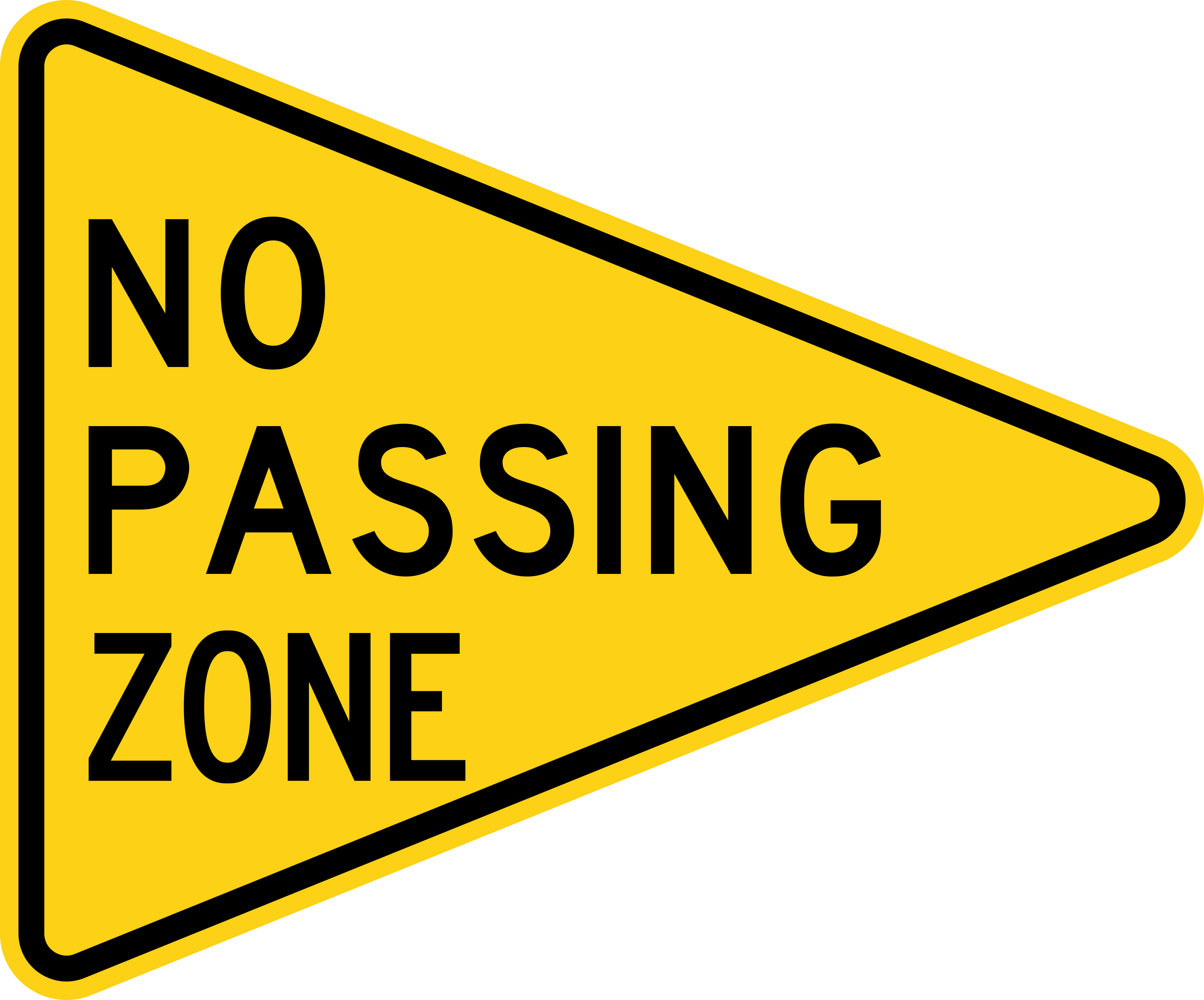
- On the right side of every multilane roadway
- Above the entrance to a parking garage
- On the left side of a two-lane, two-way roadway
- At the end of a railroad crossing
Show answer
On the left side of a two-lane, two-way roadway. Illinois describes the no-passing sign as a three-sided yellow sign with black letters. Full explanation in Test 5
