
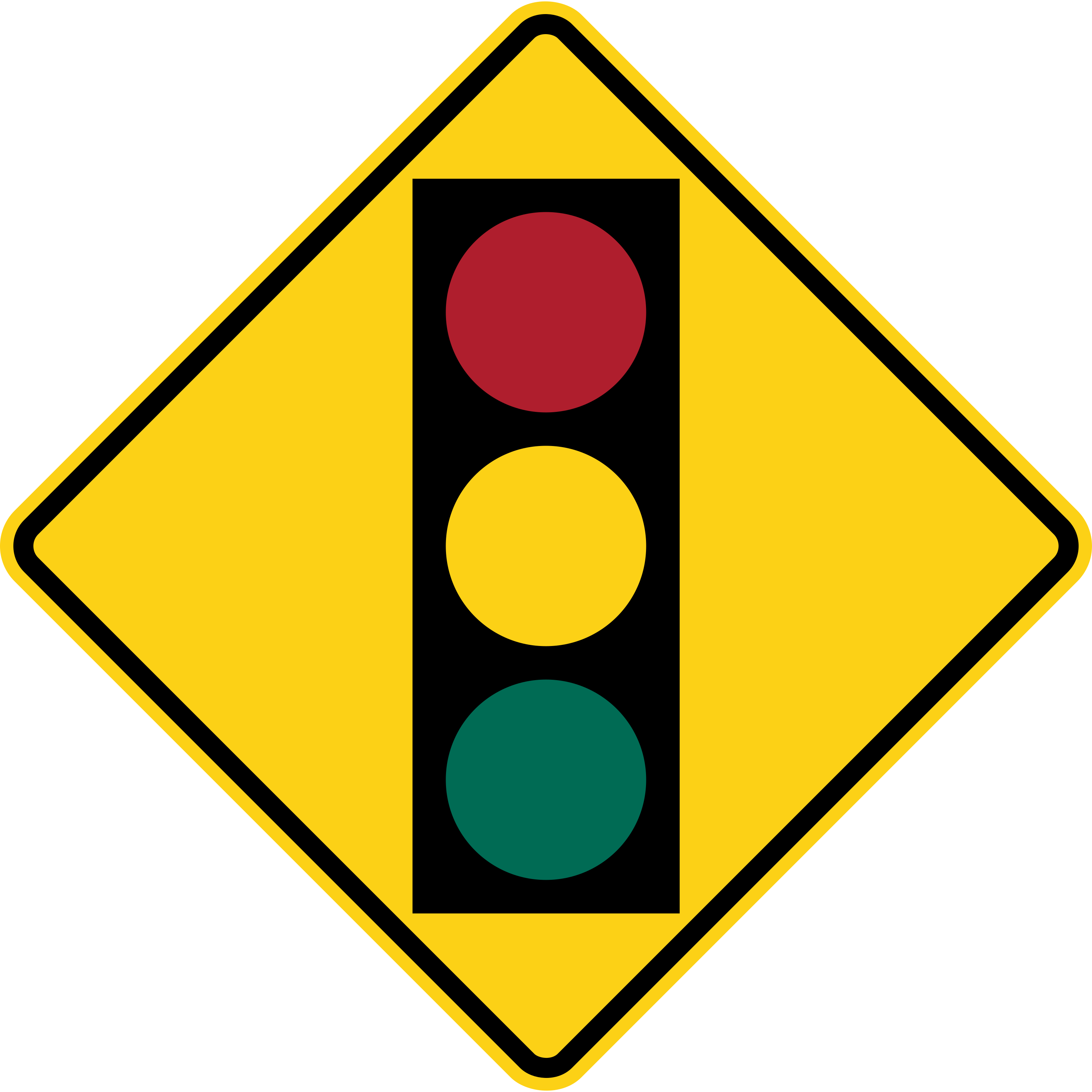
46 question exam format · Real sign images · Producer reviewed

CA Permit Practice Test

The most complete free California DMV practice test online: 238 questions verified against the California Driver's Handbook, real MUTCD sign images, audio read-aloud, and a plain-English explanation the moment you answer. Built and reviewed by a licensed California insurance producer. No account, no cost.

Questions
238
Time to clear the bank
~35 min
Passing standard
38 of 46
Reviewed by
Kevin Vu, CA #4037122

Talk to Kevin

714-666-6669

Mon to Sat, 9 AM to 6 PM PT
English or Vietnamese

Call now →

Road signsRight of waySpeed limitsParkingAlcohol & DUISafe drivingSignals & markingsLaws & paperworkEmergencies

238-question bank · Real sign images & audio · Free

California practice test has 238 questions. Every question comes with a plain-English explanation the moment you answer.

Real exam format: 46 questions, 38 correct to pass.

Start here

Run 20 questions to warm up.

Find your gaps

Diagnose weak topics and retry what you've missed.

Simulate the real thing

Practice under graded exam conditions or run the whole bank.

Random draw every attempt. Scored against the 83% passing standard.

Free means actually free: no subscription, no auto-renew, no card required, no locked features. This site is funded by our insurance work, not by test-prep charges.

All 46 questions, CA exam length

Every question below comes from the California question bank on this page. Open a question to see the correct answer and the explanation. Nothing here is hidden behind a signup.

  1. 1. From which California roads are neighborhood electric vehicles (NEVs) and low-speed vehicles restricted?

    1. Roads where the speed limit is greater than 35 mph
    2. Any road with more than two lanes
    3. All roads outside a residential area
    4. Roads where the speed limit is greater than 25 mph
    Show answer

    Roads where the speed limit is greater than 35 mph. Neighborhood electric vehicles and low-speed vehicles reach a maximum speed of only 25 mph, so the handbook restricts them from roads where Full explanation in Test 1

  2. 2. What does a red painted curb mean?

    1. No stopping, standing, or parking
    2. Passenger loading for three minutes
    3. Disabled parking with a placard
    4. Limited-time parking during posted hours
    Show answer

    No stopping, standing, or parking. A red curb is the strictest colored curb rule: no stopping, standing, or parking. Full explanation in Test 1

  3. 3. At an uncontrolled intersection, you and another vehicle arrive at the same time. Who should yield?

    1. Yield to the vehicle on your right
    2. The larger vehicle must always yield
    3. Yield to the vehicle on your left
    4. The vehicle going straight must stop first
    Show answer

    Yield to the vehicle on your right. At an uncontrolled intersection, simultaneous arrivals require you to give way to the vehicle, pedestrian, or bicyclist on your right. Full explanation in Test 1

  4. 4. How may a minor use a cell phone while driving?

    1. Only to make an emergency assistance call
    2. For hands-free calls during daylight
    3. For texting when traffic is stopped
    4. Any time the phone is mounted
    Show answer

    Only to make an emergency assistance call. A minor may use a cell phone while driving only for emergency assistance. Full explanation in Test 1

  5. 5. When may you pass another vehicle on a broken yellow line?

    1. Only when the broken line is next to your lane and passing is safe
    2. Whenever the vehicle ahead is below the posted limit
    3. Only within 100 feet of a railroad crossing
    4. Across any yellow line if you signal first
    Show answer

    Only when the broken line is next to your lane and passing is safe. A broken yellow line allows passing only when that broken line is beside your lane and the maneuver can be made safely. Full explanation in Test 2

  6. 6. Who may park at a blue curb?

    1. A disabled person or someone driving a disabled person with the proper placard or plate
    2. Any driver loading freight for a short time
    3. Only buses during posted commute hours
    4. Any driver who stays inside the vehicle
    Show answer

    A disabled person or someone driving a disabled person with the proper placard or plate. A blue curb is reserved for a disabled person or someone driving a disabled person when the vehicle has the special placard or license plate Full explanation in Test 2

  7. 7. A pedestrian using a wheelchair is crossing. How should a driver treat that person?

    1. As a pedestrian or vulnerable road user
    2. As a slow vehicle that must yield
    3. As a bicyclist only in a marked lane
    4. As traffic only when using a motor
    Show answer

    As a pedestrian or vulnerable road user. California includes a person with a disability using a wheelchair for transportation among pedestrians or vulnerable road users. Full explanation in Test 2

  8. 8. During the first 12 months of a provisional license, when may a minor drive without an adult passenger under the standard restriction?

    1. Not between 11 p.m. and 5 a.m.
    2. Any time after holding the license for 6 months
    3. Between midnight and 4 a.m. only for social trips
    4. With passengers under 20 whenever school is in session
    Show answer

    Not between 11 p.m. and 5 a.m.. For the first 12 months, a provisional driver may not drive between 11 p.m. and 5 a.m. Full explanation in Test 2

  9. 9. At a STOP sign, where must you make a full stop?

    1. Before the crosswalk or at the limit line
    2. Past the crosswalk where cross traffic is visible
    3. Only after the front wheels enter the intersection
    4. Beside the sign post, regardless of pavement markings
    Show answer

    Before the crosswalk or at the limit line. A STOP sign requires a full stop before entering the crosswalk or at the limit line. Full explanation in Test 3

  10. 10. What does a diamond-shaped warning sign tell you?

    1. Specific road conditions or dangers are ahead
    2. Only public transit buses may use the lane
    3. You have reached a rest area
    4. Traffic may pass a stopped school bus
    Show answer

    Specific road conditions or dangers are ahead. A diamond-shaped sign warns of specific road conditions and dangers ahead. Full explanation in Test 3

  11. 11. What is the purpose of a center left-turn lane?

    1. To pass slow traffic before a driveway
    2. To wait before entering a freeway ramp
    3. To begin or finish a left turn or permitted U-turn
    4. To travel continuously when both through lanes are crowded
    Show answer

    To begin or finish a left turn or permitted U-turn. A center left-turn lane is a shared lane for vehicles preparing to turn left, turning from a side street or driveway, or making a legal U-tu Full explanation in Test 3

  12. 12. Where is parking prohibited near a marked or unmarked crosswalk?

    1. Within 20 feet, or within 15 feet when a curb extension is present
    2. Within 5 feet, unless the vehicle faces traffic
    3. Within 30 feet, but only at school crossings
    4. Within 100 feet whenever the road has two lanes
    Show answer

    Within 20 feet, or within 15 feet when a curb extension is present. California prohibits parking close to crosswalks because a parked vehicle can hide pedestrians from approaching drivers. Full explanation in Test 3

  13. 13. Which headlights should you use when driving in heavy fog or smoke?

    1. Parking lights only
    2. High beams so others can see you sooner
    3. Low beams
    4. No lights unless it is nighttime
    Show answer

    Low beams. Low beams work best in fog or heavy smoke because high beams reflect back and create glare. Full explanation in Test 4

  14. 14. Your vehicle stalls on train tracks and a train is approaching. Which direction should you run?

    1. Straight down the tracks away from the train
    2. Diagonally away from the tracks toward the direction the train is coming from
    3. Toward the nearest crossing gate
    4. Behind your vehicle so it shields you from debris
    Show answer

    Diagonally away from the tracks toward the direction the train is coming from. Leave the vehicle immediately and run diagonally away from the tracks in the direction the train is coming from. Full explanation in Test 4

  15. 15. A flashing yellow left-turn arrow appears. What does it mean?

    1. Your left turn is protected from oncoming traffic
    2. You may turn after yielding to oncoming traffic
    3. You must stop and wait for a green arrow
    4. Oncoming vehicles must stop before you turn
    Show answer

    You may turn after yielding to oncoming traffic. A flashing yellow arrow allows the turn, but it is not protected. Full explanation in Test 4

  16. 16. Which medication-related situation can make driving illegal?

    1. Only taking medication bought without a prescription
    2. Taking any drug that affects your ability to drive safely
    3. Taking medicine only after sunset
    4. Carrying prescription medicine in the vehicle
    Show answer

    Taking any drug that affects your ability to drive safely. California treats impairment from drugs seriously, whether the drug is illegal, prescribed, or bought over the counter. Full explanation in Test 4

  17. 17. At this stop sign there is no limit line and no crosswalk. Where must a California driver stop?

    1. At the sign post
    2. With the front wheels in the intersection for a better view
    3. Before entering the intersection
    4. Ten feet past the sign
    Show answer

    Before entering the intersection. A limit line is a wide white line that shows drivers where to stop before an intersection or crosswalk. Full explanation in Test 5

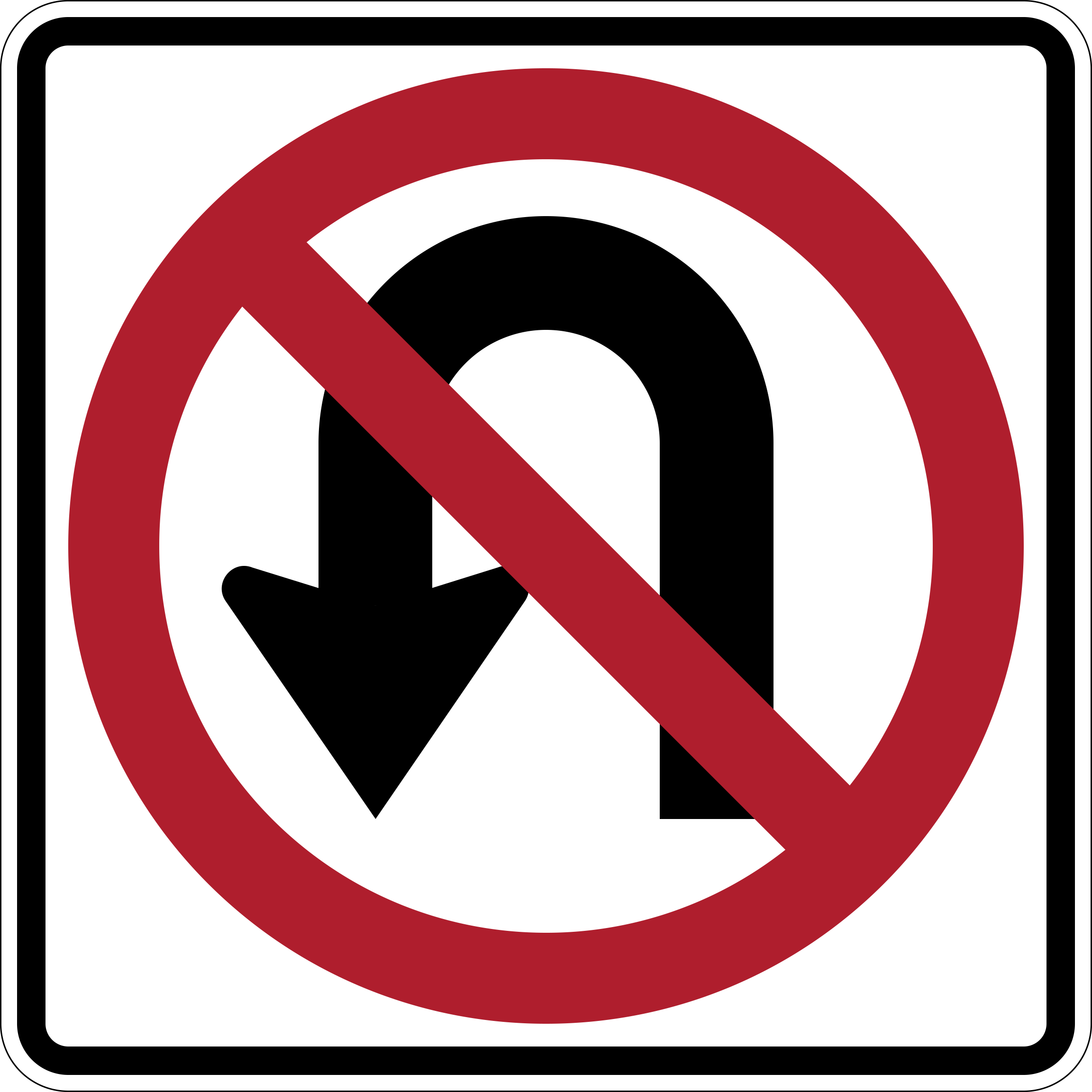
  18. 18. What movement does this sign prohibit?

    1. A left turn only
    2. A U-turn
    3. A right turn only
    4. A lane change
    Show answer

    A U-turn. A red circle with a red slash means the pictured movement is not allowed. Full explanation in Test 5

  19. 19. At this railroad crossbuck, what should you do before crossing?

    1. Look, listen, slow down, and be ready to stop
    2. Stop only when a gate is present
    3. Maintain speed because trains must sound a horn
    4. Cross immediately after the first train passes
    Show answer

    Look, listen, slow down, and be ready to stop. A railroad crossbuck marks a crossing where you must watch and listen for trains, slow down, and prepare to stop. Full explanation in Test 5

  20. 20. A yellow sign showing a small STOP sign ahead tells you to do what?

    1. Maintain speed because it only marks a future parking rule
    2. Start slowing and prepare to make a full stop soon
    3. Turn right at the next intersection without stopping
    4. Stop immediately at the warning sign itself
    Show answer

    Start slowing and prepare to make a full stop soon. A stop-ahead warning means the actual stop sign is coming soon, so start reducing speed and get ready for a complete stop at the proper line Full explanation in Test 5

  21. 21. What is the safest response to a slippery-when-wet sign?

    1. Brake sharply at the sign to test traction
    2. Use high beams so pavement glare shows standing water
    3. Slow down and make steering and braking inputs gently
    4. Move close behind the vehicle ahead to follow its tire tracks
    Show answer

    Slow down and make steering and braking inputs gently. A slippery-when-wet sign warns that traction can drop when the pavement is wet, so reduce speed before the hazard and avoid sudden moves. Full explanation in Test 6

  22. 22. At a no-passing pennant near a hazardous area, what must you avoid?

    1. Passing another vehicle where the road or sign bars the maneuver
    2. Changing lanes after checking mirrors on a multilane freeway
    3. Letting a faster driver pass when your lane is clear
    4. Driving below the posted limit in heavy weather
    Show answer

    Passing another vehicle where the road or sign bars the maneuver. A no-passing pennant marks a place where passing is unsafe or prohibited, commonly because sight distance or a hazard is ahead. Full explanation in Test 6

  23. 23. When passing a large truck, which practice is safest?

    1. Pass on the left and avoid staying beside the truck longer than needed
    2. Pass on the right so you remain near the shoulder
    3. Match the truck's speed while alongside so the driver can see you
    4. Move back in front as soon as your rear bumper clears the cab
    Show answer

    Pass on the left and avoid staying beside the truck longer than needed. Large trucks have substantial blind spots, so pass on the left, move ahead, and avoid lingering beside them. Full explanation in Test 6

  24. 24. If oncoming headlights are too bright at night, where should you look?

    1. Directly into the headlights until your eyes adjust
    2. At your rearview mirror to avoid the glare
    3. Toward the right edge of your lane
    4. At the centerline between the vehicles
    Show answer

    Toward the right edge of your lane. When oncoming lights are too bright, avoid staring into them and guide your path by looking toward the right edge of your lane. Full explanation in Test 6

  25. 25. If your vehicle stops working on the freeway, what should you do after pulling onto the right shoulder?

    1. Stand behind the vehicle to warn traffic
    2. Walk along the freeway shoulder to find help
    3. Return to the vehicle and stay belted inside until help arrives
    4. Turn off all lights so traffic will not follow you
    Show answer

    Return to the vehicle and stay belted inside until help arrives. After a freeway breakdown, pull to the right shoulder if possible, call for help, and stay inside with your seat belt on until help arrives. Full explanation in Test 7

  26. 26. Which road surfaces tend to freeze before the rest of the road?

    1. Bridges and overpasses
    2. Freshly painted lane markings only
    3. Flat city blocks with heavy traffic
    4. Downhill shoulders after sunrise only
    Show answer

    Bridges and overpasses. Bridges and overpasses can freeze before other pavement, so slow before reaching them on cold wet days and expect hidden icy spots. Full explanation in Test 7

  27. 27. For normal push-pull steering, where should your hands start?

    1. At 10 and 2 o'clock
    2. At 12 and 6 o'clock
    3. At 9 and 3 o'clock or 8 and 4 o'clock
    4. One hand at 12 o'clock for all turns
    Show answer

    At 9 and 3 o'clock or 8 and 4 o'clock. California describes starting push-pull steering with hands at 9 and 3 or 8 and 4, keeping them there through turns. Full explanation in Test 7

  28. 28. When passing a stopped bus, streetcar, or trolley at a safety zone, what speed limit applies?

    1. No more than 10 mph
    2. No more than 15 mph
    3. No more than 25 mph
    4. Normal posted speed if the lane is clear
    Show answer

    No more than 10 mph. When a bus, streetcar, or trolley is stopped at a safety zone or traffic light, you may pass at no more than 10 mph. Full explanation in Test 7

  29. 29. A large truck signals right but first moves left. What is the safest interpretation?

    1. The truck is probably preparing a wide right turn.
    2. The truck driver is inviting you to pass on the right.
    3. The truck must be changing to the left lane.
    4. The signal should be ignored until the truck slows.
    Show answer

    The truck is probably preparing a wide right turn.. Long vehicles often need extra room because their rear wheels track inside the front wheels during a turn. Full explanation in Test 8

  30. 30. In California, when may a driver turn left against a red light?

    1. From any street onto a one-way street after stopping.
    2. From a one-way street onto a one-way street when no sign prohibits it.
    3. From a two-way street onto a divided highway.
    4. From a left turn lane whenever cross traffic has stopped.
    Show answer

    From a one-way street onto a one-way street when no sign prohibits it.. California's left-on-red permission is narrow: it applies when turning from a one-way street onto a one-way street, with no sign prohibiting Full explanation in Test 8

  31. 31. What lane space should you give a motorcycle when possible?

    1. Only the left half of the lane.
    2. The full lane.
    3. Enough room to share the lane side by side.
    4. A shoulder path if traffic is slow.
    Show answer

    The full lane.. California advises drivers to give motorcycles the full lane whenever possible. Full explanation in Test 8

  32. 32. You need to slow or stop suddenly on a California road. How does the handbook say to warn drivers behind you?

    1. Turn on the emergency flashers or lightly tap the brake pedal three or four times
    2. Sound the horn repeatedly
    3. Swerve slightly to draw attention
    4. Turn on the high beams
    Show answer

    Turn on the emergency flashers or lightly tap the brake pedal three or four times. When you must slow or stop suddenly, the handbook lists three ways to warn drivers behind you: turn on your emergency flashers, lightly tap Full explanation in Test 8

  33. 33. Where is a U-turn allowed in a California business district?

    1. Anywhere traffic is light enough.
    2. Only at an intersection or on a divided highway with an opening.
    3. Across two sets of double yellow lines.
    4. In front of a fire station driveway.
    Show answer

    Only at an intersection or on a divided highway with an opening.. California generally forbids U-turns in business districts, but allows them at an intersection or on a divided highway where an opening has Full explanation in Test 9

  34. 34. Why should you create more space ahead when another vehicle is tailgating you?

    1. So you can brake harder and force the tailgater back.
    2. So you have more time to react and can let the tailgater pass when safe.
    3. So the tailgater can draft behind your vehicle.
    4. So you can speed up without changing lanes.
    Show answer

    So you have more time to react and can let the tailgater pass when safe.. A tailgater behind you reduces your margin if traffic changes suddenly, so California advises creating more space in front while maintaining Full explanation in Test 9

  35. 35. Why should you allow extra time for seniors, people with small children, and people with disabilities at crossings?

    1. They may need extra time to cross safely.
    2. They may cross only at yellow crosswalk lines.
    3. They have right-of-way only when signals are flashing.
    4. They must wait until all vehicles have passed.
    Show answer

    They may need extra time to cross safely.. California reminds drivers that some pedestrians, including seniors, people with small children, and people with disabilities, may require e Full explanation in Test 9

  36. 36. Traffic is moving faster than the posted speed limit. What should you remember?

    1. You may be cited for driving faster or slower than the speed limit.
    2. You must match the fastest traffic to avoid blocking lanes.
    3. The posted limit does not apply during rush hour.
    4. You may exceed the limit when staying in the right lane.
    Show answer

    You may be cited for driving faster or slower than the speed limit.. California warns that driving faster or slower than the speed limit can lead to a citation, even when traffic pressure makes another speed t Full explanation in Test 9

  37. 37. A California lane is signed for public transit buses only. When may a car cross it?

    1. Never, for any reason
    2. To make a right turn
    3. Whenever no bus is in sight
    4. To pass slow traffic
    Show answer

    To make a right turn. It is illegal to drive, stop, park or leave a vehicle in an area designated for public transit buses, and signs are posted to show which lan Full explanation in Test 10

  38. 38. What is the maximum fine listed for dumping or abandoning an animal on a California highway?

    1. Up to $1,000
    2. Up to $250
    3. Exactly $100 with no jail exposure
    4. Only payment for animal shelter costs
    Show answer

    Up to $1,000. The handbook says dumping or abandoning animals on a highway can bring a fine up to $1,000, six months in jail, or both. Full explanation in Test 10

  39. 39. Before entering a bike lane to make a right turn, what should a driver check?

    1. Blind spots for bicyclists
    2. Whether the nearest parked car has expired tags
    3. Only the rearview mirror after starting the turn
    4. The left shoulder, because bicycles may not be on the right
    Show answer

    Blind spots for bicyclists. California allows a driver to enter a bike lane near a turn, but the driver must check for bicyclists in blind spots before doing so. Full explanation in Test 10

  40. 40. If another vehicle merges too closely in front of you, what should you do?

    1. Ease off the accelerator to create space
    2. Tap the bumper to warn the other driver
    3. Move onto the shoulder and pass immediately
    4. Flash high beams until the driver speeds up
    Show answer

    Ease off the accelerator to create space. When a vehicle cuts into your following space, California recommends taking your foot off the accelerator to rebuild the gap ahead. Full explanation in Test 10

  41. 41. If animals or livestock are near the roadway, what should you do?

    1. Slow down or stop and continue only when safe
    2. Honk repeatedly so the animals scatter
    3. Drive between the animals before they move
    4. Speed up because animals usually avoid vehicles
    Show answer

    Slow down or stop and continue only when safe. California instructs drivers who see animals or livestock near the road to slow down or stop and proceed only when safe. Full explanation in Test 11

  42. 42. Besides darkness and bad weather, where does the California handbook say headlights must be on even on a sunny day?

    1. On all freeways
    2. On mountain roads and in tunnels
    3. In parking structures
    4. Within 500 feet of a school
    Show answer

    On mountain roads and in tunnels. The headlight rules go beyond nighttime. You must turn on your headlights when conditions such as clouds, dust, smoke or fog prevent you fro Full explanation in Test 11

  43. 43. At a four-way stop, who has the right-of-way when vehicles arrive at different times?

    1. The vehicle that arrives first
    2. The vehicle on the widest road
    3. The driver making a right turn
    4. The vehicle with the brightest headlights
    Show answer

    The vehicle that arrives first. California's right-of-way rule begins with the vehicle that arrives at the intersection first. Full explanation in Test 11

  44. 44. When a school bus flashes red lights on an undivided road, how long must you remain stopped?

    1. Until children are safely across and the red lights stop flashing
    2. Only until the stop arm first comes out
    3. Until the bus driver waves at one vehicle
    4. Only while children are visible from your lane
    Show answer

    Until children are safely across and the red lights stop flashing. California says drivers from either direction must remain stopped for a school bus with flashing red lights until the children have crossed Full explanation in Test 11

  45. 45. You are on a narrow mountain road where you cannot see at least 200 feet ahead. What does the handbook say you may do with your horn?

    1. Sound it to alert oncoming traffic you cannot yet see
    2. Save it strictly for emergencies once a collision is unavoidable
    3. Sound it only after an oncoming vehicle appears
    4. Leave it alone, because horns are prohibited on mountain roads
    Show answer

    Sound it to alert oncoming traffic you cannot yet see. Mountain curves hide oncoming traffic until the last moment, so California lists this as one of the situations where a horn genuinely helps: Full explanation in Test 12

  46. 46. During a traffic stop, a state or local officer asks about your immigration status. What does California law allow?

    1. You can decline to answer the question
    2. You must answer any question an officer asks
    3. Only passengers are required to answer
    4. You must answer once you have shown your license
    Show answer

    You can decline to answer the question. California bars state and local officers from asking drivers or passengers about immigration status, and a driver who is asked may decline t Full explanation in Test 12

Study rewards · Earned as you practice

Level 1Answer questions to earn XP
0 XP

Achievements

    Rewards are saved on your device only. They never affect your score or the real DMV test.

    Evidence-based study plan · Personalized to your exam date

    When is your driving test?

    Tell us the date and we will build a review schedule (based on learning-science research: spreading study out always beats cramming).

    How this test works

    Written for new Americans, scored like the real thing

    Every question here was written from the current California Driver's Handbook and independently fact-checked against the Vehicle Code, never copied from the DMV's sample tests. The explanations are the point: most practice sites tell you what the answer is; this one tells you why, in plain English, so the rule sticks on exam day.

    The real California knowledge test has 46 questions with 38 correct to pass for first-time applicants under 18; applicants 18 and older get a 36 question test and need 30 correct. Our simulator mode deals 46 random questions and scores you against the first-time standard. Wrong answers are remembered on your device, and the retry mode re-serves them until you have mastered every one.

    Fixed test set

    11 numbered tests that cover the whole bank

    Prefer studying test by test? Each numbered test is a fixed set from our verified bank. Work through all 11 and you have covered every question we publish, each with a plain-English explanation.

    Printable CA practice test with answer key

    Cheat sheet

    Want the key numbers on one page? Keep our free California DMV cheat sheet open while you study the most-missed rules.

    Exam day

    Knowledge is half the battle. See what the science says actually helps you pass on exam day itself.

    After you pass

    The first policy is where new drivers overpay

    A brand-new license means carriers rate you as a new driver even if you have driven for years abroad. Before accepting the first number you see, ask about good student discounts, driver assignment on multi-car households, and carriers that are friendlier to newly licensed adults. That conversation is free: request a quote or explore our other California insurance tools, including the AB60 eligibility checker for drivers without federal documents.