
Key points
You can turn right at a red light if no NO TURN ON RED sign is posted, after you stop at the limit line, yield to pedestrians and turn when safe.
Source: Handbook p. 33
“You can turn right at a red light, if: • There is not a NO TURN ON RED sign posted. • You stop at the stop or limit line, yield for pedestrians, and turn when it is safe.”
California Driver's Handbook, Handbook p. 33A red arrow means stop. Do not turn at a red arrow; wait for a green light or green arrow.
Source: Handbook p. 33
“A red arrow means STOP. Do not turn at a red arrow. Remain stopped until a green traffic signal light or green arrow appears.”
California Driver's Handbook, Handbook p. 33A flashing red light means stop. After stopping, go when it is safe.
Source: Handbook p. 33
“A flashing red signal light means STOP. After stopping, you may go when it is safe.”
California Driver's Handbook, Handbook p. 33A solid yellow light means the light is about to turn red. Stop if you can do so safely.
Source: Handbook p. 33
“A yellow traffic signal light means CAUTION. The light is about to turn red. When you see a yellow traffic signal light, stop, if you can do so safely.”
California Driver's Handbook, Handbook p. 33A flashing yellow arrow means you may turn left, but only after yielding to oncoming traffic.
Source: Handbook p. 34
“Flashing Yellow Arrow You can turn, but your turn is not protected from other traffic. Proceed to turn left after yielding to oncoming traffic and proceed with caution.”
California Driver's Handbook, Handbook p. 34On green, do not enter the intersection if you cannot get completely across before the light turns red.
Source: Handbook p. 34
“Do not enter the intersection if you cannot get completely across before the traffic signal light turns red.”
California Driver's Handbook, Handbook p. 34When a traffic light is not working, stop as if there were STOP signs in all directions.
Source: Handbook p. 34
“When a traffic light is not working, stop as if the intersection is controlled by STOP signs in all directions.”
California Driver's Handbook, Handbook p. 34Drivers must yield to pedestrians even if the DON'T WALK light is flashing.
Source: Handbook p. 35
“Drivers must yield to pedestrians, even if the DON’T WALK light is flashing.”
California Driver's Handbook, Handbook p. 35
Recognize these signs
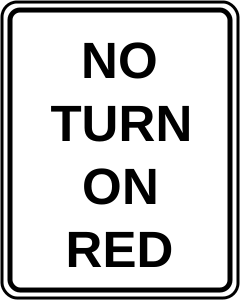
No turn on red 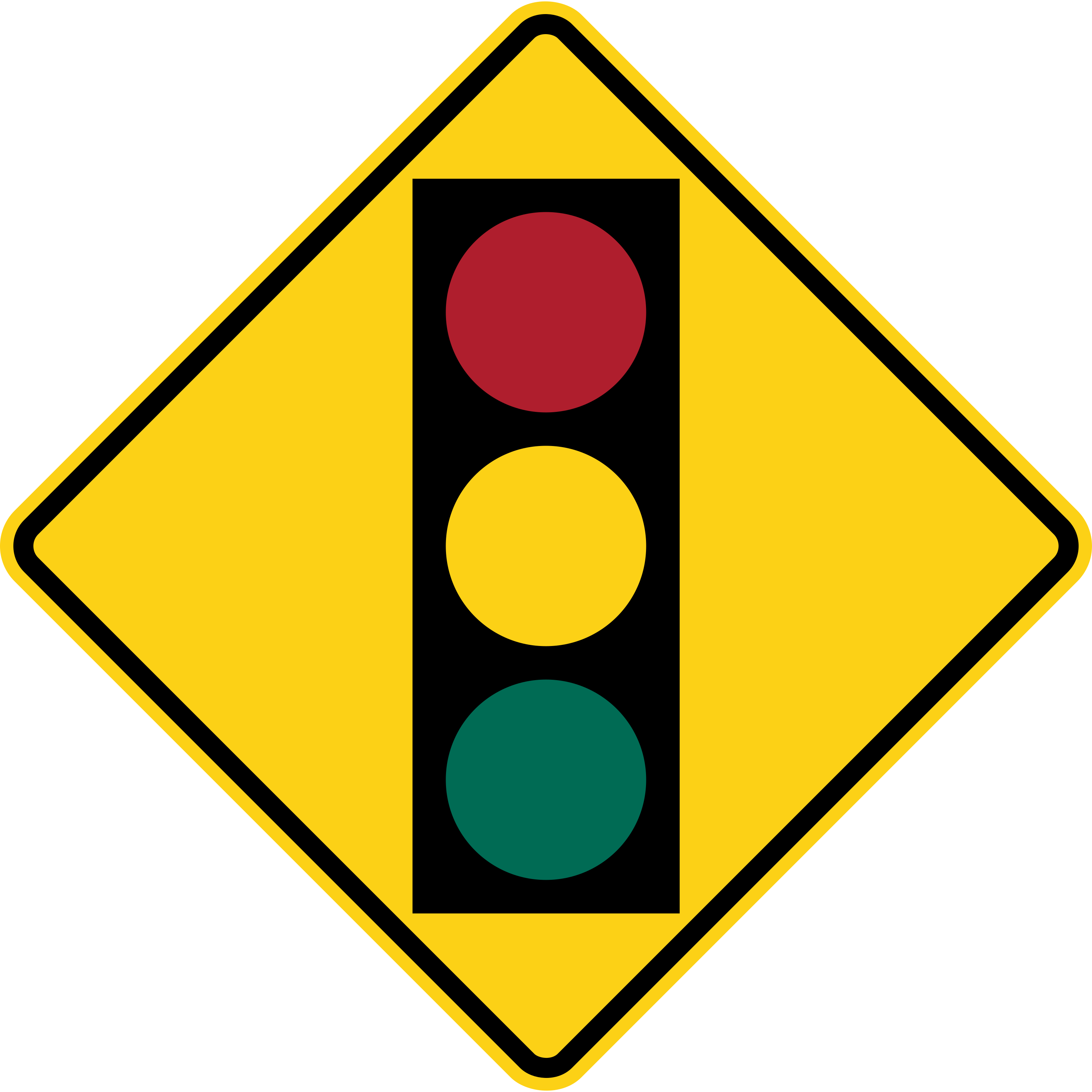
Traffic signal ahead
3 questions from the California practice test
1. When may you turn right at a solid red light in California?
- After slowing, if the cross street is clear.
- Only from a one-way street onto another one-way street.
- After stopping, unless a NO TURN ON RED sign is posted, and yielding as required.
- Only when a green arrow is also displayed.
Show answer
After stopping, unless a NO TURN ON RED sign is posted, and yielding as required.. A solid red light requires a stop, but California allows a right turn after the stop when no NO TURN ON RED sign forbids it. You still have to stop at the proper line and yield to pedestrians and traffic before turning. The slow-and-go option skips the complete stop, which changes the rule. Use the posted sign and stop line as cues: no prohibiting sign plus a full stop can make the right turn legal.
2. A flashing yellow left-turn arrow appears. What does it mean?
- Your left turn is protected from oncoming traffic
- You must stop and wait for a green arrow
- You may turn after yielding to oncoming traffic
- Oncoming vehicles must stop before you turn
Show answer
You may turn after yielding to oncoming traffic. A flashing yellow arrow allows the turn, but it is not protected. You must yield to oncoming traffic and proceed cautiously when the gap is safe. The protected-turn choice confuses this signal with a green arrow, where oncoming vehicles are stopped by red. A cue is the flashing yellow color: it gives permission to turn with caution, not ownership of the intersection.
3. What should you do when a traffic light is not working?
- Proceed because the larger road has priority
- Treat the intersection as if all directions have STOP signs
- Stop only if another vehicle reaches the intersection first
- Use the pedestrian signal as the only control
Show answer
Treat the intersection as if all directions have STOP signs. A nonworking traffic light is handled like an all-way stop: stop first, then proceed cautiously when it is safe. The larger-road choice is unsafe because the handbook does not give automatic priority to the wider or busier road in this situation. The cue is a dark or failed signal head; make a complete stop, communicate with other road users, and apply normal stop-sign right-of-way order.
Practice this topic
Lock it in with signals and markings questions from the free California practice test. Every answer comes with a plain English explanation.
Source: the California Driver's Handbook, Section 7: Laws and Rules of the Road. This lesson is a plain English summary, not the law itself; where it differs, the manual and the statute govern. Last checked 2026-09-27.