Every question below comes from the Colorado question bank on this page. Open a question to see the correct answer and the explanation. Nothing here is hidden behind a signup.
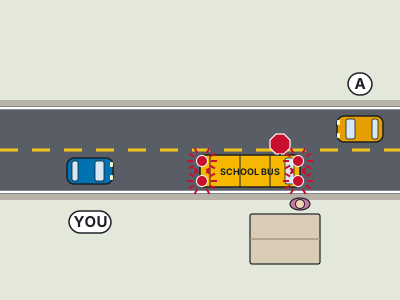
1. No median or barrier separates you from a stopped school bus with flashing red lights. How far before the bus must a Colorado driver stop?
- At least 5 feet
- At least 20 feet
- At least 50 feet
- Only far enough to leave one car length
Show answer
At least 20 feet. Colorado requires a driver to stop at least 20 feet before a school bus that is stopped with red lights flashing. Full explanation in Test 1
2. Which road features do Colorado advisory speed signs cover?
- The safe speed around curves, corners, and off-ramps in ideal conditions
- The legal minimum speed on every freeway
- Directions and mileage to specific destinations
- The location of emergency services
Show answer
The safe speed around curves, corners, and off-ramps in ideal conditions. Advisory speed signs show a safe speed for curves, corners, and off-ramps in ideal conditions. Full explanation in Test 2
3. What must a Colorado minor submit with the application for a driver license?
- Only proof of vehicle registration
- A log showing 20 total hours, all during daylight
- A signed log showing 100 hours, none after sunset
- A completed, signed driving log showing 50 hours, including 10 at night
Show answer
A completed, signed driving log showing 50 hours, including 10 at night. The minor licensing requirement combines a 12-month instruction permit period with a completed, signed driving log. Full explanation in Test 3
4. With low beams and fog lights on in Colorado, when must you dim them for an oncoming vehicle?
- Before coming within 200 feet
- Before coming within 1,000 feet
- Before coming within 500 feet of the oncoming vehicle
- Only if the other driver flashes high beams
Show answer
Before coming within 500 feet of the oncoming vehicle. If you are driving with low beam lights and fog lights on, you must dim them before coming within 500 feet of any oncoming vehicle so the ot Full explanation in Test 4
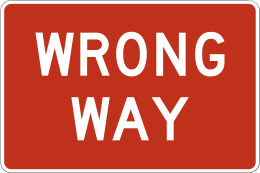
5. What does a WRONG WAY sign tell a driver?
- A truck route begins ahead
- The pavement is rough but travel may continue normally
- The driver is traveling against the permitted direction and must not proceed
- The next intersection requires a U-turn
Show answer
The driver is traveling against the permitted direction and must not proceed. A WRONG WAY sign confirms that the vehicle is headed in a direction where travel is prohibited. Full explanation in Test 5
6. A Colorado child is 5 years old and weighs 45 pounds. How must the child ride?
- In a rear-facing seat in the front
- In a child restraint system or booster seat in the rear seat, if one is available
- With only a lap belt in any seat
- Unrestrained, if a parent holds the child
Show answer
In a child restraint system or booster seat in the rear seat, if one is available. Children 4 years of age or older but less than 9, and weighing at least 40 pounds, must be properly secured in a child restraint system or b Full explanation in Test 6
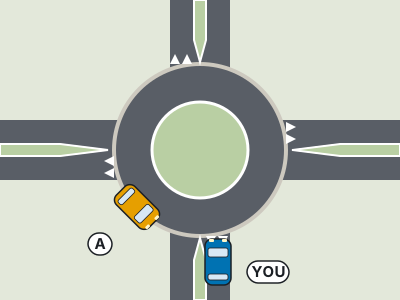
7. At a Colorado roundabout, which traffic has the right-of-way when you enter?
- The vehicle entering from the right, every time
- Traffic already circulating in the roundabout
- The vehicle carrying the most passengers
- The vehicle that reaches the yield line last
Show answer
Traffic already circulating in the roundabout. A roundabout directs vehicles to the right around a center island, and entering traffic must yield to traffic already circulating. Full explanation in Test 7
8. Who may sign the Affidavit of Liability for a Colorado applicant under 18?
- Only a biological parent
- Any licensed driver 16 or older
- A parent, stepparent, grandparent with power of attorney, legal guardian, spouse older than 18, or another responsible adult
- The applicant, once they turn 17
Show answer
A parent, stepparent, grandparent with power of attorney, legal guardian, spouse older than 18, or another responsible adult. A Colorado applicant under 18 needs an Affidavit of Liability (DR2460) signed and verified by a parent, stepparent, grandparent with power o Full explanation in Test 8
9. The adult who signed a Colorado minor's Affidavit of Liability withdraws the signature. What happens?
- The minor's permit or license is canceled
- Nothing, because the license was already issued
- The minor must retake the written test
- The minor gets a 30 day grace period to find a new signer
Show answer
The minor's permit or license is canceled. Whoever signs the affidavit takes legal responsibility for the minor's driving. Full explanation in Test 9
10. What do Colorado traffic signals tell drivers?
- Which private business to visit
- When or where to stop and go
- How far away a service station is
- Where a railroad emergency phone is located
Show answer
When or where to stop and go. Traffic signals are lights that tell drivers when or where to stop and go. Full explanation in Test 10
11. Under Colorado seat belt law, which group must wear a fastened belt in a vehicle with a factory-equipped belt system?
- Only children under 16, while adults are exempt
- Only the driver and passengers in the back seat
- The driver, front seat passengers, and children under 16
- Every passenger except the driver
Show answer
The driver, front seat passengers, and children under 16. On Colorado public roads, the fastened-belt requirement applies in motor vehicles with a factory-equipped seat belt system to the driver, fr Full explanation in Test 1
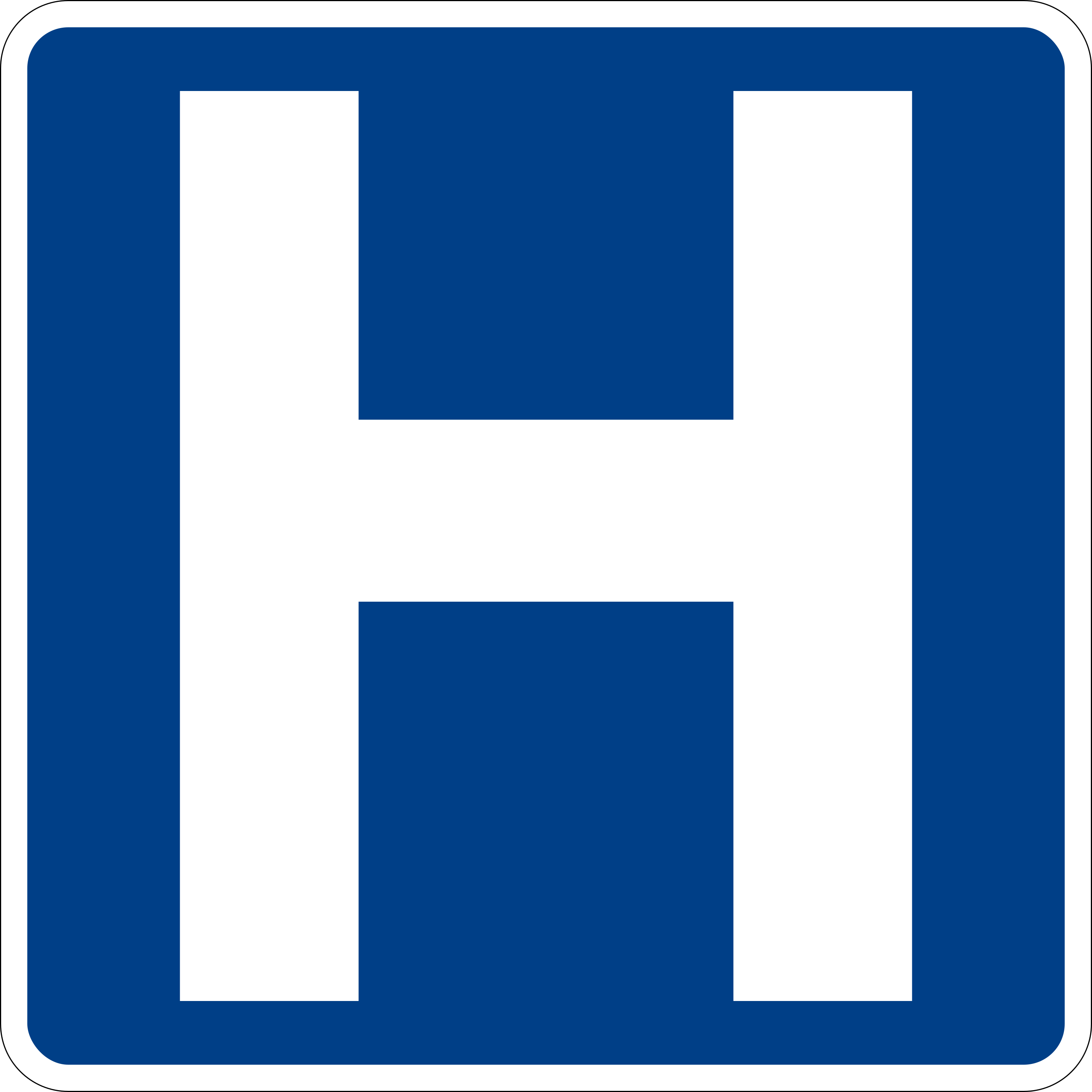
12. What do blue backgrounds on Colorado service signs provide?
- Directions to service facilities
- Warnings about school zones and curves
- Mileage to specific destinations only
- Rules prohibiting a turn
Show answer
Directions to service facilities. Blue backgrounds identify signs that provide directions to service facilities. Full explanation in Test 2
13. What does a round railroad advance warning sign indicate?

- A roundabout requires a left turn
- A bicycle lane begins immediately
- A railroad crossing is ahead
- A school entrance is ahead
Show answer
A railroad crossing is ahead. The round railroad advance warning sign tells the driver that a railroad crossing is ahead. Full explanation in Test 3
14. Where are Colorado bicycle and pedestrian crossing signs used?

- Only at vehicle inspection stations
- Only where pedestrians are prohibited
- Where both bicyclists and pedestrians might cross the roadway
- Where the road becomes bicycle-only
Show answer
Where both bicyclists and pedestrians might cross the roadway. Colorado uses bicycle and pedestrian crossing signs where both bicyclists and pedestrians might cross the roadway, including an intersection Full explanation in Test 4
15. When following another vehicle at night, when must low beams be used?
- Only on urban streets with streetlights
- Only when you are within 50 feet
- When you are within 200 feet of the vehicle ahead
- High beams remain required until you reach an intersection
Show answer
When you are within 200 feet of the vehicle ahead. Colorado requires low beams, with fog lights off, when following another vehicle within 200 feet. Full explanation in Test 5
16. What do the shapes and colors of Colorado traffic signs indicate?

- The driver's eligibility for a license
- The mechanical condition of the vehicle
- The type of information the sign provides
- Whether a railroad train is approaching
Show answer
The type of information the sign provides. Colorado explains that the shapes and colors of traffic signs indicate the type of information they provide. Full explanation in Test 6
17. Unless otherwise posted, what is the Colorado speed limit on urban interstates and highways?
- 65 mph
- 45 mph
- 55 mph
- 75 mph
Show answer
55 mph. The handbook sets 55 mph on urban interstate and highways unless another limit is posted. Full explanation in Test 7
18. What license action does Colorado list for a third or later DWAI or DUI for a driver 21 or older?
- Revocation for 1 year
- Revocation for 2 years
- Revocation for 9 months
- Permanent cancellation
Show answer
Revocation for 2 years. A third or subsequent DWAI or DUI carries a 2 year revocation in the table, along with a $600 to $1,500 fine, 60 to 365 days in jail and 48 Full explanation in Test 8
19. How is a second or third DUI or DWAI conviction described for a driver younger than 21?
- A vehicle registration suspension only
- A warning with no licensing consequence
- A license renewal without restrictions
- A mandatory revocation of the driver license
Show answer
A mandatory revocation of the driver license. For a driver younger than 21, the handbook says a second or third DUI or DWAI conviction requires mandatory revocation of the license. Full explanation in Test 9
20. What must a driver do before entering a railroad crossing?
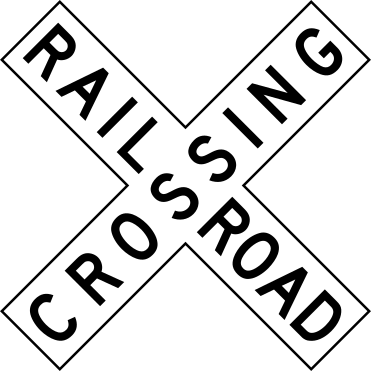
- Make sure there is enough room beyond the tracks for the vehicle to clear them
- Enter as soon as the warning sign is visible
- Shift gears while crossing to maintain momentum
- Try to beat the train if the gates are still raised
Show answer
Make sure there is enough room beyond the tracks for the vehicle to clear them. A railroad crossing requires space on the far side, not merely a clear view of the rails. Full explanation in Test 10
21. An emergency vehicle approaches while you are already in a Colorado intersection. What should you do?
- Continue at the same speed until the emergency vehicle turns away
- Stop immediately in the intersection to let it pass around you
- Drive through the intersection, then pull to the right and stop
- Turn left across its path to reach the nearest shoulder
Show answer
Drive through the intersection, then pull to the right and stop. Colorado directs a driver already in an intersection to clear that intersection before pulling over. Full explanation in Test 1
22. When are most deer and elk crashes described in the Colorado handbook as occurring?
- Only during heavy snowfall at midday
- Only during the middle of the afternoon
- Between dusk and dawn
- Between sunrise and noon on city streets
Show answer
Between dusk and dawn. The handbook identifies the period between dusk and dawn as the time when approximately 90 percent of deer and elk crashes occur. Full explanation in Test 2
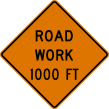
23. What do Colorado work zone signs help direct?
- Drivers toward recreational areas
- Traffic safely through work areas
- Vehicles toward service facilities
- Pedestrians across every intersection
Show answer
Traffic safely through work areas. Work zone signs have an orange background with black letters or symbols. Full explanation in Test 3
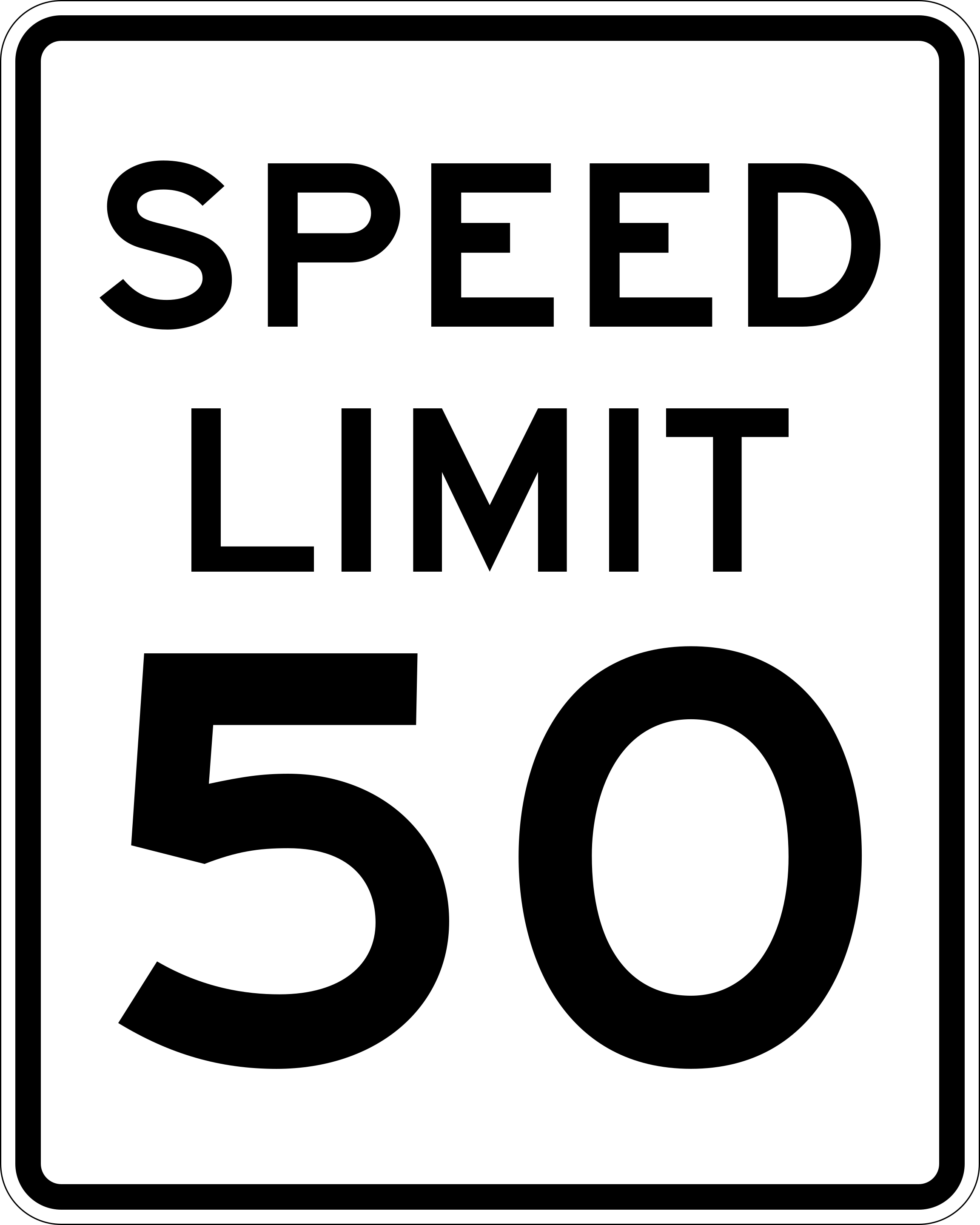
24. What can happen if a driver fails to obey a regulatory sign?
- The driver may ignore it if traffic is light
- The sign becomes advisory only
- The rule applies only at night
- It is a traffic violation
Show answer
It is a traffic violation. Regulatory signs communicate laws and regulations that apply at a location, and failure to obey them is a traffic violation. Full explanation in Test 4
25. What two actions are most important when driving in rain, fog, ice, high winds, or dust?
- Slow your speed and increase your following distance
- Maintain the limit and follow more closely
- Use high beams and accelerate through the hazard
- Stop in the travel lane and turn off all lights
Show answer
Slow your speed and increase your following distance. Colorado identifies slower speed and a larger following distance as the two most important responses to inclement weather. Full explanation in Test 5
26. A new Colorado resident who is not in the military or a student must get a Colorado driver license within how many days of becoming a resident?
- 90 days
- 30 days
- 60 days
- One year
Show answer
30 days. Colorado requires a new resident to get a Colorado driver license within 30 days of becoming a resident. Full explanation in Test 6
27. Can a Colorado driver plea bargain out of an alcohol or drug related driving offense?
- No, Colorado law does not allow it
- Yes, on a first offense
- Yes, if BAC was under 0.08%
- Yes, if the driver completes a class first
Show answer
No, Colorado law does not allow it. Colorado law does not allow you to plea bargain out of an alcohol or drug related driving offense. Full explanation in Test 7
28. When stopping quickly with ABS, what does the Colorado handbook advise?
- Use the parking brake before touching the service brake
- Pump the pedal rapidly until the vehicle stops
- Release the pedal as soon as it pushes back
- Apply hard, firm pressure and keep the brake pedal down
Show answer
Apply hard, firm pressure and keep the brake pedal down. With ABS, apply the brakes with hard, firm pressure and keep the pedal down while the system works. Full explanation in Test 8
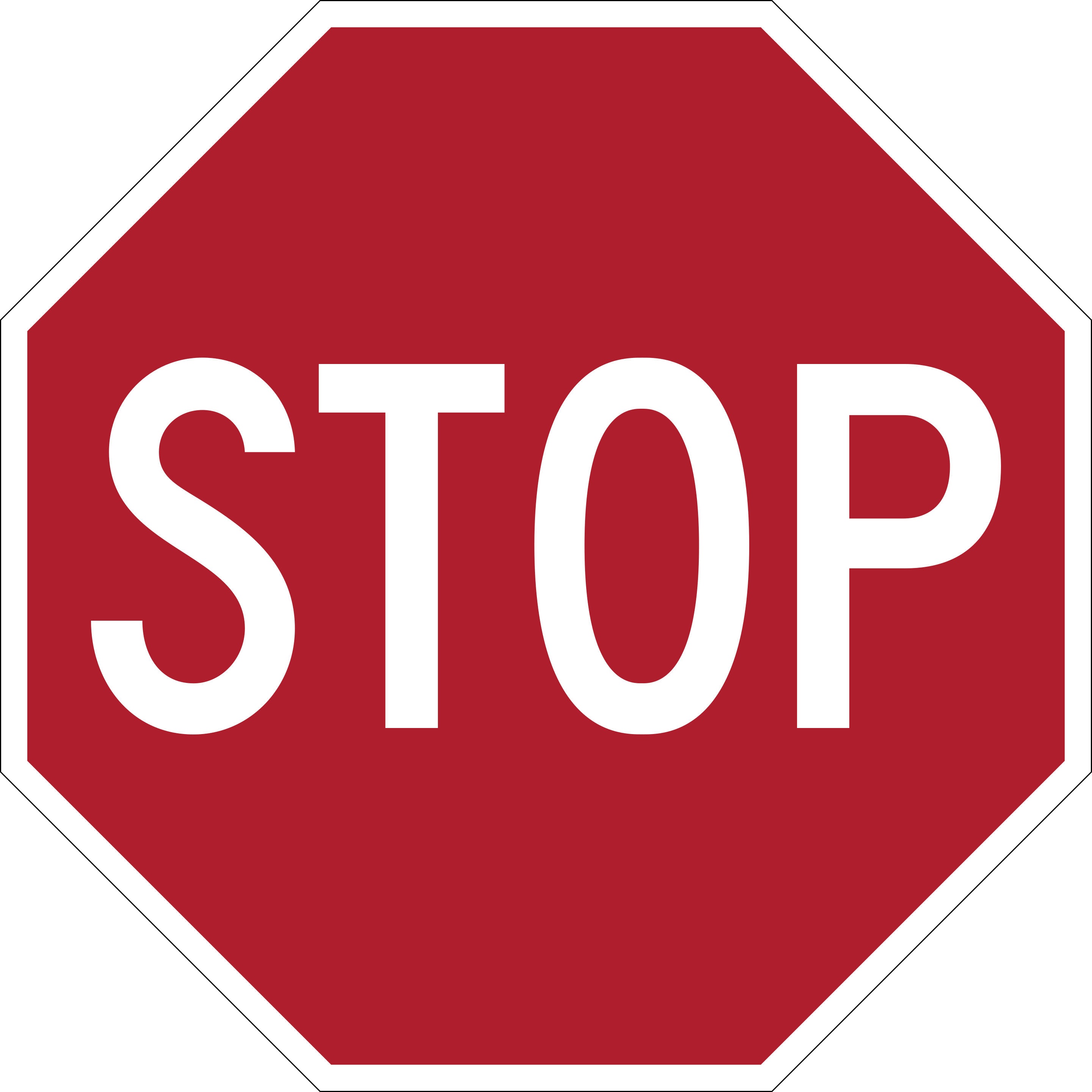
29. What must a driver do at a Colorado STOP sign?
- Slow down without stopping
- Continue if no vehicle is visible
- Stop only if a train is approaching
- Come to a complete stop
Show answer
Come to a complete stop. A Colorado STOP sign requires a complete stop. Full explanation in Test 9
30. At the pictured STOP sign, where should you stop when a marked stop line is present?
- At the clearly marked stop line
- Past the crosswalk in the intersection
- Only after another vehicle arrives
- Anywhere on the approach as long as the vehicle slows
Show answer
At the clearly marked stop line. The red octagonal sign requires a complete stop, and a clearly marked stop line is the first stopping location named by the handbook. Full explanation in Test 10
31. When must a Colorado driver yield to a bicyclist in a designated bike lane?
- Never, because bicycles are not vehicles
- Only when the bicyclist rings a bell
- Only after the driver enters the lane
- When merging with or crossing the lane to turn
Show answer
When merging with or crossing the lane to turn. A driver must yield to a bicyclist in a designated bike lane when merging with that lane or crossing it to turn. Full explanation in Test 1
32. What jail range does Colorado's table list for a first DUI for a driver 21 or older?
- 2 to 180 days
- 60 to 365 days
- 5 to 365 days
- No jail for a first offense
Show answer
5 to 365 days. The handbook's table lists 5 to 365 days of jail for a first DUI, along with a 9 month revocation, a $600 to $1,000 fine and 48 to 96 hours Full explanation in Test 2
33. What does a solid yellow line generally mean on a Colorado roadway?
- Only vehicles turning right may cross it
- Passing is required before the line ends
- Traffic in both directions may use the shoulder
- Passing is not permitted, with a limited bicyclist exception
Show answer
Passing is not permitted, with a limited bicyclist exception. A solid yellow line separates opposing traffic and generally prohibits passing. Full explanation in Test 3
34. At an uncontrolled intersection, what does the vehicle on the left do when both vehicles arrive together?
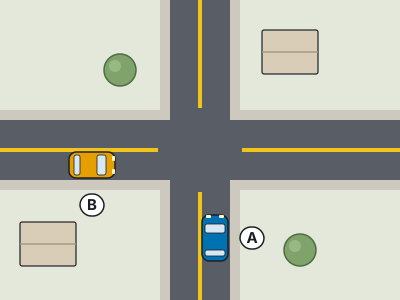
- Accelerate so it crosses before the vehicle on the right
- Yield and allow the vehicle on the right to go first
- Stop in the center until the other driver waves
- Turn left automatically because it has the inside path
Show answer
Yield and allow the vehicle on the right to go first. The left-side driver yields when two vehicles reach an uncontrolled intersection at the same time. Full explanation in Test 4
35. What does a broken yellow line between opposing traffic lanes tell a driver?
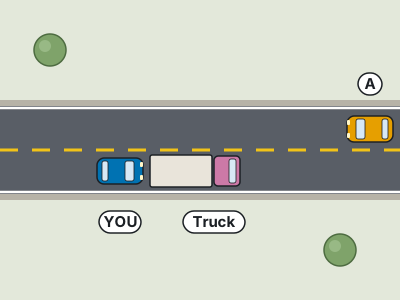
- Passing is prohibited until the line becomes white
- Passing is permitted when the maneuver is safe
- Traffic on both sides must travel in the same direction
- The lane is reserved for emergency vehicles
Show answer
Passing is permitted when the maneuver is safe. A broken yellow centerline separates traffic moving in opposite directions and marks a place where passing is permitted. Full explanation in Test 5
36. What may happen if you refuse to sign a traffic ticket in Colorado?
- The ticket is automatically dismissed
- You may be arrested
- You pay double the fine
- Nothing, since signing is optional
Show answer
You may be arrested. Signing a Colorado traffic ticket is not an admission of guilt, and disagreements belong in court or other legal channels. Full explanation in Test 6
37. What does a STOP sign require under Colorado's handbook?
- A rolling slowdown when no other vehicle is visible
- A complete stop at the marked line, or at the required location if no line exists
- A stop only if a pedestrian is waiting
- A stop after entering the crosswalk so the driver can see better
Show answer
A complete stop at the marked line, or at the required location if no line exists. A STOP sign requires a complete stop. Use the clearly marked stop line first; if there is no line, stop before the near-side crosswalk, or i Full explanation in Test 7
38. A bicyclist riding on a sidewalk or in a crosswalk has the same rights and responsibilities as which road user?
- A train
- A parked car
- A maintenance vehicle
- A pedestrian
Show answer
A pedestrian. Colorado gives a bicyclist on a sidewalk or in a crosswalk the same rights and responsibilities as a pedestrian. Full explanation in Test 8
39. Which serving is defined as one standard drink under Colorado's handbook guidance?
- 16 ounces of beer, 6 ounces of wine, or 2 ounces of distilled spirits
- 8 ounces of beer, 4 ounces of wine, or 1 ounce of distilled spirits
- 12 ounces of beer, 5 ounces of wine, or 1.5 ounces of distilled spirits
- A mixed drink is always one standard drink regardless of its ingredients
Show answer
12 ounces of beer, 5 ounces of wine, or 1.5 ounces of distilled spirits. Colorado treats several differently sized servings as comparable alcohol amounts: 12 ounces of beer, 5 ounces of wine, or 1. Full explanation in Test 9
40. What does a flashing yellow light at a Colorado intersection tell a driver?
- It requires the driver to reverse before continuing
- It has the same meaning as a stop sign
- It guarantees that cross traffic will stop
- It warns of a hazard, so slow down and proceed cautiously
Show answer
It warns of a hazard, so slow down and proceed cautiously. A flashing yellow light is a warning rather than a protected right-of-way signal. Full explanation in Test 10
