
Test 1 of 10 · 20 questions · Free 2026
CO Permit Practice Test 1
Jump to the test ↓A fixed 20 question set from the Colorado bank with answers and plain English explanations.
Question 1 of 20 · 0 right so far
All 20 questions in test 1
Every question below comes from the Colorado question bank on this page. Open a question to see the correct answer and the explanation. Nothing here is hidden behind a signup.
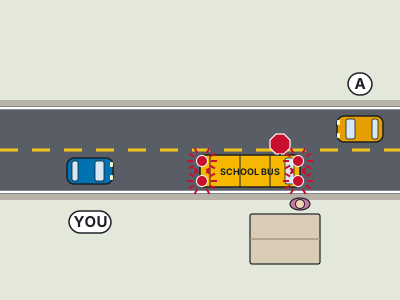
1. No median or barrier separates you from a stopped school bus with flashing red lights. How far before the bus must a Colorado driver stop?
- At least 5 feet
- At least 20 feet
- At least 50 feet
- Only far enough to leave one car length
Show answer
At least 20 feet. Colorado requires a driver to stop at least 20 feet before a school bus that is stopped with red lights flashing. The stop remains in effect until the lights stop flashing, so the driver must not inch forward as children board or leave. Five feet is too close to provide a safe buffer, while 50 feet is not the handbook's stated minimum. A car-length estimate is unreliable because vehicle lengths vary. Use the 20-foot minimum and watch carefully for children near the bus.
Study this in the handbook: Right of way at intersections, roundabouts and mountain roads
2. Under Colorado seat belt law, which group must wear a fastened belt in a vehicle with a factory-equipped belt system?
- Only children under 16, while adults are exempt
- Only the driver and passengers in the back seat
- The driver, front seat passengers, and children under 16
- Every passenger except the driver
Show answer
The driver, front seat passengers, and children under 16. On Colorado public roads, the fastened-belt requirement applies in motor vehicles with a factory-equipped seat belt system to the driver, front seat passengers, and children under 16. It is not limited to children and does not exempt the driver. The handbook lists narrow exceptions, including emergency personnel, passenger or school buses, farm equipment, certain delivery drivers while working, and a person with a written medical statement. Before moving, check the driver's belt, the front passenger's belt, and every child under 16. The rule names front seat passengers, not back seat adults.
Study this in the handbook: Losing your license, seat belts and child restraints
3. An emergency vehicle approaches while you are already in a Colorado intersection. What should you do?
- Continue at the same speed until the emergency vehicle turns away
- Stop immediately in the intersection to let it pass around you
- Drive through the intersection, then pull to the right and stop
- Turn left across its path to reach the nearest shoulder
Show answer
Drive through the intersection, then pull to the right and stop. Colorado directs a driver already in an intersection to clear that intersection before pulling over. Once clear, move to the right edge and stop so the emergency vehicle has an unobstructed route. Stopping in the intersection can block the emergency vehicle and create a second conflict with cross traffic. Continuing at normal speed does not yield, and turning across the emergency vehicle's path is unpredictable. Check mirrors, keep the route open, and stop where emergency personnel can safely pass.
Study this in the handbook: Right of way at intersections, roundabouts and mountain roads
4. When must a Colorado driver yield to a bicyclist in a designated bike lane?
- Never, because bicycles are not vehicles
- Only when the bicyclist rings a bell
- Only after the driver enters the lane
- When merging with or crossing the lane to turn
Show answer
When merging with or crossing the lane to turn. A driver must yield to a bicyclist in a designated bike lane when merging with that lane or crossing it to turn. The bicycle is not a disposable obstacle, and Colorado treats bicycles on the road as vehicles with many of the same rights and responsibilities. Waiting for a bell adds a condition the rule does not require. Before crossing the lane, check beside and behind the vehicle, signal early, and let the bicyclist clear the intended path.
Study this in the handbook: Bicyclists, motorcycles, trucks and pedestrians
5. When may a driver cross a solid yellow line in Colorado?
- Only to change lanes on a freeway
- Whenever the driver wants to pass a slower car
- For a left turn into an alley, private road, or driveway, or to pass a bicyclist safely
- Never, including for a driveway or bicyclist
Show answer
For a left turn into an alley, private road, or driveway, or to pass a bicyclist safely. Solid yellow lines normally prohibit passing, but Colorado allows a driver to cross one for a left turn into an alley, private road, or driveway. The handbook also allows crossing to pass a bicyclist when the movement is safe and at least three feet of space can be maintained. That is not a general license to overtake cars. Check the oncoming lane, keep the required clearance from a bicyclist, and return to the proper lane without creating a conflict.
Study this in the handbook: Lines, crosswalks and special lanes
6. What must a driver do when a tire blows out?
- Hold the wheel tightly, keep straight, and slow gradually
- Turn sharply toward the shoulder immediately
- Accelerate hard to stabilize the tire
- Stop in the travel lane as quickly as possible
Show answer
Hold the wheel tightly, keep straight, and slow gradually. A blowout can pull the vehicle and provoke a panic reaction. The handbook's response is to hold the steering wheel tightly, keep the vehicle going straight, remove the foot from the accelerator, and brake lightly while slowing gradually. A sharp turn or abrupt lane stop can create a loss of control, and acceleration adds energy to the emergency. Once the vehicle has slowed, move off the roadway to a safe location instead of stopping in traffic.
Study this in the handbook: Avoiding collisions, animals and vehicle failures
7. Under Colorado's hands-free law in effect since January 1, 2025, when may a driver hold a phone to text while driving?
- Whenever the driver keeps one hand on the wheel
- Whenever traffic is moving below 25 mph
- Whenever the car is stopped at a red light
- Only to contact a public safety entity or during an emergency
Show answer
Only to contact a public safety entity or during an emergency. Since January 1, 2025, Colorado law bars every driver from using a mobile electronic device while operating a motor vehicle, and use includes holding the phone for a call or writing, sending, or reading texts. The exceptions are contacting a public safety entity, an emergency, and certain on duty workers and first responders. Slow traffic and a red light do not count as being lawfully parked, and keeping one hand on the wheel does not make handheld texting legal. A hands-free accessory, or pulling off to park, is the lawful way to handle messages.
Study this in the handbook: Distracted, reckless and aggressive driving
8. What does a lighted red arrow require a driver to do?
- Stop and not turn in the direction shown
- Turn immediately in the direction shown
- Proceed straight without stopping
- Stop only if a pedestrian is present
Show answer
Stop and not turn in the direction shown. A lighted red arrow requires a driver to stop and prohibits turning in the direction shown. The arrow controls the indicated movement, so an empty intersection does not make that turn permissible. Proceeding straight may depend on other signals or signs, but it does not replace the required stop for the red arrow. A pedestrian is not required for the signal to apply. Stop at the proper line or crosswalk, wait for a permitted indication, and then move only when the roadway control allows it.
Study this in the handbook: Fitness to drive, distractions and basic control
9. A Colorado teen under 16 and 6 months lives more than 30 miles from any approved driving school. What may replace the 6 hours of instructor training?
- 6 hours of online videos
- A signed letter from a school principal
- Nothing; the teen must wait until 18
- 12 additional hours of driving with a parent, guardian or alternate permit supervisor
Show answer
12 additional hours of driving with a parent, guardian or alternate permit supervisor. If there is no approved driving school offering at least 20 hours of behind-the-wheel training per week within 30 miles of home, 12 additional hours of driving with a parent, guardian or alternate permit supervisor may be substituted for the 6 instructor hours. The teen must bring a printed map of the route to the nearest school to the license office. Online videos and a principal's letter are not substitutes, and waiting until 18 is not required.
Study this in the handbook: Getting a license, instruction permits and the drive test
10. Which emergency vehicles must receive the right-of-way?
- Only police cars using a siren
- Only ambulances displaying red lights
- All emergency vehicles using a siren, air horn, or qualifying flashing lights
- Only fire trucks stopped at an intersection
Show answer
All emergency vehicles using a siren, air horn, or qualifying flashing lights. Colorado requires drivers to yield to emergency vehicles using a siren, air horn, or flashing red, blue, white, or yellow lights. Limiting the rule to ambulances, police cars, or one color can leave a driver blocking another authorized responder. Give the vehicle room, and where possible pull to the right edge and stop. If you are already in an intersection, clear it first, then pull over so you do not stop in the crossing path.
Study this in the handbook: Right of way at intersections, roundabouts and mountain roads
11. How far before a turn or lane change must a driver signal in an urban area?
- Continuously for 25 feet
- Continuously for 100 feet
- Only for three seconds after beginning the maneuver
- For 200 feet on every road
Show answer
Continuously for 100 feet. In urban areas, Colorado requires a turn signal continuously for 100 feet before a turn or lane change. The handbook also gives a different 200-foot rule for four-lane highways where the posted speed limit is faster than 40 mph, so that distance does not apply to every road. Signaling after the maneuver begins gives other road users too little notice. Activate the signal early, keep it on through the required approach, and cancel it after completing the movement.
Study this in the handbook: Signaling, turns, U turns and parking
12. At a Colorado intersection or crosswalk, what must a driver do for a pedestrian?
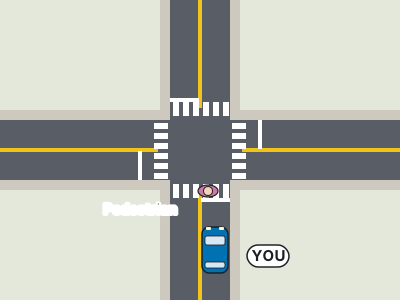
- Yield and come to a complete stop so the pedestrian can pass safely
- Continue whenever the driver entered on a green signal
- Yield only when the crosswalk lines are freshly painted
- Sound the horn and proceed before the pedestrian reaches the lane
Show answer
Yield and come to a complete stop so the pedestrian can pass safely. The handbook gives pedestrians priority at all intersections and crosswalks, so the driver must stop and let the person pass safely. A green signal does not erase that duty, and the rule does not depend on newly painted lines. Honking is not a substitute for yielding and can pressure a vulnerable road user. As you approach a crossing, scan both sides, reduce speed, and be prepared to stop before entering the pedestrian's path.
Study this in the handbook: Bicyclists, motorcycles, trucks and pedestrians
13. What happens to a speeding fine in a Colorado work or construction zone?
- It is reduced by half
- It is waived if workers are absent
- It is doubled
- It stays at the ordinary amount
Show answer
It is doubled. Colorado doubles fines in work zones, so a driver must take the warning signs, reduced limits, and changing traffic pattern seriously. The absence of visible workers does not create a discount, and a work zone does not preserve the ordinary fine. Slow down for obstacles, obey the marked limit, and watch the vehicle ahead because rear end crashes are common there. The higher penalty reinforces the need for attention around crews and equipment.
Study this in the handbook: Scanning, following distance, phones and traffic stops
14. What does DWAI mean under Colorado's impaired-driving definitions?
- The driver is impaired to the slightest degree
- The driver is substantially incapable of safe driving
- The driver has a BAC below every legal threshold
- The driver has refused every chemical test
Show answer
The driver is impaired to the slightest degree. DWAI means driving while ability is impaired to the slightest degree. That standard is lower than the handbook's description of DUI, which means the driver is substantially incapable of safe driving. The remaining choices invent a BAC guarantee, a testing refusal rule, or another threshold that the definition does not use. The practical lesson is that a driver need not appear profoundly intoxicated before impaired-driving consequences can apply. Any observed impairment can matter.
Study this in the handbook: DUI, DWAI and how alcohol works
15. In Colorado, what decides whether an impaired driver is charged with DWAI or with DUI?
- The level of the driver's mental or physical impairment
- Whether the driver was stopped on an interstate
- The driver's age at the time of the stop
- Whether the vehicle was registered in Colorado
Show answer
The level of the driver's mental or physical impairment. Colorado has two impaired driving charges. Driving While Ability Impaired, or DWAI, applies when alcohol or drugs affect the driver to the slightest degree, and Driving Under the Influence, or DUI, applies when the impairment is substantial. The handbook says which charge is brought depends on the level of the driver's mental or physical impairment, not on the road, the driver's age, or where the car is registered. Both convictions bring fines, possible jail, public service, and points or a license revocation, and the penalties grow with each repeat offense. The safest rule is not to drive after drinking at all, because impairment begins well below the DUI per se level.
Study this in the handbook: Losing your license, seat belts and child restraints
16. What should you do after seeing a DO NOT ENTER sign?
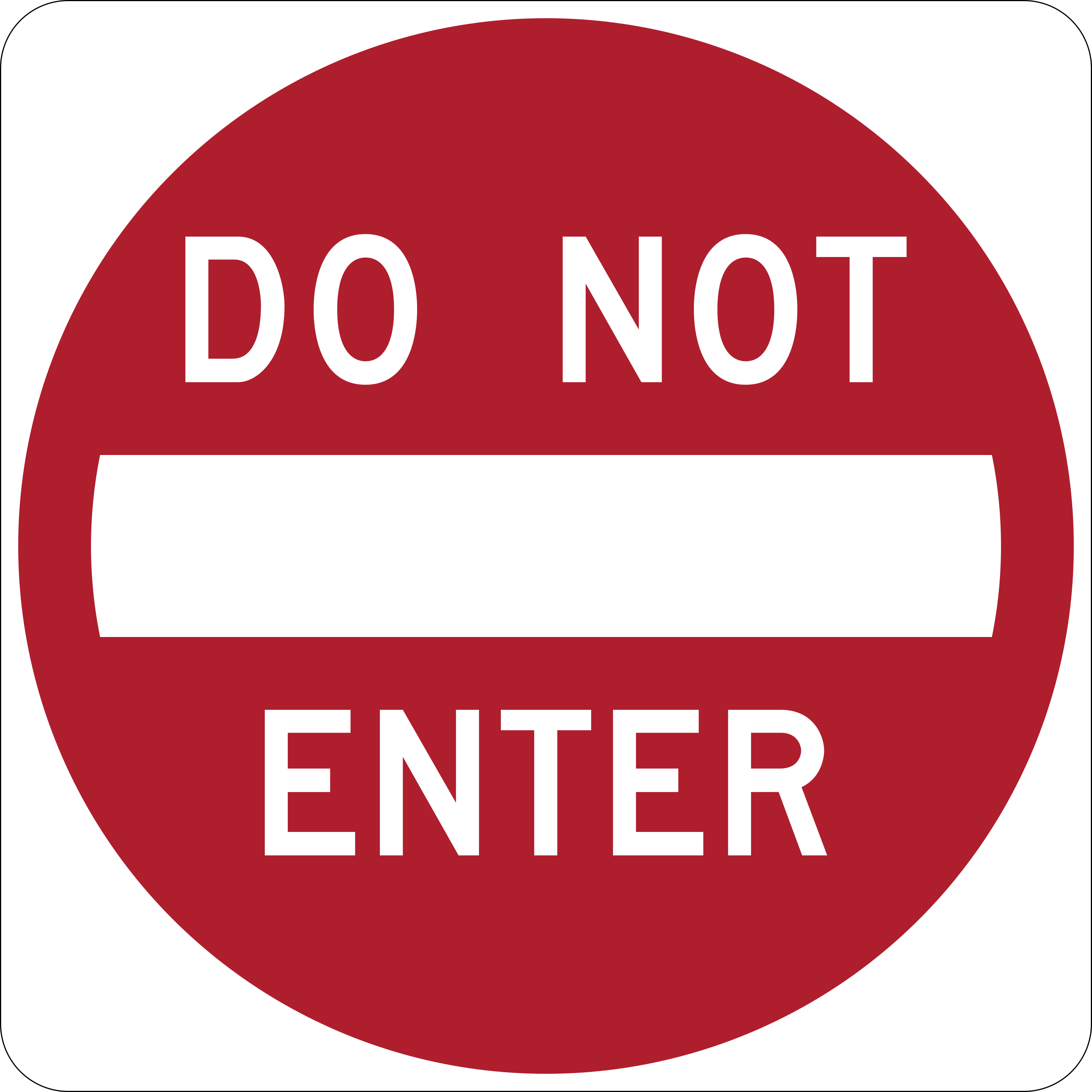
- Proceed if the road appears clear
- Do not continue past the sign and find a permitted route
- Stop, then enter after yielding to oncoming traffic
- Use the lane only for a left turn
Show answer
Do not continue past the sign and find a permitted route. A DO NOT ENTER sign tells a driver that the approach is wrong for travel, often because it leads into opposing traffic or an exit ramp. The driver must not go past the sign, even if no vehicle is visible. The choice allowing entry after a yield is dangerous because yielding cannot make a prohibited direction legal. Treat the sign as an immediate instruction to stop safely or redirect before entering the restricted roadway.
Study this in the handbook: Regulatory signs: stop, yield and speed
17. In a Colorado zipper merge, when should cars take turns entering the open lane?

- Immediately after the first warning sign
- Just before the lane ends
- Only after the lane is fully closed
- After passing the point of closure
Show answer
Just before the lane ends. In a zipper merge, both lanes continue toward the closure so traffic can use the available roadway efficiently. Just before the lane ends, cars take turns filling the open lane carefully and then resume full speed. Merging immediately after the first warning sign wastes usable space, while waiting until the lane is fully closed leaves no orderly place to move. Passing the closure point is too late and unsafe. Watch the lane markings, match the flow, signal as appropriate, and alternate with the drivers already in the continuing lane.
Study this in the handbook: Scanning, following distance, phones and traffic stops
18. What does a merging traffic warning sign indicate?

- The road ahead has no connecting traffic
- Your lane is reserved for vehicles leaving the highway
- Merging is prohibited in both directions
- Vehicles may be entering from a side street
Show answer
Vehicles may be entering from a side street. A merging traffic warning alerts the driver to vehicles entering from a side street or joining the roadway. Reduce speed if needed, check mirrors and blind areas, and make room without an abrupt move. The no merging choice reverses the warning and could leave a joining vehicle trapped. This sign does not designate an exit-only lane, so continue reading the lane markings and other controls as the merge approaches.
Study this in the handbook: Regulatory signs: stop, yield and speed
19. What can happen if a driver ignores a Colorado regulatory sign?
- Only a warning is allowed by law
- The vehicle registration is automatically canceled
- The driver must retake the road test the next business day
- It is a traffic violation
Show answer
It is a traffic violation. Regulatory signs are enforceable rules for the place where they are posted. Colorado states that failing to obey them is a traffic violation, so a stop, turn restriction, or similar sign is not just advice. Automatic registration cancellation and a mandatory road-test retake are unrelated. The cue is a regulatory sign’s law-focused message at a specific location. Treat the posted instruction as enforceable immediately.
Study this in the handbook: Fitness to drive, distractions and basic control
20. What do HAWK signals alert motorists that pedestrians need to do?
- Remain on the sidewalk until traffic clears itself
- Cross the road safely
- Enter the roadway only from a vehicle lane
- Ignore the crossing because the sequence is for drivers only
Show answer
Cross the road safely. HAWK signals are designed around a pedestrian crossing. Their yellow and red flashing sequence alerts motorists that pedestrians need to cross the road safely, so drivers should watch the crossing and follow the displayed signal. The sequence is not an invitation to ignore people on foot or to treat the crossing as a vehicle-only movement. Staying focused on the crosswalk helps the driver recognize when stopping or yielding is needed and prevents a turning vehicle from entering a pedestrian's path.
Study this in the handbook: Fitness to drive, distractions and basic control
QualitySpace is expanding to Colorado
We are a California-based independent insurance brokerage working on licensing in more states. We cannot help with Colorado insurance yet. Leave your email and we will let you know when we can.
Every question is written from the official Colorado Driver Handbook. Need paper? Printable CO practice test with answer key.
Last verified 2026-10-05. How we check every question · Study all 213 as flashcards
Frequently asked questions
How many questions are on this Colorado practice test?
This fixed set has 20 questions. It is test 1 of 10 from the 213 question Colorado bank.
How does this fixed test relate to the full Colorado bank?
Each numbered test is a fixed set of questions in a fixed order, so you can retake the same test later and compare. Every test mixes road signs and the other topics in about the same proportion as the full bank. Tests 1 to 10 together cover 200 of the 213 questions in the Colorado bank, each once. The full practice page mixes the whole bank at random.
Last verified 2026-10-05. See the Colorado DMV facts page for sourced state details.
Return to the full Colorado practice test · Study road signs