27 federal road signs · Real images · Free

Road sign glossary with real images

These are the federal road signs used in every state's practice test, gathered here as a browsable reference. Each entry has the real sign image, its meaning, and a short explanation, outside of quiz mode.

Signs
27
Cost
Free

Talk to Kevin

714-666-6669

Mon to Sat, 9 AM to 6 PM PT
English or Vietnamese

Call now →

Road sign flashcards

Flip through the signs one at a time. See the sign, guess what it means, then reveal the answer. Mark each one "Got it" to drop it from the round, or "Review again" to send it to the back of the deck. Your progress is saved on this device so you can pick up where you left off.

Card 1 of 2626 left this round

Tap the card or press Space to reveal the meaning.

Want to practice with these in a quiz? Go back to the DMV practice test hub or choose a state sign quiz:

Alabama road sign practice test · Alaska road sign practice test · Arizona road sign practice test · Arkansas road sign practice test · California road sign practice test · Colorado road sign practice test · Connecticut road sign practice test · Delaware road sign practice test · Florida road sign practice test · Georgia road sign practice test · Hawaii road sign practice test · Idaho road sign practice test · Illinois road sign practice test · Indiana road sign practice test · Iowa road sign practice test · Kansas road sign practice test · Kentucky road sign practice test · Louisiana road sign practice test · Maine road sign practice test · Maryland road sign practice test · Massachusetts road sign practice test · Michigan road sign practice test · Minnesota road sign practice test · Mississippi road sign practice test · Missouri road sign practice test · Montana road sign practice test · Nebraska road sign practice test · Nevada road sign practice test · New Hampshire road sign practice test · New Jersey road sign practice test · New Mexico road sign practice test · New York road sign practice test · North Carolina road sign practice test · North Dakota road sign practice test · Ohio road sign practice test · Oklahoma road sign practice test · Oregon road sign practice test · Pennsylvania road sign practice test · Rhode Island road sign practice test · South Carolina road sign practice test · South Dakota road sign practice test · Tennessee road sign practice test · Texas road sign practice test · Utah road sign practice test · Vermont road sign practice test · Virginia road sign practice test · Washington road sign practice test · West Virginia road sign practice test · Wisconsin road sign practice test · Wyoming road sign practice test ·

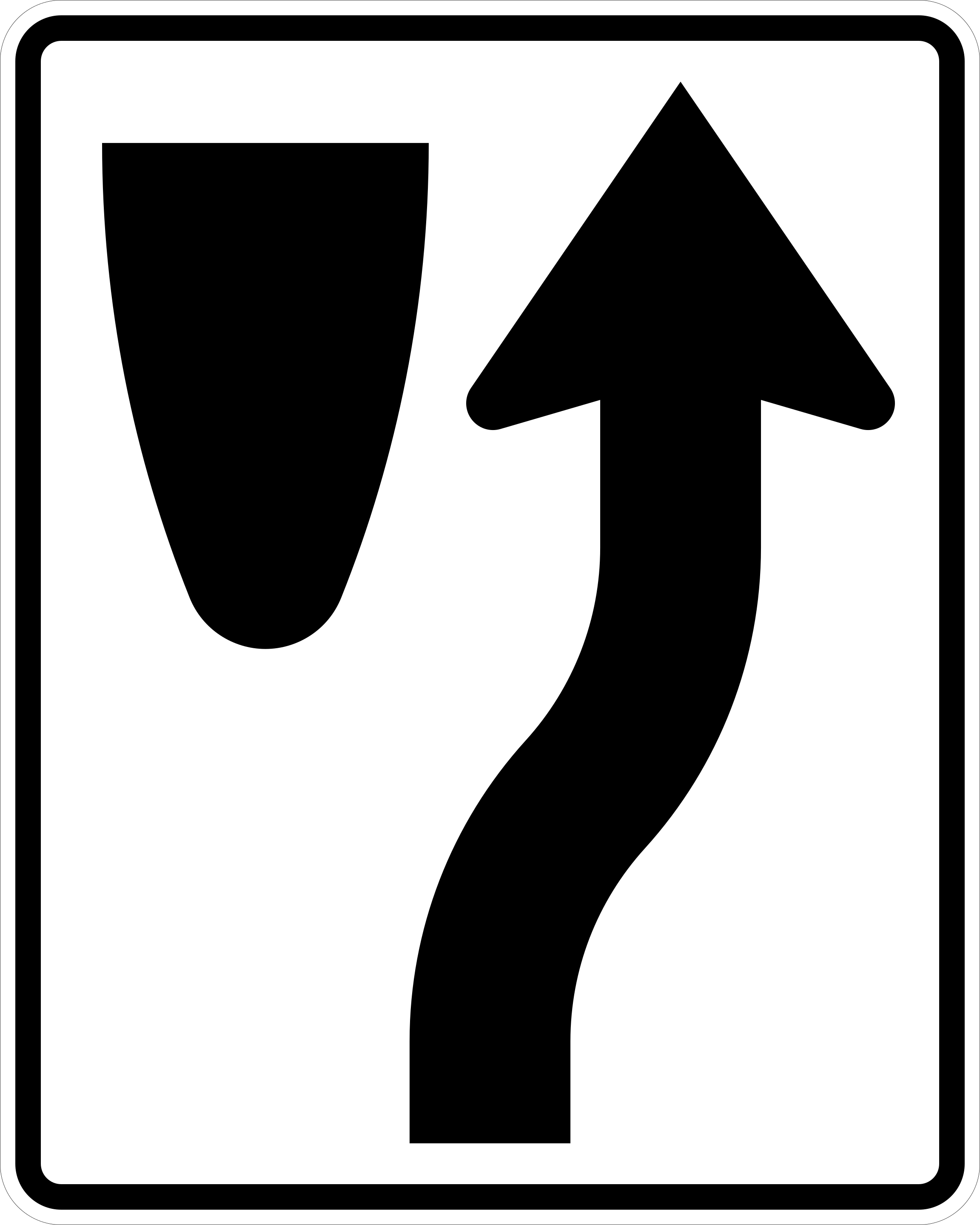
Arrow curving right around an obstruction

Arrow curving right around an obstruction

Remain to the right of the sign or the marked obstruction

What does a KEEP RIGHT sign direct a driver to do?

KEEP RIGHT directs traffic to stay on the right side of the sign or obstruction. The instruction is about passing the object safely, not about reserving the lane for passing or banning the right side. It also does not replace a turn arrow or require an immediate turn. Watch the roadway geometry and keep the vehicle on the indicated side as you go around the divider. A sudden move left could place the vehicle in conflict with opposing traffic.
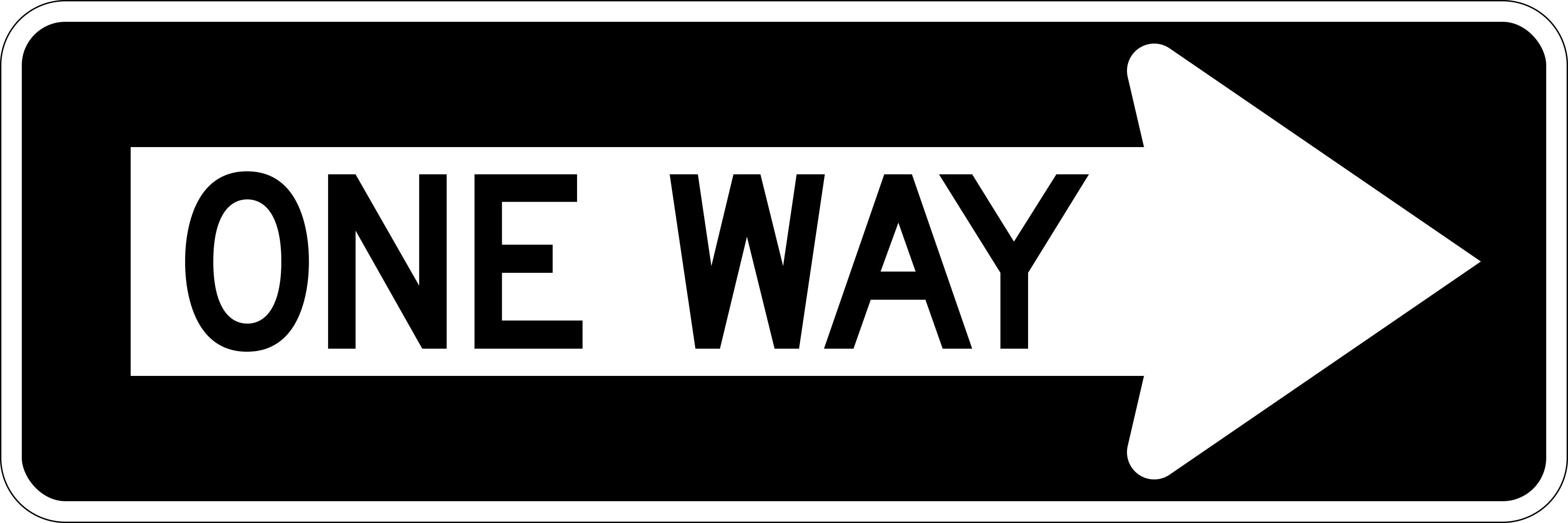
Black ONE WAY sign with arrow

Black ONE WAY sign with arrow

Travel only as indicated on the posted street

What traffic pattern does a ONE WAY sign identify?

A ONE WAY sign tells drivers that travel on the posted street follows the indicated direction. It does not permit opposing movement, create a bus-only lane, or require an immediate turnaround. A driver entering such a street must align with the displayed direction and remain alert for the roadway’s lane arrangement. Choosing the two-direction option would create a head-on conflict with traffic using the designated flow. Read the arrow before moving into the street.

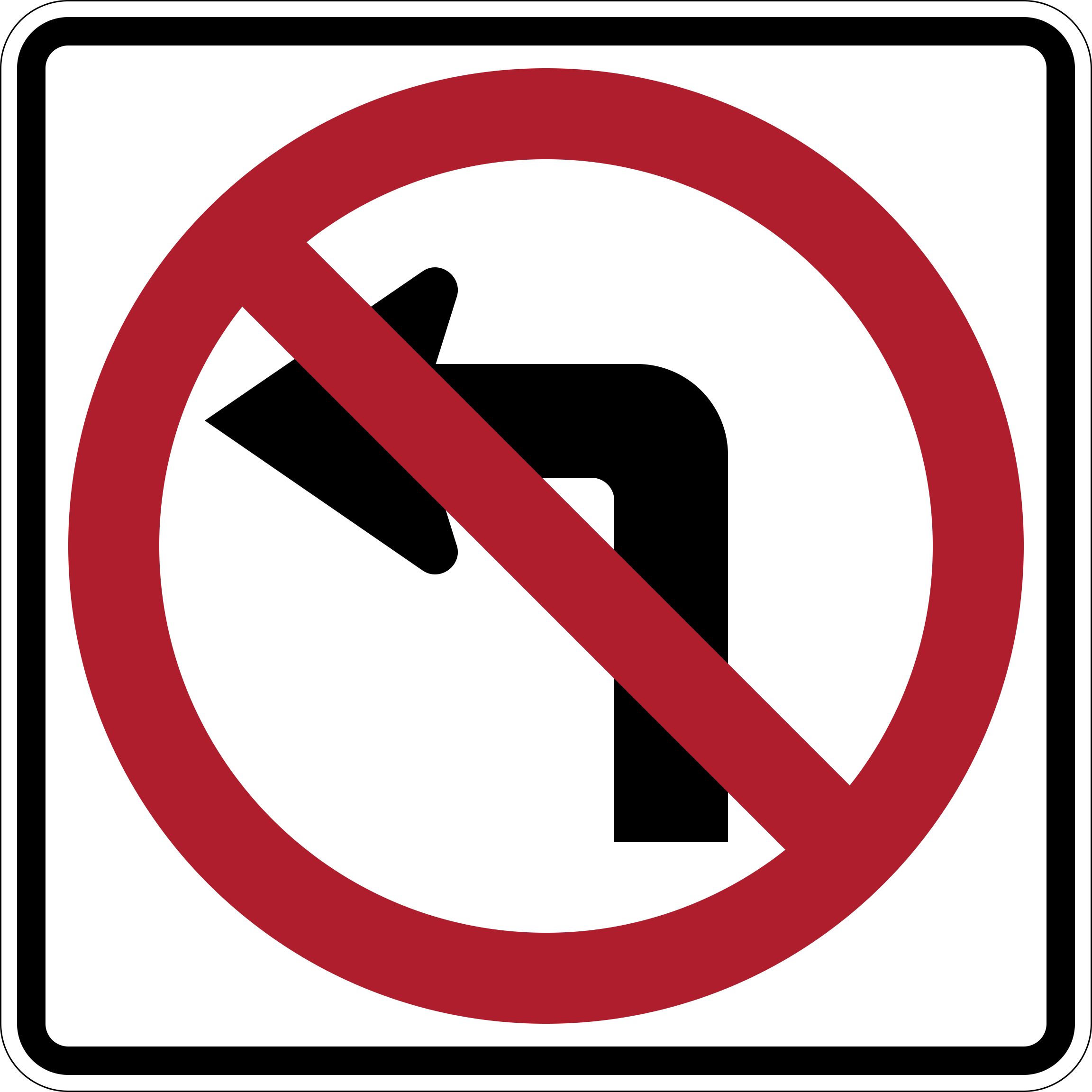
Left-turn arrow crossed by red slash

Left-turn arrow crossed by red slash

The pictured left-turn movement is prohibited

A red slash over a left-turn arrow means what?

A red circle and diagonal slash identify the movement shown by the arrow as prohibited. With a left-turn arrow, the restriction applies to making that left turn at the posted location. It does not require left turns, automatically ban U-turns, or change a one-way roadway into a two-way street. The driver should follow the available route and wait for a legal turning point. The visual cue is the arrow itself, since the pictured direction tells you which movement the sign controls.

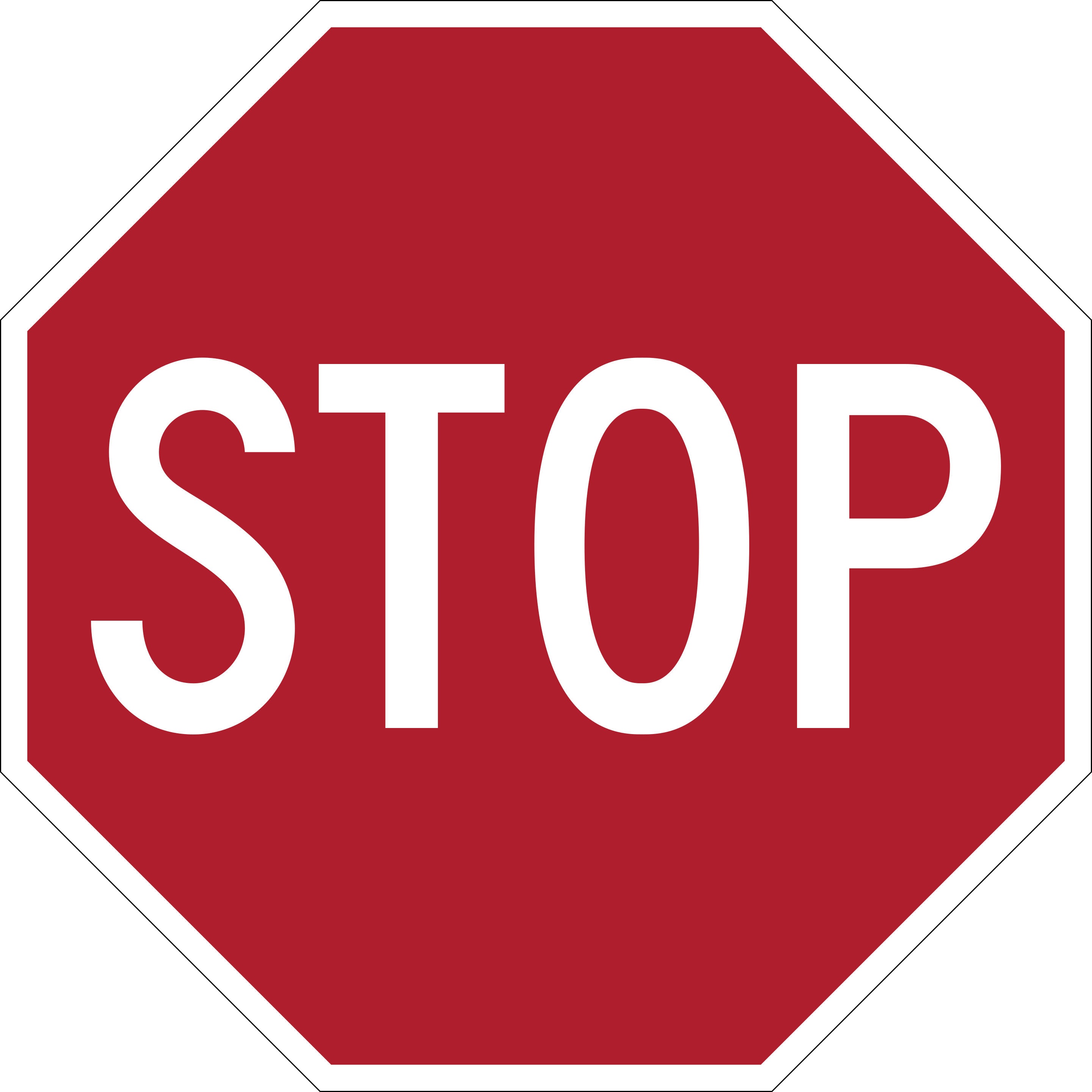
Red octagon STOP sign

Red octagon STOP sign

Make a complete stop before the intersection or at the stop line, then yield

At a STOP sign, which action is required before entering the intersection?

A STOP sign requires the vehicle to become fully stationary before the intersection or at the stop line. The driver must stop behind the crosswalk, check both directions for vehicles and pedestrians, and yield the right-of-way. Merely slowing is inadequate, even on an empty street. Stopping past the crosswalk can put the vehicle into the pedestrian path and reduce the view of traffic. Use the stop line as the first stopping point, then proceed only after the intersection is clear.

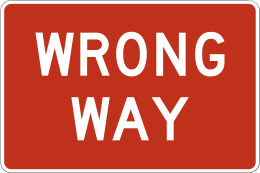
Red rectangular WRONG WAY sign

Red rectangular WRONG WAY sign

The driver has entered the prohibited direction of a roadway or ramp

If a WRONG WAY sign faces you, what does it indicate?

A WRONG WAY sign confirms that the vehicle is traveling in a direction prohibited for that roadway or ramp. The driver should stop the unsafe movement and correct course only when it can be done safely. A lane closure, commercial restriction, or required turn would communicate a different condition. The useful cue is the combination of the sign and the vehicle's direction, not the presence of construction or a nearby turn. Do not continue farther into the roadway while looking for a convenient place to reverse direction.

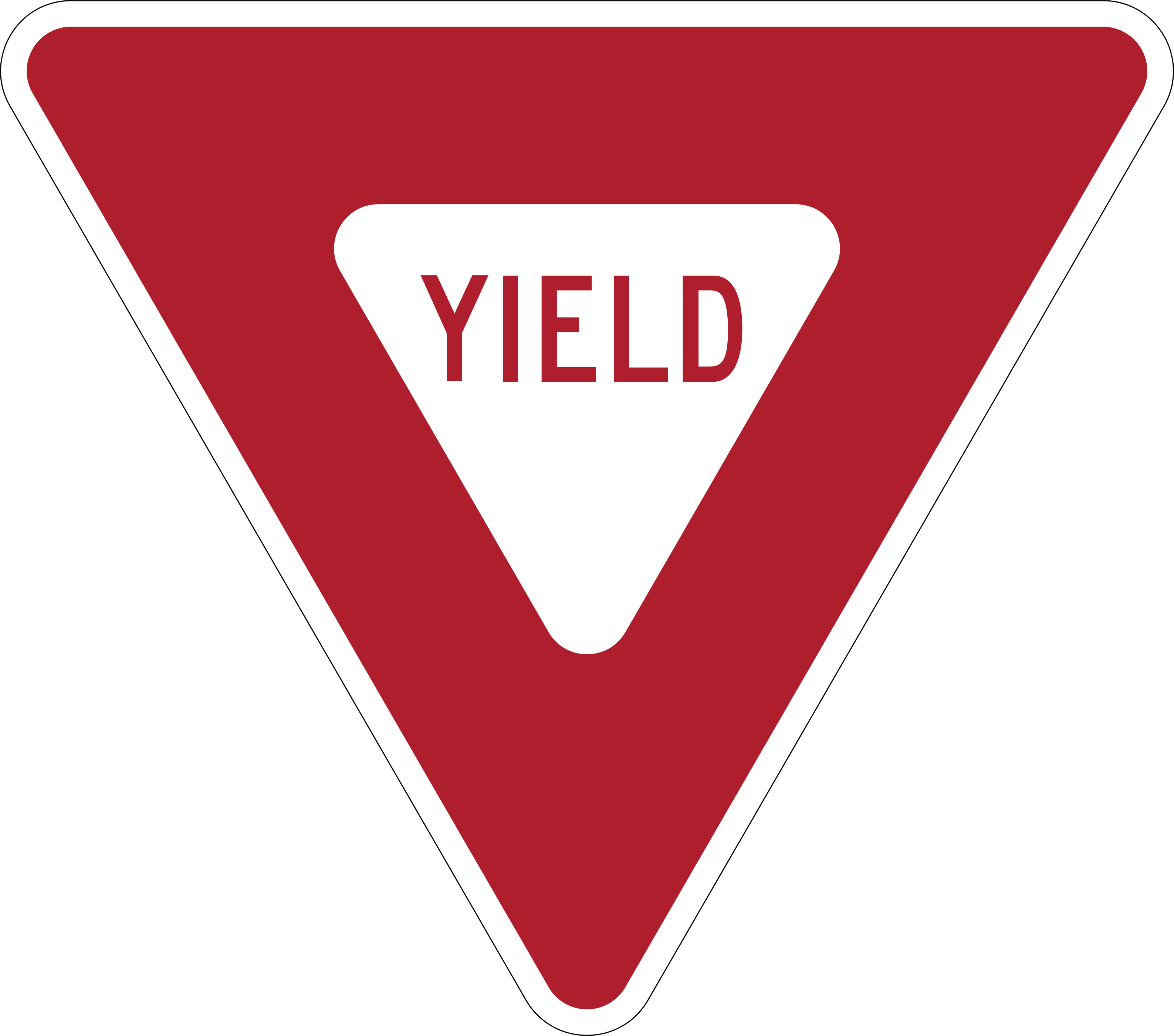
Red-bordered inverted triangle YIELD sign

Red-bordered inverted triangle YIELD sign

Slow down, check both directions, and yield to traffic and pedestrians

When approaching a YIELD sign, what must you be prepared to do?

A YIELD sign calls for a reduced approach speed and an active check to the left and right. Traffic and pedestrians have priority, so the driver gives them room to pass. A full stop is required when stopping is necessary to avoid someone on the protected street, but an empty approach does not automatically require a stop. Looking only left misses a possible road user from the other direction. Slow early enough that stopping remains available.

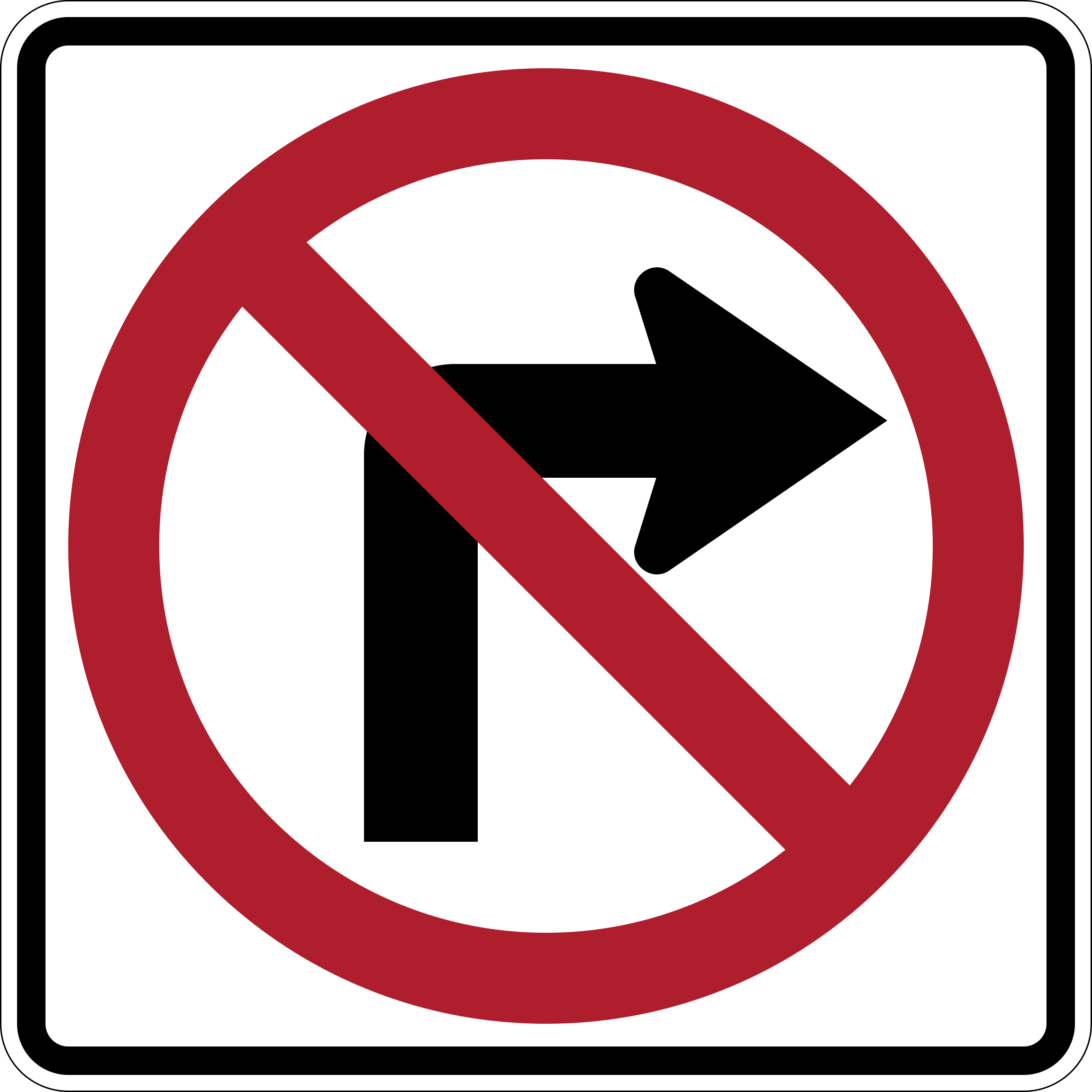
Right-turn arrow crossed by red slash

Right-turn arrow crossed by red slash

Turning right where the sign is posted

A red slash over a right-turn arrow prohibits which maneuver?

The right-turn arrow shows the movement covered by the prohibition, so the driver may not turn right where the sign applies. Straight travel, curbside parking, and yielding to a pedestrian are separate actions and are not identified by this arrow. Check the route before entering the junction and choose a permitted movement. A red slash is not a command to stop every kind of travel. Match the slash to the symbol beneath it, then obey that specific restriction while continuing to watch for people and traffic.

Round yellow RXR sign

Round yellow RXR sign

A railroad crossing ahead where the driver should prepare to stop

What danger does the round railroad warning sign identify?

The round railroad warning sign marks an upcoming crossing, giving the driver time to reduce speed and assess the tracks. It is not a roundabout sign, a bicycle warning, or a generic passing restriction. Approaching traffic may need to stop for a train even when the crossing equipment is not immediately visible. Treat the advance warning as an early planning cue: check the space beyond the rails, listen, and avoid entering unless the vehicle can fully clear the crossing.

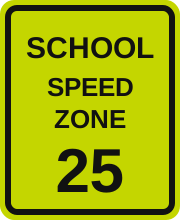
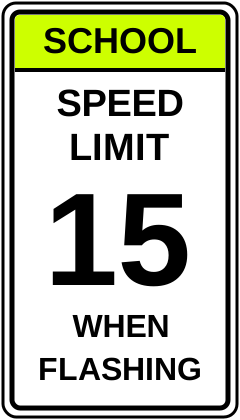
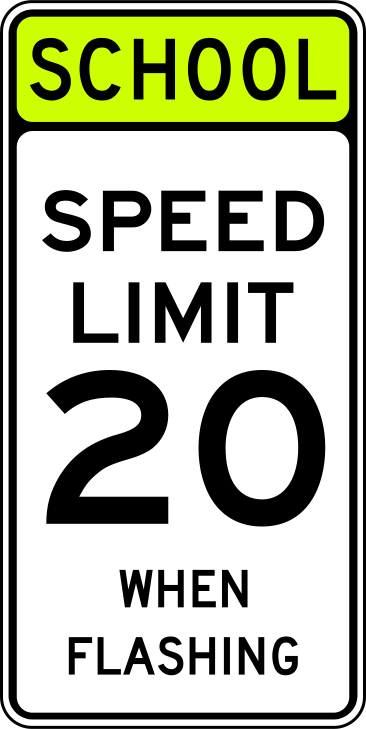
School speed limit sign with flashing warning

School speed limit sign with flashing warning

15 mph

When school-zone signals are flashing in Pennsylvania, what speed must a driver not exceed?

A Pennsylvania school-zone signal is a flashing yellow signal on the school-zone speed-limit sign. During flashing periods, the driver must travel no faster than 15 mph, or follow the time period shown on the sign. Twenty-five and 35 mph are ordinary roadway figures that do not replace the school-zone limit, and 45 mph is plainly too high for the marked area. Watch the sign’s lights, reduce speed before the zone, and expect children near the roadway.

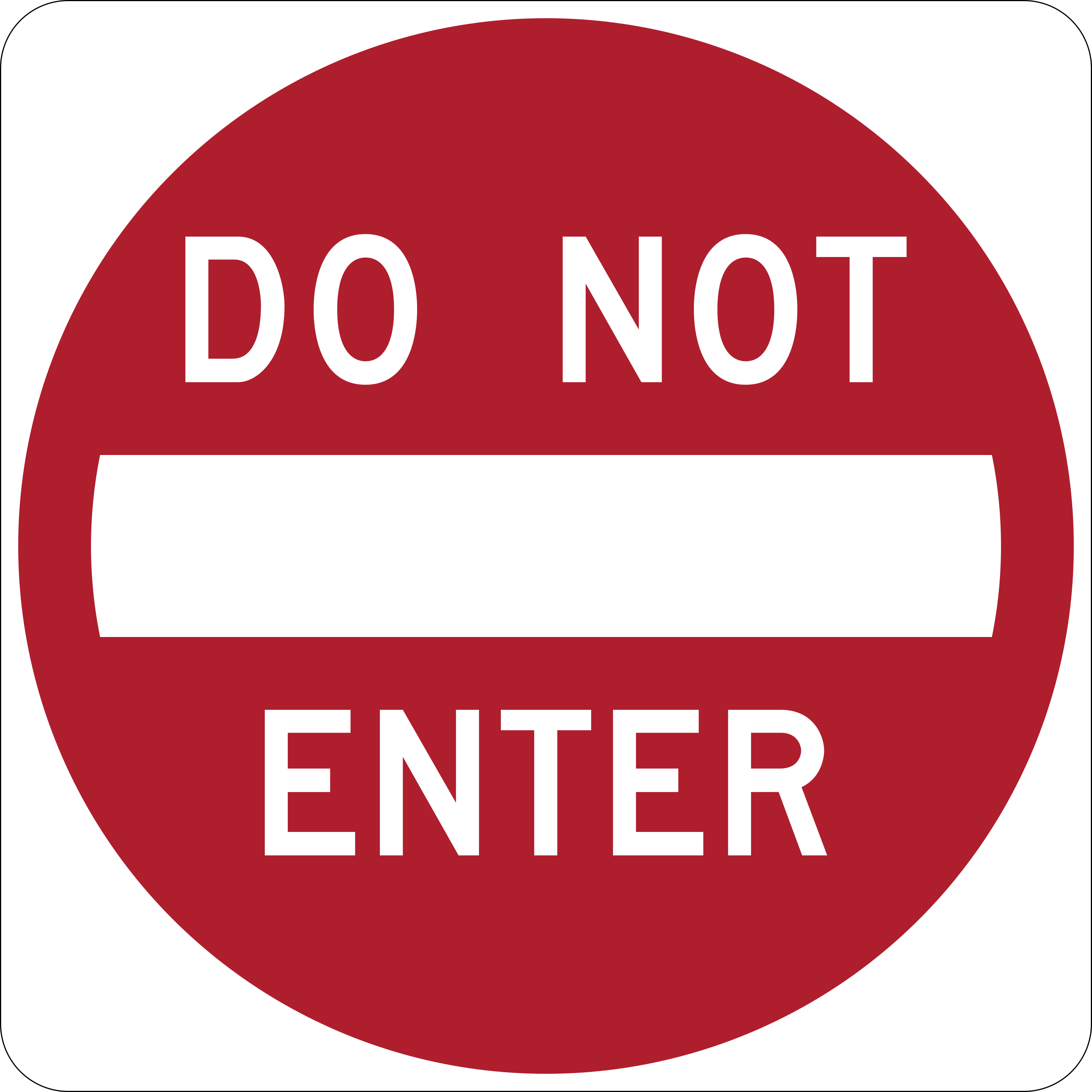
Square sign with red circle reading DO NOT ENTER

Square sign with red circle reading DO NOT ENTER

Continuing beyond the sign into the roadway or ramp it faces

What does a red and white DO NOT ENTER sign prohibit?

A DO NOT ENTER sign faces traffic that would enter a roadway or ramp in the wrong direction. The driver must not proceed beyond that sign. It is not a parking restriction, a turn instruction, or a time-of-day rule. A WRONG WAY sign may appear farther along the prohibited direction, but seeing that second sign does not make the first one optional. Treat the red and white face as an immediate instruction to keep out.

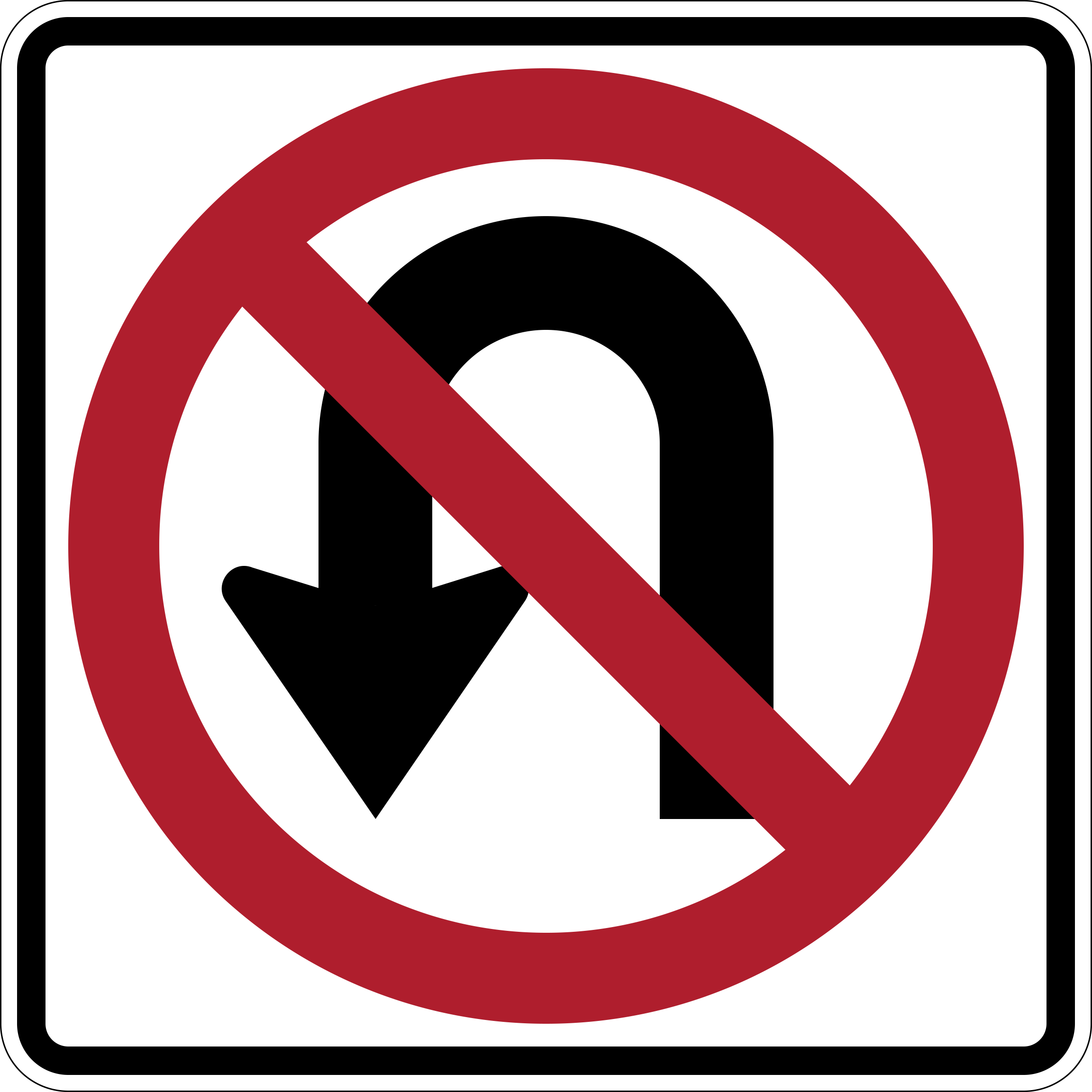
U-shaped arrow crossed by red slash

U-shaped arrow crossed by red slash

A U-turn at the posted location

What movement is prohibited by this sign?

The sign's crossed U-shaped arrow identifies a U-turn as the prohibited movement at that location. It does not ban every left turn, ordinary passing, or straight travel. The driver should continue along the permitted route and wait for a location where changing direction is allowed and safe. Read the pictured maneuver rather than treating every red slash as a general stop command. A left-turn restriction would use a left-turn arrow, while a U-turn restriction is shown by the U-shaped arrow used here.

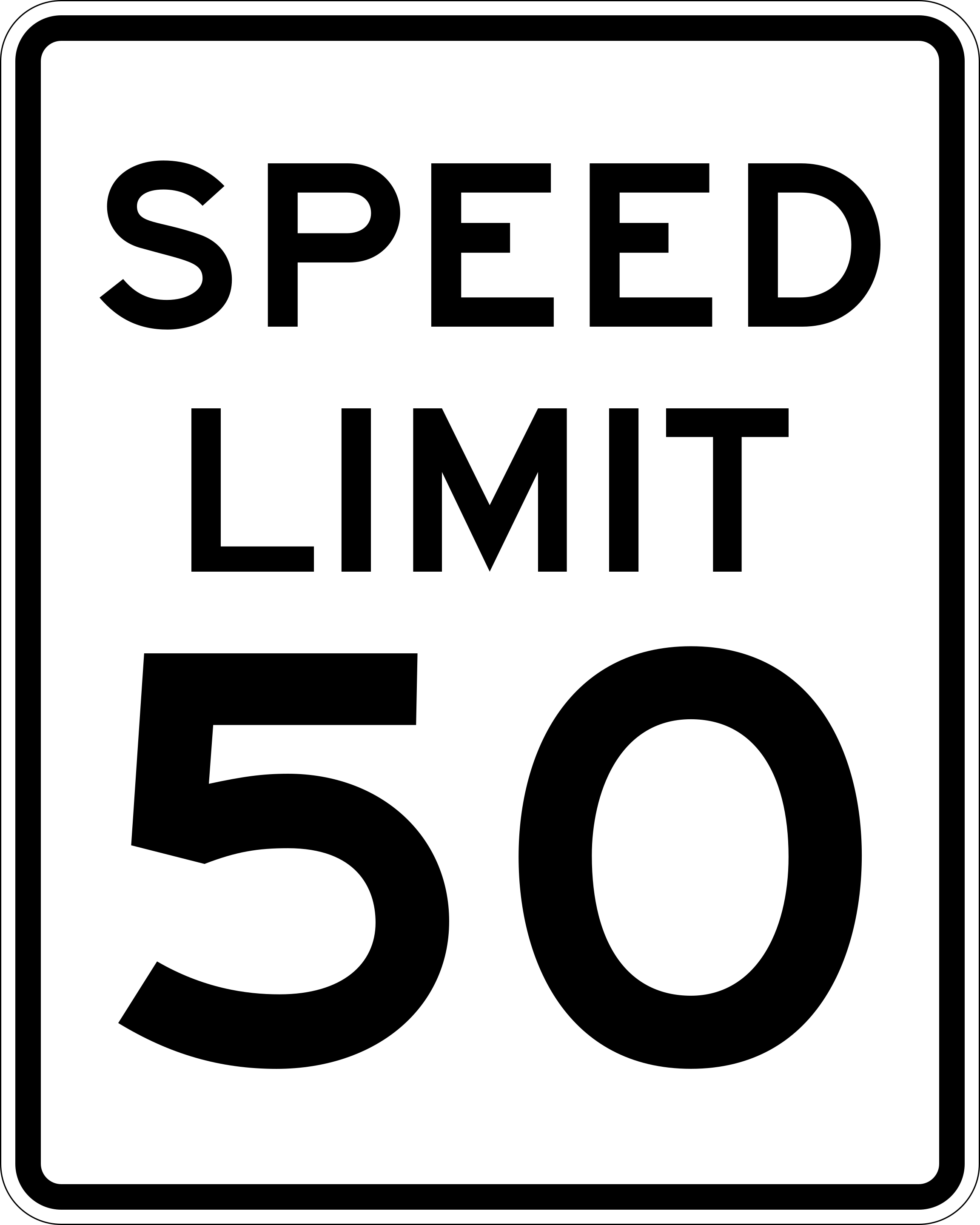
White SPEED LIMIT 50 sign

White SPEED LIMIT 50 sign

A legal instruction that must be understood and obeyed

What kind of instruction does a regulatory speed sign provide?

Regulatory signs communicate instructions backed by state statute, regulation, or local ordinance. A posted speed instruction therefore carries legal force rather than serving as an optional suggestion. Light traffic does not erase the limit, and the sign is not a truck detour or temporary work-zone message unless its separate wording says so. Violating a regulatory instruction can lead to a traffic citation. Treat the black or red wording on white as a rule that governs your driving.

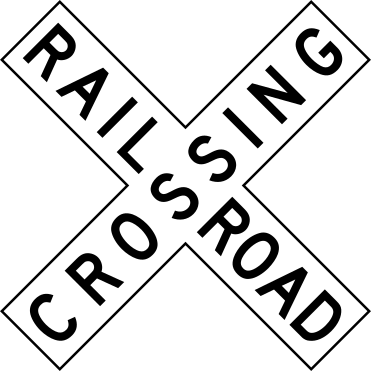
White X-shaped RAILROAD CROSSING crossbuck

White X-shaped RAILROAD CROSSING crossbuck

Be prepared to stop for trains

What should a driver do when approaching the railroad crossbuck shown here?

The railroad crossbuck and its warning message tell drivers to prepare for trains. A gate is not the only cue that requires caution, so waiting for a barrier would be too late. Trains have no obligation to yield to a vehicle, and acceleration does not create a safe crossing. Gear changes can create a problem on the tracks, especially for a manual transmission. Slow, look, listen, and make sure the crossing can be cleared before entering it.

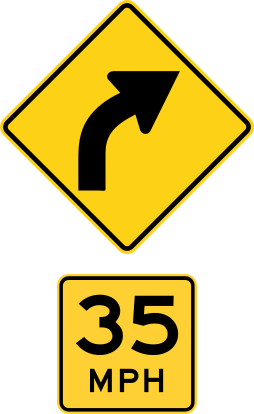
Yellow curved-arrow sign

Yellow curved-arrow sign

A curve is ahead, so the driver should take it at the advisory speed

What does the curved-arrow warning indicate?

The curved-arrow warning identifies a bend ahead and gives the driver a cue to adjust speed before reaching it. The advisory speed is a planning reference for taking the curve, not a command to make a turn at a junction. The sign also does not announce a road closure or create a passing zone. Braking and steering should be settled before the bend whenever possible. Reduce speed early, then maintain a controlled path through the curve.

Yellow merge arrow sign

Yellow merge arrow sign

Traffic is joining ahead, so the driver should adjust speed and position

What roadway change does a MERGE warning identify?

A MERGE warning tells the driver to expect traffic joining the roadway ahead. The driver should watch the adjacent lane, check mirrors, and adjust speed or position to create a safe opening when needed. It does not require an exit, reserve a lane for hazardous materials, or give one stream unlimited priority. Abrupt braking can make the interaction less safe, while refusing to adjust can close the available gap. Treat the warning as advance notice and keep a predictable path while the streams of traffic come together.

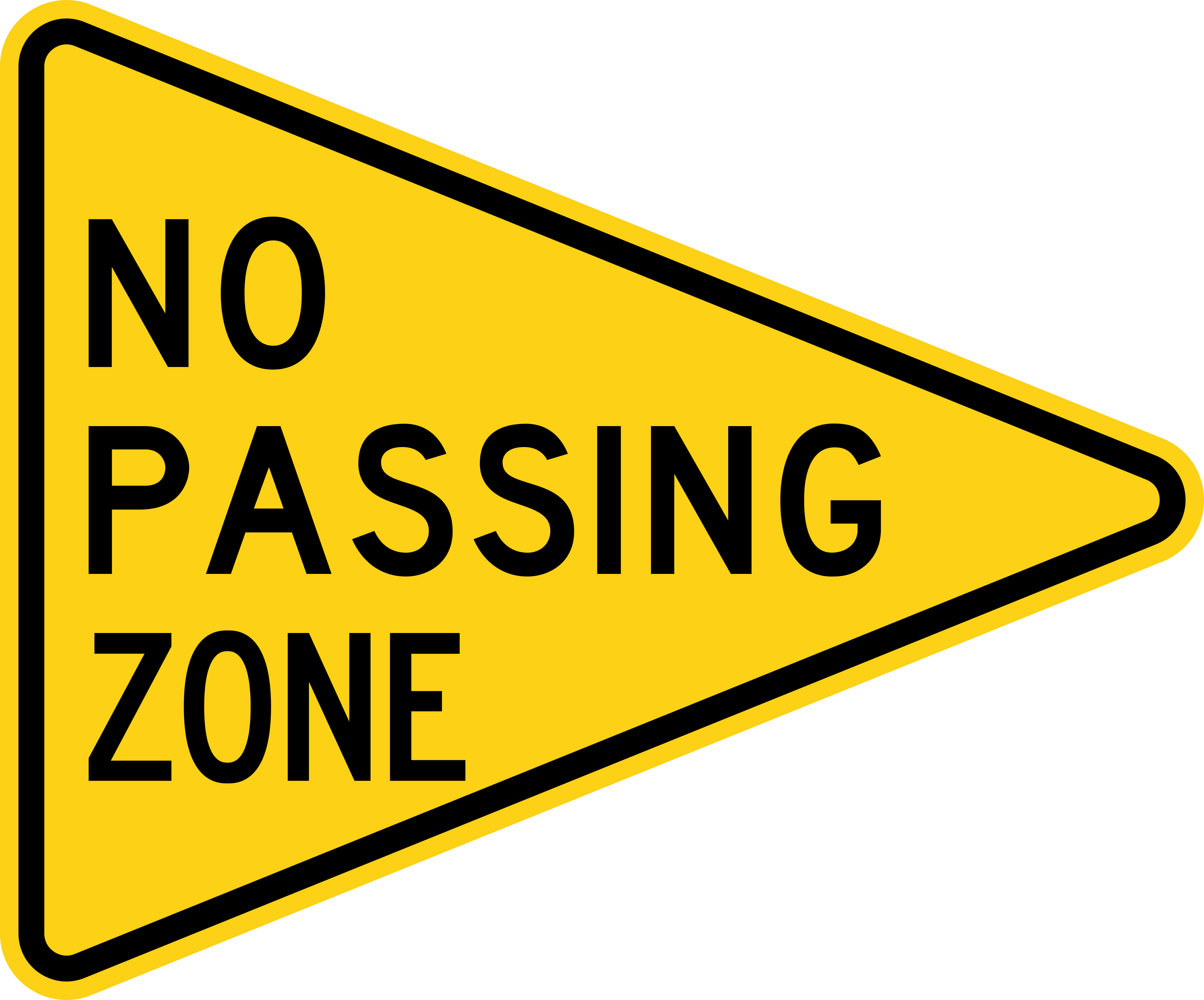
Yellow pennant NO PASSING ZONE sign

Yellow pennant NO PASSING ZONE sign

Do not proceed beyond the sign

What action is required when a Do Not Enter sign faces your traffic?

A Do Not Enter sign faces traffic that is entering a roadway or ramp in the wrong direction. The driver must stop the intended movement and avoid going beyond the sign. The choice allowing entry when the road looks empty is dangerous because the sign addresses direction of travel, not whether another vehicle is visible. A wrong-way ramp can have hidden or fast-moving traffic, and an additional Wrong Way sign may appear farther along. Treat the red and white message as an immediate direction cue: do not enter, and find a legal route away from the prohibited path.

Yellow plus-shaped crossroad sign

Yellow plus-shaped crossroad sign

Understand and obey the instruction shown

What does a regulatory traffic sign require a driver to do?

A regulatory sign communicates an instruction backed by a statute, regulation, or local ordinance. The driver must understand and obey it, and violating the instruction can lead to a traffic citation. The choice that calls the sign a sightseeing suggestion is wrong because guide signs provide destinations, while regulatory signs control conduct. When you see a regulatory message, read the restriction or command, check that it applies to your movement, and follow it promptly. This habit is especially important where a posted rule changes what the roadway would otherwise permit.

Yellow right-angle arrow sign

Yellow right-angle arrow sign

A sharp turn to the right in front of the sign

What does the sharp right-turn warning tell a driver to expect?

The right-angle arrow warns of a sharp right turn immediately ahead. The driver should reduce speed early, stay in the lane, and follow the roadway rather than interpreting the symbol as a one-way announcement or a T-intersection rule. A sharp turn demands more preparation than a gentle bend, especially on a slippery or unfamiliar surface. Scan past the sign for the turn, check the lane boundary, and avoid entering faster than control conditions allow.

Yellow sign showing a small STOP sign and arrow

Yellow sign showing a small STOP sign and arrow

A stop sign is approaching, so the driver should prepare to stop

What does a STOP AHEAD warning tell a driver to anticipate?

STOP AHEAD warns that a stop condition is coming, so the driver should reduce speed early and prepare for the required stop at the actual stop sign. It does not cancel a stop sign, prohibit stopping, or by itself establish a no-passing zone. Start looking for the intersection, crosswalk, and stopping reference instead of waiting until the sign is close. The manual treats this special legend as a condition requiring extreme caution. Early preparation helps avoid a late brake application or a stop beyond the proper line.

Yellow sign showing right lane narrowing

Yellow sign showing right lane narrowing

The roadway narrows ahead, requiring a safe move into the remaining lane

What does a lane-ending warning require a driver to anticipate?

A lane-ending warning shows that the roadway will narrow ahead, so the driver must plan a safe move into the lane that remains. Check mirrors and blind spots, signal, and change lanes gradually when a suitable gap is available. The sign does not add a lane, create a permanent passing lane, or require all traffic to stop. Identify the open lane early and avoid waiting until the stripe disappears. The warning gives time to make a controlled transition rather than forcing a sudden lateral move beside other vehicles.

Yellow sign with arrows splitting around a median

Yellow sign with arrows splitting around a median

A multi-lane roadway is divided by a median

What roadway arrangement is shown by a divided-highway warning?

A divided roadway has multiple lanes separated by a divider, and the manual identifies yellow left-edge lines on divided or one-way roadways. The median separates opposing traffic, so it is not an invitation to cross over or make a U-turn wherever convenient. The one-lane choice describes a merge rather than a divided design, and shared opposing traffic would describe an undivided road. As the warning approaches, stay on the vehicle’s side of the divider and follow the lane markings through the separated roadway.

Yellow sign with skidding car

Yellow sign with skidding car

A slippery roadway after rain, frost, or similar conditions

What condition does the skidding-car warning identify?

The skidding-car symbol warns that the roadway can become slippery after rain, frost, or related weather. Reduce speed and use smooth steering, braking, and acceleration because available traction may be lower than the pavement appearance suggests. It does not identify a racing area, automatically require chains on gravel, or indicate a closed bridge. Fresh precipitation can make the surface especially deceptive. Increase following space and avoid sudden control inputs near the warning.

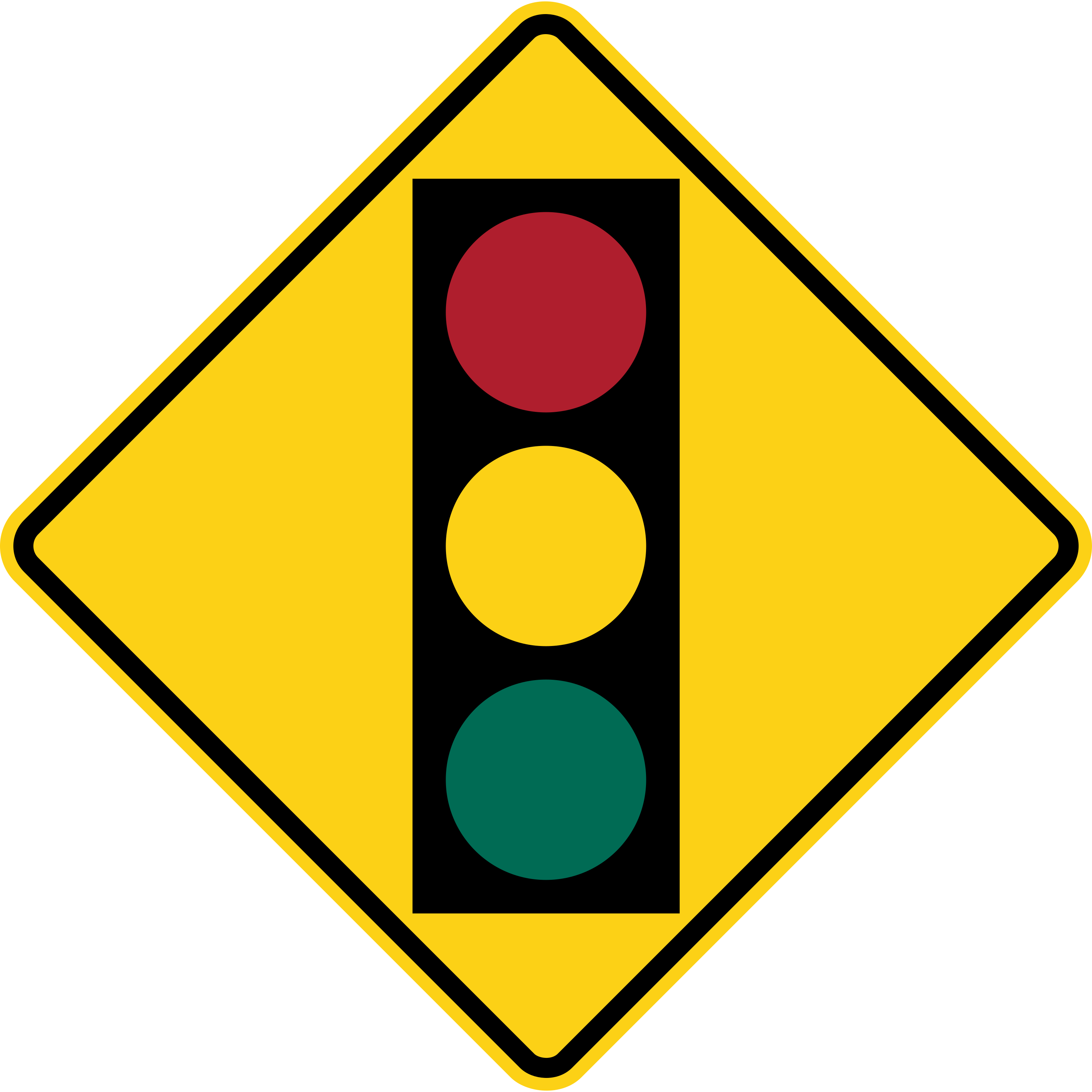
Yellow sign with traffic signal symbol

Yellow sign with traffic signal symbol

A traffic signal is ahead, so the driver should prepare to obey it

What condition is indicated by a traffic signal symbol on a yellow warning sign?

The traffic signal symbol gives advance notice of a signal ahead. The driver should look forward, adjust speed as needed, and be ready to obey the indication when reaching the intersection. It does not say that the signal is broken, that police will stop every vehicle, or that streetlights are under repair. Warning signs are meant to identify conditions before the driver arrives at them. The practical cue is to begin scanning for the signal early, especially when a curve, hill, or other obstruction could shorten the available stopping distance.

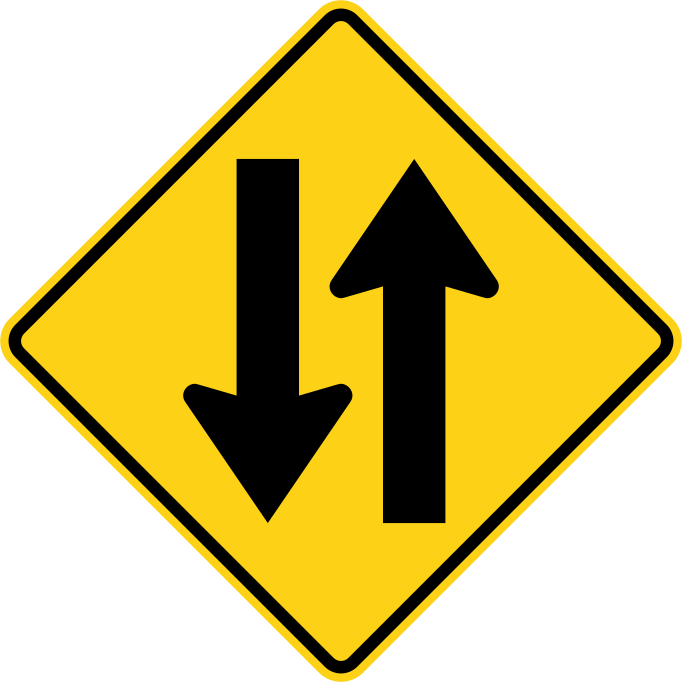
Yellow sign with two opposing arrows

Yellow sign with two opposing arrows

Keep right of approaching traffic on the two-way road

What does the two-way road warning tell a driver to do?

The two-way warning marks a roadway where traffic approaches from opposite directions. Keeping right leaves space for oncoming vehicles and follows the manual’s instruction for this condition. Using both lanes in either direction would invite a head-on conflict. Staying left because opposing traffic is elsewhere reverses the needed position, while assuming one-way travel ignores the warning. Look for the centerline and maintain a lane that clearly separates your vehicle from approaching traffic.
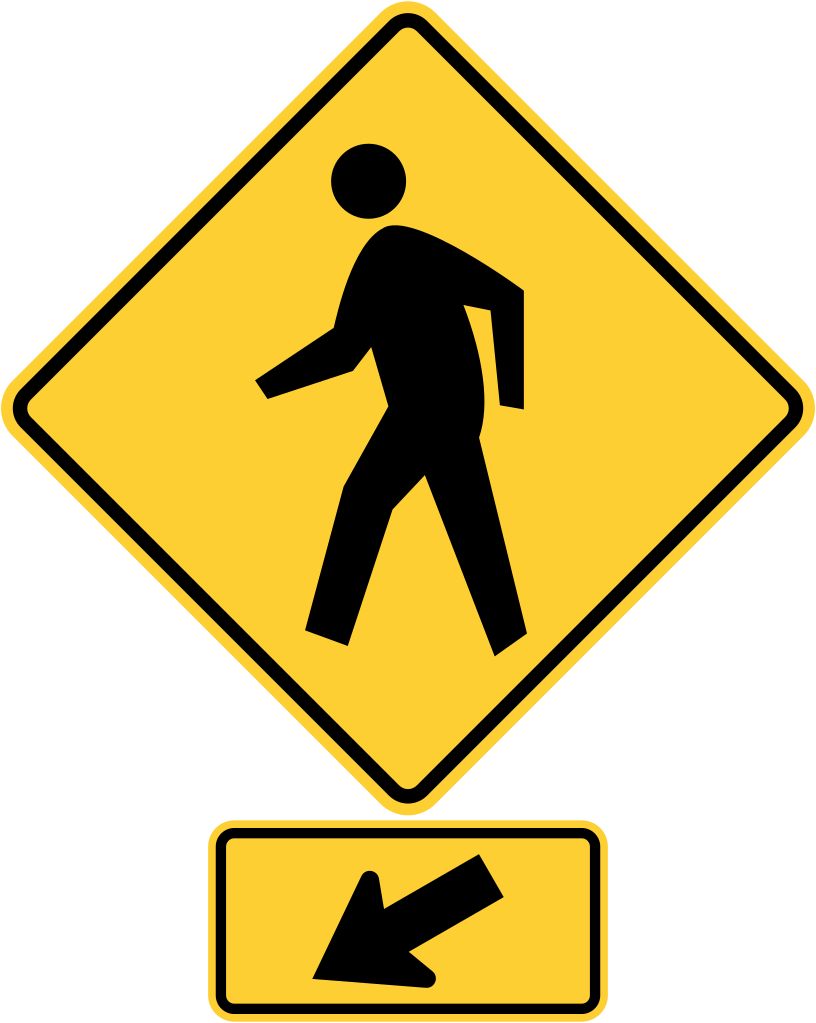
Yellow sign with walking person

Yellow sign with walking person

Use extra caution and be prepared to stop for pedestrians

What should this pedestrian warning sign prompt a driver to do?

A pedestrian warning sign alerts the driver to a condition that may require extra attention and a speed adjustment. The manual says warning signs call for extra caution and that most imply decreasing speed. Sounding the horn, passing a stopped vehicle, or accelerating can hide or endanger a person in the crossing area. Scan the roadway and shoulder, cover the brake, and be ready to stop if someone enters the path. The sign is advance notice, so prepare before reaching the place where pedestrians may appear.
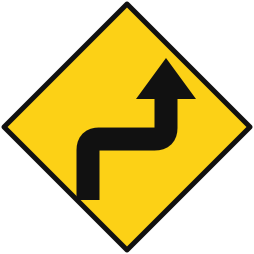
Yellow winding-arrow sign

Yellow winding-arrow sign

Observe extra caution and usually reduce speed

What should you generally do when you see an Alaska warning sign?

Warning signs identify actual or potentially dangerous conditions ahead, so the useful response is to become more alert and adjust speed to the situation. The choice about treating the sign as a destination marker confuses warning signs with guide signs, which provide route and place information. A yellow diamond may appear before a curve, crossing, or other hazard, and the symbol tells you what to expect. Use the sign as an early cue: scan farther ahead, ease off the accelerator when appropriate, and be ready for a sudden change in traffic or road design.

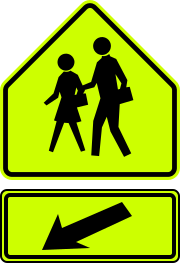
Yellow-green pentagon with two walking figures

Yellow-green pentagon with two walking figures

A school area or school crosswalk requiring reduced speed

What does the five-sided school sign warn drivers to expect?

The five-sided school sign identifies a school area or school crosswalk. The manual associates that setting with reduced speed and tells drivers to prepare to stop for pedestrians. It does not mark a hospital, describe the number of highway lanes, or exclude pedestrians. Children may enter the roadway unexpectedly, so scan beyond the sign and cover the brake. A driver who waits until the crosswalk is occupied may not leave enough room to stop smoothly.