

500 practice questions · Real sign images & audio · Free

West Virginia Permit Practice Test

The West Virginia permit test has at least 25 questions, and on the 25 question test you need 19 correct (76%) to pass. Practice 20 at a time below. Free, no signup.

Free West Virginia DMV practice test with 500 practice questions written from the official West Virginia Driver's Licensing Handbook, each with an explanation and a handbook page citation. No signup and no ads. The West Virginia permit test has at least 25 questions, and on the 25 question test you need 19 correct (76%) to pass. Page updated 2026-10-27.

Also here: exam simulator in the real test format, flashcards for the whole bank, a one-page cheat sheet, handbook lessons, chapter by chapter, and audio read-aloud for questions.

West Virginia verified practice bank · 500 questions · Page updated 2026-10-27

Question 1 of 20 · 0 right so far

0 correct · 0 missed
What is the safest response when there is no room to pass a bicyclist because traffic is approaching?
More ways to practice: exam simulator, topic drills, missed questions

500-question bank · Sign images & explanations · Free

West Virginia practice test has 500 questions. Every question comes with a plain-English explanation the moment you answer.

Get a day by day study plan

Optional. Three quick answers; the tests below work without it.

Age on test day

No date yet? You get a 7 day plan.

Real exam format: 25 questions, 19 correct to pass.

Start here

Run 20 questions to warm up.

Find your gaps

Diagnose weak topics and retry what you've missed.

Simulate the real thing

Practice under graded exam conditions or run the whole bank.

Practice one topic

Drill a single topic, up to 20 questions with explanations.

Random draw and answer order every attempt. Practice scoring: 19 of 25 correct. The West Virginia permit test has at least 25 questions, and on the 25 question test you need 19 correct (76%) to pass.

Free means actually free: no subscription, no auto-renew, no card required, no locked features. This site is funded by our insurance work, not by test-prep charges.

Show a parent how you are doing

A read-only link with your West Virginia recent practice accuracy, topic scores and test results. No account, no name or email.

West Virginia permit practice test at a glance

500 free practice questions, with 25 numbered 20 question tests and the full bank to practice, plus a free exam simulator for practice, a road sign test, and an explanation for every answer. No signup, no paywall, nothing locked. Questions are written from the West Virginia Driver's Licensing Handbook and were last checked against it on September 7, 2026. The West Virginia permit test has at least 25 questions, and on the 25 question test you need 19 correct (76%) to pass. Page updated 2026-10-27.

Key facts: West Virginia permit test

Questions on the knowledge test

At least 25 questions based on basic knowledge and traffic rules

Official source · verified 2026-10-21

Passing score

19 out of the 25 questions correctly to pass (76%)

Official source · verified 2026-10-21

Knowledge test fee

The Level 1 GDL fee is $7.50 per attempt; the adult instruction permit is listed at $7.50.

Official source · verified 2026-10-05

The real West Virginia knowledge test is the DMV exam used for a learner permit. This page contains the full free 500 question study bank, with an explanation after each answer. Use the numbered 20 question tests below when you want a fixed study session.

The West Virginia permit test has at least 25 questions, and on the 25 question test you need 19 correct (76%) to pass. This practice bank has 500 questions. Source: official source, checked 2026-10-18.

Alcohol and DUIEmergenciesLaws and paperworkParkingRight of wayRoad signsSafe drivingSignals and markingsSpeed limits

See facts and key topics for West Virginia DMV (minimum age, fees, wait times, question counts by topic) before you start, or print it to bring with you on test day.

Booked your test? See what to bring and where to go: a printable West Virginia document checklist with official office and appointment links.

Study the handbook, chapter by chapter: 23 short free lessons with the key rules, the exact numbers, and 3 check questions each, all quoted from the West Virginia manual.

How to use this WV practice test

  1. Take the 25 question exam-length practice test above once, untimed, to find your weak topics.
  2. Work through the numbered 20 question sets below. Each one is fixed, so a second attempt is a fair comparison.
  3. Read the explanation on every miss. The wording comes from the West Virginia Driver's Licensing Handbook, which is what the examiners use.
  4. Come back on a later day and retake the questions you missed. A score on questions you have not seen before tells you more than a repeat.

Frequently asked questions

How many questions are on the West Virginia permit test, and what score do you need?

The West Virginia permit test has at least 25 questions, and on the 25 question test you need 19 correct (76%) to pass. Official source: webapps.transportation.wv.gov.

How old do you have to be to get a learner's permit in West Virginia?

West Virginia lists the minimum permit age as: At least 15 and under 18 for the Level 1 instruction permit. Official source: transportation.wv.gov.

How much does the West Virginia permit test cost?

The Level 1 GDL fee is $7.50 per attempt; the adult instruction permit is listed at $7.50. Official source: dmv.wv.gov.

What should I bring to take the permit test?

West Virginia asks you to bring: Proof of identity, proof of Social Security number, two proofs of WV residency, and parent or guardian consent if a minor. Official source: transportation.wv.gov. Full list: West Virginia what to bring checklist.

Is this West Virginia practice test free, and where do the questions come from?

Yes. The practice questions, explanations, and numbered tests are free to use with no account required. The questions are written from the West Virginia Driver's Licensing Handbook, and this page is an educational practice bank that is separate from the DMV test.

How many questions are in the West Virginia practice bank?

This free page contains the full 500 question bank. The numbered tests each contain 20 fixed questions.

Page updated 2026-10-27. Questions last verified 2026-09-07 against the West Virginia Driver's Licensing Handbook.

25 sample practice questions from the WV bank

Every question below comes from the West Virginia question bank on this page. Open a question to see the correct answer and the explanation. Nothing here is hidden behind a signup.

  1. 1. What is the safest response when there is no room to pass a bicyclist because traffic is approaching?

    1. Follow within one car length until the cyclist moves aside
    2. Pass immediately by moving onto the shoulder
    3. Sound the horn and squeeze between the bicycle and traffic
    4. Wait until the approaching traffic has gone by
    Show answer

    Wait until the approaching traffic has gone by. The handbook tells drivers to wait when an oncoming vehicle leaves no room to pass a bicyclist. Full explanation in Test 1

    Study this in the handbook: School buses, bicycles, motorcycles and trucks

  2. 2. What should a driver do when approaching a stop sign?

    Red octagon STOP sign
    1. Stop completely, then yield to pedestrians and cross traffic
    2. Slow down and roll through if no one is visible
    3. Stop only after entering the intersection
    4. Stop only when another vehicle is waiting
    Show answer

    Stop completely, then yield to pedestrians and cross traffic. An eight-sided stop sign means you must stop completely and give the right-of-way to pedestrians and to all cross traffic before moving agai Full explanation in Test 2

    Study this in the handbook: Sign shapes, colors and pavement markings

  3. 3. The West Virginia DMV sends you a notice asking for proof of insurance mid-year. Why?

    1. The DMV may verify insurance at any time during the registration year, and you must submit proof of coverage
    2. Only vehicles over 10 years old are checked
    3. Notices go out only after a crash
    4. The notice is a billing error
    Show answer

    The DMV may verify insurance at any time during the registration year, and you must submit proof of coverage. Proof of West Virginia liability insurance is required when you obtain or renew a registration, and coverage must be maintained for the full Full explanation in Test 3

    Study this in the handbook: Crash reports, insurance and phone use

  4. 4. What minimum following interval does the handbook advise in darkness or rain?

    1. At least six seconds in every condition
    2. Exactly two seconds
    3. At least four seconds
    4. No additional interval is needed if headlights are on
    Show answer

    At least four seconds. Reduced visibility and changing road grip call for more space than the ordinary three-to-four second rule. Full explanation in Test 4

    Study this in the handbook: U-turns, backing, parking and following distance

  5. 5. Which report is specifically listed as an allowed use of an electronic communications device?

    1. Composing an email while moving through traffic
    2. Sending a personal text to arrange dinner
    3. Watching a video while stopped at a light
    4. Reporting a fire, traffic crash, serious road hazard, or emergency to authorities
    Show answer

    Reporting a fire, traffic crash, serious road hazard, or emergency to authorities. The handbook lists reporting a fire, traffic crash, serious road hazard, or emergency to the appropriate authorities as an allowed use. Full explanation in Test 5

    Study this in the handbook: Crash reports, insurance and phone use

  6. 6. Which situation is specifically listed as a reason to slow down even before a driver reaches the posted speed limit?

    1. Leaving a parking space after checking traffic
    2. Driving on a clear, empty straight road
    3. Approaching and crossing an intersection
    4. Traveling below the normal flow on a wide road
    Show answer

    Approaching and crossing an intersection. The handbook names approaching and crossing an intersection as a situation requiring extra caution and reduced speed. Full explanation in Test 6

    Study this in the handbook: Basic speed law and school zones

  7. 7. When does a Level 1 GDL instruction permit expire under the handbook's stated schedule?

    1. On the applicant's 18th birthday
    2. On the applicant's 16th birthday
    3. Five years after issuance
    4. At the end of the calendar year
    Show answer

    On the applicant's 18th birthday. The Level 1 GDL instruction permit expires on the applicant's 18th birthday, although the handbook allows a 30-day grace period to provide t Full explanation in Test 7

    Study this in the handbook: Graduated Driver's License levels

  8. 8. Where should drivers use extreme care to avoid colliding with a pedestrian?

    1. Only at gas stations
    2. In office parks, warehouses, and industrial loading docks
    3. In school zones, bus stops, playgrounds, and parks
    4. At bank drive-throughs, car washes, and toll plazas
    Show answer

    In school zones, bus stops, playgrounds, and parks. Pedestrian collisions are especially dangerous in places where people may enter the roadway unexpectedly. Full explanation in Test 8

    Study this in the handbook: Right of way and pedestrians

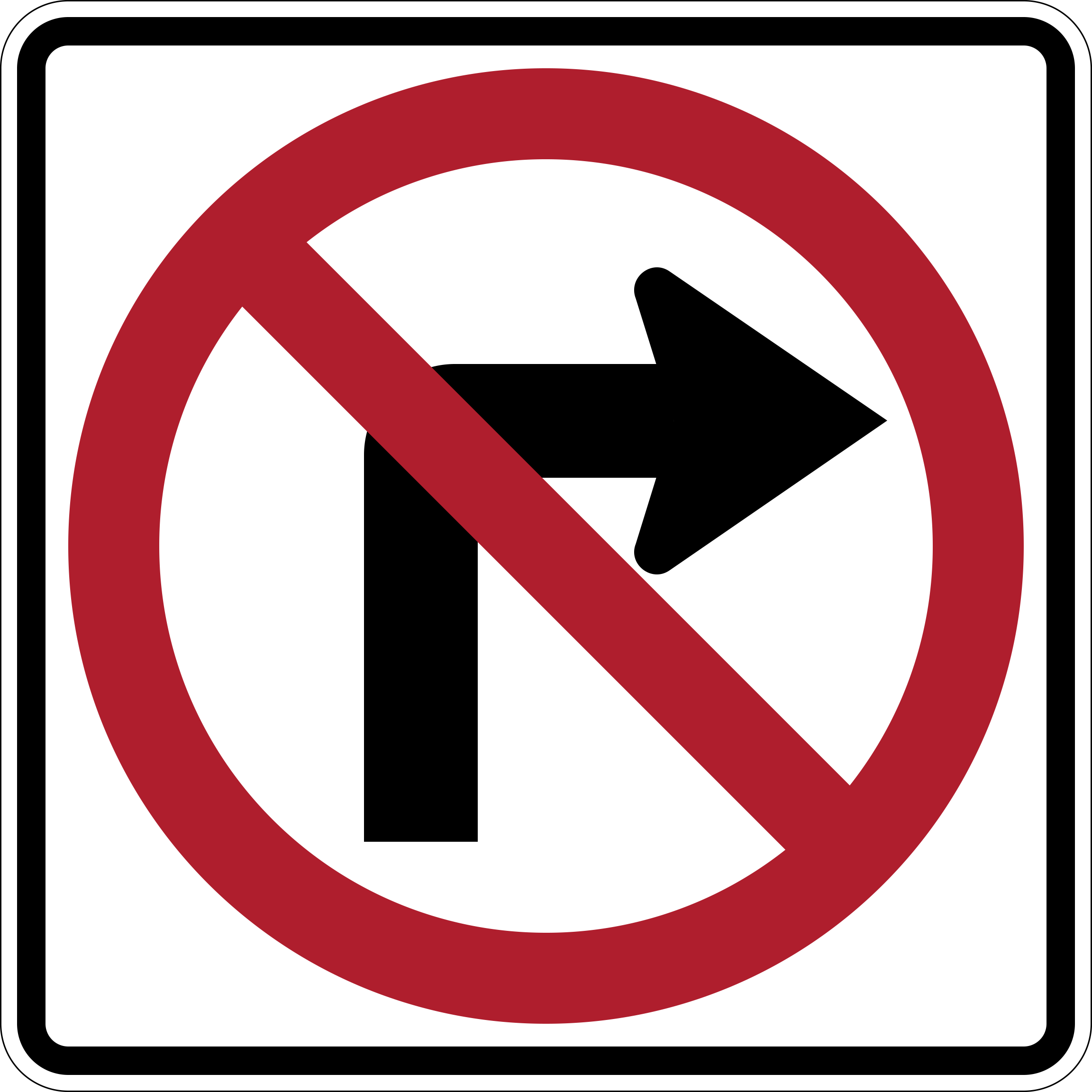
  9. 9. Why might a NO RIGHT TURN sign be posted?

    Right-turn arrow crossed by red slash
    1. The road has no painted center line
    2. The turn is unsafe or the street is one way
    3. The next block has a legal parking area
    4. The intersection is always controlled by a railroad gate
    Show answer

    The turn is unsafe or the street is one way. A no-turn sign can control a movement where a one-way street or another condition makes the turn unsafe. Full explanation in Test 9

    Study this in the handbook: Sign shapes, colors and pavement markings

  10. 10. Where may a West Virginia resident apply for an instruction permit, driver's license, or identification card?

    1. At any DMV regional office
    2. Only at the Charleston headquarters
    3. At a local police station or sheriff's office
    4. At the nearest post office or public library
    Show answer

    At any DMV regional office. A West Virginia resident can apply at any DMV regional office, so the applicant is not limited to Charleston. Full explanation in Test 10

    Study this in the handbook: Who needs a license, new residents and address changes

  11. 11. What must a West Virginia driver carry whenever driving?

    1. A birth certificate
    2. A vehicle title certificate
    3. A copy of the insurance policy only
    4. A West Virginia driver's license
    Show answer

    A West Virginia driver's license. West Virginia requires a licensed driver to carry the driver's license while driving, so it is available on demand during any stop. Full explanation in Test 11

    Study this in the handbook: Who needs a license, new residents and address changes

  12. 12. How does implied consent protect a driver who has not been drinking?

    1. The test erases any traffic stop from the record
    2. The test proves the driver obeyed every traffic law that day
    3. The test removes points already on the driving record
    4. The test gives a medically accepted alcohol measure
    Show answer

    The test gives a medically accepted alcohol measure. For a sober driver, an alcohol test is evidence that works in the driver favor. Full explanation in Test 12

    Study this in the handbook: Alcohol, BAC limits and zero tolerance

  13. 13. How does the handbook rank using a designated driver among ways to avoid a DUI?

    1. The most reasonable, safe, and practical method
    2. A method that works only for very short trips home
    3. A last resort when no taxi service answers the phone
    4. A courtesy that carries no real safety benefit at all
    Show answer

    The most reasonable, safe, and practical method. Having a designated driver is described as the most reasonable, safe, and practical method to avoid drinking and driving and a DUI violation Full explanation in Test 13

    Study this in the handbook: Alcohol, BAC limits and zero tolerance

  14. 14. Which activities have no place in the driver's seat?

    1. Scanning intersections, checking mirrors, and planning gaps
    2. Watching pedestrians, reading signs, and judging speeds
    3. Daydreaming, window shopping, and distracting conversation
    4. Holding conversation that stays brief and road focused
    Show answer

    Daydreaming, window shopping, and distracting conversation. The driver's seat is no place for daydreaming, mental napping, window shopping, scenic viewing, or distracting conversation during any trip. Full explanation in Test 14

    Study this in the handbook: Headlights and light conditions

  15. 15. In which direction must a bicyclist ride on a public road?

    1. Against traffic on a quiet road
    2. Either direction if the rider stays near the edge
    3. In the same direction as other vehicles
    4. Toward the nearest shoulder regardless of traffic
    Show answer

    In the same direction as other vehicles. A bicyclist must ride in the same direction as other vehicles. Full explanation in Test 15

  16. 16. Which visibility equipment must be kept in good working condition for winter?

    1. Windshield wipers and defroster
    2. Windshield washers and headlight lenses
    3. Defroster and a rear window wiper only
    4. Fog lamps and windshield wipers only
    Show answer

    Windshield wipers and defroster. Winter driving begins with being able to see. Full explanation in Test 16

    Study this in the handbook: Headlights and light conditions

  17. 17. Your vehicle begins to skid. When should you use the brakes during the skid?

    1. At once, with full pressure on the pedal
    2. Only if you are in danger of hitting something
    3. After turning the wheel fully to one side
    4. Not until the vehicle has come to a stop
    Show answer

    Only if you are in danger of hitting something. When a vehicle begins to skid, stay calm and concentrate on steering out of trouble. Full explanation in Test 17

    Study this in the handbook: Blowouts, fires and other vehicle emergencies

  18. 18. An insurer does not verify a driver's coverage and the driver cannot prove otherwise. What may follow?

    1. A warning with no fee or suspension
    2. Penalty fee plus suspension of license and plate
    3. Suspension of the registration plate only, with no fee charged
    4. A caution letter urging the driver to buy coverage
    Show answer

    Penalty fee plus suspension of license and plate. Insurance verification protects everyone on the road, so a gap in the record has serious consequences when the driver cannot prove coverage Full explanation in Test 18

    Study this in the handbook: Crash reports, insurance and phone use

  19. 19. For some DUI offenders, how is Interlock participation described?

    1. It is available to every traffic offender
    2. It may be an option for some offenders
    3. It is limited to offenders who refuse testing
    4. It is required for every first DUI offense
    Show answer

    It may be an option for some offenders. Interlock participation is not one rule for everybody. Full explanation in Test 19

    Study this in the handbook: Implied consent, DUI penalties and interlock

  20. 20. Battery acid splashes onto skin during a jump start. What is the response?

    1. Wash it off immediately with water
    2. Wipe it off with a dry cloth and continue
    3. Rinse it with water after reaching home
    4. Cover the area with a dry cloth before using water
    Show answer

    Wash it off immediately with water. If battery acid gets on skin, eyes, or a vehicle, wash it off immediately with water. Full explanation in Test 20

    Study this in the handbook: Blowouts, fires and other vehicle emergencies

  21. 21. How does developing good driving habits compare with falling into bad ones?

    1. Good habits take about five years of steady practice to develop
    2. Bad habits form mainly in new teen drivers during training
    3. It is just as easy to develop good habits as to fall into bad ones
    4. Good habits require yearly professional instruction for drivers
    Show answer

    It is just as easy to develop good habits as to fall into bad ones. Developing good driving habits is just as easy as falling into bad ones. Full explanation in Test 21

    Study this in the handbook: Drowsy driving, fatigue and emotions

  22. 22. Where must an infant in a rear-facing seat never ride in an air bag equipped vehicle?

    1. In the rear seat with a belted adult beside the infant
    2. In the rear seat behind the driver
    3. In the rear seat while the vehicle is moving
    4. In the front passenger seat of the vehicle
    Show answer

    In the front passenger seat of the vehicle. If a vehicle has a passenger-side air bag, an infant in a rear-facing safety seat must never be placed in the front passenger seat. Full explanation in Test 22

  23. 23. What penalties may follow a conviction for littering a West Virginia roadway?

    1. A fine of $50 to $1,000, up to 60 days in jail, or litter removal
    2. A warning letter and a note added to the driving record
    3. A fine of $5 to $25 with no other penalty possible
    4. Suspension of the vehicle registration for one year
    Show answer

    A fine of $50 to $1,000, up to 60 days in jail, or litter removal. Littering public or private roadways or property is a violation of West Virginia law. Full explanation in Test 23

    Study this in the handbook: Points, citations and suspensions

  24. 24. What must a West Virginia driver complete before reinstating a license that was revoked for DUI?

    1. Only a new vision test
    2. An eight hour defensive driving class
    3. Nothing beyond waiting out the revocation
    4. A prescribed Safety and Treatment program
    Show answer

    A prescribed Safety and Treatment program. Every West Virginia DUI revocation or suspension requires the driver to complete a prescribed Safety and Treatment program before becoming e Full explanation in Test 24

    Study this in the handbook: Implied consent, DUI penalties and interlock

  25. 25. What must a bicyclist do when making a turn or stopping?

    1. Use a horn instead of a hand signal
    2. Signal the turn or stop unless both hands are needed for balance
    3. Signal only when a motor vehicle is behind
    4. Keep both hands on the handlebars and give no signal
    Show answer

    Signal the turn or stop unless both hands are needed for balance. A bicyclist must signal a turn or stop unless both hands are needed on the handlebars for balance. Full explanation in Test 25

How this test works

Study the rules, then check the explanation

This page uses the prepared West Virginia question bank exactly as provided. Start the test, choose an answer, and read the explanation before moving on. Retakes serve the same 500 questions so you can work through the state set without losing your place.

Want a one-page summary to study or print? See the West Virginia DMV cheat sheet, with the key rules and numbers from this same question bank.

Looking for another state? Go back to the DMV practice test hub. California remains on the established California DMV practice test page.

Are you a library or school? See the free DMV practice test partner resource for a copy ready listing and referral link.

How we write and check these questions