
Test 10 of 10 · 20 questions · Free 2026
WV Permit Practice Test 10
Jump to the test ↓A fixed 20 question set from the West Virginia bank with answers and plain English explanations. The real WV exam is 25 questions, 76 percent to pass; take the full length version on the main practice page.
Question 1 of 20 · 0 right so far
All 20 questions in test 10
Every question below comes from the West Virginia question bank on this page. Open a question to see the correct answer and the explanation. Nothing here is hidden behind a signup.
1. Where may a West Virginia resident apply for an instruction permit, driver's license, or identification card?
- At any DMV regional office
- Only at the Charleston headquarters
- Only through the county school board
- Only at a county courthouse
Show answer
At any DMV regional office. A West Virginia resident can apply at any DMV regional office, so the applicant is not limited to Charleston or to a courthouse. The county school board is not the general licensing location, and no single headquarters office is required. Before traveling, check the DMV website or call for testing times and additional information because office schedules can differ. The practical cue is the word any: choose the regional office that serves your needs, then confirm its hours before arriving.
Study this in the handbook: Who needs a license, new residents and address changes
2. How does the handbook characterize a BAC greater than 0.05 percent but less than 0.08 percent?
- It is treated exactly like a BAC of 0.08 percent
- It is automatically harmless for an adult driver
- It is relevant evidence for presuming impaired driving
- It matters only for commercial license holders
Show answer
It is relevant evidence for presuming impaired driving. The intermediate BAC range is not described as harmless and is not identical to the 0.08 percent presumption. West Virginia treats a reading above 0.05 percent and below 0.08 percent as relevant evidence that may support a presumption that driving ability is impaired. The commercial-driver choice adds a restriction absent from this passage. A useful memory aid is to keep the two thresholds distinct: the lower range supplies evidence, while 0.08 percent or more triggers the stated presumption.
Study this in the handbook: Alcohol, BAC limits and zero tolerance
3. How many questions must be answered correctly to pass the West Virginia knowledge test?
- 15 of 25
- 18 of 25
- 24 of 25
- 19 of 25
Show answer
19 of 25. Passing requires 19 correct answers out of 25. The nearby numbers are deliberate traps: 18 is one short, while 24 demands nearly a perfect score that the handbook does not require. The choice “15 of 25” is also below the stated threshold. Think of the result as a minimum count, not a percentage guessed from the number of questions. The handbook also warns that unanswered questions within the allotted time count as incorrect, so an applicant should keep moving through the test and submit an answer to every item before time expires.
Study this in the handbook: Vision, knowledge and road tests
4. How many points does West Virginia assign for speeding 20 mph or more over the speed limit?
- Eight points
- Two points
- Three points
- Six points
Show answer
Six points. The point scale lists six points for speeding 20 mph or more over the speed limit. Three points apply to several lower or different moving offenses, and eight points belongs to fleeing from an officer in the same chart. The two-point choice is associated with selected lesser violations, not this speeding tier. Points can affect a driving record and licensing privileges, so compare the amount over the limit with the chart's exact row instead of treating every speeding ticket as identical.
5. A West Virginia Level 2 intermediate license holder gets a citation for using a cell phone while driving. What happens to the conviction free period?
- It starts over, and the Level 2 period is 12 months
- Nothing, because phone citations do not count for GDL drivers
- It starts over, and the Level 2 period is 6 months
- It is extended by 30 days
Show answer
It starts over, and the Level 2 period is 12 months. A phone citation on a Level 1 permit or Level 2 license resets the conviction free clock. For Level 2 the period is 12 months, and for Level 1 it is 6 months, so 6 months is the Level 1 figure. Drivers under 18 may not use a wireless device while driving except to contact a 9-1-1 system, so a citation clearly counts. The rule restarts the whole period rather than adding a short extension.
Study this in the handbook: Graduated Driver's License levels
6. How often may a West Virginia driver use the defensive driving class point reduction?
- Once every 6 months
- Once every three years
- Only once in a lifetime
- Once every 12 months
Show answer
Once every 12 months. The defensive driving point reduction can be used only once every 12 months. Six months is more frequent than allowed. Three years and once in a lifetime are stricter than the West Virginia rule. Each use removes three points, and the class must be DMV approved and taken after the points appear on the record, or the driver is not eligible.
Study this in the handbook: Points, citations and suspensions
7. What standard should a driver use when deciding whether the current speed is safe?
- A fixed 70 mph on every highway
- The fastest speed used by nearby traffic
- The maximum number printed on any nearby sign
- A speed that is reasonable and prudent for existing conditions
Show answer
A speed that is reasonable and prudent for existing conditions. West Virginia's basic speed rule requires a speed that is reasonable and prudent for existing conditions. Nearby drivers do not set your safe speed, and a sign from another roadway cannot be treated as a universal maximum. Seventy mph is the designated interstate maximum unless otherwise posted, not a speed for every highway. Look beyond the number on the sign and account for visibility, weather, traffic, and stopping distance. A posted limit is an upper boundary under normal conditions, while the basic rule may require you to slow below it when the road becomes hazardous.
Study this in the handbook: Basic speed law and school zones
8. What steering-wheel practice helps a driver maintain control?
- Drive with one hand outside the window
- Keep both hands on the steering wheel
- Release the wheel briefly on straight roads
- Hold the wheel only when turning
Show answer
Keep both hands on the steering wheel. Using both hands gives the driver more control when the roadway changes or an unexpected movement occurs. The one-hand choices reduce available control and are specifically contrary to the handbook's simple safety guidance. A straight road can still contain a sudden hazard, so hand position should not depend on whether a turn is visible. Keep a firm, balanced grip, stay attentive, and preserve the ability to steer smoothly around a developing problem.
Study this in the handbook: The road skills test and basic control
9. When you meet another vehicle at night in West Virginia, within what distance must you dim your headlight beams?
- Within 100 feet of the other vehicle
- Within 500 feet of the other vehicle
- Within 1,000 feet of the other vehicle
- Only when the other driver flashes first
Show answer
Within 500 feet of the other vehicle. High beams blind the driver coming toward you, so the handbook sets the dimming distance at 500 feet. When you see an oncoming vehicle, switch to low beams before you are within 500 feet of it, slow down, keep to the right of your lane, and look toward the right edge of the road rather than into the other headlights. One hundred feet is far too late, one thousand feet is more than the rule requires, and waiting for the other driver to flash means you have already dazzled them.
Study this in the handbook: Headlights and light conditions
10. What should you do if your vehicle becomes disabled on an Interstate?
- Park in an exit gore so other drivers can see you
- Leave the vehicle in the travel lane with the headlights off
- Stop on the shoulder and use the vehicle for a reading or map break
- Move as far off the road as possible and turn on the four-way flashers
Show answer
Move as far off the road as possible and turn on the four-way flashers. A disabled vehicle should be moved as far off the road as possible, with the four-way flashers turned on to show that it is stopped. The handbook also advises getting everyone out and well away from the road. Interstate shoulders are for disabled vehicles, not for reading, changing drivers, or other ordinary stops, and an exit gore is a dangerous triangular area where another driver may cross unexpectedly. The key cue is visibility plus distance: warn approaching traffic and put people away from moving vehicles.
Study this in the handbook: Breakdowns, fog and work zones on interstates
11. What should come before insisting on your right-of-way?
- Safety and courtesy
- A rapid acceleration
- A warning horn held continuously
- The size of your vehicle
Show answer
Safety and courtesy. The handbook places safety ahead of priority. A driver should use courtesy and avoid forcing another road user into a dangerous choice, even when the rules seem favorable. Accelerating to claim space can turn a misunderstanding into a crash, while a continuous horn does not establish authority. A larger vehicle still has the same responsibility to avoid harm. Scan the whole movement, anticipate mistakes, and yield when that is the safer course. Right-of-way is useful only when every road user can proceed safely.
Study this in the handbook: Right of way and pedestrians
12. West Virginia law bars turning around near a curve or hill crest where you cannot be seen by vehicles approaching within how many feet?
- 100 feet
- 200 feet
- 500 feet
- 1,000 feet
Show answer
500 feet. It is illegal to turn a vehicle around near a curve or near the crest of a hill where another vehicle approaching within 500 feet in either direction cannot see you, or where signs prohibit turning. One hundred feet is the minimum turn signal distance. Two hundred feet is the distance for dimming headlights when following another vehicle. One thousand feet is not a figure in this rule.
Study this in the handbook: U-turns, backing, parking and following distance
13. In West Virginia, what is the minimum first-offense penalty for passing a school bus that is stopped to load or unload students?
- A $50 fine
- A 60 day license suspension and a $500 fine, or up to six months in jail
- A warning letter
- A 10 day suspension
Show answer
A 60 day license suspension and a $500 fine, or up to six months in jail. The penalty for passing a stopped school bus is a minimum 60 day driver's license suspension and a minimum fine of $500, or confinement in jail for not more than six months, for the first offense, with increased penalties for later offenses. If the driver cannot be identified, the vehicle's owner or lessee is guilty of a misdemeanor and subject to fines. A $50 fine, a warning letter, or a 10 day suspension all understate the first-offense minimum. When red bus lights are flashing, stay stopped until the bus resumes motion, the driver signals you to proceed, or the signals stop.
Study this in the handbook: Right of way and pedestrians
14. An oncoming vehicle enters your lane. What should you do first?
- Move right, slow down, sound the horn, and flash the headlights
- Turn left into the lane the other vehicle left
- Accelerate toward the vehicle to make it move over
- Stop in the center of the roadway without warning
Show answer
Move right, slow down, sound the horn, and flash the headlights. The handbook's response creates space and alerts the other driver: move right, reduce speed, sound the horn, and flash the headlights. Turning into the lane the vehicle abandoned could place both vehicles together if the other driver corrects course. Accelerating reduces reaction time, and stopping in the center can expose the vehicle to a rear-end or side collision. Keep control, avoid the opposing path, and use warning signals while looking for a safe place away from the immediate conflict.
Study this in the handbook: Blowouts, fires and other vehicle emergencies
15. What do the shape and color of signs help drivers recognize?
- Whether the vehicle needs an inspection
- The exact distance to the next town
- What a sign is trying to tell them
- The driver's license renewal date
Show answer
What a sign is trying to tell them. The handbook treats sign shape and color as recognition aids that communicate a sign's purpose. This lets a driver begin responding even when lettering is hard to read. The choice “The exact distance to the next town” invents a destination detail, while inspection and license information are unrelated to traffic sign design. Shapes distinguish warnings, controls, and guidance, and colors reinforce those categories. Use the visible outline and color as an early cue, then read the wording or symbol when conditions allow. This is especially useful in fog, rain, snow, darkness, or fading light.
Study this in the handbook: Sign shapes, colors and pavement markings
16. How does the handbook describe right-of-way in a safe-driving decision?
- It may be claimed by accelerating first
- It always belongs to the larger vehicle
- It is something to be given, not taken
- It applies only when a police officer is present
Show answer
It is something to be given, not taken. West Virginia’s handbook describes right-of-way as something to be given, not taken. It also places courtesy and safety ahead of insisting on priority, and says to give the right-of-way if another driver does not follow the expected rule. Vehicle size does not decide the issue, acceleration does not create safe priority, and a police officer does not need to be present. Scan for the developing conflict, yield when needed, and let the movement clear before continuing. This approach prevents a technical advantage from becoming a collision.
Study this in the handbook: Right of way and pedestrians
17. What warning does the handbook give about driving while drowsy?
- It can decrease reaction time and increase crash risk
- It makes braking distance shorter
- It improves concentration on long trips
- It affects only passengers, not drivers
Show answer
It can decrease reaction time and increase crash risk. The West Virginia handbook warns that driving drowsy can decrease your reaction time and increase your crash risk, and that you often cannot react in time to apply brakes or steer away from a potential crash. Drowsiness does not shorten braking distance, improve concentration, or affect only passengers. Signs include yawning, heavy eyelids, and drifting out of the travel lane. The handbook says the best way to reduce drowsiness is more sleep, and a drowsy driver should pull over to a safe area and take a short nap.
Study this in the handbook: Implied consent, DUI penalties and interlock
18. What condition is assumed by the speed shown on a standard speed limit sign?
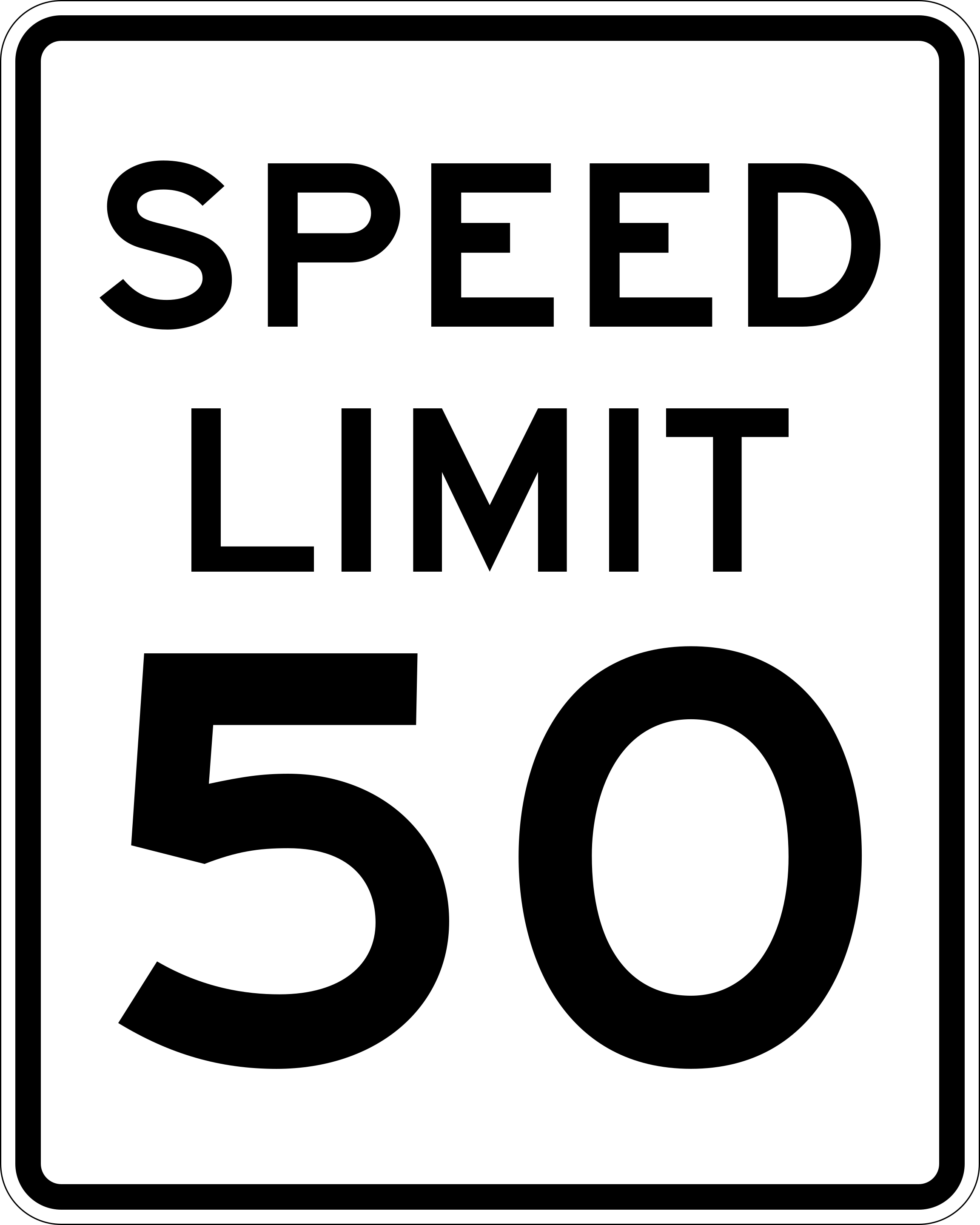
- Heavy rain and reduced visibility
- Optimal weather and road conditions
- A closed lane ahead
- A guaranteed safe speed for every vehicle
Show answer
Optimal weather and road conditions. The posted speed is the fastest permitted under optimal weather and road conditions. Rain, fog, snow, traffic, pavement problems, or poor visibility can require a slower speed. It is not a promise that every vehicle can safely travel that fast, and it does not announce a closed lane. Read the number as a ceiling for favorable conditions, then adjust downward when the roadway demands it.
Study this in the handbook: Sign shapes, colors and pavement markings
19. White pavement lines generally separate lanes of traffic moving in which relationship?
- Only stopped vehicles
- Opposite directions
- The same direction
- A travel lane and a sidewalk
Show answer
The same direction. White lines normally divide lanes whose traffic is traveling in the same direction. That meaning differs from yellow lines, which separate opposing flows. A white line does not by itself identify a parking area or a sidewalk edge, although a particular solid white line can mark the pavement edge. Look at the line pattern and surrounding roadway before changing lanes. The color is a quick visual cue, but it works best when combined with lane arrows, signs, and the direction of nearby vehicles.
Study this in the handbook: Sign shapes, colors and pavement markings
20. Where are West Virginia lane-direction signs placed on a divided highway?
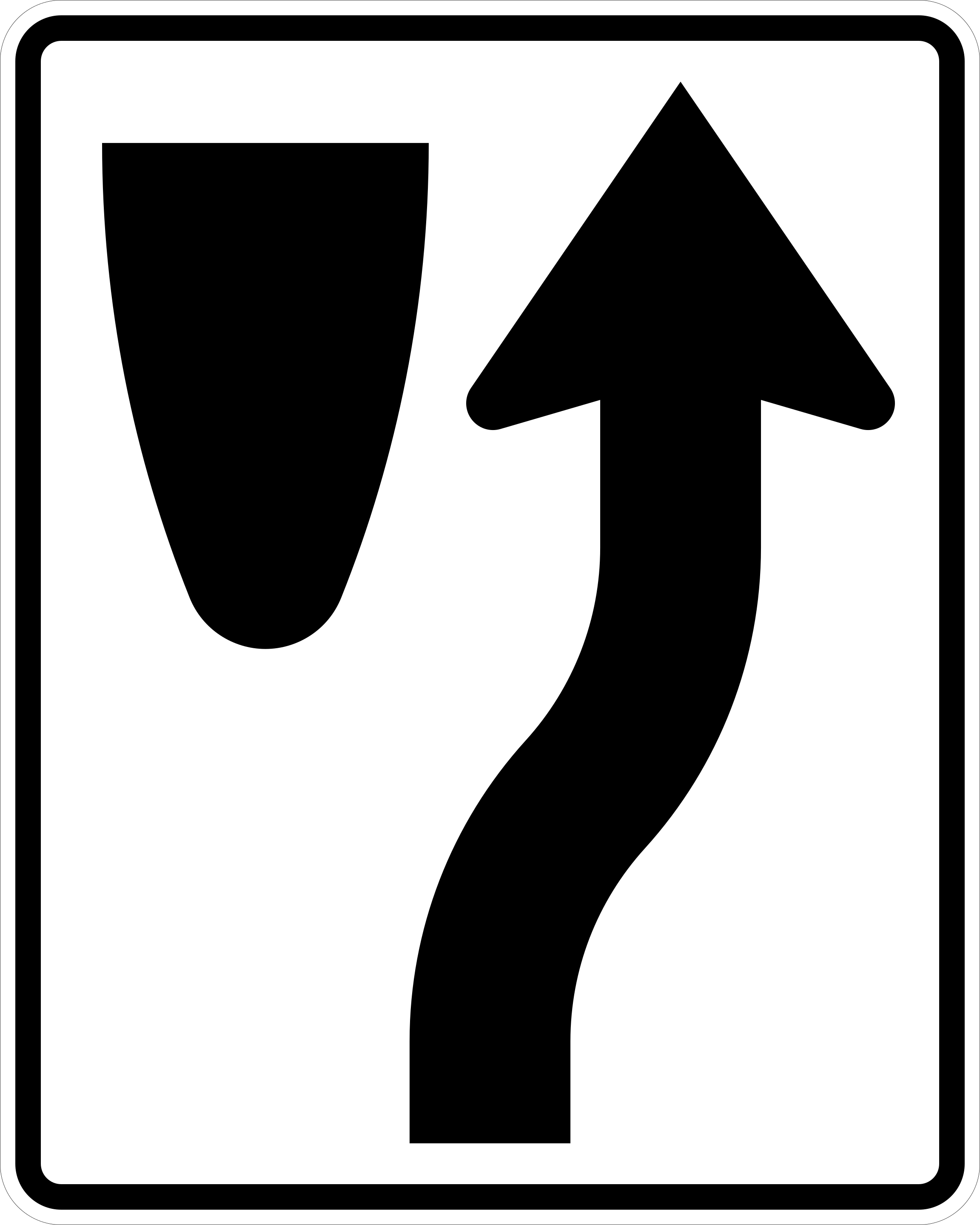
- On every curve of a two-lane road
- At openings in the dividers where streets intersect with the highway
- Only at the entrance to a school zone
- Only at railroad crossings before the tracks
Show answer
At openings in the dividers where streets intersect with the highway. The handbook says lane-direction signs are posted between highway lanes that are divided and placed at openings in the dividers where streets intersect with the highway. Their job is to remind you which side of the divider you belong on, which matters most at the exact point where a cross street lets you turn onto the divided roadway. They are not curve warnings, school-zone signs, or railroad signs. When turning onto a divided highway, look for the sign at the opening and enter the side assigned to your direction of travel.
Study this in the handbook: Sign shapes, colors and pavement markings
QualitySpace is expanding to West Virginia
We are a California-based independent insurance brokerage working on licensing in more states. We cannot help with West Virginia insurance yet. Leave your email and we will let you know when we can.
Every question is written from the official West Virginia Driver's Licensing Handbook. Need paper? Printable WV practice test with answer key.
Last verified 2026-10-05. How we check every question · Study all 209 as flashcards
Frequently asked questions
How many questions are on this West Virginia practice test?
This fixed set has 20 questions. It is test 10 of 10 from the 209 question West Virginia bank. The real WV exam asks 25 questions and you need 19 correct.
What is the passing score for the real West Virginia test?
19 out of the 25 questions correctly to pass (76%) That figure comes from the official West Virginia source cited on the DMV facts page.
How does this fixed test relate to the full West Virginia bank?
Each numbered test is a fixed set of questions in a fixed order, so you can retake the same test later and compare. Every test mixes road signs and the other topics in about the same proportion as the full bank. Tests 1 to 10 together cover 200 of the 209 questions in the West Virginia bank, each once. The full practice page mixes the whole bank at random.
Last verified 2026-10-05. See the West Virginia DMV facts page for sourced state details.
Return to the full West Virginia practice test · Study road signs