
Test 9 of 10 · 20 questions · Free 2026
WV Permit Practice Test 9
Jump to the test ↓A fixed 20 question set from the West Virginia bank with answers and plain English explanations. The real WV exam is 25 questions, 76 percent to pass; take the full length version on the main practice page.
Question 1 of 20 · 0 right so far
All 20 questions in test 9
Every question below comes from the West Virginia question bank on this page. Open a question to see the correct answer and the explanation. Nothing here is hidden behind a signup.
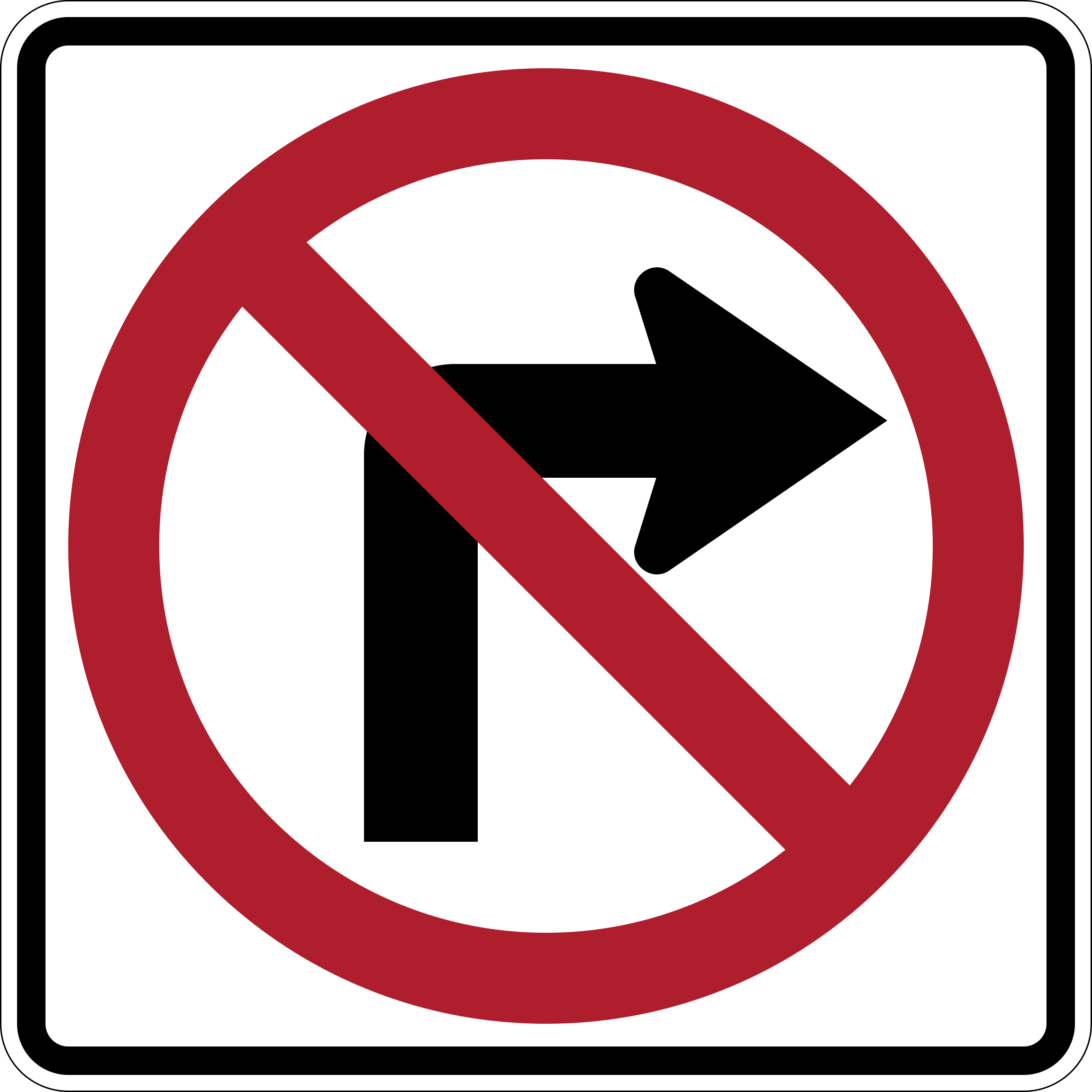
1. Why might a NO RIGHT TURN sign be posted?
- The road has no painted center line
- The turn is unsafe or the street is one way
- The next block has a legal parking area
- The intersection is always controlled by a railroad gate
Show answer
The turn is unsafe or the street is one way. A no-turn sign can control a movement where a one-way street or another condition makes the turn unsafe. It does not indicate that the road lacks a center line, promise a parking area, or say that a railroad gate controls every approach. Scan for the arrow and slash before entering the intersection, and follow the permitted direction instead of relying on a familiar route.
Study this in the handbook: Sign shapes, colors and pavement markings
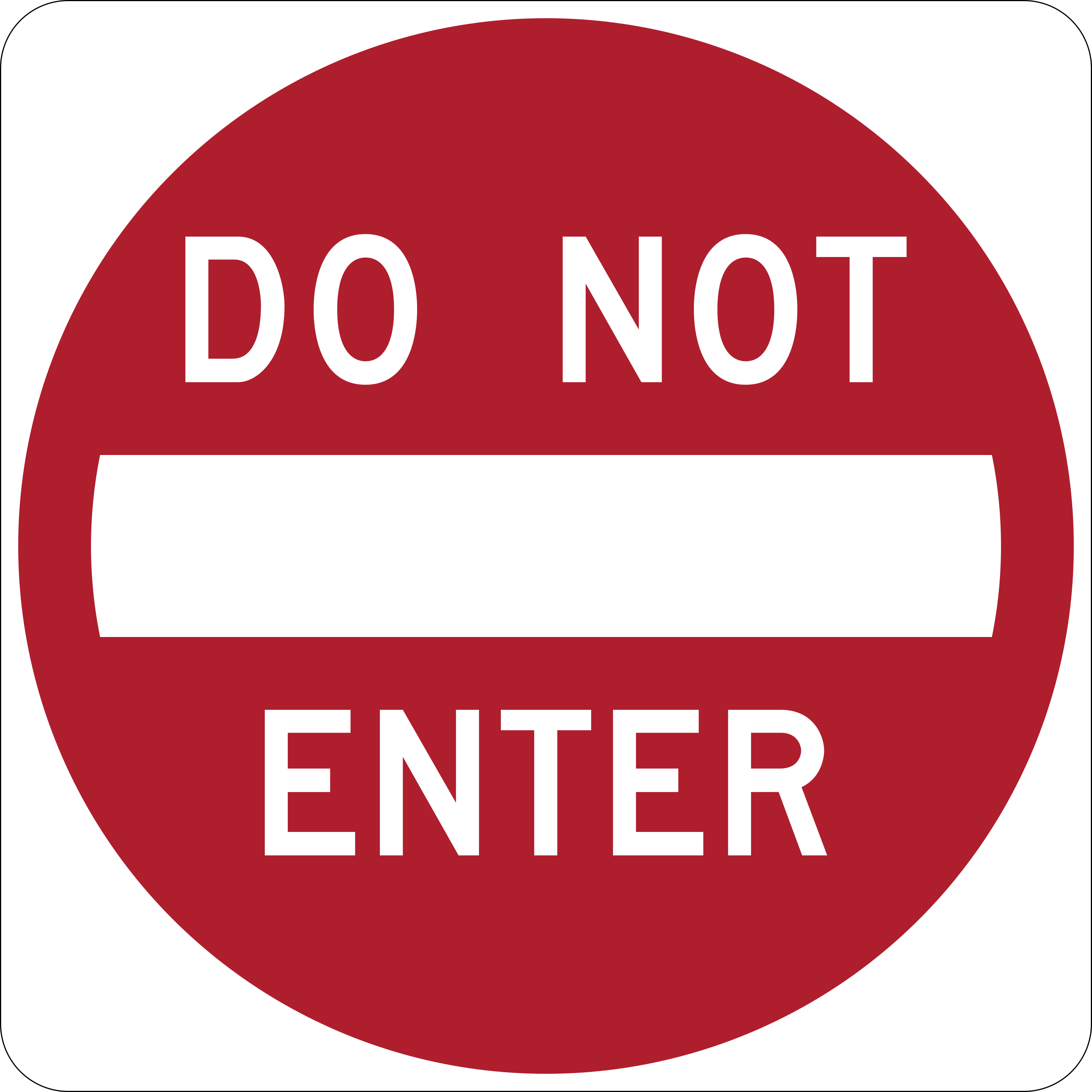
2. What does a Wrong Way or Do Not Enter sign tell a driver?
- The driver may enter after stopping briefly
- The lane is reserved for emergency vehicles
- Traffic in that direction is prohibited
- The roadway becomes one way after the next intersection
Show answer
Traffic in that direction is prohibited. A Wrong Way or Do Not Enter sign warns that traffic is prohibited in the marked direction. The restriction applies even when the road appears empty, because another vehicle may be approaching from the lawful direction. The emergency vehicle option describes a different kind of lane control, and stopping briefly does not create permission to enter. The one way choice reverses the message rather than following it. Treat the sign as an immediate instruction to stay out of that lane, then find a safe legal route instead of trying to correct course by entering against traffic.
Study this in the handbook: Sign shapes, colors and pavement markings
3. How does the West Virginia handbook describe right-of-way in situations where another driver may not yield?
- It belongs automatically to the vehicle traveling fastest
- It should be given rather than taken when safety requires caution
- It can be taken whenever a driver reaches the intersection first
- It is guaranteed whenever a driver has a green signal
Show answer
It should be given rather than taken when safety requires caution. The handbook treats right-of-way as something a driver gives when needed for safety, not as permission to force another road user into a conflict. A driver may have priority under a traffic rule and still need to yield if another person fails to follow that rule. The fastest vehicle does not automatically gain priority, and arriving first does not erase the duty to avoid a collision. Use the phrase as a driving cue: slow down, observe the other road user, and choose the safe gap instead of insisting on priority.
Study this in the handbook: Right of way and pedestrians
4. What does the West Virginia handbook say people mistakenly assume about the Implied Consent Law?
- That it applies only to commercial drivers
- That they will be fined or jailed just for being stopped with alcohol on their breath
- That refusing the test has no penalty
- That it requires a blood test in every stop
Show answer
That they will be fined or jailed just for being stopped with alcohol on their breath. The handbook notes that many people mistakenly assume the Implied Consent Law means they will be fined or go to jail if they are stopped and have alcohol on their breath. In fact the law is about consent to the designated Breathalyzer test; the serious consequence is for refusing it, which revokes the driving privilege for one year and up to life. The law applies to every driver, and it does not require a blood test at every stop.
Study this in the handbook: Implied consent, DUI penalties and interlock
5. When a vehicle begins to skid, which steering response does the West Virginia handbook recommend?
- Accelerate until the tires regain grip
- Brake hard and hold the wheel straight
- Turn sharply opposite the skid
- Turn the steering wheel in the direction of the skid
Show answer
Turn the steering wheel in the direction of the skid. During a skid, the handbook says to stay calm, take your foot off the gas, and turn the steering wheel in the direction of the skid. If the rear moves right, steer right, then straighten the wheels as control returns. Hard braking can worsen the loss of control, and turning sharply the other way can produce an overcorrection. Acceleration does not restore traction. A useful cue is to look where you want the vehicle to travel, ease off the accelerator, and make smooth steering corrections until the car is stable.
Study this in the handbook: At a crash scene
6. What does an octagon-shaped traffic sign require?
- A warning to increase speed
- A yield without stopping
- A complete stop before proceeding
- A lane change to the left
Show answer
A complete stop before proceeding. An octagon is reserved for stop signs, and this shape requires the driver to stop completely before moving again. Yielding without stopping describes a different control, while increasing speed or changing lanes has no connection to the sign. After stopping, check the crossing area and all approaching traffic, then proceed only when the way is safe and right-of-way has been given as required. The useful visual cue is the eight-sided outline, which remains recognizable even when distance, darkness, or weather makes the lettering hard to read.
Study this in the handbook: Sign shapes, colors and pavement markings
7. Your vehicle is disabled on a West Virginia interstate. Where does the handbook say to place flares?
- One about a vehicle length behind and another about 300 feet back
- One directly beside the driver door only
- One about 50 feet back and another 100 feet back
- One about 1,000 feet back only
Show answer
One about a vehicle length behind and another about 300 feet back. For a disabled vehicle on an interstate, the handbook says to put one flare about one vehicle length behind the vehicle and another about 300 feet back, each on the shoulder near the edge of the through lane. A flare beside the door gives approaching drivers no warning. Fifty and 100 feet are too close for interstate speeds, and a single flare 1,000 feet back is not the pattern described. Also move off the road, turn on the four way flashers, and get everyone away from the road.
Study this in the handbook: Entering, exiting and driving on interstates
8. What license format is issued to applicants who are 21 years old or older?
- A vertical license with a blue background
- A vertical license with a red background
- A horizontal license with a landscape background
- A horizontal license with a portrait background
Show answer
A horizontal license with a landscape background. Applicants who are at least 21 receive a horizontal license with a landscape background. The red vertical design identifies applicants ages 15 through 17, while the blue vertical design identifies those ages 18 through 20. A portrait background changes the handbook's description and is not the adult format. These visual distinctions help law enforcement and retailers recognize the cardholder's age. When reviewing a license sample, check both orientation and background rather than relying on color alone.
Study this in the handbook: License colors, Drive for Five and renewal
9. According to the West Virginia handbook, about what share of traffic fatalities are vehicle-pedestrian collisions?
- Nearly 20 percent
- Less than 1 percent
- About half
- Nearly 90 percent
Show answer
Nearly 20 percent. The West Virginia handbook opens its pedestrian section with the figure that vehicle-pedestrian collisions account for nearly 20 percent of traffic fatalities. It then says drivers must use extreme care to avoid colliding with a pedestrian, especially where special hazards exist, such as school zones, bus stops, playgrounds and parks, and that drivers may use their horns to warn pedestrians if necessary. The other percentages are far from the handbook's number. Pedestrians have the right of way in a crosswalk.
Study this in the handbook: Right of way and pedestrians
10. Where should a driver travel when moving more slowly than normal traffic?
- On the shoulder whenever any vehicle approaches
- Along the center line so others cannot pass
- In the left lane regardless of the road layout
- As close as possible to the right edge of the road
Show answer
As close as possible to the right edge of the road. Keeping close to the right edge gives faster traffic a clearer opportunity to pass and makes the slower vehicle's position predictable. The center line and left-lane choices interfere with normal traffic flow. Moving onto the shoulder every time another vehicle appears is not the handbook's general rule and may be unsafe. Maintain a lawful speed for the conditions, watch for a safe turnout when needed, and avoid making other drivers guess where you intend to travel.
Study this in the handbook: The road skills test and basic control
11. When should a driver switch off a turn signal?
- Only after traveling another block
- Before beginning the turn
- After completing the turn
- Never, because a signal should remain on
Show answer
After completing the turn. The signal should communicate an intended movement, then be switched off after that movement is complete. Leaving it on can make other drivers believe another turn is coming and can create confusion. Turning it off before the maneuver removes the warning too early, while waiting a block misleads traffic behind you. Check the indicator after the turn and cancel it promptly, especially before continuing straight or preparing for a different lane change.
Study this in the handbook: The road skills test and basic control
12. What should a driver do when entering an interstate exit lane?
- Keep interstate speed through the entire exit ramp
- Brake sharply in the through lane before reaching the exit
- Stop on the interstate shoulder and then turn onto the ramp
- Wait until the deceleration lane, then brake gently to the ramp speed
Show answer
Wait until the deceleration lane, then brake gently to the ramp speed. Interstate exits usually provide a deceleration lane for slowing before the ramp. The handbook says not to slow down on the interstate; wait until entering that lane, then brake gently until the vehicle matches the posted exit-ramp limit. Braking sharply in the through lane can surprise following traffic, and the shoulder is intended for disabled vehicles rather than planned exits. Keeping full interstate speed onto a curved ramp ignores the advisory or posted ramp speed. Signal early, move over in time, and reduce speed smoothly.
Study this in the handbook: Entering, exiting and driving on interstates
13. What happens if a West Virginia driver fails to provide proof of liability insurance when the DMV asks for it?
- Only a $25 late fee is charged
- The vehicle must be inspected again
- Nothing until a crash occurs
- The driver's license and the vehicle registration are suspended, with reinstatement or penalty fees
Show answer
The driver's license and the vehicle registration are suspended, with reinstatement or penalty fees. Every vehicle on West Virginia public roads must carry state liability insurance, and the DMV may verify coverage at any time during the registration year. Failure to provide proof of West Virginia liability insurance results in suspension of your driver's license as well as your vehicle registration, along with reinstatement and penalty fees. The consequence does not wait for a crash, and it is not a small late fee or an inspection matter.
Study this in the handbook: Crash reports, insurance and phone use
14. What must a driver do at a stop sign or red light, even when turning right?
- Slow down without stopping if cross traffic is absent
- Come to a complete stop
- Stop only when another vehicle is approaching
- Turn immediately after signaling
Show answer
Come to a complete stop. The handbook warns that impatience can lead drivers to roll through a stop sign or red light when no cross traffic is visible. The rule still requires a complete stop, including when the intended movement is a right turn. Merely slowing is not enough, and signaling does not replace the stop. Stop at the marked line, crosswalk, or before entering the intersection as appropriate, then check for pedestrians and traffic before proceeding. Pressure from a following vehicle is never permission to roll through.
Study this in the handbook: Drowsy driving, fatigue and emotions
15. How many points can a West Virginia driver remove by completing an approved defensive driving class?
- 2 points
- 6 points
- All points on the record
- 3 points
Show answer
3 points. An approved eight hour defensive driving class removes three points from a West Virginia record. Two points is less than the stated deduction, and six points or a full wipe are more than the class allows. The class must be approved by the DMV, the points must already be on the record before the class is taken, and the reduction is available only once every 12 months.
Study this in the handbook: Points, citations and suspensions
16. What are pavement markings used to do?
- Warn, regulate, and inform traffic
- Identify only vehicle registration numbers
- Separate only traffic traveling in opposite directions
- Show only where emergency vehicles may travel
Show answer
Warn, regulate, and inform traffic. Pavement markings serve the same broad communication purpose as highway signs: they warn, regulate, and inform traffic. Their details can separate lanes, identify a center turn lane, mark a crosswalk, or show where a vehicle must stop. They are not registration labels, and they do not separate only opposing traffic because some markings divide lanes moving in the same direction. They also do not reserve every marked lane for emergency vehicles. Read the marking's color, pattern, and location together before choosing a movement.
Study this in the handbook: Sign shapes, colors and pavement markings
17. What should a driver do before entering a curve?
- Brake sharply after the vehicle is centered in the curve
- Accelerate until reaching the posted maximum
- Reduce speed so further braking is not needed in the curve
- Move toward the center line for a wider path
Show answer
Reduce speed so further braking is not needed in the curve. The handbook advises reducing speed before entering a curve so that further braking is not required while the vehicle is turning. Braking late can upset the vehicle, and accelerating to the posted maximum ignores the warning sign and roadway conditions. Moving toward the center line creates a conflict with opposing traffic. Enter at a controlled speed, stay in your lane, continue checking traffic, and maintain a safe pace through the bend. The key timing cue is to slow before the curve rather than after steering into it.
Study this in the handbook: The road skills test and basic control
18. What subjects form the basis of the West Virginia knowledge examination?
- Basic knowledge, traffic rules, regulations, signs, and markings
- Vehicle repairs, insurance claims, and fuel economy
- Only road signs and pavement colors
- Motorcycle maintenance and commercial vehicle loading
Show answer
Basic knowledge, traffic rules, regulations, signs, and markings. The examination covers a broad set of handbook material: basic knowledge, traffic rules, regulations, signs, and markings. The option “Vehicle repairs, insurance claims, and fuel economy” is too narrow and shifts the focus toward vehicle ownership topics that are not listed as the exam foundation. The option “Only road signs and pavement colors” leaves out basic knowledge and traffic rules, while the option “Motorcycle maintenance and commercial vehicle loading” describes specialized subjects rather than the general test. Use the list as a study map: review the rules of the road, learn the signs, and understand the markings instead of preparing only for a sign-identification quiz.
Study this in the handbook: Vision, knowledge and road tests
19. What is the effect of West Virginia's implied consent law after a driver is arrested for DUI?
- The driver may choose any medical test instead
- The driver is deemed to have consented to the designated Breathalyzer
- Consent is required only after a conviction
- The law applies only to drivers under 21
Show answer
The driver is deemed to have consented to the designated Breathalyzer. Implied consent means that a driver is considered to have agreed to the designated Breathalyzer when arrested for DUI. It is not limited to drivers under 21, and it does not wait for a conviction. The passage does not provide a right to replace the designated test with any test the driver prefers. Refusal carries a separate revocation consequence, so the chemical-test decision can affect the driving privilege even apart from the underlying DUI case. Remember the sequence: arrest, deemed consent, designated test, and consequences for refusal.
Study this in the handbook: Alcohol, BAC limits and zero tolerance
20. What principle should guide a driver who is uncertain about another vehicle's right-of-way?
- Give the right-of-way when necessary for safety
- Take the right-of-way to prevent delay
- Accelerate so the other driver must stop
- Rely on the vehicle's larger size
Show answer
Give the right-of-way when necessary for safety. West Virginia treats right-of-way as something drivers give, not something they seize. If another road user fails to follow the expected rule, yielding can prevent a collision even when you believe you should proceed. Taking priority to save time increases conflict, and acceleration cannot safely force another driver to stop. Vehicle size is not a substitute for judgment. Ease off, make eye contact when possible, and leave room for the other vehicle to clear. Courtesy is a protective driving action when the situation is unclear.
Study this in the handbook: Right of way and pedestrians
QualitySpace is expanding to West Virginia
We are a California-based independent insurance brokerage working on licensing in more states. We cannot help with West Virginia insurance yet. Leave your email and we will let you know when we can.
Every question is written from the official West Virginia Driver's Licensing Handbook. Need paper? Printable WV practice test with answer key.
Last verified 2026-10-05. How we check every question · Study all 209 as flashcards
Frequently asked questions
How many questions are on this West Virginia practice test?
This fixed set has 20 questions. It is test 9 of 10 from the 209 question West Virginia bank. The real WV exam asks 25 questions and you need 19 correct.
What is the passing score for the real West Virginia test?
19 out of the 25 questions correctly to pass (76%) That figure comes from the official West Virginia source cited on the DMV facts page.
How does this fixed test relate to the full West Virginia bank?
Each numbered test is a fixed set of questions in a fixed order, so you can retake the same test later and compare. Every test mixes road signs and the other topics in about the same proportion as the full bank. Tests 1 to 10 together cover 200 of the 209 questions in the West Virginia bank, each once. The full practice page mixes the whole bank at random.
Last verified 2026-10-05. See the West Virginia DMV facts page for sourced state details.
Return to the full West Virginia practice test · Study road signs