
Key points
Observe speed limits and adjust your speed to the driving conditions.
Source: PDF page 52
“Observe speed limits and adjust your speed to the driving conditions.”
West Virginia Driver's Licensing Handbook, PDF page 52The higher your speed, the less time you have to spot hazards and act.
Source: PDF page 52
“The higher the speed, the less time you have to spot hazards, judge the speed of other vehicles, and act to avoid personal mistakes and those of other drivers.”
West Virginia Driver's Licensing Handbook, PDF page 52Speed limits are posted on most roads, but you may never drive faster than is reasonable and prudent for conditions.
Source: PDF page 52
“The speed limit for most roads are posted. However West Virginia law prohibits driving at a speed that is greater than reasonable and prudent for existing conditions.”
West Virginia Driver's Licensing Handbook, PDF page 52Emergency vehicles on duty with signals operating may exceed the speed limit if others are not endangered.
Source: PDF page 52
“Authorized emergency vehicles may exceed the posted speed limits when on emergency duty with emergency signal equipment operating, as long as other road users are not endangered.”
West Virginia Driver's Licensing Handbook, PDF page 52A school zone includes school grounds and the street extending 125 feet from them.
Source: PDF page 52
“A school zone is all school property, including school grounds, and/or any street or highway abutting the school grounds and extending 125 feet along the street or highway from the school grounds.”
West Virginia Driver's Licensing Handbook, PDF page 52When driving slower than normal traffic, stay as close as possible to the right edge of the road.
Source: PDF page 53
“When you drive at less than the normal speed of traffic, you should drive as close as possible to the right edge of the road.”
West Virginia Driver's Licensing Handbook, PDF page 53On a road with 1 lane each way, pull off at the first safe turnout to let faster traffic pass.
Source: PDF page 53
“pull off at the first safe turnout to let faster moving traffic pass. This rule applies when you are on a road with one (1) lane in each direction”
West Virginia Driver's Licensing Handbook, PDF page 53
Numbers to know
| Number | What it means | Manual |
|---|---|---|
| 125 feet | how far a school zone extends along the road from school grounds | PDF page 52 |
| 1 lane | roads with one lane each way where slow drivers must pull off to let traffic pass | PDF page 53 |
Recognize these signs
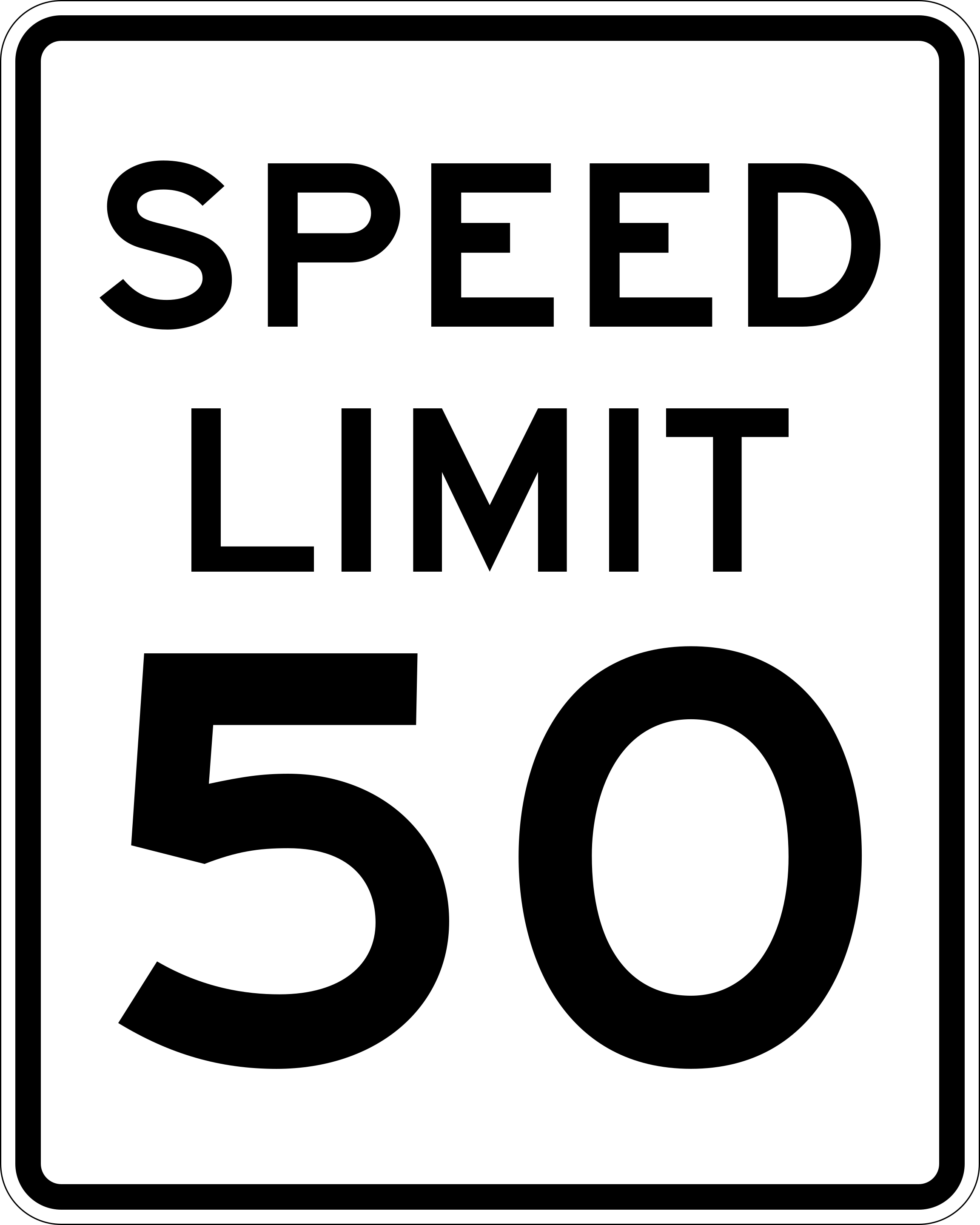
Speed limit 
School zone
3 questions from the West Virginia practice test
1. How far along a street or highway does a West Virginia school zone extend from school grounds?
- 100 feet
- 50 feet
- 125 feet
- 250 feet
Show answer
125 feet. The handbook defines the school zone as school property plus an abutting street or highway extending 125 feet from the school grounds. The 100-foot choice is a plausible distance, but it is not the measurement used in this definition. Treat the zone as more than the immediate driveway or entrance area. When approaching school property, look for children, buses, crossing activity, and signs before deciding how quickly to travel. The distance describes the legal zone, while the posted school-zone speed and present conditions govern the safe speed.
2. What standard should a driver use when deciding whether the current speed is safe?
- A fixed 70 mph on every highway
- The fastest speed used by nearby traffic
- The maximum number printed on any nearby sign
- A speed that is reasonable and prudent for existing conditions
Show answer
A speed that is reasonable and prudent for existing conditions. West Virginia's basic speed rule requires a speed that is reasonable and prudent for existing conditions. Nearby drivers do not set your safe speed, and a sign from another roadway cannot be treated as a universal maximum. Seventy mph is the designated interstate maximum unless otherwise posted, not a speed for every highway. Look beyond the number on the sign and account for visibility, weather, traffic, and stopping distance. A posted limit is an upper boundary under normal conditions, while the basic rule may require you to slow below it when the road becomes hazardous.
3. What is the recommended response when you are driving slower than normal traffic and faster vehicles cannot pass safely?
- Speed up above the posted limit
- Drive in the center of the lane to block passing
- Stop immediately in the travel lane
- Move as close as possible to the right edge and use the first safe turnout
Show answer
Move as close as possible to the right edge and use the first safe turnout. A slower driver should make room for traffic rather than create a moving obstruction. The handbook says to stay close to the right edge and pull off at the first safe turnout when a one-lane-each-way road leaves overtaking traffic without a clear passing lane. Blocking the center is the opposite of that courtesy. Stopping in the travel lane adds a hazard, while exceeding the limit is not required. Watch the road behind you, plan ahead for a turnout, and reenter only when the maneuver can be completed safely.
Practice this topic
Lock it in with speed limits questions from the free West Virginia practice test. Every answer comes with a plain English explanation.
Source: the West Virginia Driver's Licensing Handbook, Chapter VI: Traffic Laws And Rules Of The Road. This lesson is a plain English summary, not the law itself; where it differs, the manual and the statute govern. Last checked 2026-09-27.