
QualitySpaceQualitySpace
Display
Auto follows your device setting.
Menu

20 question exam format · Real sign images & audio · Free

NY Permit Practice Test

Real test: 20 questions, 70% to pass. Practice 20 at a time below. Free, no signup.

New York verified practice bank · 500 questions rev 2026-10-12-ca500

Question 1 of 20 · 0 right so far

0 correct · 0 missed
Flashing red lights and a lowered gate are active at a railroad crossing. How far back must you stop?
More ways to practice: exam simulator, topic drills, missed questions

500-question bank · Sign images & explanations · Free

New York practice test has 500 questions. Every question comes with a plain-English explanation the moment you answer.

Get a day by day study plan

Optional. Three quick answers; the tests below work without it.

Age on test day

No date yet? You get a 7 day plan.

Real exam format: 20 questions, 14 correct to pass; at least 2 of 4 road sign questions correct.

Start here

Run 20 questions to warm up.

Find your gaps

Diagnose weak topics and retry what you've missed.

Simulate the real thing

Practice under graded exam conditions or run the whole bank.

Practice one topic

Drill a single topic, up to 20 questions with explanations.

Random draw and answer order every attempt. Scored against the real test's pass mark: 14 of 20 correct.

Free means actually free: no subscription, no auto-renew, no card required, no locked features. This site is funded by our insurance work, not by test-prep charges.

Show a parent how you are doing

A read-only link with your New York readiness, topic scores and test results. No account, no name or email.

New York permit practice test at a glance

500 free practice questions, with 25 numbered 20 question tests and the full bank to practice, plus a free real-exam simulator that matches the New York knowledge test (20 questions and 14 correct to pass), a road sign test, and an explanation for every answer. No signup, no paywall, nothing locked. Questions are written from the New York State Driver's Manual and were last checked against it on September 6, 2026.

The real New York knowledge test is the DMV exam used for a learner permit. This page contains the full free 500 question study bank, with an explanation after each answer. Use the numbered 20 question tests below when you want a fixed study session.

The real New York knowledge test: 20 questions on the written test; passing score You must correctly answer at least 14 of the 20 questions asked, including two of the four questions about road signs (official source). This practice bank has 500 questions.

Alcohol and DUIEmergenciesLaws and paperworkParkingRight of wayRoad signsSafe drivingSignals and markingsSpeed limits

See facts and key topics for New York DMV (minimum age, fees, wait times, question counts by topic) before you start, or print it to bring with you on test day.

Booked your test? See what to bring and where to go: a printable New York document checklist with official office and appointment links.

Study the handbook, chapter by chapter: 17 short free lessons with the key rules, the exact numbers, and 3 check questions each, all quoted from the New York manual.

How to use this NY practice test

  1. Take the 20 question exam-length practice test above once, untimed, to find your weak topics.
  2. Work through the numbered 20 question sets below. Each one is fixed, so a second attempt is a fair comparison.
  3. Read the explanation on every miss. The wording comes from the New York State Driver's Manual, which is what the examiners use.
  4. When you pass three sets in a row at 70 percent or better, book the real test.

Frequently asked questions

How many questions are in the New York practice bank?

This free page contains the full 500 question bank. The numbered tests each contain 20 fixed questions.

How does this practice test relate to the real New York test?

The real test facts are shown above from the official source. This page is an educational practice bank and is separate from the DMV test.

Can I use the New York practice test for free?

Yes. The practice questions, explanations, and numbered tests are free to use with no account required.

Last verified 2026-09-05 against the New York State Driver's Manual, which sets the real exam at 20 questions and 14 correct to pass.

All 20 questions, NY exam length

Every question below comes from the New York question bank on this page. Open a question to see the correct answer and the explanation. Nothing here is hidden behind a signup.

  1. 1. Flashing red lights and a lowered gate are active at a railroad crossing. How far back must you stop?

    1. At least 30 feet from the tracks
    2. At least 3 feet from the tracks
    3. At least 15 feet from the tracks
    4. With the front bumper over the first rail
    Show answer

    At least 15 feet from the tracks. Flashing red lights, a lowered gate, or a bell at a railroad crossing requires stopping at least 15 feet from the tracks. Full explanation in Test 1

  2. 2. May you enter to prepare a left turn?

    1. Enter on green if no one ahead plans a left
    2. Always wait behind the line
    3. Enter on red
    4. Rush through yellow
    Show answer

    Enter on green if no one ahead plans a left. Left-turn staging is allowed conditionally: on green, enter to prepare when no vehicle ahead plans a left turn. Full explanation in Test 2

  3. 3. A New York junior permit holder is driving with a supervising parent. Who may sit in the front passenger seat?

    1. Any licensed adult
    2. Any passenger wearing a seat belt
    3. A friend under 21, if the supervisor sits in back
    4. Only the supervising driver
    Show answer

    Only the supervising driver. New York keeps the front passenger seat for the supervising driver whenever a junior permit holder is at the wheel. Full explanation in Test 3

  4. 4. What happens when you drive below a minimum speed limit?

    1. It improves traffic flow
    2. It is always safest
    3. It can halt traffic flow and create danger
    4. It saves fuel for all
    Show answer

    It can halt traffic flow and create danger. Minimum limits exist to keep traffic moving: driving slower than the posted minimum can halt the traffic flow and create a dangerous conditi Full explanation in Test 4

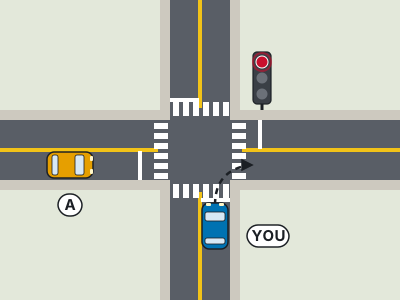
  5. 5. Outside New York City, when may you turn right at a steady red light?

    A four-way intersection with a traffic signal. The signal facing your car shows a steady red light in the top position. Your car, blue, is stopped at the stop line heading north and plans to turn right, shown by a dashed arrow. Car A, orange, approaches from the left on the cross street, heading east.
    1. Immediately after slowing if no vehicle is close
    2. After a full stop, when the way is clear and no sign or marking prohibits the turn
    3. Only after waiting for a green arrow in every location
    4. Whenever the driver is turning from a one-way street
    Show answer

    After a full stop, when the way is clear and no sign or marking prohibits the turn. Outside New York City, you may turn right on a steady red after a complete stop, once you have yielded to oncoming traffic and pedestrians, Full explanation in Test 5

  6. 6. Which vehicles display amber hazard lights?

    1. Snow plows, tow trucks, and towing rigs with amber or amber-blue warning lights
    2. Only ice cream trucks
    3. Only mail trucks
    4. Only buses
    Show answer

    Snow plows, tow trucks, and towing rigs with amber or amber-blue warning lights. Amber warns of work hazards: hazard vehicles like snow plows and tow trucks, plus towing rigs combining amber with rear blue, warn of possib Full explanation in Test 6

  7. 7. May you park on the striped space beside a reserved spot?

    1. Park there freely
    2. Use them for loading
    3. Never park on diagonal-stripe access spaces
    4. Motorcycles may use them
    Show answer

    Never park on diagonal-stripe access spaces. Striped spaces are wheelchair room: never park in the diagonal-striped spaces beside reserved areas, which provide access for wheelchairs an Full explanation in Test 7

  8. 8. How many classes of limited-use motorcycles, commonly called mopeds, does New York recognize?

    1. Two: Class M and Class MJ
    2. Three: Class A, Class B, and Class C
    3. Four, based only on engine size
    4. One class with identical operating rules
    Show answer

    Three: Class A, Class B, and Class C. New York divides mopeds into three classes based on maximum performance speed. Full explanation in Test 8

  9. 9. Is a New York driver at a YIELD sign ever required to come to a full stop?

    1. No, a YIELD sign only requires slowing down
    2. Only when a police officer is present
    3. Yes, when traffic conditions require it
    4. Only between sunset and sunrise
    Show answer

    Yes, when traffic conditions require it. A YIELD sign tells you to decrease speed and prepare to stop, but the New York manual adds that you must come to a full stop at a YIELD sign Full explanation in Test 9

  10. 10. May parking lights replace headlights?

    1. Yes, always
    2. Yes, in cities
    3. No, headlights do a better job
    4. Only in daylight
    Show answer

    No, headlights do a better job. Parking lights never substitute for headlamps: drivers must not use parking lights or daytime running lights as a replacement because headli Full explanation in Test 10

  11. 11. How many motorcycles may ride side-by-side in one New York lane?

    1. Two motorcycles
    2. One motorcycle only
    3. Any number if they maintain the speed limit
    4. Three motorcycles
    Show answer

    Two motorcycles. New York permits two motorcycles to ride side-by-side in a single lane. Full explanation in Test 11

  12. 12. How much room should you leave ahead?

    1. Enough room to stop if the leader stops suddenly
    2. One car length always
    3. No gap is needed
    4. A full mile of space
    Show answer

    Enough room to stop if the leader stops suddenly. Following distance has one job: leave enough room to stop safely if the vehicle ahead stops suddenly. Full explanation in Test 12

  13. 13. What freezes first when snow begins to fall?

    1. Bridges, ramps, and overpasses
    2. Tunnels
    3. Parking garages
    4. Underpasses
    Show answer

    Bridges, ramps, and overpasses. Elevated pavement freezes first: when wintry precipitation begins, bridges, ramps, and overpasses ice before ordinary roadways because cold Full explanation in Test 13

  14. 14. What is the usual speed limit on a New York expressway, and when can it be higher?

    1. Normally 55 mph, but it can be posted at 65 mph in some rural areas
    2. Normally 65 mph everywhere
    3. Normally 45 mph, raised to 55 mph at night
    4. Normally 70 mph in rural areas
    Show answer

    Normally 55 mph, but it can be posted at 65 mph in some rural areas. An expressway is a divided highway where traffic moves one way on two or more lanes, entered and exited by ramps. Full explanation in Test 14

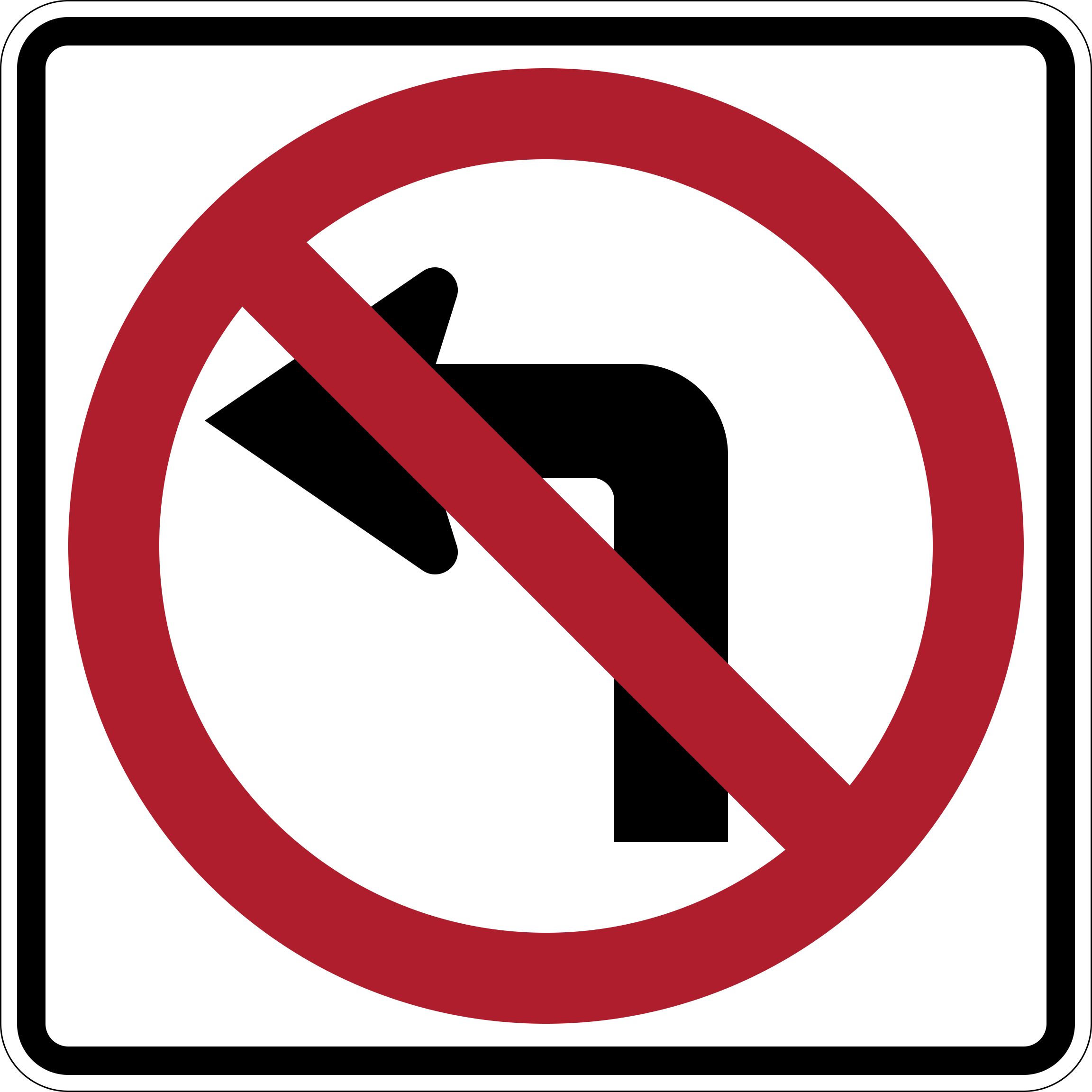
  15. 15. What movement is forbidden by the red-slash sign showing a left-turn arrow?

    Left-turn arrow crossed by red slash
    1. Turning left where the sign is posted
    2. Driving straight through the intersection
    3. Changing lanes before the intersection
    4. Turning right after stopping at a red light
    Show answer

    Turning left where the sign is posted. The sign depicts a left turn with a red slash, so that particular movement is prohibited at the posted location. Full explanation in Test 15

  16. 16. What does an inward-angling edge line mean?

    1. The road widens
    2. A parking area nears
    3. The road narrows ahead
    4. A hill nears
    Show answer

    The road narrows ahead. Angling edge lines warn of squeeze: an edge line bending toward the center shows the road narrows ahead. Full explanation in Test 16

  17. 17. What do solid edge lines indicate?

    1. Lane centers
    2. Where the travel lane ends and the shoulder begins
    3. Parking spaces
    4. Speed limits
    Show answer

    Where the travel lane ends and the shoulder begins. Edge lines mark pavement limits: solid side lines show where the travel lane ends and the shoulder begins. Full explanation in Test 17

  18. 18. A New York driver who is 18 or older passes the road test. How long is the new license on probation?

    1. Six months
    2. One year
    3. There is no probation for adults
    4. Thirty days
    Show answer

    Six months. If you are 18 or older when you pass your road test, or you obtain a license after a revocation, you are on probation for six months. Full explanation in Test 18

  19. 19. What should you do at a broken traffic light?

    1. Stop as for a stop sign
    2. Speed through
    3. Ignore the intersection
    4. Turn around
    Show answer

    Stop as for a stop sign. Dead signals mean stop signs: when lights or controls are out of service or malfunctioning, drivers must stop as for a stop sign. Full explanation in Test 19

  20. 20. A New York driver who got a license at age 19 is still in the six-month probation period and is convicted of speeding. What happens?

    1. Nothing beyond the fine and points
    2. The license is suspended for 60 days
    3. The license is revoked for one year
    4. Probation is extended by one week
    Show answer

    The license is suspended for 60 days. Drivers who are 18 or older when they pass the road test in New York start with six months of probation. Full explanation in Test 20

How this test works

Study the rules, then check the explanation

This page uses the prepared New York question bank exactly as provided. Start the test, choose an answer, and read the explanation before moving on. Retakes serve the same 500 questions so you can work through the state set without losing your place.

Want a one-page summary to study or print? See the New York DMV cheat sheet, with the most-missed rules from this same question bank.

Looking for another state? Go back to the DMV practice test hub. California remains on the established California DMV practice test page.

Are you a library or school? See the free DMV practice test partner resource for a copy ready listing and referral link.

How we write and check these questions

QualitySpace is expanding to New York

We are a California-based independent insurance brokerage working on licensing in more states. We cannot help with New York insurance yet. Leave your email and we will let you know when we can.