
Test 24 of 25 · 20 questions · Free 2026
NY Permit Practice Test 24
Jump to the test ↓A fixed 20 question set from the New York bank with answers and plain English explanations. The real NY exam is 20 questions, 70 percent to pass; take the full length version on the main practice page.
Question 1 of 20 · 0 right so far
All 20 questions in test 24
Every question below comes from the New York question bank on this page. Open a question to see the correct answer and the explanation. Nothing here is hidden behind a signup.
1. How should you use the mirror when exiting?
- Ignore mirrors
- Watch the interior mirror for hazards behind
- Fold the mirrors
- Cover the mirror
Show answer
Watch the interior mirror for hazards behind. The interior mirror keeps rear watch: use it to keep an eye on hazards behind the vehicle while preparing to exit. Ignoring, folding, and covering readings each blind the driver to approaching traffic during the slow pullout. Shoulder checks catch blind spots, but the mirror tracks the developing gap continuously. Mirror, signal, shoulders, then go when the lane truly clears.
2. Must you yield turning left into a driveway?
- Yield to oncoming traffic even with no signs
- Turn without looking
- Oncoming traffic must yield
- Signs are always present
Show answer
Yield to oncoming traffic even with no signs. Driveway and lot lefts keep the yield duty: yield to headed-toward traffic when turning left into driveways, lots, or other areas even with no signs or signals. Blind, reversed-priority, and signs-always readings each deny the sign-independent rule. Uncontrolled does not mean unruled; oncoming keeps priority. Wait the gap out, then complete the turn cleanly. Wait the oncoming gap out, then complete the driveway turn cleanly.
3. Why check specially for motorcycles?
- Check specially for motorcycles, often unseen
- Ignore motorcycles
- Motorcycles always yield
- Only watch for trucks
Show answer
Check specially for motorcycles, often unseen. Motorcycles vanish in plain sight: take special caution checking for them, since most bike-car crashes happen because the car driver failed to see the motorcycle. Ignore, yield-assuming, and trucks-only readings each skip the hardest vehicle to spot. Small profiles hide in blind spots and against backgrounds. Look twice for bikes before every turn and lane change. Small profiles hide in blind spots, so scan twice every time.
4. To what speed are New York roundabouts designed to limit vehicles inside the circle?
- 45 mph or less
- 55 mph or less
- 10 mph or less in every roundabout
- 30 mph or less
Show answer
30 mph or less. New York describes roundabouts as designed to restrict vehicle speed within the circle to 30 mph or less. The design encourages a controlled, continuous flow, but drivers must still obey any posted lower limit and yield as required at entry. Forty-five or 55 mph is too fast for the stated design, while 10 mph is not a universal requirement. Approach slowly enough to read signs, yield, and merge into the circulating lane safely.
5. What should you expect after one deer crosses?
- Only lone deer cross
- Deer ignore roads
- Expect more deer to follow
- Deer never return
Show answer
Expect more deer to follow. Deer travel as groups: spotting one crossing means expecting others to follow. Lone-only, ignore, and never-return readings each deny the herd behavior behind repeat strikes. Slow when any deer nears the roadside, since they bolt unpredictably. One crossing is a warning; the next may already be running. Slow for any roadside deer, since they bolt without any warning at all.
6. How far from a fire station driveway must a New York driver stay when parking, on each side of the road?
- 30 feet on the same side only
- 10 feet on either side
- 50 feet on either side
- 20 feet on the same side, and 75 feet on the opposite side
Show answer
20 feet on the same side, and 75 feet on the opposite side. New York bars parking within 20 feet, about 6 meters, of a fire station driveway, and within 75 feet, about 23 meters, on the opposite side of the road. The same list of statewide rules bars parking along a curb cut for sidewalk access and within 50 feet of a railroad crossing. Thirty feet is the distance from a traffic light, stop sign or yield sign, and 10 and 50 feet do not match the fire station rule. Remember the pair of numbers together: 20 feet on your side, 75 feet across the road.
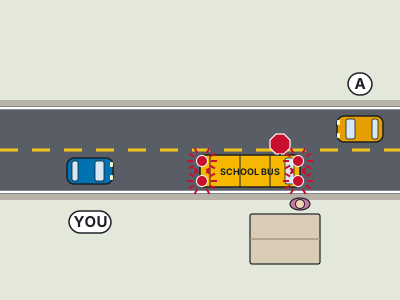
7. A New York school bus is stopped with flashing red lights. What must drivers do?
- Pass slowly if no child is visible
- Stop and remain stopped while the red lights flash
- Change lanes and continue at the posted speed
- Stop only when the bus is on the opposite shoulder
Show answer
Stop and remain stopped while the red lights flash. Flashing red school-bus lights require a stop, not merely a reduction in speed. The driver must remain stopped while the bus is loading or unloading and the red lights continue to operate. A child may be hidden from view, so the absence of a visible pedestrian does not authorize passing. Changing lanes also fails to address the stop requirement. The roadside cue is the bus's red lighting: stop well before it, watch for the lights to stop, and proceed only when the situation is safe.
8. What is the purpose of a New York bike box at an intersection?
- It gives bicyclists extra space ahead of the required vehicle stop
- It tells drivers to accelerate before the cross street
- It marks a lane reserved for parked motorcycles
- It replaces the crosswalk for people on foot
Show answer
It gives bicyclists extra space ahead of the required vehicle stop. A bike box is a marked area at an intersection positioned ahead of where motor traffic must stop. Its purpose is to provide extra space for bicyclists, helping them position visibly before traffic moves. It is not a motorcycle parking area and does not invite drivers to enter early. Nor does it eliminate a pedestrian crosswalk. When the painted box is visible, stop behind the required line and scan for cyclists before turning or proceeding. The roadway marking itself is the cue to leave that space available.
9. Are plowed roads completely safe?
- Roads are fully clear
- Salt guarantees grip
- Slippery spots may remain after plowing
- Plowed roads need no caution
Show answer
Slippery spots may remain after plowing. Plows clear snow, not all danger: slippery spots may remain after road workers remove the snow, from packed ice to refrozen melt. Fully-clear, guaranteed-grip, and no-caution readings treat the plow's pass as a safety certificate it never issues. Black ice hides in plowed wheel tracks and shaded stretches. Keep winter speed and spacing until bare dry pavement confirms itself across the whole route.
10. How should you begin backing into the space?
- Back fast with wheels straight
- Back slowly with the wheel fully toward the near curb
- Race backward
- Back with wheels away from the curb
Show answer
Back slowly with the wheel fully toward the near curb. The entry arc needs slow speed and full lock: back slowly while turning the wheel completely toward the near curb. Fast, racing, and away-from-curb readings each ruin the arc that swings the nose clear and the tail in. Slow rolling preserves steering control and reaction time if a pedestrian appears. Creep back at full lock until the front wheels oppose the neighbor's rear bumper.
11. May you drink alcohol while on other drugs?
- Never mix alcohol with other drugs
- Mixing is safe
- Mixing sobers you
- Only mix with prescriptions
Show answer
Never mix alcohol with other drugs. Alcohol plus drugs is forbidden: never drink while taking other drugs, a combination that dangerously enhances both substances' effects. Safe, sobering, and prescription-only readings each bless chemistry that kills. One drink atop a cold remedy can hit like several. Keep every substance solo or skip driving entirely. Keep every substance solo or skip driving the car entirely today. One drink atop medicine can hit like several drinks together.
12. What must you do if someone is hurt in a crash?
- Notify police immediately and ensure ambulance or rescue is called
- Wait an hour
- Handle it privately
- Leave the scene
Show answer
Notify police immediately and ensure ambulance or rescue is called. Injury crashes trigger instant calls: when anyone is injured or killed, police must be notified immediately and ambulance or rescue personnel ensured. Hour-waits, private deals, and flight readings each delay aid the law demands at once. Minutes decide medical outcomes. Call first, protect the scene, and render only safe aid. Call first, protect the scene, and render only safe and simple aid.
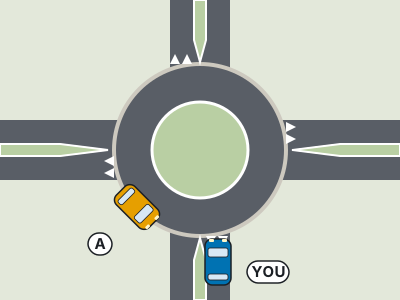
13. At a traffic circle or rotary, who has the right-of-way?
- Drivers entering from an approach road
- The largest vehicle approaching the circle
- Drivers already traveling in the circle
- The driver who signals first
Show answer
Drivers already traveling in the circle. A driver approaching a New York traffic circle or rotary must yield to vehicles already in the circle. Reaching the entrance first does not create priority, vehicle size is irrelevant, and a turn signal only communicates intention. Slow before the entrance, scan the circulating lane, and wait for a safe gap. The visible traffic already moving inside the circle is the cue to let those vehicles continue.
14. Will road signs appear on the written test?
- Never
- Only in other states
- Yes, know the signs and their meanings
- Only for truck drivers
Show answer
Yes, know the signs and their meanings. Signs are test material: drivers must know the chapter's signs and meanings because the written test asks about them. Never, other-states, and truck-only readings each excuse study the manual explicitly requires. Shapes, colors, and legends all appear. Learn every sign before the exam. Shapes, colors, and legends all appear on every exam. Learn every sign before the exam day. Study all signs these upcoming weeks.
15. What rights do motorcyclists have?
- No rights at all
- Only sidewalk rights
- Only park rights
- Full rights and responsibilities of other drivers
Show answer
Full rights and responsibilities of other drivers. Motorcycles are full traffic citizens: riders hold the same rights and responsibilities as other vehicle drivers and must follow the same traffic laws. None, sidewalk, and park readings each demote vehicles the law promotes equally. Drivers must share lanes and awareness accordingly. Same roads, same rules, same respect. Same roads, same rules, and same respect for all drivers. Drivers must share lanes and awareness with riders accordingly.
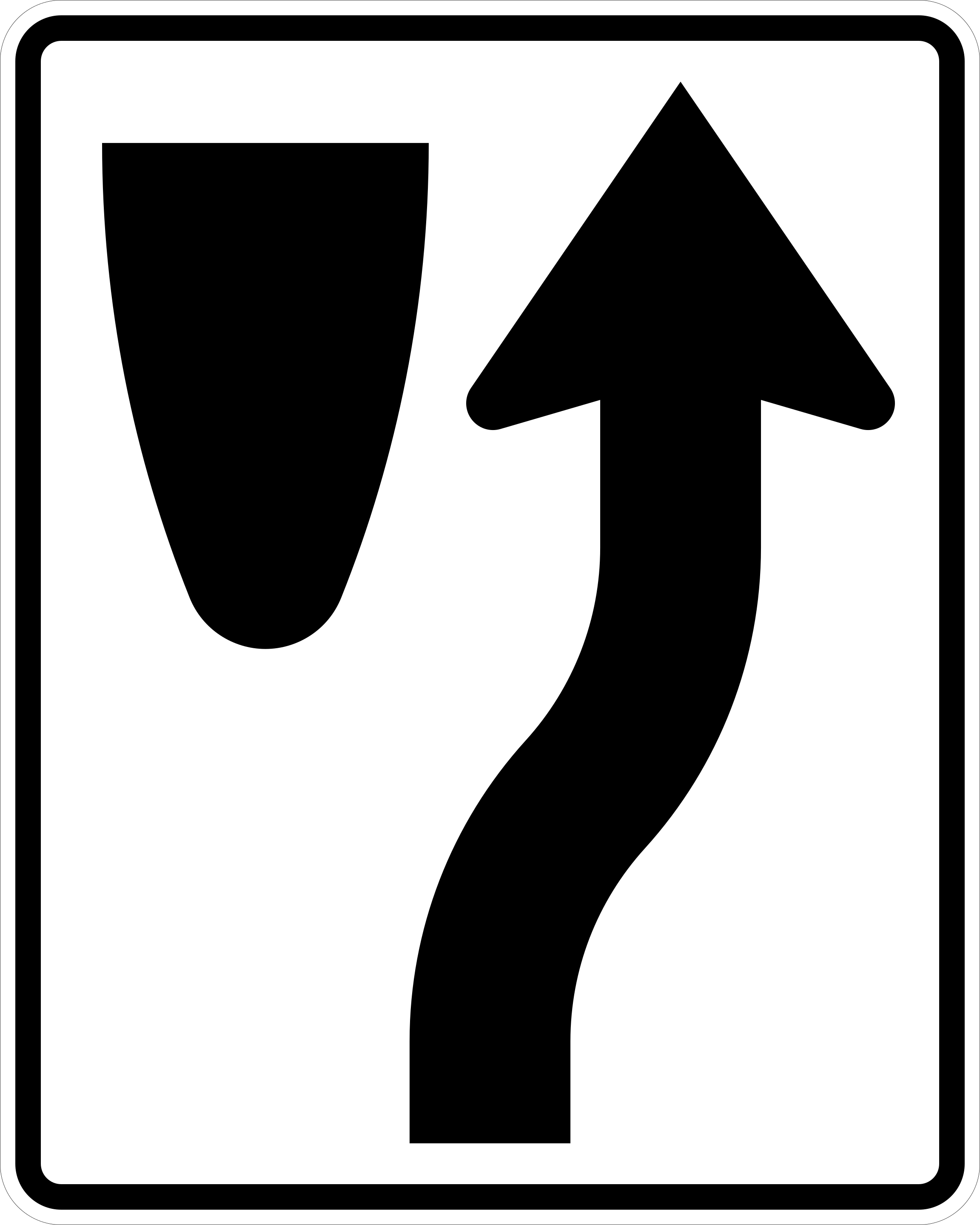
16. When this keep-right sign appears beside a divider, what should the driver do?
- Cross left of the divider before reaching it
- Pass to the right of the divider or obstruction
- Use the shoulder as a permanent travel lane
- Stop and wait for a traffic officer
Show answer
Pass to the right of the divider or obstruction. The arrow beside the divider directs traffic to keep right of the median or obstruction. It does not tell drivers to abandon the right side, use the shoulder continuously, or stop when no officer is present. The movement should be completed smoothly while the roadway remains clear, with attention to nearby vehicles and pedestrians. The manual's sign list describes this symbol as keep right of divider. The practical cue is the barrier shown next to the arrow: go around its right side, not through or left of it.
17. How should you choose routes before a trip?
- Use a highway map to choose routes
- Guess the way
- Follow any car
- Drive randomly
Show answer
Use a highway map to choose routes. Trips start on paper: when planning, use a highway map to decide which routes to take. Guessing, following, and random readings each navigate by hope instead of preparation. Route shield shapes identify interstate, U.S., state, and county roads. Plan the route, then watch destination signs en route. Plan the route well, then watch destination signs en route. Route shields identify interstate, U.S., state, and county roads.
18. A New York junior license holder is convicted of texting while driving for the first time. What happens to the license?
- It is suspended for 60 days
- Nothing beyond a fine
- It is suspended for 120 days
- It is revoked until age 21
Show answer
It is suspended for 120 days. The manual sets a specific penalty for phone use by young drivers. A junior permit or license holder convicted of a texting or cell phone violation loses the privilege for 120 days. The 60 day suspension applies to other serious violations worth three points or more, or to two other violations. An adult with a full license would face a fine and points, but a junior driver also loses the license. A later conviction soon after restoration brings a revocation of at least one year, not a revocation until 21.
19. What fine range applies to a first New York conviction for driving while intoxicated (DWI)?
- $300 to $500
- $500 to $1,000
- $1,000 to $2,500
- $50 to $150
Show answer
$500 to $1,000. A first DWI in New York, meaning a BAC of .08 or higher or intoxication shown by other evidence, is a misdemeanor. The fine is at least $500 and at most $1,000, with up to one year in jail and a minimum six-month license revocation. The $300 to $500 range is for a first DWAI, and $1,000 to $2,500 is for a first aggravated DWI at .18 or higher. The court must also order an ignition interlock for at least 12 months, and mandatory surcharges come on top of the fine.
20. After a New York license suspension for a fixed period, such as 30 or 90 days, what must usually be paid before the license is returned?
- A $100 reapplication fee
- A $50 suspension termination fee
- A $750 civil penalty
- Nothing; the license comes back automatically
Show answer
A $50 suspension termination fee. New York distinguishes suspension from revocation, and the fees follow that difference. A license suspended for an exact period, like 30 or 90 days, generally comes back only after a non-refundable $50 suspension termination fee is paid. The $100 fee is for reapplying after a revocation, when the license was canceled. The $750 civil penalty applies after certain revocations such as driving without insurance. A Zero Tolerance suspension has its own costs: a $125 civil penalty and a $100 termination fee.
QualitySpace is expanding to New York
We are a California-based independent insurance brokerage working on licensing in more states. We cannot help with New York insurance yet. Leave your email and we will let you know when we can.
Every question is written from the official New York State Driver's Manual. Need paper? Printable NY practice test with answer key.
Last verified 2026-09-06. How we check every question · Study all 500 as flashcards
Frequently asked questions
How many questions are on this New York practice test?
This fixed set has 20 questions. It is test 24 of 25 from the 500 question New York bank. The real NY exam asks 20 questions and you need 14 correct.
What is the passing score for the real New York test?
You must correctly answer at least 14 of the 20 questions asked, including two of the four questions about road signs That figure comes from the official New York source cited on the DMV facts page.
How does this fixed test relate to the full New York bank?
Each numbered test is a fixed set of 20 questions in a fixed order, so you can retake the same test later and compare. Every test mixes road signs and the other topics in about the same proportion as the full bank. Tests 1 to 25 together cover every question in the New York bank once. The full practice page mixes the whole bank at random.
Last verified 2026-09-06. See the New York DMV facts page for sourced state details.
Return to the full New York practice test · Study road signs