Every question below comes from the South Carolina question bank on this page. Open a question to see the correct answer and the explanation. Nothing here is hidden behind a signup.
1. What should a driver do on a slippery road covered with rain, snow, sleet, or ice?
- Follow more closely to reduce spray
- Keep the posted speed until the tires begin to slide
- Brake hard before every change in direction
- Reduce speed at the first sign of the slippery condition
Show answer
Reduce speed at the first sign of the slippery condition. On a slippery road, the manual says to reduce speed at the first sign of rain, snow, sleet, or ice. Full explanation in Test 1
Study this in the handbook: Visual search and speed management
2. What area do crosswalks define for pedestrians?
- The shoulder used for disabled vehicles
- A lane reserved for passing trucks
- A place where parking is always required
- The area where pedestrians may cross the roadway
Show answer
The area where pedestrians may cross the roadway. Crosswalks define the area where pedestrians may cross the roadway. Full explanation in Test 2
Study this in the handbook: Pavement markings, crosswalks and stop lines
3. Which South Carolina license class covers a non commercial single unit vehicle over 26,000 pounds, such as a large motor home?
- Class D
- Class M
- Class A
- Class E
Show answer
Class E. Class E allows you to operate non commercial single unit vehicles that exceed 26,000 pounds GVW, such as large trucks and motor homes, and t Full explanation in Test 3
Study this in the handbook: License classes and the beginner's permit
4. At what point total does the South Carolina manual say a driver's license will be suspended for excessive points?
- 10 points after two years
- 6 or more points for every driver age 17 or older
- 12 or more points for a driver age 17 or older
- 4 points for any licensed driver
Show answer
12 or more points for a driver age 17 or older. For a driver who is 17 or older, the manual describes a warning at six or more points and suspension when the total reaches 12 or more. Full explanation in Test 4
Study this in the handbook: The point system and losing your license
5. If a disabled vehicle is stopped on a highway, how far behind it should emergency flares be placed when available?
- Directly beneath the rear bumper
- About 20 to 30 feet
- At least one mile
- About 200 to 300 feet
Show answer
About 200 to 300 feet. Emergency flares create an advance warning zone for approaching drivers. Full explanation in Test 5
Study this in the handbook: Avoiding collisions and vehicle malfunctions
6. Where may a South Carolina driver go with a route-restricted license?
- To and from work, college or residence, ADSAP, or a court-ordered drug program
- Anywhere during daylight
- Only to medical appointments
- Any trip under 20 miles
Show answer
To and from work, college or residence, ADSAP, or a court-ordered drug program. A route-restricted license lets a suspended driver operate a non-commercial vehicle only to and from employment, college or residence, to an Full explanation in Test 6
Study this in the handbook: Provisional and temporary alcohol licenses
7. With a South Carolina conditional or special restricted license, during what hours may the teen drive alone?
- 6 a.m. to midnight
- 9 a.m. to 9 p.m.
- 6 a.m. to 6 p.m., or to 8 p.m. during daylight saving time
- Any time before midnight
Show answer
6 a.m. to 6 p.m., or to 8 p.m. during daylight saving time. Both the conditional license for 15 year olds and the special restricted license for 16 year olds allow driving alone from 6 a.m. to 6 p.m. Full explanation in Test 7
Study this in the handbook: Conditional and special restricted licenses
8. How long must the National Safety Council Defensive Driving Course last for point reduction?
- Four hours of online instruction
- Eight hours of classroom training
- Ten hours of behind-the-wheel practice
- One hour at an SCDMV branch
Show answer
Eight hours of classroom training. The point-reduction course must provide eight hours of classroom training. Full explanation in Test 8
Study this in the handbook: The point system and losing your license
9. What colors and shapes may regulatory signs use?
- White with black, red, or green letters or symbols, often square or rectangular
- Yellow with black symbols, always diamond shaped
- Green with white letters, always circular
- Blue with orange symbols, usually triangular
Show answer
White with black, red, or green letters or symbols, often square or rectangular. Regulatory signs may be square, rectangular, or a special shape, and they are white with black, red, or green letters or symbols. Full explanation in Test 9
Study this in the handbook: Regulatory and guide signs
10. What does the traffic-light symbol on this yellow warning sign announce?
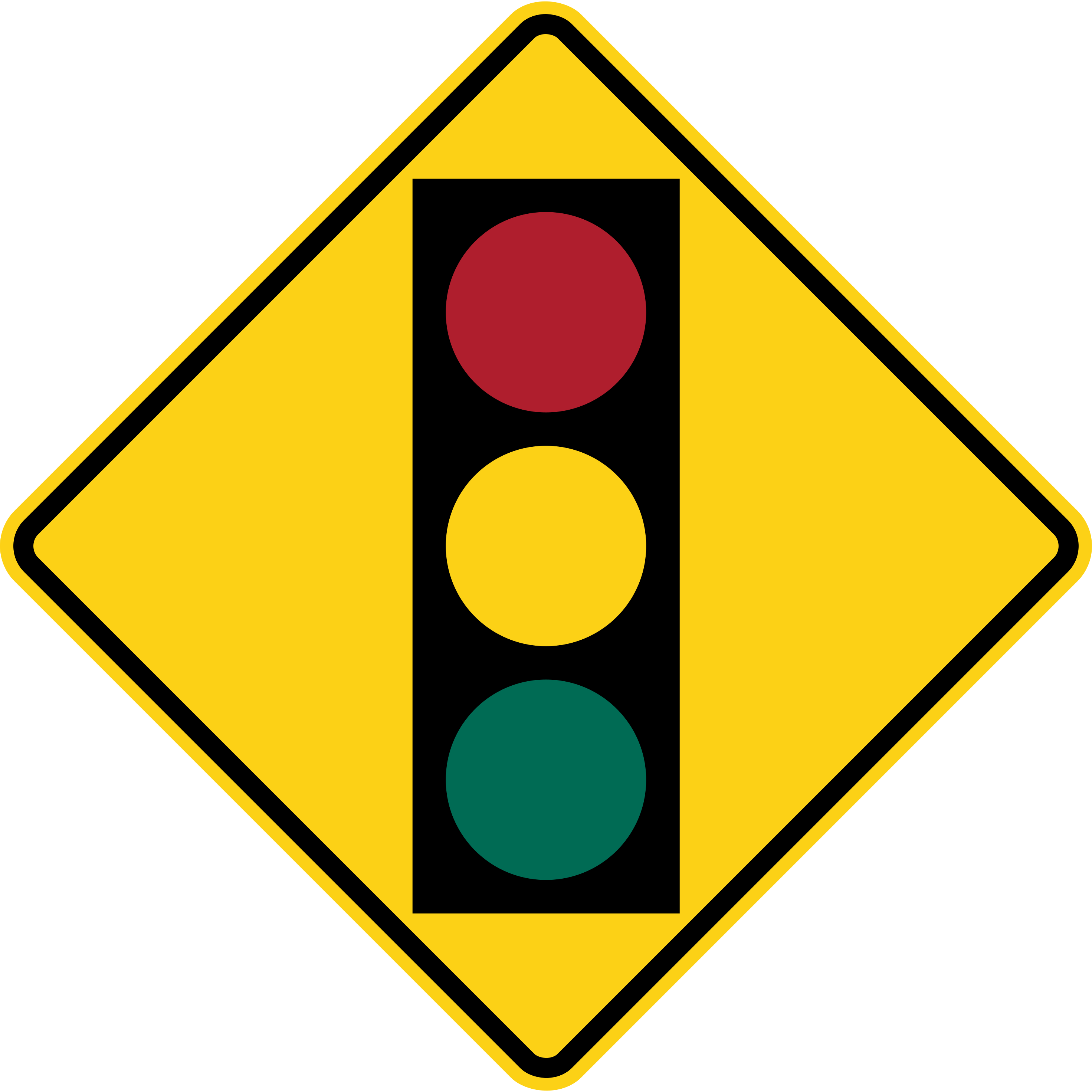
- A traffic signal ahead
- A stop sign ahead
- A lane ending ahead
- A pedestrian-only crossing signal
Show answer
A traffic signal ahead. The pictured symbol gives advance notice of a traffic signal. Full explanation in Test 10
11. Why does the South Carolina manual want you to look 20 to 30 seconds ahead while driving?
- It lets you watch the car directly ahead more closely
- It is needed on interstates above 55 mph alone
- It lets you stop checking your mirrors
- It gives you time to plan and avoid emergency moves
Show answer
It gives you time to plan and avoid emergency moves. Looking well down your planned path helps you see the road, other road users, and traffic conditions early. Full explanation in Test 11
Study this in the handbook: Visual search and speed management
12. While backing up, why does the South Carolina manual say you should not rely on your mirrors alone?
- Using them while reversing is illegal in South Carolina
- They fog over whenever the car is in reverse gear
- They do not show the area immediately behind the vehicle
- They are angled for night driving while you back up
Show answer
They do not show the area immediately behind the vehicle. When backing, the manual has you grasp the wheel at 12 o'clock with your left hand, put your right arm on the back of the passenger seat, an Full explanation in Test 12
13. While towing a boat, the trailer starts to whip from side to side. What should you do?
- Steer straight and slow gradually without braking
- Brake hard to stop the swaying quickly
- Speed up to pull the trailer straight
- Steer side to side against the sway
Show answer
Steer straight and slow gradually without braking. If a trailer begins to sway or whip, the manual says to steer straight and reduce speed gradually, without applying the brakes, and never to Full explanation in Test 13
Study this in the handbook: Rural roads, winter driving and trailers
14. What does BAC, or blood alcohol concentration, measure?
- The number of drinks you had in the last two hours of the evening
- How long alcohol has been in your stomach before it is absorbed
- The amount of alcohol in each drink compared with the water in it
- The percentage of alcohol compared with the blood in your body
Show answer
The percentage of alcohol compared with the blood in your body. BAC is a percentage: the amount of alcohol compared with the amount of blood in your body. Full explanation in Test 14
Study this in the handbook: Alcohol, other drugs and implied consent
15. What does a South Carolina yield sign look like?
- A red eight-sided sign with white letters
- A red and white triangle pointing down, with red letters
- A yellow diamond with black letters and a triangle symbol
- A white rectangle with a red circle and slash
Show answer
A red and white triangle pointing down, with red letters. The manual describes the yield sign as a red and white downward-pointing triangle with red letters. Full explanation in Test 15
Study this in the handbook: Regulatory and guide signs
16. You are behind a stopped school bus with flashing red lights on a four-lane road. What must you do?
- Pass in the left lane, since this is a multi-lane road
- Slow to 15 mph and pass carefully on the left side
- Stop and wait until the bus moves or its red lights stop
- Stop briefly, then pass once no children are visible
Show answer
Stop and wait until the bus moves or its red lights stop. On a four-lane or multi-lane highway, drivers meeting a stopped bus from the opposite direction do not have to stop, but that exception neve Full explanation in Test 16
Study this in the handbook: School buses
17. A traffic light over the intersection ahead is flashing yellow, and cross traffic is approaching from the right. What should you do?
- Slow down and be ready to stop for that traffic
- Come to a full stop as you would at a stop sign
- Keep your speed; flashing yellow gives you priority
- Stop and wait for the light to turn green
Show answer
Slow down and be ready to stop for that traffic. A flashing yellow light means slow down and proceed with caution, prepared to stop for any traffic that may be entering the intersection. Full explanation in Test 17
Study this in the handbook: Traffic lights
18. You are waiting to pull out, and an approaching car has its right turn signal on. What should you do?
- Pull out now, since the signal shows it will turn
- Flash your lights so the driver turns faster
- Pull out if the car is still more than a block away
- Wait until you are sure the car is actually turning
Show answer
Wait until you are sure the car is actually turning. A turn signal shows a plan, not a promise. Full explanation in Test 18
Study this in the handbook: Turns, intersections and roundabouts
19. You are not sure whether a new prescription is safe to take before driving. What does the South Carolina manual tell you to do?
- Take half the dose and drive short distances
- Drive as usual unless the label mentions alcohol
- Wait until you feel a side effect, then pull over
- Ask your doctor or pharmacist about side effects
Show answer
Ask your doctor or pharmacist about side effects. Some prescription drugs affect reflexes, judgment, vision, and alertness in ways similar to alcohol. Full explanation in Test 19
Study this in the handbook: Alcohol, other drugs and implied consent
20. Besides reducing injury, what two benefits of safety belts does the South Carolina manual name?
- They lower your insurance rate and prevent tickets
- They protect you from air bags and keep you awake
- They keep you in the car and help you keep control
- They let you sit closer to the wheel and see better
Show answer
They keep you in the car and help you keep control. Studies show that wearing a safety belt in a collision greatly reduces your chances of injury or death. Full explanation in Test 20
21. You are following a school bus that will soon reach a railroad crossing. What does the South Carolina manual say about your following distance?
- Keep the usual four seconds; buses are easy to see
- Shorten it so other cars do not cut in front
- It does not matter on roads with a crossing gate
- Increase it, because the bus must stop at the crossing
Show answer
Increase it, because the bus must stop at the crossing. Four seconds is the minimum following distance, and the manual lists situations that call for more. Full explanation in Test 21
Study this in the handbook: Stopping distance, following distance and signaling
22. You reach a roundabout, and a car already circling is coming toward your entry point from the left. What should you do?
- Enter first, since you are on its right
- Yield and enter after it passes
- Stop in the circle to let it go around you
- Speed up to enter ahead of it
Show answer
Yield and enter after it passes. In a roundabout, entering traffic yields the right-of-way to traffic already circulating. Full explanation in Test 22
Study this in the handbook: Turns, intersections and roundabouts
23. You are turning right at an intersection, and a bicyclist is riding straight through on your right. Who goes first?
- The bicyclist; yield as you would to any vehicle
- You, because cars have priority over bicycles
- Whoever is moving faster at that moment
- You, if you signaled before the bicyclist arrived
Show answer
The bicyclist; yield as you would to any vehicle. Bicycles are vehicles on the roadway, and bicyclists have the same rights and responsibilities as drivers. Full explanation in Test 23
Study this in the handbook: Yielding to pedestrians and bicyclists
24. In a work zone, the car ahead is moving slowly. What does the South Carolina manual say about following it?
- Stay close so other cars cannot cut in
- Follow closely so you can use its lights as a guide
- Don't tailgate; be ready to stop suddenly
- Keep the usual gap since work zones are short
Show answer
Don't tailgate; be ready to stop suddenly. The manual's work zone message is to give construction workers a brake: reduce your speed, be prepared to stop suddenly, and do not tailgate Full explanation in Test 24
Study this in the handbook: Regulatory and guide signs
25. Which of these counts as a traffic control device under the South Carolina manual?
- Hand waves from another driver offering to let you go
- Advice from a passenger about when to turn
- A GPS voice telling you to turn left ahead
- Directions given by a school crossing guard
Show answer
Directions given by a school crossing guard. The manual's list of traffic control devices goes beyond signals, signs, and pavement markings. Full explanation in Test 25
Study this in the handbook: Yielding the right of way
26. When yielding to an emergency vehicle, what should a driver avoid whenever possible?
- Using a turn signal before pulling over
- Blocking intersections, roadways, or driveways
- Stopping at the edge of the road
- Allowing the emergency vehicle to pass
Show answer
Blocking intersections, roadways, or driveways. An emergency response needs a continuous route, so a driver who pulls aside should avoid blocking an intersection, roadway, or driveway. Full explanation in Test 1
Study this in the handbook: Emergency vehicles, traffic stops and the Move Over Law
27. Why does the South Carolina manual say not to assume a motorcycle is turning when its signal flashes?
- Motorcycles are not required to have signals
- Motorcycle signals are decorative
- Riders signal only for lane changes
- Motorcycle turn signals may not self cancel and the rider may have forgotten them
Show answer
Motorcycle turn signals may not self cancel and the rider may have forgotten them. Do not assume a motorcycle is turning when you see its turn signal flashing. Full explanation in Test 2
Study this in the handbook: Motorcycles and commercial vehicles
28. A South Carolina conditional license holder has no licensed adult in the car. When may the teen carry more than two passengers under 21?
- Never, under any circumstances
- When driving on weekends and the passengers are friends
- When transporting family members or students to and from school
- When the passengers are over 16 and wearing seat belts
Show answer
When transporting family members or students to and from school. A conditional or special restricted license holder cannot have more than two passengers under 21 unless a licensed adult at least 21 is in t Full explanation in Test 3
Study this in the handbook: Conditional and special restricted licenses
29. After moving permanently to South Carolina with a valid out-of-state license, when must a resident apply for an SC license?
- Within 10 days of moving
- Within 45 days of moving
- Within 90 days of moving
- Only when the other license expires
Show answer
Within 45 days of moving. A person who permanently relocates to South Carolina generally has 45 days to apply for an SC license or identification card. Full explanation in Test 4
Study this in the handbook: Knowledge and skills tests, moving and renewal
30. What is the average perception time for an alert driver, according to the South Carolina manual?
- One tenth of a second
- 5 seconds
- Three quarters of a second to 1 second
- 10 seconds
Show answer
Three quarters of a second to 1 second. Perception time is the time and distance it takes to recognize you must stop, and the average for an alert driver is three quarters of a sec Full explanation in Test 5
Study this in the handbook: Stopping distance, following distance and signaling
31. A South Carolina driver's license is about to be suspended for points. When must a defensive driving course be finished to help?
- Within 30 days after the suspension begins
- Any time during the suspension
- Only after the suspension ends
- Before the suspension begins
Show answer
Before the suspension begins. If you take a defensive driving course because your license is in danger of being suspended, you must complete it before the suspension begi Full explanation in Test 6
Study this in the handbook: The point system and losing your license
32. Your vehicle gets stuck on railroad tracks in South Carolina. Which sign at the crossing gives the number to call?
- The round yellow RXR advance warning sign
- The white crossbuck sign
- An orange work zone sign
- The blue sign with an emergency phone number
Show answer
The blue sign with an emergency phone number. South Carolina says that if your vehicle ever gets stuck on a track, you should contact the emergency phone number listed on the blue sign a Full explanation in Test 7
Study this in the handbook: Warning, railroad and work zone signs
33. When parking downhill on the right side of a street, how should the front wheels be turned?
- To the left if a curb is present
- Straight ahead if there is no curb
- Toward the center of the street
- To the right, with or without a curb
Show answer
To the right, with or without a curb. Facing downhill, turn the wheels right whether the roadway has a curb or not. Full explanation in Test 8
Study this in the handbook: Turnabouts, parking, lane changes and passing
34. What does the pictured ONE WAY sign tell a driver about traffic flow?
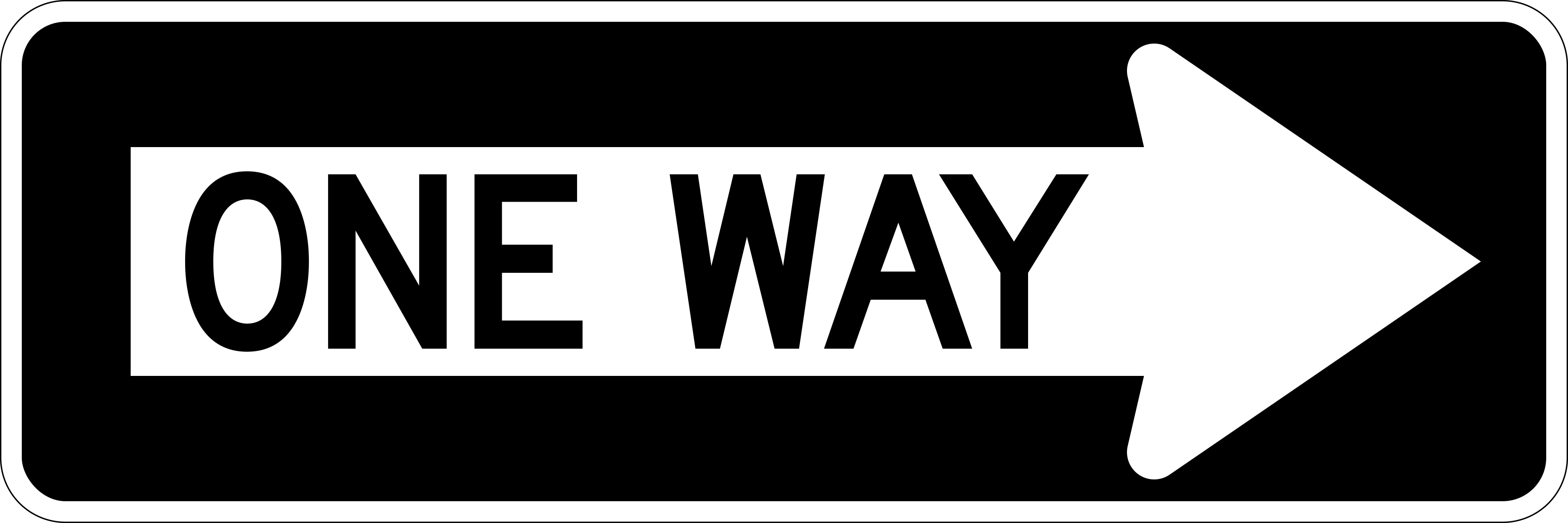
- The driver must turn around before reaching the sign
- Traffic may travel in either direction when no cars are visible
- The arrow marks a lane reserved for buses
- Traffic travels only in the arrow's direction
Show answer
Traffic travels only in the arrow's direction. A ONE WAY sign identifies the permitted direction of traffic on that roadway. Full explanation in Test 9
Study this in the handbook: Regulatory and guide signs
35. What does the small stop-sign symbol on this yellow warning sign mean?

- A stop is required at this warning sign itself
- A traffic signal is ahead
- A yield sign is ahead
- A stop sign is ahead
Show answer
A stop sign is ahead. This warning announces a stop sign farther ahead. Full explanation in Test 10
36. This sign appears before a curve on a country highway. What should you be ready for?
- A railroad crossing with flashing lights and a gate arm
- A four-way stop with no signals at all
- A traffic signal ahead that may soon require a stop
- A lane that is closed ahead for road work crews
Show answer
A traffic signal ahead that may soon require a stop. The traffic light symbol on this yellow diamond means a traffic signal is ahead. Full explanation in Test 11
37. What three options does the South Carolina manual give for avoiding a collision or reducing its impact?
- Braking, honking, or flashing headlights
- Braking, steering, or accelerating
- Steering, shifting to neutral, or honking
- Braking, turning on hazards, or stopping
Show answer
Braking, steering, or accelerating. Every driver has a responsibility to do all they can to prevent collisions. Full explanation in Test 12
Study this in the handbook: Avoiding collisions and vehicle malfunctions
38. On a highway with two lanes in each direction, a school bus traveling the opposite way stops with red lights flashing. Must you stop?
- Yes, all traffic must stop in both directions
- No, you are meeting it on a multi-lane highway
- Yes, unless a median divides the road
- Only if the bus has its stop arm out
Show answer
No, you are meeting it on a multi-lane highway. A driver does not have to stop upon meeting a stopped school bus while traveling in the opposite direction on a multi-lane highway. Full explanation in Test 13
Study this in the handbook: School buses
39. A tractor trailer is passing you on the left. Where should you position your car in your lane?
- Toward the outside of your lane, away from the truck
- Close to the truck so it can see you clearly
- Exactly in the center of your lane at all times
- On the shoulder until the truck has passed
Show answer
Toward the outside of your lane, away from the truck. The manual gives a specific space tip for being passed by a tractor trailer: leave a little more room by moving to the outside portion of yo Full explanation in Test 14
Study this in the handbook: Stopping distance, following distance and signaling
40. You are stopped at a red light and want to turn right. A sign at the corner prohibits right turns on red, and no cars are coming. What should you do?
- Turn right, since the road is clear
- Turn right after a full three-second stop
- Wait for the green light before turning
- Turn right if a pedestrian waves you on
Show answer
Wait for the green light before turning. In South Carolina, traffic facing a red signal may turn right after stopping, except where a sign prohibits a right turn on red. Full explanation in Test 15
Study this in the handbook: Traffic lights
