
Test 9 of 10 · 20 questions · Free 2026
SC Permit Practice Test 9
Jump to the test ↓A fixed 20 question set from the South Carolina bank with answers and plain English explanations.
Question 1 of 20 · 0 right so far
All 20 questions in test 9
Every question below comes from the South Carolina question bank on this page. Open a question to see the correct answer and the explanation. Nothing here is hidden behind a signup.
1. What colors and shapes may regulatory signs use?
- White with black, red, or green letters or symbols, often square or rectangular
- Yellow with black symbols, always diamond shaped
- Green with white letters, always circular
- Blue with orange symbols, usually triangular
Show answer
White with black, red, or green letters or symbols, often square or rectangular. Regulatory signs may be square, rectangular, or a special shape, and they are white with black, red, or green letters or symbols. Their appearance helps distinguish enforceable traffic instructions from yellow warning signs and green guide signs. The yellow diamond choice describes a common warning-sign pattern, while green and blue choices belong to other sign purposes. Read the symbol or wording after identifying the category, because the sign's shape and color provide a first clue but the specific command controls the maneuver.
Study this in the handbook: Regulatory and guide signs
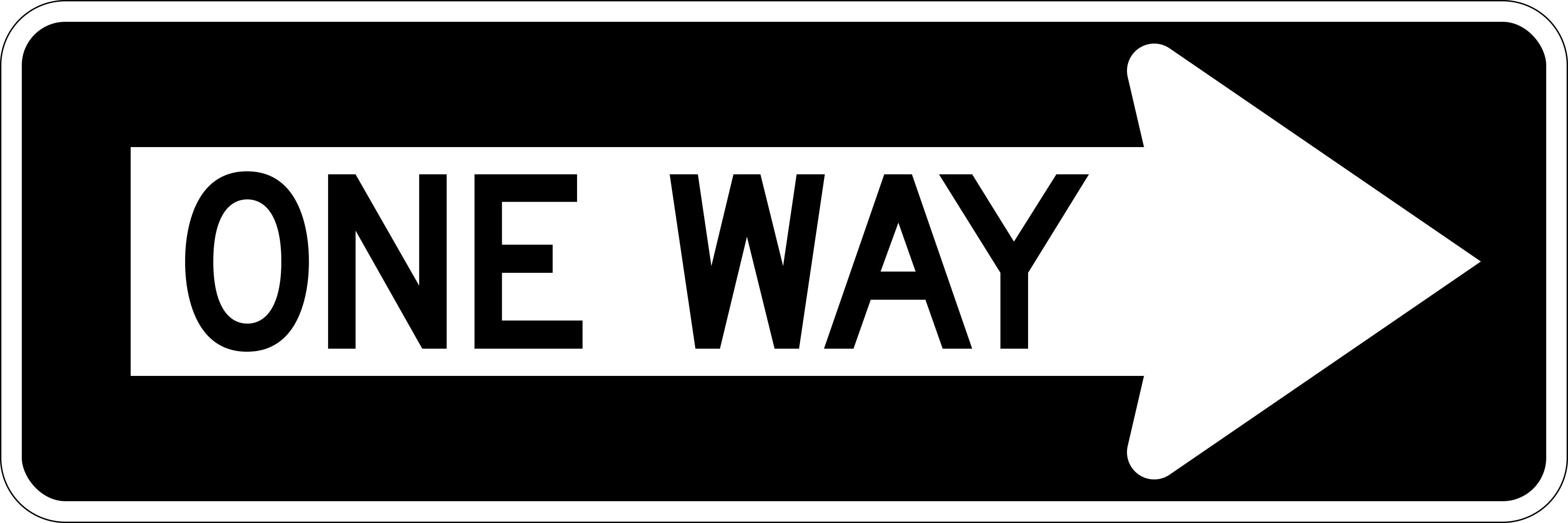
2. What does the pictured ONE WAY sign tell a driver about traffic flow?
- The driver must turn around before reaching the sign
- Traffic may travel in either direction when no cars are visible
- The arrow marks a lane reserved for buses
- Traffic travels only in the arrow's direction
Show answer
Traffic travels only in the arrow's direction. A ONE WAY sign identifies the permitted direction of traffic on that roadway. The arrow is not a suggestion and does not describe a bus-only lane. Clear pavement does not authorize travel in the opposite direction. Nor does the sign itself require an immediate U-turn. Read the arrow before entering, align the vehicle with it, and continue in that direction. If you discover that you are facing against the flow, correct the mistake only through a safe legal maneuver.
Study this in the handbook: Regulatory and guide signs
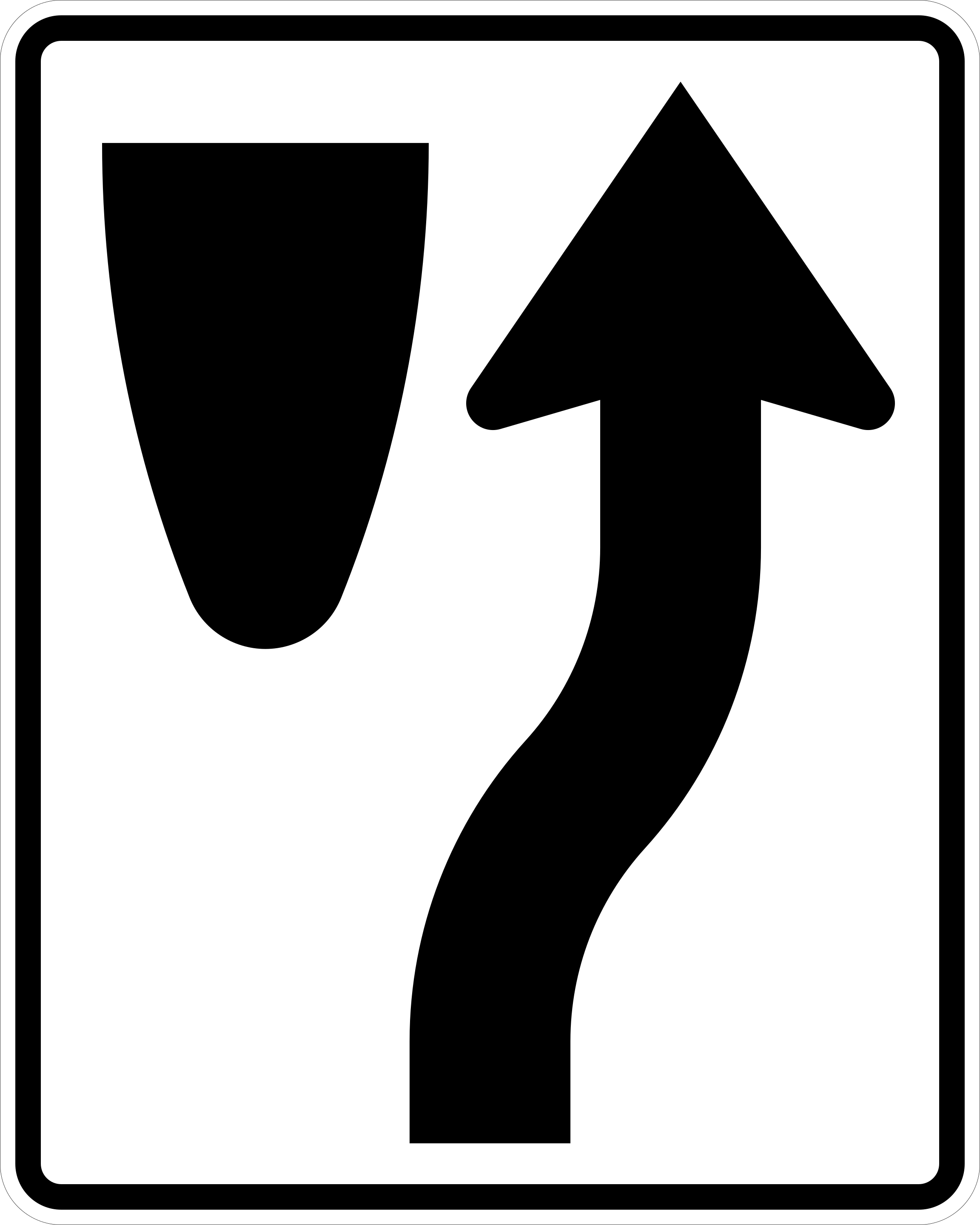
3. What features help a driver identify the kind of information a traffic sign provides?
- The size and make of the vehicle approaching it
- Only the distance from the nearest intersection
- Its shape, color, symbols, and words
- Whether the road surface is wet or dry
Show answer
Its shape, color, symbols, and words. The manual says drivers can use a sign's shape, color, symbols, and words to identify the information it provides. Those features work together, so a driver should read the message and recognize the sign form rather than rely on one visual detail. Distance from an intersection, the approaching vehicle's characteristics, and pavement condition do not classify the sign. A practical cue is to scan the whole sign before acting, then match its warning, direction, service, or rule to the roadway situation.
Study this in the handbook: Traffic lights
4. What is the fine for a first offense under South Carolina's Hands-Free and Distracted Driving Act?
- $200 and two points
- $100
- $25
- $500
Show answer
$100. The Hands-Free and Distracted Driving Act bans holding or supporting a phone, texting, and watching video while driving. A first offense carries a $100 fine. A second or later offense carries a $200 fine and two points on the driving record, so that choice describes repeat violations. Twenty-five and five hundred dollars are not the stated amounts. Earpieces and wrist-worn devices for voice calls are allowed.
Study this in the handbook: Fatigue, distraction and the hands free law
5. How much sleep does the South Carolina manual say most people need to stay alert while driving?
- 4 to 5 hours
- At least 12 hours
- 3 hours plus coffee
- 7 to 9 hours per day
Show answer
7 to 9 hours per day. Most people need 7 to 9 hours of sleep per day to maintain proper alertness throughout their waking hours, so get adequate sleep before a trip. Plan to stop about every 100 miles or two hours on long drives, arrange a travel companion to watch your driving, and check medication labels for drowsiness warnings. If you feel tired, pull off and nap.
Study this in the handbook: Fatigue, distraction and the hands free law
6. A 15- or 16-year-old permit holder must complete at least how much supervised practice, including how much at night?
- 30 hours, including 5 hours at night
- 40 hours, including 10 hours at night
- 50 hours, all during daylight
- 40 hours, with no night requirement
Show answer
40 hours, including 10 hours at night. Applicants who are 15 or 16 must practice for at least 40 hours, and 10 of those hours must be night driving with an eligible supervising person. The 30-hour option understates the total and night practice. Fifty daylight-only hours misses the required nighttime component, while 40 hours without night practice leaves out a specific condition. The practical cue is to split the requirement into a 40-hour total and a 10-hour nighttime subset, rather than treating those numbers as alternatives.
Study this in the handbook: License classes and the beginner's permit
7. In what program must a South Carolina driver be enrolled to receive a provisional license after a DUI?
- A defensive driving course
- The Alcohol and Drug Safety Action Program, ADSAP
- Traffic school
- No program is required
Show answer
The Alcohol and Drug Safety Action Program, ADSAP. A provisional license after a DUI or DUAC requires enrollment in the Alcohol and Drug Safety Action Program, known as ADSAP, along with a $100 fee, a BAC of 0.14 percent or less for offenses since October 2014, and no other unrelated suspensions. The provisional license is not available for any DUI or DUAC that takes place on or after May 19, 2024, so newer cases follow different rules.
Study this in the handbook: Provisional and temporary alcohol licenses
8. How must a driver handle a flashing red traffic light?
- Wait for the signal to become solid green before moving
- Slow down and continue without stopping
- Make a complete stop, then proceed as at a stop sign when safe
- Stop only if cross traffic is approaching
Show answer
Make a complete stop, then proceed as at a stop sign when safe. A flashing red indication uses the stop-sign procedure. The driver stops behind the stop line, crosswalk, or intersection, looks both ways, and proceeds only after yielding when required. Merely slowing leaves the required stop undone. Waiting for a solid green treats the signal as if it were a normal red light and may create unnecessary delay. Stopping only for visible traffic is also incomplete. Remember: flashing red means full stop, search, and yield.
Study this in the handbook: Traffic lights
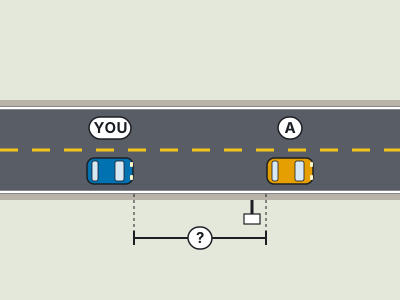
9. What minimum following distance should a driver try to maintain behind the vehicle ahead?
- One second
- Four seconds
- Two car lengths at every speed
- Ten seconds in all conditions
Show answer
Four seconds. The manual recommends keeping a minimum following distance of four seconds. Use a fixed object such as a sign or pole, watch the vehicle ahead pass it, and count until your vehicle reaches the same point. If you arrive before saying the fourth count, reduce speed and repeat the check. One second is too little for normal reaction and braking, while a fixed number of car lengths changes meaning with speed. Bad weather, darkness, and slippery roads call for even more space, so four seconds is a floor rather than a ceiling.
Study this in the handbook: Stopping distance, following distance and signaling
10. During which hours may a beginner's permit holder drive with a qualified adult in the front seat?
- Midnight to 6 a.m. without supervision
- 5 a.m. to 10 p.m.
- 8 a.m. to 8 p.m.
- 6 a.m. to midnight
Show answer
6 a.m. to midnight. A beginner’s permit allows driving from 6 a.m. through midnight when a licensed driver at least 21 years old, with at least one year of experience, sits in the front seat. The earlier start and earlier ending choices alter the stated window. The overnight option reverses the rule because after midnight a listed licensed individual must supervise. Use the cue 6 to midnight for the ordinary qualified-front-seat period, then check the separate after-midnight condition.
Study this in the handbook: License classes and the beginner's permit
11. After failing a South Carolina skills test on the first attempt, how long must the applicant wait to retest?
- Thirty calendar days
- Seven calendar days
- Two business days
- No waiting period
Show answer
Two business days. The first failed skills test creates a two-business-day waiting period before retesting, regardless of age or driving experience. Seven calendar days applies after a second failure, and 30 calendar days applies after a third or later failure. The no-wait option ignores the explicit schedule. The helpful sequence is first failure, two business days; second failure, seven calendar days; third or more, 30 calendar days.
Study this in the handbook: Knowledge and skills tests, moving and renewal
12. What does a South Carolina special restricted license with a waiver permit a 16-year-old to do?
- Drive alone until midnight for qualifying work or activities
- Drive alone throughout the entire night
- Carry any number of under-21 passengers
- Drive without a license during school hours
Show answer
Drive alone until midnight for qualifying work or activities. The waiver expands the permitted solo period until midnight when the teen works or participates in certain extracurricular activities. The manual states plainly that the waiver will not allow driving after midnight, and it does not replace the license itself. Nothing in the waiver section lifts the separate passenger limit of the special restricted license. The phrase until midnight is the crucial boundary. When reviewing this provision, separate the waiver from ordinary unrestricted privileges: it creates a limited exception tied to qualifying activities and still stops before the overnight hours.
Study this in the handbook: Conditional and special restricted licenses
13. Which communication device does South Carolina's hands-free law expressly allow for voice communication?
- A phone held in the driver's lap
- A handheld phone held against the shoulder
- A tablet displaying a video call
- An earpiece or wrist worn device
Show answer
An earpiece or wrist worn device. The manual makes an exception for an earpiece or a wrist worn device when it is used to conduct voice-based communications. Holding a phone against a shoulder or in a lap still physically supports a mobile device. A tablet showing a moving video call falls under the separate moving-image restriction. The cue is to distinguish the permitted wearable voice device from handling a screen or supporting a handheld device with the body.
Study this in the handbook: Fatigue, distraction and the hands free law
14. What does the abbreviation DUAC mean in the South Carolina manual?
- Driving Under an Automatic Citation
- Driving with an Unlawful Alcohol Concentration
- Departmental Unlicensed Automobile Check
- Driver Use and Accident Control
Show answer
Driving with an Unlawful Alcohol Concentration. DUAC expands to Driving with an Unlawful Alcohol Concentration. It is named alongside DUI in the manual's discussion of alcohol-related suspensions. The other phrases are invented expansions and do not identify an alcohol-concentration offense. When reading a question about the abbreviation, connect the word concentration to the measured alcohol level rather than treating DUAC as a general traffic citation or an administrative inspection.
Study this in the handbook: Provisional and temporary alcohol licenses
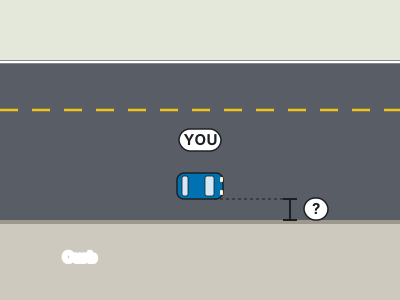
15. How far from the curb may a South Carolina driver park?
- Up to 3 feet
- Up to 12 inches
- No more than 18 inches from the curb or edge of pavement
- Any distance if the wheels are turned
Show answer
No more than 18 inches from the curb or edge of pavement. When parking along the roadway, park your vehicle as far away from the flow of traffic as possible, and do not park more than 18 inches from the curb or edge of pavement. Three feet is too far out, and the manual names no 12 inch rule. Turning the wheels is a separate step for parking on a hill and does not change the distance limit. Also check for signs or painted curbs that may prohibit or limit parking, because some restrictions are shown only by colored curb markings.
Study this in the handbook: Turnabouts, parking, lane changes and passing
16. What does a yellow caution light tell a South Carolina driver?
- The signal is about to change to red
- Cross traffic must stop for you
- You may turn without checking traffic
- The intersection is closed to vehicles
Show answer
The signal is about to change to red. A yellow light warns that the signal will soon become red, so a driver should prepare to stop rather than treat it as permission to accelerate. The distractor about cross traffic incorrectly assumes every other approach has already been stopped. If you are already in the intersection, clear it promptly, but if you are approaching and can stop safely, wait for the next green signal. A useful cue is to read yellow as a transition warning, not as an extra period of green. That distinction helps prevent entering an intersection just as opposing traffic receives its signal.
Study this in the handbook: Traffic lights
17. Which use of a device is not restricted by South Carolina's Hands-Free and Distracted Driving Act?
- An earpiece for voice communication
- Holding a phone while driving
- Reading a text message while driving
- Viewing a moving video while driving
Show answer
An earpiece for voice communication. South Carolina's Hands-Free and Distracted Driving Act says that while operating a motor vehicle on any public road, a driver must not physically hold or support a mobile electronic device with any part of the body, read, write or send any form of text, or view moving images such as videos. The manual then states that the law does not restrict earpieces or wrist worn devices used for voice-based communications, so an earpiece for voice communication is the use left unrestricted.
Study this in the handbook: Fatigue, distraction and the hands free law
18. For hand to hand steering, where does the South Carolina manual say each hand should work on the wheel?
- Both hands crossing over the top
- The left hand only at 12 o'clock
- Either hand anywhere on the wheel
- The left hand between 11 and 8 o'clock and the right hand between 1 and 8 o'clock, whichever way you turn
Show answer
The left hand between 11 and 8 o'clock and the right hand between 1 and 8 o'clock, whichever way you turn. In hand to hand steering, the driver uses the area on the wheel between 11 and 8 o'clock with the left hand and between 1 and 8 o'clock with the right hand, regardless of the direction of the turn. One hand pushes the wheel up while the other slides up, grasps, and pulls down. Because the hands and arms never cross over the wheel, there is less chance of injury to the face, hands, and arms in a frontal crash when the vehicle has a driver side air bag. Reverse the process to bring the vehicle back into your intended path.
19. How should a driver use the brake pedal in a vehicle equipped with ABS during emergency braking?
- Press hard and maintain constant pressure
- Pump the pedal repeatedly
- Use only the parking brake
- Release the pedal whenever it vibrates
Show answer
Press hard and maintain constant pressure. With anti-lock brakes, press the brake pedal as hard as possible and keep steady pressure on it. Pumping the pedal can deactivate ABS, and the system is designed to prevent skidding while preserving steering control. A vibrating pedal or clicking noise is normal during ABS operation, so releasing the pedal at that moment defeats the system's purpose. The parking brake is not the substitute described here. The useful cue is firm, continuous pressure while steering remains available.
Study this in the handbook: Avoiding collisions and vehicle malfunctions
20. When approaching any intersection, what search should a South Carolina driver make?
- Look only for the traffic signal
- Look only to the right after entering
- Check for controls, cross traffic, pedestrians, roadway conditions, and limited visibility
- Accelerate before checking for pedestrians
Show answer
Check for controls, cross traffic, pedestrians, roadway conditions, and limited visibility. At every intersection, reduce speed and search broadly. The manual identifies traffic controls, oncoming and cross traffic, pedestrians and bicyclists, roadway condition, and areas where visibility is limited. Looking only for a signal or only to one side can miss a person or vehicle that does not obey the expected control. Accelerating first reduces the time available to respond. The practical cue is a complete scan before entry, with extra caution after stopping and before moving again.
Study this in the handbook: Turns, intersections and roundabouts
QualitySpace is expanding to South Carolina
We are a California-based independent insurance brokerage working on licensing in more states. We cannot help with South Carolina insurance yet. Leave your email and we will let you know when we can.
Every question is written from the official South Carolina Driver's Manual. Need paper? Printable SC practice test with answer key.
Last verified 2026-10-05. How we check every question · Study all 201 as flashcards
Frequently asked questions
How many questions are on this South Carolina practice test?
This fixed set has 20 questions. It is test 9 of 10 from the 201 question South Carolina bank.
How does this fixed test relate to the full South Carolina bank?
Each numbered test is a fixed set of questions in a fixed order, so you can retake the same test later and compare. Every test mixes road signs and the other topics in about the same proportion as the full bank. Tests 1 to 10 together cover 200 of the 201 questions in the South Carolina bank, each once. The full practice page mixes the whole bank at random.
Last verified 2026-10-05. See the South Carolina DMV facts page for sourced state details.
Return to the full South Carolina practice test · Study road signs