
Test 19 of 25 · 20 questions · Free 2026
SC Permit Practice Test 19
Jump to the test ↓A fixed 20 question set from the South Carolina bank with answers and plain English explanations.
Question 1 of 20 · 0 right so far
All 20 questions in test 19
Every question below comes from the South Carolina question bank on this page. Open a question to see the correct answer and the explanation. Nothing here is hidden behind a signup.
1. You are not sure whether a new prescription is safe to take before driving. What does the South Carolina manual tell you to do?
- Take half the dose and drive short distances
- Drive as usual unless the label mentions alcohol
- Wait until you feel a side effect, then pull over
- Ask your doctor or pharmacist about side effects
Show answer
Ask your doctor or pharmacist about side effects. Some prescription drugs affect reflexes, judgment, vision, and alertness in ways similar to alcohol. The manual gives two steps: check the label and packaging for warnings before you take the drug, and if you are still unsure, ask your doctor or pharmacist about known side effects. Cutting the dose or limiting yourself to short trips is guesswork, and waiting until you feel a side effect means you may already be impaired behind the wheel. Get the answer before you drive.
Study this in the handbook: Alcohol, other drugs and implied consent
2. Traffic is backing up after a lane closed ahead sign in a construction zone. What does the zipper merge strategy have you do?
- Move into the open lane as early as you possibly can
- Stay in your lane until the merge point, then take turns
- Drive on the shoulder to reach the front of the line
- Stop in your lane until the other lane is empty
Show answer
Stay in your lane until the merge point, then take turns. The zipper merge, also called the late merge, uses both lanes until the merge area. When traffic is backing up, stay in your current lane until you reach the point of merge, then take turns with other drivers to ease into the open lane safely and smoothly. Merging early can lead to unexpected and dangerous lane switching, collisions, and road rage. The law does not require the zipper merge, but the manual calls it a best practice, especially when a lane is closed in a construction zone.
Study this in the handbook: Turnabouts, parking, lane changes and passing
3. You hear a siren and see flashing lights coming up behind you on a two-lane road. What must you do?
- Pull over to the edge of the road so it can pass
- Speed up to stay ahead of the emergency vehicle
- Stop right where you are in your lane
- Keep driving until you reach the next intersection
Show answer
Pull over to the edge of the road so it can pass. When an emergency vehicle approaches with its flashing lights and siren on, the manual says you must yield the right-of-way by pulling over to the edge of the road so the vehicle can pass more easily. Stopping in your lane leaves it blocked, and racing ahead or waiting for an intersection delays the responder. While pulling over, avoid blocking intersections, roadways, or driveways whenever possible, then return to traffic carefully after it passes.
Study this in the handbook: Emergency vehicles, traffic stops and the Move Over Law
4. You drive through a neighborhood posted at 25 mph, and children are playing near a row of parked cars. What does the South Carolina manual suggest?
- Drive exactly 25 mph, since that is the posted limit
- Honk as you pass so the children stay back
- Drive slower than the limit and be ready to stop quickly
- Move to the center of the road and keep your speed
Show answer
Drive slower than the limit and be ready to stop quickly. In playground and residential areas, children can run out from between parked vehicles. The manual says it is a good idea to drive slower than the speed limit in these areas and be prepared to stop quickly. A posted limit is the maximum in ideal conditions, not a target when children are nearby. Honking does not make a child stop, and drifting toward the center of the road brings you closer to oncoming traffic.
Study this in the handbook: Pedestrians, school zones and speed
5. On a two-lane road, the dashed yellow line is on your side, but a hill crest ahead blocks your view of oncoming traffic. May you pass?
- No, do not pass when a hill blocks your view
- Yes, the dashed line on your side permits it
- Yes, if you flash your lights before passing
- Yes, if you pass at a much higher speed
Show answer
No, do not pass when a hill blocks your view. A dashed yellow line on your side means passing may be allowed, but only when it is safe. The manual lists situations where you should not attempt to pass, including when your view is blocked by a curve or a hill, when an oncoming vehicle is approaching, at intersections, and before a railroad crossing or bridge. A hill crest hides oncoming traffic, so wait until you can see far enough ahead to complete the pass.
Study this in the handbook: Turnabouts, parking, lane changes and passing
6. Your new car has forward collision warning and lane keeping assist. What does the South Carolina manual say about relying on them?
- They let you look away briefly on highways
- They assist you, but you still do the driving
- They replace the need for head checks
- They make following distance rules unnecessary
Show answer
They assist you, but you still do the driving. Driver assistance features can give alerts such as sounds or vibration, and some may adjust braking or steering, but the manual is clear that they are meant to assist you, not to drive the vehicle. You must remain engaged and focused at all times, perform head checks, and use mirrors and cameras to observe traffic. Do not rely on safety features alone. They also may not work properly in rain, snow, ice, fog, hills, and curves.
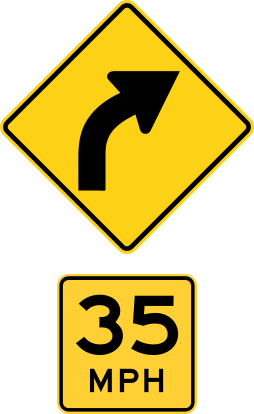
7. The plaque below this curve sign shows 35 mph, and the posted speed limit is 55 mph. What does that mean for you?
- Keep 55 mph, since that is the legal limit
- Drive 35 mph only if it is raining
- Slow to about 35 mph before entering the curve
- Expect the speed limit to drop to 35 for several miles
Show answer
Slow to about 35 mph before entering the curve. The speed plaque under a curve warning sign gives the advisory speed for going around that curve. The posted 55 mph limit is the maximum in ideal conditions, but the curve calls for a lower speed. The manual says to reduce speed before entering a curve, and to slow more when traction is poor or you cannot see the end of the curve. The plaque applies to the curve, not to the miles of road beyond it.
8. Traffic on the far side of a railroad crossing is backed up, and you will have to stop before you can clear the tracks. Where should you stop?
- On the tracks if no train is in sight
- With the front of your car just over the rail
- At the stop line before the railroad tracks
- Right behind the last car, even on the tracks
Show answer
At the stop line before the railroad tracks. When you approach railroad tracks and need to stop for traffic or a signal, the manual says to stop at the stop line before the railroad tracks. That keeps your car off the crossing while you wait. Stopping on or over the rails, or right behind the last car, puts you in the wrong place. Wait there until traffic ahead allows you to move.
Study this in the handbook: Warning, railroad and work zone signs
9. A school bus has finished unloading. Its red lights are off and the stop arm is folded in, but some children are still walking near the road ahead. What should you do?
- Drive on at normal speed, since the bus is done
- Go ahead slowly and watch for the children
- Stay stopped until every child is out of sight
- Speed up to clear the area before the bus moves
Show answer
Go ahead slowly and watch for the children. After the school bus's red or amber lights have stopped flashing and the stop arm is no longer visible, the manual tells you to proceed slowly, watching for children. Signals being off means you may move, not that you may hurry. With children still near the road, keep watching them as you go. Waiting for them all to leave or driving at normal speed is not what the manual says.
Study this in the handbook: Turns, intersections and roundabouts
10. Large trucks slow to about 35 mph on steep hills. What does the South Carolina manual suggest you do on those grades?
- Stay in the right lane behind the trucks
- Pass trucks on the right shoulder
- Use the right lane to pass the trucks
- Avoid the right lane when you can
Show answer
Avoid the right lane when you can. On steep hills, large vehicles must drive slowly, about 35 mph, and so they use the right lane. Near truck weigh stations, large vehicles are trying to re-enter faster traffic. In both places the manual suggests avoiding the right lane when possible, which reduces the chance of a collision with a large vehicle. The shoulder is never a passing lane, and using the right lane to get around slow trucks puts you in the very lane the manual says to avoid.
Study this in the handbook: Motorcycles and commercial vehicles
11. At an intersection, you stopped, looked left, and then looked right. What does the manual say you should do before you enter?
- Look left again before entering
- Look right again before entering
- Look straight ahead for pedestrians
- Nothing more; both sides are checked
Show answer
Look left again before entering. The manual says you should always look left, then right, and left again before entering the intersection. That is three looks, with the last one back to the left. Having looked left and then right, you are not finished: look left once more before you enter. Looking right twice, looking only ahead, or stopping after two looks does not follow the manual's order.
Study this in the handbook: Turns, intersections and roundabouts
12. Along the South Carolina coast, you see an Evacuation Route sign. For what kind of emergency is that road used?
- A chemical spill at a nearby industrial plant
- A dam failure in the upstate mountains
- Wildfire smoke drifting across the highway
- A mandatory hurricane evacuation of coastal areas
Show answer
A mandatory hurricane evacuation of coastal areas. When a hurricane threatens, a mandatory evacuation may be declared for the coastal areas of South Carolina. The Evacuation Route sign marks a road or highway that is used as an evacuation route in that type of emergency. The manual's general trip advice fits here too: use a road map or GPS device to plan your route, then follow the route signs during the trip so you do not get lost in an unfamiliar area.
Study this in the handbook: Pavement markings, crosswalks and stop lines
13. On a two-lane road, where should you keep your car in relation to the centerline?
- Right against it so you have room to swerve right
- Away from it, keeping space from oncoming traffic
- Straddling it when the road ahead looks empty
- Close to it whenever trucks are coming toward you
Show answer
Away from it, keeping space from oncoming traffic. Space to the sides gives you room to react. The manual says to avoid crowding the centerline marking and to keep as much space as possible between you and oncoming traffic. That advice gets stronger with large vehicles: when you meet a truck coming from the opposite direction, keep as far to the right as possible to avoid a sideswipe and reduce the wind turbulence between the vehicles. Drifting onto the line, even on an empty road, gives up that space.
Study this in the handbook: Stopping distance, following distance and signaling
14. The light turns yellow while you are still well back from the intersection and can stop safely. What does the South Carolina manual say to do?
- Stop and wait for the next green light
- Speed up to get through before it turns red
- Keep your speed; yellow means proceed
- Stop if a police car is nearby
Show answer
Stop and wait for the next green light. A yellow light follows the green and warns that the signal is about to change to red. The manual's advice is to stop your vehicle and wait for the next green light. The exception is when you are already in the intersection; then you clear it as quickly as possible. Speeding up to beat the red is not the rule, and as you approach a yellow light, watch for errors by other drivers at your side, front, and rear.
Study this in the handbook: Traffic lights
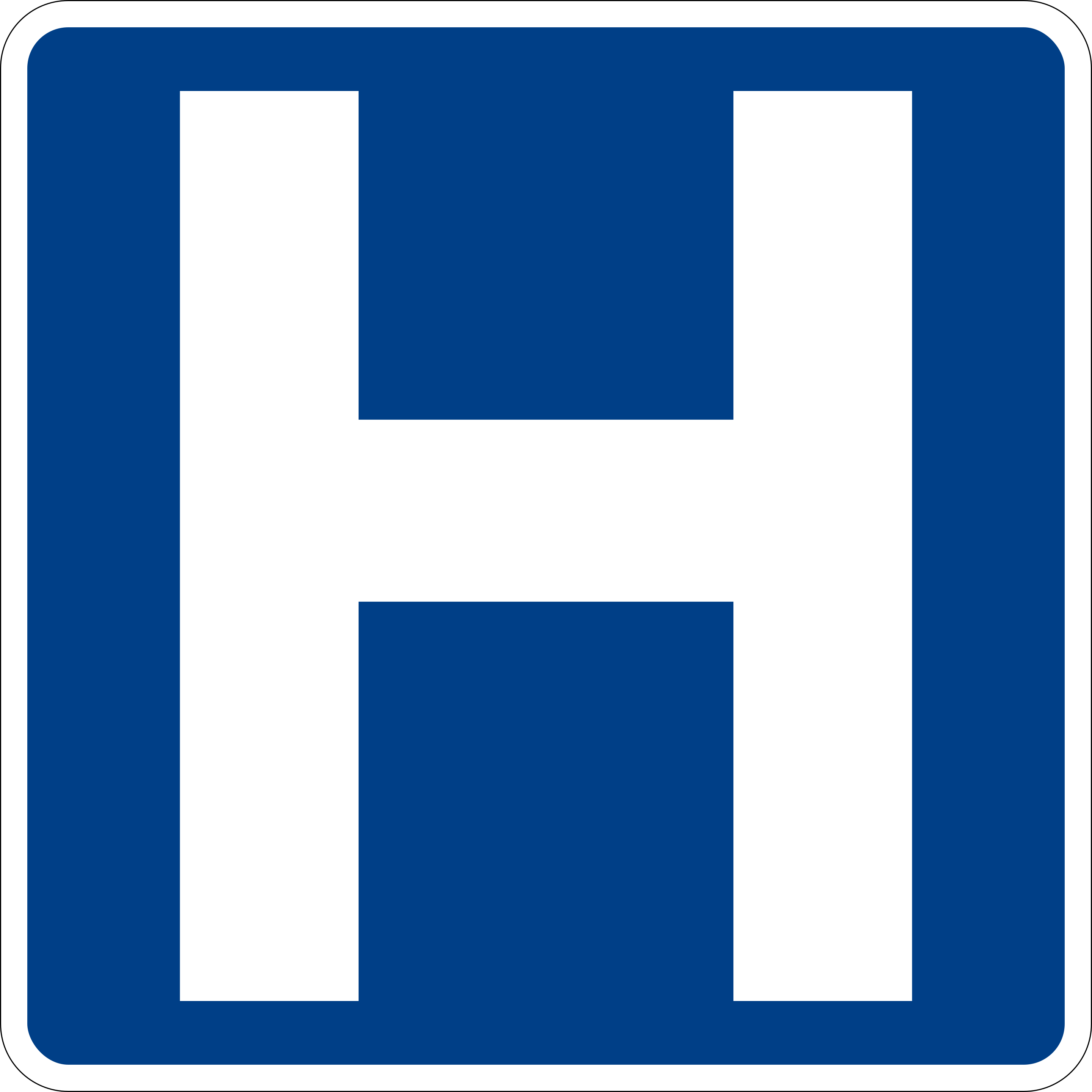
15. While driving on a highway, you see this blue sign. What is it pointing you toward?
- A nearby hotel
- The next highway exit
- A nearby rest area
- A nearby hospital
Show answer
A nearby hospital. Blue signs are guide signs, and the manual says guide signs can help you find hospitals, service stations, restaurants, and hotels. A blue square with a large white H points to a hospital. Guide signs come in square or rectangular shapes and in green, brown, or blue. Rest areas and exits appear on their own guide signs, and hotels are usually listed by name or symbol on service signs.
Study this in the handbook: Regulatory and guide signs
16. You take a voice call through a wireless earbud while driving, without touching your phone. Does South Carolina's Hands-Free Act restrict that?
- Yes, any phone call at all is banned while driving
- No, earpieces for voice calls are not restricted
- Yes, unless the call lasts under a minute
- No, but only if you are stopped at a light
Show answer
No, earpieces for voice calls are not restricted. The Hands-Free and Distracted Driving Act bans holding or supporting a mobile device, reading or sending texts and other written content, and viewing moving images while driving. It specifically does not restrict the use of earpieces or wrist-worn devices for voice-based communication. A call through an earbud, with no hands on the phone, fits that allowance. Even so, the manual reminds drivers that stressful or emotional conversations are a distraction.
Study this in the handbook: Fatigue, distraction and the hands free law
17. Your car without ABS starts to skid on an icy South Carolina road. How does the manual say to use the brakes?
- Pump the standard brakes gently
- Press hard and hold steady pressure
- Lock the brakes until the car stops
- Pull the parking brake to stop
Show answer
Pump the standard brakes gently. In a winter skid, take your foot off the accelerator and steer in the direction you want the front of the vehicle to go. Braking depends on your system: with ABS, do not pump; apply steady pressure and expect the brakes to pulse, which is normal. With standard brakes, the manual says to pump them gently. Holding hard, steady pressure is the ABS method, and locking the wheels or grabbing the parking brake is not the advice for a skid.
18. On a cold winter morning in South Carolina, which road surfaces does the manual say tend to freeze first?
- Busy highways with heavy truck traffic
- Main roads in sunny, open stretches
- Bridges, overpasses, and lightly traveled roads
- Roads that were salted the day before
Show answer
Bridges, overpasses, and lightly traveled roads. South Carolina generally does not have extreme winters, but it occasionally gets snow and ice. The manual says to be especially careful on bridges, overpasses, and infrequently traveled roadways because they tend to freeze first. Busy highways and sunny stretches are not the surfaces it singles out. Road conditions are constantly changing, so winter driving calls for slower speeds, slower acceleration, slower steering, and slower braking, plus extra distance on snow or ice.
Study this in the handbook: Rural roads, winter driving and trailers
19. You are giving your 6-year-old nephew a ride. Where must he ride, according to South Carolina's child passenger rules?
- In the front seat with a lap belt
- In a car seat in the back seat
- In the back seat with an adult belt alone
- In the front seat if the air bag is on
Show answer
In a car seat in the back seat. Children age seven and younger must sit in a car seat in the back seat of the vehicle, which protects them from injury by an air bag in a collision. A 6-year-old falls under that rule, so an adult belt alone or a front seat ride is not allowed. Install and use the car seat correctly, following the vehicle owner's manual and the child restraint directions. Never place a rear-facing child seat in front of an air bag.
20. You wear prescription glasses to drive in South Carolina. What does the manual say about dark or tinted corrective lenses after dark?
- Wear them at night if oncoming headlight glare bothers you
- Use them only on highways with bright overhead lighting
- Avoid them at night because they cut the light you need to see
- Switch to them at dusk so your eyes adjust to the dark
Show answer
Avoid them at night because they cut the light you need to see. Drivers who need corrective lenses must wear them, but the manual warns against dark or tinted lenses at night. Those lenses reduce the light your eyes need to see clearly, and the warning holds even when they seem to help with headlight glare. Glare relief is the exact reason the manual rejects. Highway lighting or the timing of dusk does not change the rule. For night driving, wear clear prescription lenses and, when an oncoming vehicle has its high beams on, glance toward the right side of the road.
Study this in the handbook: Vision rules
Every question is written from the official South Carolina Driver's Manual. Need paper? Printable SC practice test with answer key.
Last verified 2026-10-05. How we check every question · Study all 500 as flashcards
Frequently asked questions
How many questions are on this South Carolina practice test?
This fixed set has 20 questions. It is test 19 of 25 from the 500 question South Carolina bank.
How does this fixed test relate to the full South Carolina bank?
Each numbered test is a fixed set of questions in a fixed order, so you can retake the same test later and compare. Every test mixes road signs and the other topics in about the same proportion as the full bank. Tests 1 to 25 together cover every question in the South Carolina bank once. The full practice page mixes the whole bank at random.
Last verified 2026-10-05. See the South Carolina DMV facts page for sourced state details.
Return to the full South Carolina practice test · Study road signs