
Test 14 of 25 · 20 questions · Free 2026
SC Permit Practice Test 14
Jump to the test ↓A fixed 20 question set from the South Carolina bank with answers and plain English explanations.
Question 1 of 20 · 0 right so far
All 20 questions in test 14
Every question below comes from the South Carolina question bank on this page. Open a question to see the correct answer and the explanation. Nothing here is hidden behind a signup.
1. What does BAC, or blood alcohol concentration, measure?
- The number of drinks you had in the last two hours of the evening
- How long alcohol has been in your stomach before it is absorbed
- The amount of alcohol in each drink compared with the water in it
- The percentage of alcohol compared with the blood in your body
Show answer
The percentage of alcohol compared with the blood in your body. BAC is a percentage: the amount of alcohol compared with the amount of blood in your body. It is not a simple count of drinks, and it is not a measure of how strong a drink is or how long alcohol sat in your stomach. An alcohol concentration test, usually of breath, blood, or urine, determines it. Knowing what the number means helps with the limits in the manual, such as vision being impacted at 0.02 percent and suspension risks at 0.15 percent or more.
Study this in the handbook: Alcohol, other drugs and implied consent
2. A tractor trailer is passing you on the left. Where should you position your car in your lane?
- Toward the outside of your lane, away from the truck
- Close to the truck so it can see you clearly
- Exactly in the center of your lane at all times
- On the shoulder until the truck has passed
Show answer
Toward the outside of your lane, away from the truck. The manual gives a specific space tip for being passed by a tractor trailer: leave a little more room by moving to the outside portion of your lane, away from the truck, as it passes. Large trucks have big blind spots on both sides, so hugging the truck does not help it see you. The shoulder is an emergency stopping lane, not a travel lane. Keep a constant speed and stay in your lane so the truck can complete the pass.
Study this in the handbook: Stopping distance, following distance and signaling
3. At night you are on a rural road you have never traveled. Starting from the 4 second minimum, what following distance should you keep at least?
- 6 seconds
- 5 seconds
- 4 seconds
- 8 seconds
Show answer
6 seconds. For night driving the manual adds at least one second to your following distance, and for unfamiliar roads at night it adds at least two. Starting from the 4 second minimum, that means at least 6 seconds on a road you do not know. Five seconds is the figure for familiar roads at night. Leaving more space is allowed, but 6 seconds is the least the manual's rule permits here.
Study this in the handbook: Night driving and work zones
4. When does the South Carolina manual say a three-point turnabout should be used?
- Whenever you miss a turn on a busy multi-lane street
- Any time a driveway is available to turn into
- On a busy street, to avoid driving around a block
- When a U-turn won't fit and you can't circle the block
Show answer
When a U-turn won't fit and you can't circle the block. The three-point turnabout is a fallback maneuver. Use it only when the road is too narrow for a U-turn and you cannot go around the block, and only on a two-lane road that is not busy; on a busy street it is better to circle an entire block. When a street, alley, or driveway is available, a two-point turnabout is the method the manual describes. Done correctly, the three-point turn avoids hitting the curb, leaving the road surface, or using a side street.
5. On a highway where traffic is moving at full speed with no backup, you see a sign that the lane ahead is closed. When does it make sense to move over?
- At the last possible point, before the cones
- Sooner, into the lane that will stay open
- Only after you come to a full stop
- After traffic has slowed to a crawl
Show answer
Sooner, into the lane that will stay open. The manual says that when traffic is moving at highway speeds and there are no backups, it makes sense to move sooner to the lane that will remain open. Waiting until the last point is the opposite of that advice. Stopping or waiting for traffic to slow down is not part of it either. That advice fits free-flowing traffic; it is about choosing the open lane early.
6. Traffic is stopped before your exit, and a few drivers are using the shoulder to get there. What should you do?
- Follow them, since the exit is close
- Stay in your lane; never pass on the shoulder
- Use the shoulder only if it is paved
- Use the shoulder with your hazard lights on
Show answer
Stay in your lane; never pass on the shoulder. Passing on the shoulder is never allowed, paved or unpaved. It exists as an emergency stopping lane, not a lane for through traffic. Other drivers breaking the rule do not make it safe or legal, and hazard lights do not create an exception. Stay in your lane, wait your turn in the line of traffic, and plan to move toward your exit lane early next time.
Study this in the handbook: Turnabouts, parking, lane changes and passing
7. You want to leave a roundabout at the exit to your left. How do you get there?
- Turn left on entry and drive clockwise to the exit
- Cut across the center island to save time
- Enter to the right and circle counterclockwise to it
- Back up to the exit if you pass it
Show answer
Enter to the right and circle counterclockwise to it. All traffic in a roundabout travels counterclockwise around the raised center island. To reach an exit on your left, you enter to the right, yield to circulating traffic, and continue around until you reach your exit, then signal and leave. Turning left on entry would put you against traffic, and the center island is not a driving surface. Backing up is not part of the manual's roundabout steps.
Study this in the handbook: Turns, intersections and roundabouts
8. What does the South Carolina manual say two feet of moving water can do?
- Slow a car but leave steering normal
- Damage only small cars, not pickups
- Carry away most vehicles, even SUVs and pickups
- Stall the engine but never move the vehicle
Show answer
Carry away most vehicles, even SUVs and pickups. The manual warns that two feet of moving water can carry away most vehicles, including sport utility vehicles and pickup trucks. Even six inches of water reaches the bottom of most cars and can cause loss of control or stalling. A larger vehicle is not protection. Do not drive through flooded areas; turn around and find another route, or go to higher ground and wait for the water to subside.
Study this in the handbook: Visual search and speed management
9. You plan to pull into a driveway just before an intersection. What does the South Carolina manual say about signaling?
- Signal before you start slowing so drivers behind know
- Brake first; your brake lights are enough of a signal
- Signal once you have come to a full stop
- Skip the signal since you are not at the intersection
Show answer
Signal before you start slowing so drivers behind know. Brake lights tell drivers behind that you are slowing, but the manual says to signal before reducing speed in two situations: when turning off a roadway that has no separate turning or exiting lane, and when parking or turning before an intersection. Pulling into a driveway short of the corner fits the second case. Remember the general rule as well: South Carolina law requires a turn signal 100 feet or more before turning left or right.
10. Where in your lane should you begin a left turn?
- From the right side of your lane for a wider arc
- From the center, with your wheels already turned left
- From the shoulder after letting oncoming cars pass
- From the left-most portion of your lane
Show answer
From the left-most portion of your lane. A left turn begins from the left-most portion of your lane, the mirror image of the right-turn rule, which starts from the right-most portion. Enter and stay in the lane closest to the direction you want to turn, signal your intention, and look through the turn to the farthest point along your path. The manual also says that when making a left turn you yield to oncoming traffic, so wait for a safe gap before you go and confirm your signal cancels afterward.
Study this in the handbook: Turns, intersections and roundabouts
11. You enter a work zone where an orange sign warns of one lane ahead, and a worker is holding a flag. What must you do?
- Keep your speed, since the sign is only a warning
- Pass slower vehicles before the lane narrows
- Slow down or stop as directed and follow the flagger
- Drive on the shoulder to keep traffic moving
Show answer
Slow down or stop as directed and follow the flagger. In work zones, traffic may be controlled by a person with a sign or flag to tell you which direction to travel or to slow down or stop. You must follow their instructions. An orange One Lane Road Ahead sign warns that the road narrows, so expect this kind of control. Keeping your speed, passing before the merge, or driving on the shoulder ignores those instructions.
Study this in the handbook: Warning, railroad and work zone signs
12. You are on the main road and see this sign near an on-ramp. What should you do?

- Speed up so entering cars must wait behind you
- Stop so merging cars can enter ahead of you
- Keep your speed and lane; merging cars must stop
- Adjust speed or change lanes to let vehicles enter
Show answer
Adjust speed or change lanes to let vehicles enter. The merging traffic sign warns that vehicles will be entering your road from the side. The manual's space advice applies: make space for vehicles entering a multiple-lane or limited access roadway by moving over a lane or adjusting your speed. Racing ahead or holding your position leaves entering drivers nowhere to go, and stopping on the main road is not what the manual suggests. Entering drivers still yield to traffic already on the highway, but you can help them fit in.
Study this in the handbook: Stopping distance, following distance and signaling
13. A loaded truck is coming toward you on a two-lane road. Where does the South Carolina manual say to position your car?
- As far to the right of the roadway as possible
- Close to the centerline so the truck can see you
- In the middle of your lane, without changing anything
- On the shoulder, stopped until the truck passes
Show answer
As far to the right of the roadway as possible. Meeting a truck coming from the opposite direction, the manual says to keep as far as possible to the right side of the roadway. That spacing helps you avoid a sideswipe and reduces the wind turbulence between the two vehicles, which pushes them apart. Drifting toward the centerline does the opposite. You do not need to stop on the shoulder; give as much room as you safely can while staying on the roadway.
14. You want to turn left, and a large truck is approaching from the opposite direction. You cannot tell how fast it is going. What should you do?
- Turn quickly before the truck gets any closer
- Wait; do not turn left in its path
- Flash your headlights and then make the turn
- Turn if the truck seems to be slowing a little
Show answer
Wait; do not turn left in its path. Many collisions with large vehicles happen at intersections because drivers cannot accurately judge the speed of an approaching truck before turning left. The manual's rule is direct: when in doubt about the speed of an oncoming truck or bus, do not turn left in its path. It may be going faster than you think, and it takes longer for a truck or bus to stop. Flashing your lights or guessing that it is slowing does not change the risk.
15. A train has just cleared the crossing in front of you. When may you cross the tracks?
- As soon as the last car passes the road
- Once the train is well down the track or signals clear
- When the gates start rising, even if lights still flash
- After counting five seconds from the last car
Show answer
Once the train is well down the track or signals clear. When a train is crossing the highway, the manual says you must wait until the train is well down the track or until railroad devices such as lights and gates indicate it is safe to cross. Moving the instant the last car clears is not enough, and gates still moving with lights flashing have not yet shown it is safe. At crossings with more than one track, more than one train may be crossing, so check for another train before you go.
Study this in the handbook: Warning, railroad and work zone signs
16. Which maneuver does the pictured red-slash sign prohibit?
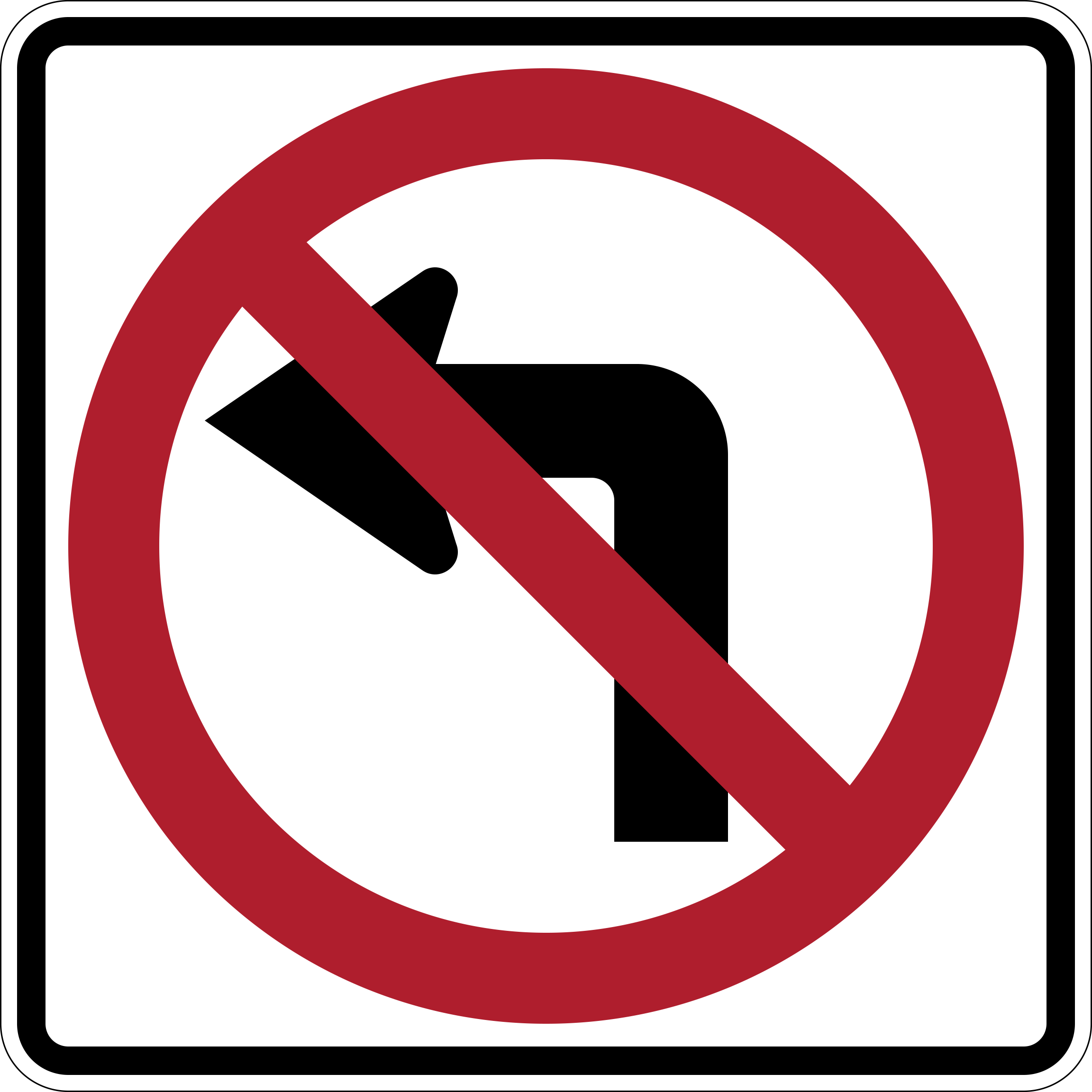
- A left turn
- A right turn
- A U-turn
- Continuing straight
Show answer
A left turn. The slash crosses a left-turn arrow, so this sign prohibits a left turn. The handbook lists separate signs for no right turn and no U-turn; their different arrows identify different barred maneuvers. Read the underlying arrow as well as the red circle and slash. This sign does not prohibit every movement through the intersection. Choose an otherwise lawful path that avoids the particular left turn identified by the symbol.
Study this in the handbook: Regulatory and guide signs
17. A tall hedge on the corner hides the cross street as you approach an intersection. What does the South Carolina manual say to do?
- Keep your speed, since your light is green anyway
- Slow down and search, including spots you can't see well
- Honk once, then continue through at the same speed
- Look straight ahead only, so you stay centered in your lane
Show answer
Slow down and search, including spots you can't see well. At all intersections, the manual says to reduce your speed and search for traffic control devices, oncoming and cross traffic, pedestrians and bicyclists, the roadway condition, and areas of limited visibility. A hedge that hides the cross street is exactly such an area, so slow down and look carefully. Do not rely on others to obey signals, and do not assume a green light makes the intersection clear.
Study this in the handbook: Turns, intersections and roundabouts
18. Your brake pedal suddenly sinks to the floor while driving, and you reach for the parking brake. How should you apply it?
- All at once, pulling as hard as you possibly can
- Slowly, ready to release it if the rear wheels skid
- Pump it rapidly on and off until you stop
- After shifting into park while still rolling
Show answer
Slowly, ready to release it if the rear wheels skid. If your brakes stop working, the manual says to use the parking brake, pulling the handle or pushing the foot pedal slowly so you do not lock the rear wheels and cause a skid. Be ready to release it if the vehicle starts to skid. Yanking it hard can lock the wheels, and shifting into park while moving is not a step the manual gives. If the parking brake does not work, turn off the engine and find a safe place to stop.
Study this in the handbook: Avoiding collisions and vehicle malfunctions
19. Your wheels spin on snow and the car will not move. What does the South Carolina manual suggest putting in the path of the wheels?
- Water, to melt the packed snow faster
- Ice chipped from the gutter to fill the ruts
- Your floor mats, then spin the wheels harder
- Sand, cat litter, gravel, or salt
Show answer
Sand, cat litter, gravel, or salt. When a vehicle is stuck in snow, the manual says not to spin the wheels, which only digs the car in deeper. Turn the wheels side to side to push snow away, use a light touch on the gas, and shovel snow from around the wheels and underside. Then pour sand, cat litter, gravel, or salt in the path of the wheels for traction; cardboard, newspaper, or brush can also help. Water would just freeze.
20. You load a utility trailer with 1,000 pounds of cargo. About how much should sit in the front, nearest the towing vehicle?
- About 400 pounds
- About 500 pounds
- About 600 pounds
- About 800 pounds
Show answer
About 600 pounds. The manual says 60 percent of a trailer's cargo weight should go in the front, nearest the towing vehicle, and 40 percent in the back. For 1,000 pounds, that is about 600 pounds up front. Trailers must be loaded heavier in the front because it reduces the chance of sway, and failing to do so is a leading cause of vehicle-trailer mishaps. Keep heavy items on the floor and secure the load.
Study this in the handbook: Rural roads, winter driving and trailers
Every question is written from the official South Carolina Driver's Manual. Need paper? Printable SC practice test with answer key.
Last verified 2026-10-05. How we check every question · Study all 500 as flashcards
Frequently asked questions
How many questions are on this South Carolina practice test?
This fixed set has 20 questions. It is test 14 of 25 from the 500 question South Carolina bank.
How does this fixed test relate to the full South Carolina bank?
Each numbered test is a fixed set of questions in a fixed order, so you can retake the same test later and compare. Every test mixes road signs and the other topics in about the same proportion as the full bank. Tests 1 to 25 together cover every question in the South Carolina bank once. The full practice page mixes the whole bank at random.
Last verified 2026-10-05. See the South Carolina DMV facts page for sourced state details.
Return to the full South Carolina practice test · Study road signs