
Test 22 of 25 · 20 questions · Free 2026
SC Permit Practice Test 22
Jump to the test ↓A fixed 20 question set from the South Carolina bank with answers and plain English explanations.
Question 1 of 20 · 0 right so far
All 20 questions in test 22
Every question below comes from the South Carolina question bank on this page. Open a question to see the correct answer and the explanation. Nothing here is hidden behind a signup.
1. You reach a roundabout, and a car already circling is coming toward your entry point from the left. What should you do?
- Enter first, since you are on its right
- Yield and enter after it passes
- Stop in the circle to let it go around you
- Speed up to enter ahead of it
Show answer
Yield and enter after it passes. In a roundabout, entering traffic yields the right-of-way to traffic already circulating. Slow down as you approach, wait for a safe gap, and enter counterclockwise after the circulating car has passed. The four-way stop rule about the driver on the right does not apply here, and stopping inside the circle is not part of the manual's steps. Once in, proceed to your exit and signal as you leave.
Study this in the handbook: Turns, intersections and roundabouts
2. You park facing downhill on the right side of a street that has no curb. Which way do you turn the front wheels?
- To the left, toward the center of the street
- Straight ahead, since there is no curb
- To the left, then set the parking brake
- To the right, toward the edge of the road
Show answer
To the right, toward the edge of the road. Headed downhill, the manual says to turn your wheels to the right, with or without a curb, except when parking on the left side of a one-way street. With no curb, turning right means a rolling car heads toward the edge of the road instead of into traffic. Straight or left-turned wheels would let it roll into the street. In every case, set the parking brake, use park or the proper gear, and turn off the engine.
Study this in the handbook: Turnabouts, parking, lane changes and passing
3. Which situation lets drivers pass a stopped school bus without stopping?
- Its red lights flash, but the stop arm is folded in
- You are behind it on a four-lane highway
- It is in an off-road loading zone where crossing is barred
- It is stopped on a two-lane road with no children visible
Show answer
It is in an off-road loading zone where crossing is barred. The manual lists two situations where you do not have to stop for a school bus. One is when the bus is in a passenger loading zone completely off the main travel lanes and pedestrians are not allowed to cross the roadway. The other is meeting a stopped bus from the opposite direction on a multi-lane highway. Flashing red lights alone require a stop, drivers behind a bus must always stop, and two-lane roads have no exception.
Study this in the handbook: School buses
4. What is the main job of a yellow warning sign, according to the South Carolina manual?
- To tell you about possible danger ahead
- To state a law you must obey, like a speed limit
- To guide you to cities, hospitals, and hotels
- To mark the start of a construction zone
Show answer
To tell you about possible danger ahead. Warning signs tell you about possible danger ahead, such as a need to slow down and be prepared to stop, or a hazard or special situation on the roadway. They are usually yellow with black lettering or symbols and typically diamond shaped. Regulatory signs, which are white, state specific laws you must obey; green, brown, and blue guide signs give directions and services; and orange signs mark construction, maintenance, or emergency work zones.
Study this in the handbook: Traffic lights
5. Why does the South Carolina manual stress making a broken-down vehicle easy for others to see?
- Tow truck drivers would not be able to find it
- Police may ticket a car that is hard to see
- Drivers often do not see it until it is too late to stop
- It keeps thieves away from the stalled vehicle
Show answer
Drivers often do not see it until it is too late to stop. When your vehicle breaks down, the manual says to make sure other road users can see it, because all too often collisions happen when a driver does not see a disabled vehicle until it is too late to stop. Get the vehicle off the road and away from traffic if possible, turn on your emergency flashers, and place flares about 200 to 300 feet behind it if you have them. Use a phone to notify authorities if one is available.
Study this in the handbook: Avoiding collisions and vehicle malfunctions
6. How does the South Carolina manual define aggressive driving?
- Accidentally drifting over a lane line once
- Honking more than once at the same driver
- Driving a few miles per hour above the posted limit
- Intentionally endangering other people or property
Show answer
Intentionally endangering other people or property. The key word in the manual's definition is intentionally: aggressive driving is a deliberate act that puts other persons or property in danger. Behaviors often linked to it include speeding, following too closely, unsafe lane changes, poor signaling, and failing to obey stop signs, yield signs, and signals. A single accidental drift lacks that intent, and honking alone is not what the definition describes. Speeding can be part of aggressive driving, but the definition centers on intentional endangerment. The manual's remedy is to concentrate, stay patient, and be courteous.
Study this in the handbook: Fatigue, distraction and the hands free law
7. What does the South Carolina manual mean by panic steering at an uneven pavement drop-off?
- Braking hard and stopping while the car is still partly on the shoulder
- Steering away from the pavement into the grass
- Jerking back onto the pavement as soon as the wheels leave it
- Letting go of the wheel when the car starts shaking
Show answer
Jerking back onto the pavement as soon as the wheels leave it. Panic steering is the manual's name for trying to return to the pavement as soon as the vehicle's wheels leave it, and the manual tells you to avoid it. Instead, slow down gradually when it is safe, and steer gently back onto the pavement with only a slight turn of the wheel. Moving gradually off and back onto the road reduces the chance of erratic vehicle behavior when your tires meet an uneven or unpaved shoulder.
Study this in the handbook: Avoiding collisions and vehicle malfunctions
8. A driver is tailgating you. Which action does the South Carolina manual suggest to help keep that driver at a safe distance?
- Tap your brakes repeatedly to warn the driver off
- Keep a steady speed and signal well in advance
- Speed up until the other driver falls back
- Slow down suddenly so the driver backs off
Show answer
Keep a steady speed and signal well in advance. You cannot control the driver behind you, but the manual says you can help keep that driver at a safe distance by keeping a steady speed, signaling in advance, and leaving more space in front of your vehicle before you slow down or turn. That extra space ahead lets you reduce speed gradually instead of suddenly. Brake tapping, sudden slowing, or speeding up to escape are not part of the manual's advice for the space behind you.
Study this in the handbook: Stopping distance, following distance and signaling
9. Why does the South Carolina manual say to finish slowing before a curve rather than braking hard in it?
- Brake lights are hard for others to see in a curve
- Braking in a curve wears out the brake pads faster
- Hard braking in the curve could make the tires lose traction
- Curves are designed for speeds above the posted limit
Show answer
Hard braking in the curve could make the tires lose traction. The manual says to reduce speed before entering a curve to a safe speed, one that allows slight and constant acceleration through it. Slow down even more when traction is poor, when following other vehicles, or when you cannot see the end of the curve. Hard braking after you enter could cause your tires to lose traction. Brake lights and brake wear are not the reason given, and curves do not invite speeds above the limit.
Study this in the handbook: Visual search and speed management
10. You are leaving a gas station lot onto a busy two-lane road. A car is approaching on the road. Who has the right-of-way?
- You, because you were waiting longer
- The driver already on the road
- Whoever turns on a signal first
- You, if you plan to turn right
Show answer
The driver already on the road. When you enter a public road from a driveway or private road, including a business lot, the manual says to yield the right-of-way to drivers on the public highway. Waiting longer does not change that, signaling does not shift priority, and turning right instead of left still means entering traffic that has the right-of-way. Wait for a gap large enough to pull out and reach a safe speed.
Study this in the handbook: Yielding the right of way
11. Why are Restricted Crossing U-turn (RCUT) intersections used on South Carolina roads?
- They let side-street drivers turn left directly
- They cut down on conflict points and improve safety
- They remove the need for drivers to yield
- They allow U-turns from any lane at any time
Show answer
They cut down on conflict points and improve safety. An RCUT eliminates the left-turn and through movements from the cross street. Instead, drivers turn right onto the main road and then make a U-turn at a one-way median opening. The manual says RCUT intersections reduce potential conflict points and increase safety. They may be controlled by a traffic signal, a stop sign, or a merge or yield sign, so yielding is still required where posted.
Study this in the handbook: Turnabouts, parking, lane changes and passing
12. The temperature is a few degrees above freezing and the roads are wet. Where does the South Carolina manual say you might still find ice?
- Nowhere, since ice cannot form above freezing
- Just on dirt roads far from any town
- On sunny stretches of busy interstate
- In shady areas or on exposed roads like bridges
Show answer
In shady areas or on exposed roads like bridges. A thermometer reading above freezing does not mean the roads are free of ice. Even at temperatures above freezing, wet conditions can leave ice in shady areas or on exposed roadways like bridges. The manual also notes that ice patches may occur on bridges even when there is no ice on the roads. Slow down in shade and on bridges during cold, wet weather, and remember that road conditions are constantly changing.
Study this in the handbook: Rural roads, winter driving and trailers
13. Why does the South Carolina manual say the lap belt must be snug and low across your hips?
- So it does not wrinkle your clothes
- So it is easier to unbuckle in a hurry
- So it keeps the shoulder harness out of the way
- So you do not slide out of it in a collision
Show answer
So you do not slide out of it in a collision. After fastening, the lap belt should be snug and lie low across your hips. The manual explains why: otherwise, in a collision, you could slide out of the belt, resulting in possible injury or death. Comfort and easy unbuckling are not the reasons. The shoulder harness has its own correct position, across the shoulder and chest with little or no slack, never under the arm or behind the back.
14. Your total stopping distance is made up of which three parts?
- Perception, reaction, and braking distance
- Signaling, steering, and braking distance
- Reaction, coasting, and parking distance
- Perception, signaling, and following distance
Show answer
Perception, reaction, and braking distance. Total stopping distance is the distance your vehicle travels from the time you realize you must stop until it actually stops. The manual breaks it into perception time and distance, which averages three quarters of a second to 1 second; reaction time and distance, about the same, to move your foot from the gas to the brake; and braking distance, about 158 feet at 50 mph on dry pavement. Speed increases all of it.
Study this in the handbook: Stopping distance, following distance and signaling
15. On a dark road with no oncoming vehicles, how much farther can you see with high beams than with low beams?
- About 10 percent farther
- About twice as far
- About four times as far
- No farther, just wider
Show answer
About twice as far. Night driving is harder because what you can see is limited by your headlights. The manual says to use high beams whenever there are no oncoming vehicles, because high beams let you see twice as far as low beams. Switch back to low beams when you are 500 feet or more from an oncoming vehicle, when you are following a vehicle less than 200 feet ahead, and in fog, rain, or snow.
Study this in the handbook: Night driving and work zones
16. You are about to cross an open steel grate bridge on a rural road. What does the South Carolina manual tell you to do?
- Slow down, leave more room, and hold the wheel firmly
- Speed up so you spend less time on the grating
- Brake hard in the middle to test the grip
- Move to the center of the bridge and coast across
Show answer
Slow down, leave more room, and hold the wheel firmly. Open bridge gratings and steel bridges can reduce your traction. The manual's response is to reduce your speed, increase your following distance, and keep a firm grip on the steering wheel. Speeding up or braking hard on a low-traction surface works against you, and drifting toward the center of a bridge puts you closer to oncoming traffic. On narrow or single-lane bridges, take turns; the first driver to reach the bridge generally has the right-of-way.
Study this in the handbook: Rural roads, winter driving and trailers
17. You reach this sign where a crosswalk is painted across the road but there is no stop line. Where do you stop?
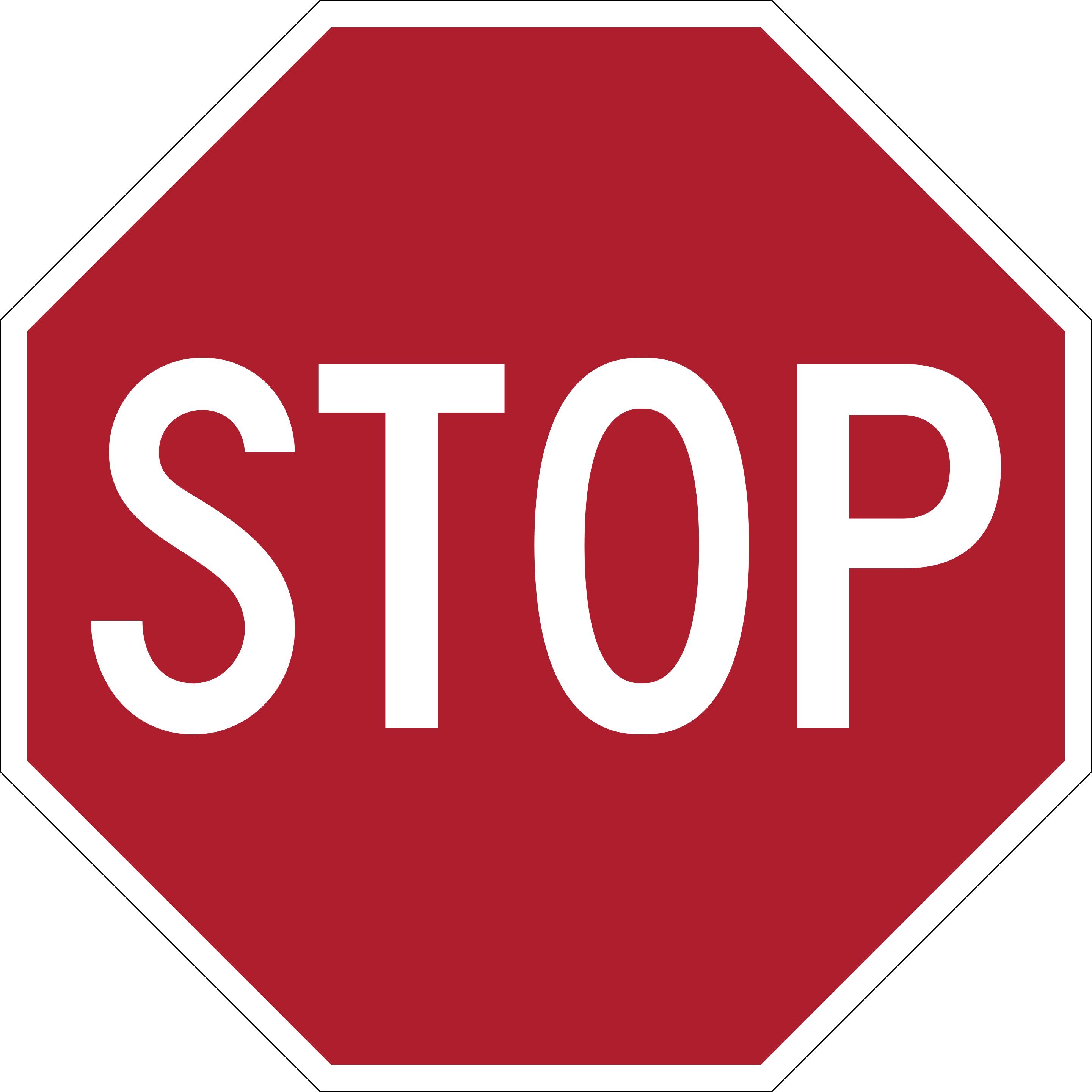
- Behind the painted crosswalk
- In the middle of the crosswalk
- Past the crosswalk at the curb line
- Beside the stop sign post itself
Show answer
Behind the painted crosswalk. At a stop sign, you must stop behind the stop line or crosswalk if one is present. Here the crosswalk is the marking, so your vehicle stops before it, leaving the crossing area clear for pedestrians. Stopping in or past the crosswalk blocks the space pedestrians use, and the post is not the reference point. After stopping, look in all directions for crossing vehicles and pedestrians and yield the right-of-way before you go.
Study this in the handbook: Regulatory and guide signs
18. At a crossing marked with this sign, a train is approaching. Where must you stop?
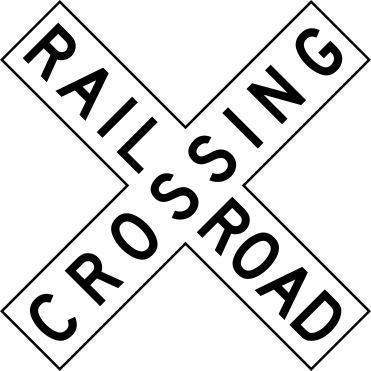
- Right at the crossbuck post, even past the stop line
- Anywhere, as long as your car is off the rails
- Behind the stop line, until the crossing is clear
- Just past the tracks, then wait for the train
Show answer
Behind the stop line, until the crossing is clear. The white X-shaped Railroad Crossing sign marks the crossing itself. When a train or railroad vehicle is approaching, you must stop behind the stop line or before the intersection and wait until the intersection is clear. Rolling up to the post past the line, or crossing to stop beyond the tracks, puts you too close to the train's path. After the train passes, wait until it is well down the track or the signals show it is safe.
Study this in the handbook: Warning, railroad and work zone signs
19. You are backing out and want the rear of your car to move to the left. Which way do you steer?
- Slightly to the left, the direction the rear should move
- Slightly to the right, opposite the way the rear should go
- Hard to the right, then straighten once the car moves
- Keep the wheel straight and let the car drift left
Show answer
Slightly to the left, the direction the rear should move. A steering wheel is turned in the direction you want the vehicle to move, whether going forward or in reverse. When backing, the manual says to steer slightly in the direction the rear of the vehicle should move, so a rear that needs to go left means steering slightly left. Turning the opposite way sends the rear the wrong direction. Keep your speed slow, because the vehicle is much harder to steer in reverse, and make quick checks to the front and sides if you are turning.
20. Why does the South Carolina manual say to avoid sounding your horn close to a bicyclist?
- It is illegal to use a horn within 50 feet of a bike
- It may startle the rider into steering into your path
- Horns are meant only for warning other motor vehicles
- The rider will speed up and block your lane
Show answer
It may startle the rider into steering into your path. The manual advises avoiding your horn close to bicyclists unless there is a chance of a collision. Its reason is specific: a horn used just to announce your presence may startle the rider and cause them to steer into your path, creating the very collision you wanted to avoid. Horns are not reserved for motor vehicles, and there is no 50-foot rule in the manual. When passing, slow down and give as much space as possible instead.
Study this in the handbook: Yielding to pedestrians and bicyclists
Every question is written from the official South Carolina Driver's Manual. Need paper? Printable SC practice test with answer key.
Last verified 2026-10-05. How we check every question · Study all 500 as flashcards
Frequently asked questions
How many questions are on this South Carolina practice test?
This fixed set has 20 questions. It is test 22 of 25 from the 500 question South Carolina bank.
How does this fixed test relate to the full South Carolina bank?
Each numbered test is a fixed set of questions in a fixed order, so you can retake the same test later and compare. Every test mixes road signs and the other topics in about the same proportion as the full bank. Tests 1 to 25 together cover every question in the South Carolina bank once. The full practice page mixes the whole bank at random.
Last verified 2026-10-05. See the South Carolina DMV facts page for sourced state details.
Return to the full South Carolina practice test · Study road signs