
500 practice questions · Real sign images & audio · Free

Maryland Permit Practice Test

The Maryland permit test has 25 questions, and you need 22 correct (88%) to pass. Practice 20 at a time below. Free, no signup.

Free Maryland DMV practice test with 500 practice questions written from the official Maryland Driver's Manual, each with an explanation and a handbook page citation. No signup and no ads. The Maryland permit test has 25 questions, and you need 22 correct (88%) to pass. Page updated 2026-10-22.

Also here: exam simulator in the real test format, flashcards for the whole bank, a one-page cheat sheet, handbook lessons, chapter by chapter, and audio read-aloud for questions.

Maryland verified practice bank · 500 questions · Page updated 2026-10-22

Question 1 of 20 · 0 right so far

0 correct · 0 missed
What following gap should you use behind a bus or delivery van that stops often?
More ways to practice: exam simulator, topic drills, missed questions

500-question bank · Sign images & explanations · Free

Maryland practice test has 500 questions. Every question comes with a plain-English explanation the moment you answer.

Get a day by day study plan

Optional. Three quick answers; the tests below work without it.

Age on test day

No date yet? You get a 7 day plan.

Real exam format: 25 questions, 22 correct to pass.

Start here

Run 20 questions to warm up.

Find your gaps

Diagnose weak topics and retry what you've missed.

Simulate the real thing

Practice under graded exam conditions or run the whole bank.

Practice one topic

Drill a single topic, up to 20 questions with explanations.

Random draw and answer order every attempt. Practice scoring: 22 of 25 correct. The Maryland permit test has 25 questions, and you need 22 correct (88%) to pass.

Free means actually free: no subscription, no auto-renew, no card required, no locked features. This site is funded by our insurance work, not by test-prep charges.

Show a parent how you are doing

A read-only link with your Maryland recent practice accuracy, topic scores and test results. No account, no name or email.

Maryland permit practice test at a glance

500 free practice questions, with 25 numbered 20 question tests and the full bank to practice, plus a free real-exam simulator that matches the Maryland knowledge test (25 questions and 22 correct to pass), a road sign test, and an explanation for every answer. No signup, no paywall, nothing locked. Questions are written from the Maryland Driver's Manual and were last checked against it on September 7, 2026. Page updated 2026-10-22.

Key facts: Maryland permit test

Questions on the knowledge test

25 questions (Class C, Class M, and Moped Permit)

Official source · verified 2026-10-21

Passing score

88% or higher

Official source · verified 2026-10-21

Knowledge test fee

$0 MVA fee for the knowledge test; permit or license issuance fees still apply

Official source · verified 2026-10-05

Minimum permit age

15 years and 9 months old

Official source · verified 2026-10-21

Retake wait after failing

Next business day after the first failure if an appointment is available; seven calendar days after two or more failures

Official source · verified 2026-10-21

The real Maryland knowledge test is the DMV exam used for a learner permit. This page contains the full free 500 question study bank, with an explanation after each answer. Use the numbered 20 question tests below when you want a fixed study session.

The Maryland permit test has 25 questions, and you need 22 correct (88%) to pass. This practice bank has 500 questions. Source: official source, checked 2026-10-18.

Alcohol and DUIEmergenciesLaws and paperworkParkingRight of wayRoad signsSafe drivingSignals and markingsSpeed limits

See facts and key topics for Maryland DMV (minimum age, fees, wait times, question counts by topic) before you start, or print it to bring with you on test day.

Booked your test? See what to bring and where to go: a printable Maryland document checklist with official office and appointment links.

Study the handbook, chapter by chapter: 21 short free lessons with the key rules, the exact numbers, and 3 check questions each, all quoted from the Maryland manual.

How to use this MD practice test

  1. Take the 25 question exam-length practice test above once, untimed, to find your weak topics.
  2. Work through the numbered 20 question sets below. Each one is fixed, so a second attempt is a fair comparison.
  3. Read the explanation on every miss. The wording comes from the Maryland Driver's Manual, which is what the examiners use.
  4. Come back on a later day and retake the questions you missed. A score on questions you have not seen before tells you more than a repeat.

Frequently asked questions

How many questions are on the Maryland permit test, and what score do you need?

The Maryland permit test has 25 questions, and you need 22 correct (88%) to pass. Official source: mva.maryland.gov.

How old do you have to be to get a learner's permit in Maryland?

Maryland lists the minimum permit age as: 15 years and 9 months old. Official source: mva.maryland.gov.

How much does the Maryland permit test cost?

Maryland lists: $0 MVA fee for the knowledge test; permit or license issuance fees still apply. Official source: mva.maryland.gov.

What should I bring to take the permit test?

Maryland asks you to bring: Proof of identity, required identification, and learner permit application materials for test day. Official source: mva.maryland.gov. Full list: Maryland what to bring checklist.

Is this Maryland practice test free, and where do the questions come from?

Yes. The practice questions, explanations, and numbered tests are free to use with no account required. The questions are written from the Maryland Driver's Manual, and this page is an educational practice bank that is separate from the DMV test.

How many questions are in the Maryland practice bank?

This free page contains the full 500 question bank. The numbered tests each contain 20 fixed questions.

Page updated 2026-10-22. Questions last verified 2026-09-07 against the Maryland Driver's Manual.

25 sample practice questions from the MD bank

Every question below comes from the Maryland question bank on this page. Open a question to see the correct answer and the explanation. Nothing here is hidden behind a signup.

  1. 1. What following gap should you use behind a bus or delivery van that stops often?

    1. Four or five seconds, and possibly more if needed
    2. The same three seconds required in every condition
    3. One second because the vehicle is moving slowly
    4. One car length regardless of speed
    Show answer

    Four or five seconds, and possibly more if needed. Vehicles that stop frequently require more room because their speed and position can change repeatedly. Full explanation in Test 1

    Study this in the handbook: Following distance, stopping distance and turns

  2. 2. Under Maryland's seat belt restriction for Provisional License holders under 18, who must be buckled up?

    1. Only the driver
    2. Only passengers in the front seat
    3. Only passengers under 16
    4. The driver and every passenger, with children in child safety seats
    Show answer

    The driver and every passenger, with children in child safety seats. A Provisional License carries a seat belt restriction that covers everyone in the vehicle. Full explanation in Test 2

    Study this in the handbook: Provisional license restrictions, implied consent and penalties

  3. 3. What is a safe speed choice when a road has pedestrians or animals nearby?

    1. Increase speed to pass the area quickly
    2. Reduce speed so you have more time to respond
    3. Maintain the posted limit regardless of visibility
    4. Match the fastest nearby vehicle
    Show answer

    Reduce speed so you have more time to respond. Maryland lists roads where pedestrians or animals may be present among the conditions that call for reduced speed. Full explanation in Test 3

    Study this in the handbook: Defensive driving and who goes first

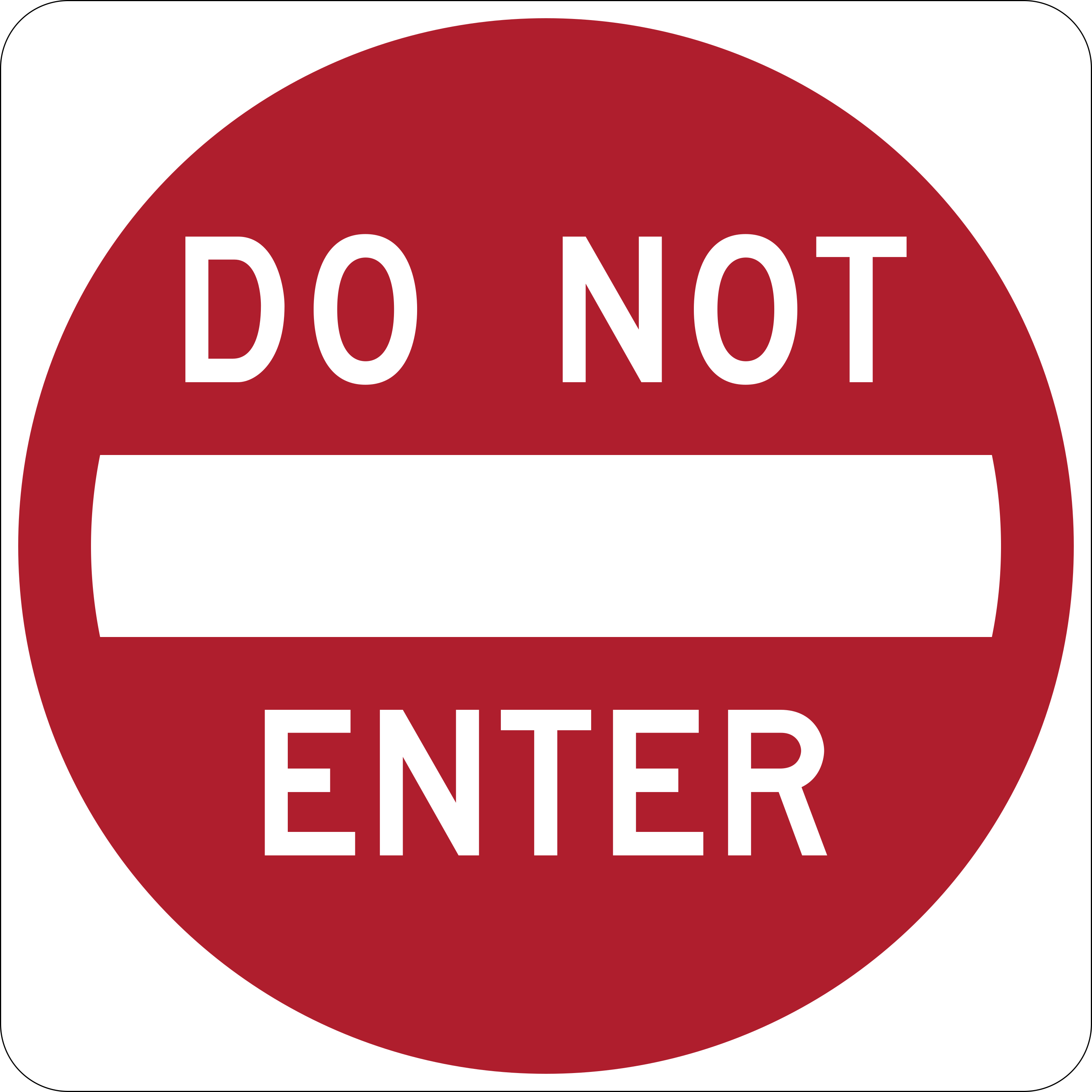
  4. 4. What does the pictured red sign communicate?

    Square sign with red circle reading DO NOT ENTER
    1. The road is one-way in your direction
    2. Parking is permitted for five minutes
    3. A railroad crossing is ahead
    4. Do not enter
    Show answer

    Do not enter. The manual identifies red as a sign color used for stop, yield, do not enter, or wrong way messages. Full explanation in Test 4

    Study this in the handbook: Sign colors and shapes

  5. 5. If a vehicle begins to hydroplane, which response is recommended?

    1. Accelerate sharply to force the tires through the water
    2. Apply the brakes firmly while turning toward the shoulder
    3. Take your foot off the gas and keep the vehicle straight
    4. Turn quickly from side to side to regain contact
    Show answer

    Take your foot off the gas and keep the vehicle straight. Hydroplaning occurs when the tires lose contact with the pavement on a sheet of water. Full explanation in Test 5

    Study this in the handbook: Bad weather, skids and hydroplaning

  6. 6. What does the five-sided sign in the image warn you about?

    Yellow-green pentagon with two walking figures
    1. A railroad crossing ahead
    2. A recreational area entrance
    3. A school zone or school crossing
    4. A mandatory truck route
    Show answer

    A school zone or school crossing. The pentagon is the shape used for school zones and school crossings. Full explanation in Test 6

    Study this in the handbook: Sign colors and shapes

  7. 7. What vision does Maryland require to qualify for a driver's license?

    1. 20/20 in one eye
    2. Binocular vision, at least 20/40 in each eye, and a continuous field of vision of at least 140 degrees
    3. 20/70 in either eye with 90 degrees
    4. Any vision with corrective lenses
    Show answer

    Binocular vision, at least 20/40 in each eye, and a continuous field of vision of at least 140 degrees. To qualify for a Maryland driver's license the applicant must have binocular vision, visual acuity of at least 20/40 in each eye, and a cont Full explanation in Test 7

    Study this in the handbook: The vision screening, knowledge test and skills test

  8. 8. What does the round railroad warning sign tell a driver?

    Round yellow RXR sign
    1. A railroad crossing is ahead
    2. The vehicle must enter a roundabout
    3. A railroad crossing has just ended
    4. Trains have priority only at night
    Show answer

    A railroad crossing is ahead. The round sign is a railroad warning sign used before a crossing. Full explanation in Test 8

    Study this in the handbook: Sign colors and shapes

  9. 9. By Maryland law, what must a bicycle's brakes be able to do?

    1. Stop the bicycle within 50 feet at 20 mph
    2. Stop the bicycle within 3 feet at any speed
    3. Stop the bicycle within 15 feet at 10 mph on dry, level, clean pavement
    4. Stop the bicycle within 100 feet on wet pavement
    Show answer

    Stop the bicycle within 15 feet at 10 mph on dry, level, clean pavement. Maryland lists required bicycle equipment, and the brake standard is exact: the brakes must stop the bicycle within 15 feet when it is going Full explanation in Test 9

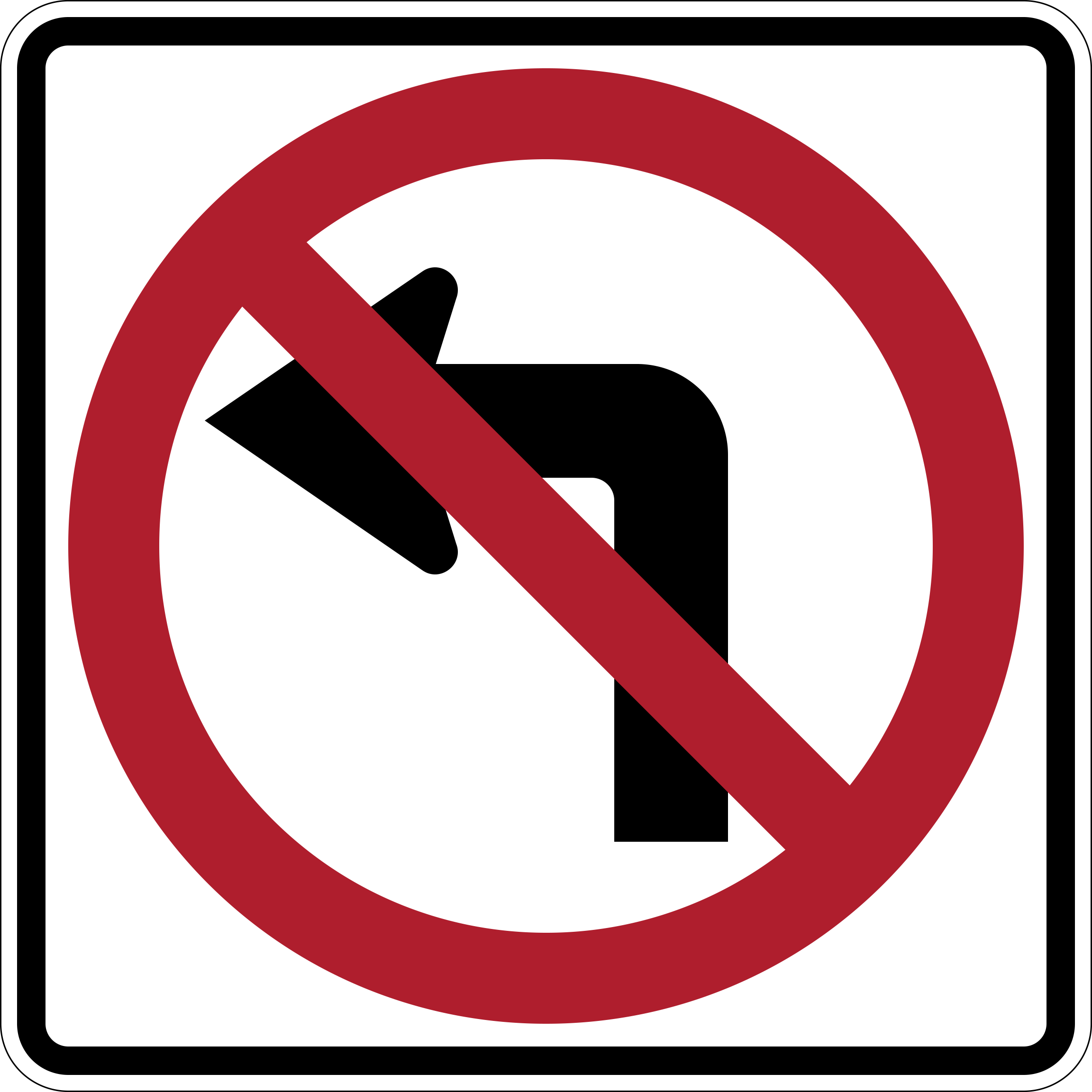
  10. 10. What do Maryland traffic signs use to communicate information?

    Left-turn arrow crossed by red slash
    1. Only flashing lights
    2. Engine sounds and tire size
    3. Symbols and words
    4. Vehicle registration numbers
    Show answer

    Symbols and words. Maryland states that traffic signs use symbols and words to communicate information. Full explanation in Test 10

    Study this in the handbook: Sign colors and shapes

  11. 11. Your 11-year-old asks to ride in the front seat of your Maryland car on a short trip. What does the manual advise?

    1. The front is fine for short trips
    2. Ride in front with the seat pushed back
    3. Ride buckled up in a rear seat
    4. Ride in front with a lap belt only
    Show answer

    Ride buckled up in a rear seat. Maryland's air bag guidance says children under age 13 should ride buckled up in a rear seat, in a child safety seat or with a seat belt. Full explanation in Test 11

    Study this in the handbook: Supervising drivers, insurance, seat belts and child seats

  12. 12. Your signal is green and you are turning in Maryland while a person on foot crosses the street you are entering. What applies?

    1. The person must hurry because your signal is green
    2. You may turn closely in front of the person
    3. The person should wait on the curb until all turns finish
    4. You must give way to the person while turning
    Show answer

    You must give way to the person while turning. Turning on green still crosses the path of people walking across the street being entered. Full explanation in Test 12

    Study this in the handbook: Pedestrians, emergency vehicles and school buses

  13. 13. You are turning right into a Maryland driveway, and your path crosses a bike lane where a bicyclist is approaching from behind. What should you do?

    1. Let the rider pass, then cross the bike lane
    2. Stop in the bike lane until the rider stops
    3. Honk so the rider moves out of the bike lane
    4. Turn first, since the rider can slow down
    Show answer

    Let the rider pass, then cross the bike lane. When you enter or cross a bike lane or shoulder, Maryland says you must yield the right-of-way to bicyclists riding in them. Full explanation in Test 13

    Study this in the handbook: Trucks, motorcycles, bicycles and mopeds

  14. 14. Darkness, fog, or heavy rain cuts your view of the road in Maryland. What does that situation demand from you?

    1. The same casual attention used on a clear day
    2. More concentration and preparation than normal driving
    3. Faster reactions instead of advance preparation
    4. Reliance on other drivers to light your way
    Show answer

    More concentration and preparation than normal driving. When vehicles, pedestrians, signs, and markings grow hard to see, the driving task itself grows harder. Full explanation in Test 14

    Study this in the handbook: Lines and pavement markings

  15. 15. You approach a yield sign in Maryland and traffic is crossing ahead from both sides. How should you approach?

    1. Slow down and look to the left and the right
    2. Keep your speed and look straight ahead
    3. Stop fully in every case before reaching the sign itself
    4. Look only to the left for oncoming cars
    Show answer

    Slow down and look to the left and the right. A yield approach starts with lower speed and a check in both directions. Full explanation in Test 15

    Study this in the handbook: Regulatory, warning and guide signs

  16. 16. You see the pictured warning sign on a two-way Maryland road. What does it tell you?

    Yellow sign with arrows splitting around a median
    1. The divided road ends ahead
    2. The road divides around a median ahead
    3. Two lanes merge into one ahead
    4. A detour begins at the next turn
    Show answer

    The road divides around a median ahead. The Road Divides Ahead sign warns that the road ahead splits into a divided highway, with a guardrail, strip of land, or other barrier betwe Full explanation in Test 16

    Study this in the handbook: Regulatory, warning and guide signs

  17. 17. Passing is barred in Maryland when the view ahead is blocked as a driver comes within how far of a bridge, elevated road, or tunnel?

    1. Within 50 feet of the bridge or tunnel entrance
    2. Within 100 feet of the structure
    3. Within 200 feet of the structure
    4. Within 500 feet of the structure
    Show answer

    Within 100 feet of the structure. Bridges, elevated roads, and tunnels squeeze sight lines and escape room, so passing near them carries extra risk when the view is blocked. Full explanation in Test 17

    Study this in the handbook: Passing rules and parking

  18. 18. What do trapezoid-shaped signs point drivers to in Maryland?

    1. School zones and school crossings marked by five-sided signs
    2. Construction and maintenance work areas shown on orange warning signs
    3. Recreation and cultural interest areas and National Forest routes
    4. Services such as food, gas, lodging, and rest areas nearby
    Show answer

    Recreation and cultural interest areas and National Forest routes. Sign shapes give Maryland drivers a fast first clue before they read any words. Full explanation in Test 18

    Study this in the handbook: Sign colors and shapes

  19. 19. Even when the rules seem to give you priority at a crossing in Maryland, how should you treat that priority?

    1. Never assume it is automatic; judge each situation
    2. Assume everyone will notice you and honor it
    3. Enter without slowing whenever the rules favor you
    4. Use your horn to claim it before entering
    Show answer

    Never assume it is automatic; judge each situation. Priority rules assign who should wait, but they cannot force another person to behave correctly. Full explanation in Test 19

    Study this in the handbook: Defensive driving and who goes first

  20. 20. You are nearing tracks in Maryland and a train is approaching. Why is extra caution needed there?

    1. Trains steer around vehicles that are on the tracks
    2. Trains cannot stop quickly, so drivers must use extra caution
    3. Trains always slow down before reaching a road crossing
    4. Crossing gates will push a stopped vehicle clear of the tracks
    Show answer

    Trains cannot stop quickly, so drivers must use extra caution. A train needs a very long distance to stop, far more than a car or truck needs on a road. Full explanation in Test 20

    Study this in the handbook: Bad weather, skids and hydroplaning

  21. 21. A solid yellow line runs along one edge of a Maryland one-way road or ramp. What does it mark?

    1. The right edge of the road
    2. The left edge of the road
    3. The spot where traffic must stop
    4. A lane where passing is allowed
    Show answer

    The left edge of the road. A single solid yellow line marks the left edge of divided highways, one-way roads, and ramps. Full explanation in Test 21

    Study this in the handbook: Lines and pavement markings

  22. 22. A large truck is stopped at a Maryland intersection with space on its right. You want to move up along that side. Why is that unsafe?

    1. The truck driver can see you clearly there and will wait
    2. Trucks are not allowed to turn right from that position
    3. The truck may begin its turn and leave you caught between it and the curb
    4. Traffic signals do not apply to vehicles on a truck's right side
    Show answer

    The truck may begin its turn and leave you caught between it and the curb. Maryland warns never to try to cut in along the right side of a truck at an intersection as the driver begins the turn. Full explanation in Test 22

    Study this in the handbook: Pedestrians, emergency vehicles and school buses

  23. 23. Your vehicle stops running on a Maryland interstate shoulder. Why is walking beside the road so risky?

    1. Shoulders are reserved for police only
    2. Traffic nearby travels at very high speeds
    3. Walking makes your vehicle harder to tow
    4. Flashers stop working once you exit
    Show answer

    Traffic nearby travels at very high speeds. Interstate traffic passes a shoulder at highway speed, so a person on foot has almost no protection or reaction room. Full explanation in Test 23

    Study this in the handbook: Railroads, work zones, roundabouts, highways and processions

  24. 24. You have stopped at a red light in Maryland and plan a permitted right turn. A bicyclist is coming from your left along the cross street. What should you do?

    1. Turn now, because bicycles must yield to cars
    2. Let the bicyclist pass, then turn when it is clear
    3. Turn quickly before the bicyclist reaches you
    4. Sound your horn so the bicyclist slows down
    Show answer

    Let the bicyclist pass, then turn when it is clear. Turning on red after a complete stop is allowed only when no sign prohibits it, and the turning driver must yield the right-of-way to pedest Full explanation in Test 24

    Study this in the handbook: Traffic signals, arrows and lane use lights

  25. 25. You approach a crossing in Maryland where a person using a white cane is stepping off the curb slowly. How should you drive?

    1. Be especially alert and allow extra crossing time
    2. Proceed normally since signals control the crossing
    3. Honk gently to hurry the person along
    4. Pass behind the person as soon as space opens
    Show answer

    Be especially alert and allow extra crossing time. Some people crossing the street cannot see or hear traffic well, or need more time to move across. Full explanation in Test 25

    Study this in the handbook: Pedestrians, emergency vehicles and school buses

How this test works

Study the rules, then check the explanation

This page uses the prepared Maryland question bank exactly as provided. Start the test, choose an answer, and read the explanation before moving on. Retakes serve the same 500 questions so you can work through the state set without losing your place.

Want a one-page summary to study or print? See the Maryland DMV cheat sheet, with the key rules and numbers from this same question bank.

Looking for another state? Go back to the DMV practice test hub. California remains on the established California DMV practice test page.

Are you a library or school? See the free DMV practice test partner resource for a copy ready listing and referral link.

How we write and check these questions