
Key points
Red signs mean stop, yield, do not enter or wrong way.
Source: Handbook p. 20
“Red Stop, yield, do not enter, or wrong way.”
Maryland Driver's Manual, Handbook p. 20Yellow gives a general warning, and orange warns of construction and maintenance work.
Source: Handbook p. 20
“Yellow General warning of what to expect ahead. White Speed limit, keep right, and some guide signs. Orange Construction and maintenance work area warning.”
Maryland Driver's Manual, Handbook p. 20Green shows destinations, distances and directions. Blue shows services such as food, gas and rest areas.
Source: Handbook p. 20
“Green Destinations, distances, and directions. Blue Services like food, gas, and rest area signs.”
Maryland Driver's Manual, Handbook p. 20Brown marks recreation areas, fluorescent yellow green marks school, pedestrian and bike signs, and fluorescent pink marks emergency incidents.
Source: Handbook p. 20
“Brown Recreation and cultural interest areas. Fluorescent Yellow-Green School, pedestrian and bicycle signs. Fluorescent Pink Emergency traffic incidents.”
Maryland Driver's Manual, Handbook p. 20The 8 sided octagon always means stop, and you must come to a complete stop.
Source: Handbook p. 20
“The octagonal (eight-sided) shape always means stop. You must come to a complete stop.”
Maryland Driver's Manual, Handbook p. 20The pennant marks the start of a no passing zone. Do not pass other vehicles there.
Source: Handbook p. 20
“Pennant: No Passing Marks the start of a no passing zone. Do not pass other vehicles.”
Maryland Driver's Manual, Handbook p. 20The 5 sided pentagon warns of school zones and marks school crossings.
Source: Handbook p. 20
“The pentagon (five-sided) shape warns you of school zones and marks school crossings.”
Maryland Driver's Manual, Handbook p. 20A round sign warns that a railroad crossing is ahead.
Source: Handbook p. 20
“Round: Railroad Warning Used to warn that there is a railroad crossing ahead.”
Maryland Driver's Manual, Handbook p. 20
Numbers to know
| Number | What it means | Manual |
|---|---|---|
| 8 sides | the octagon, used only for stop signs | Handbook p. 20 |
| 5 sides | the pentagon, used for school zones and school crossings | Handbook p. 20 |
Recognize these signs
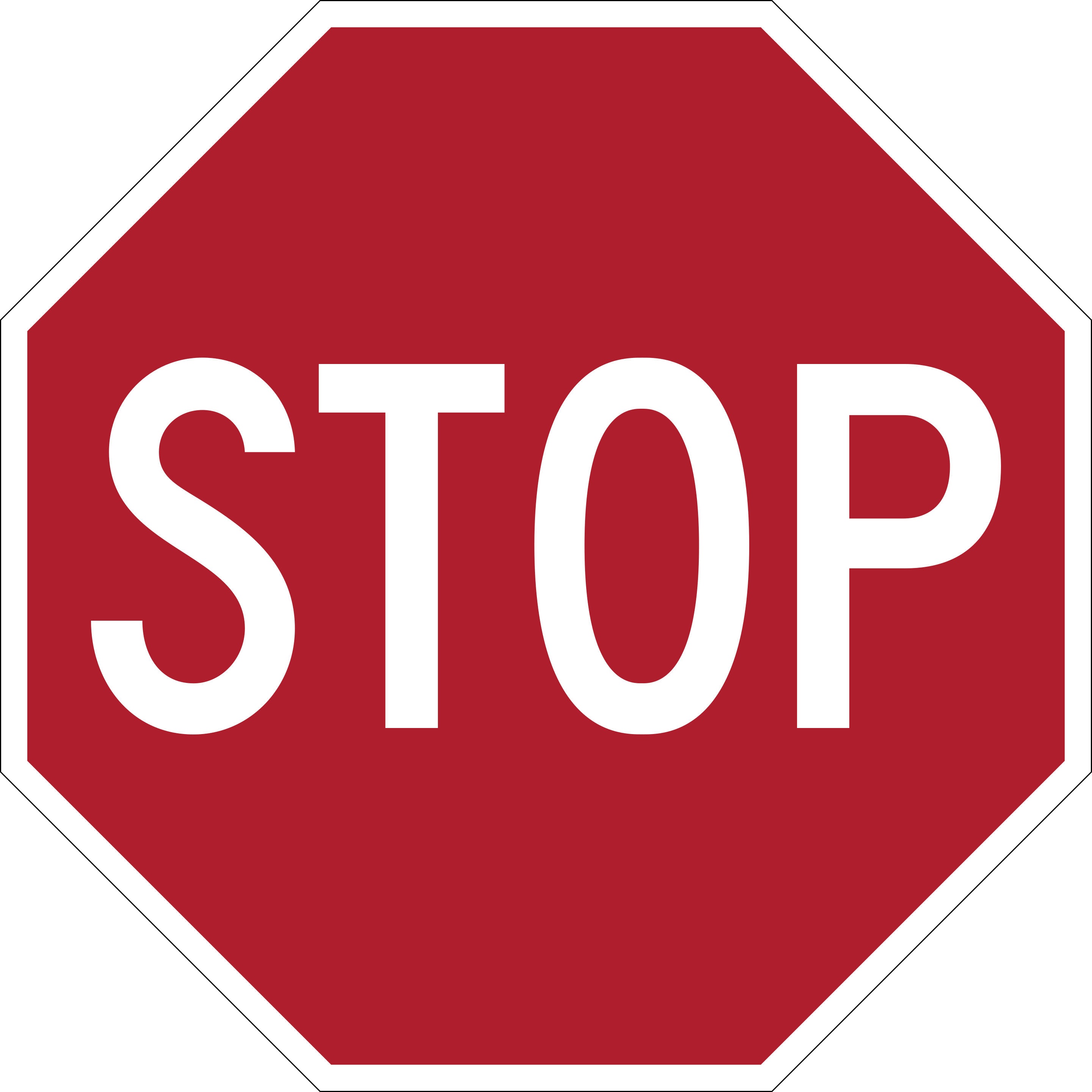
Stop 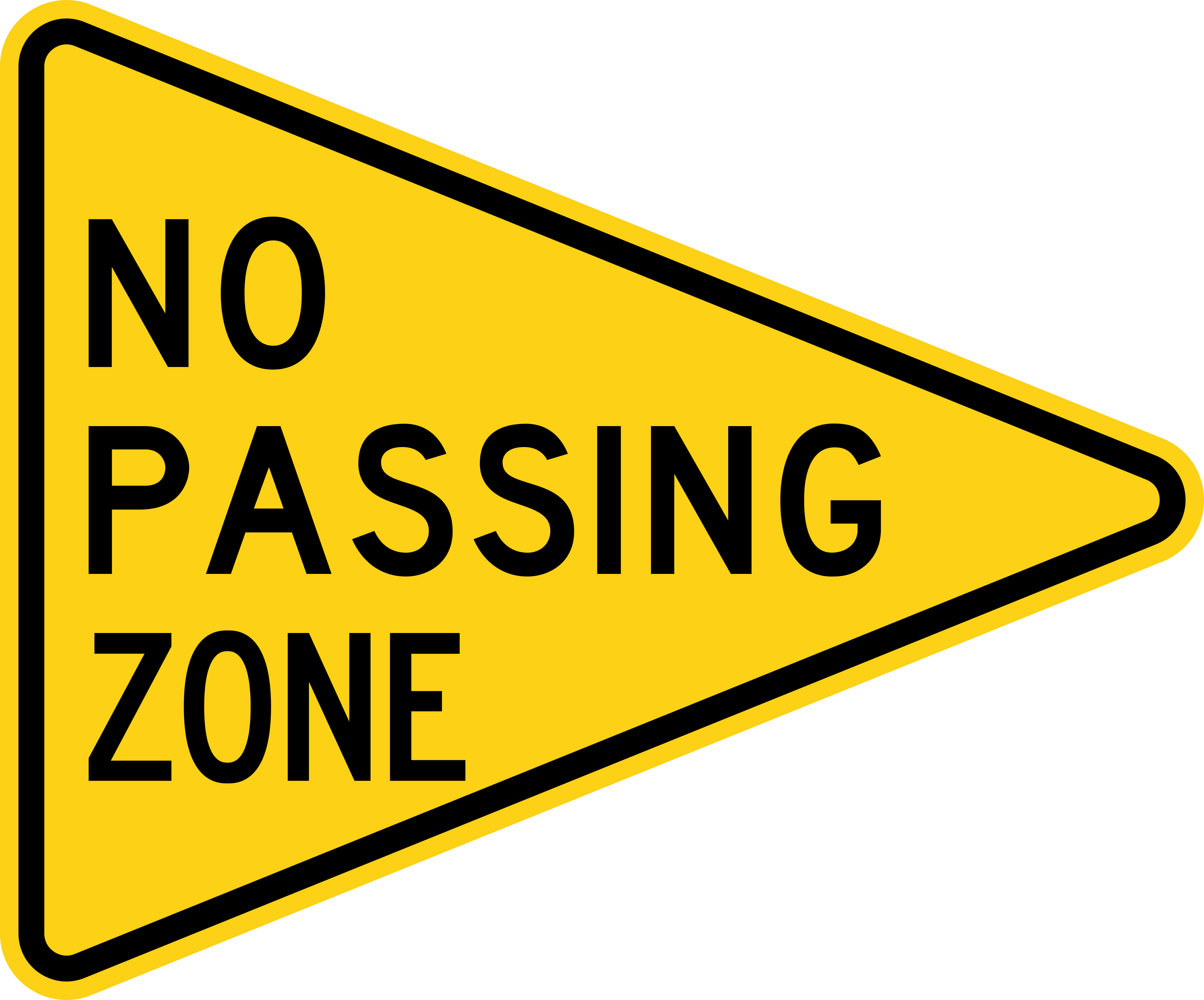
No passing zone pennant 
School zone 
Railroad crossing ahead 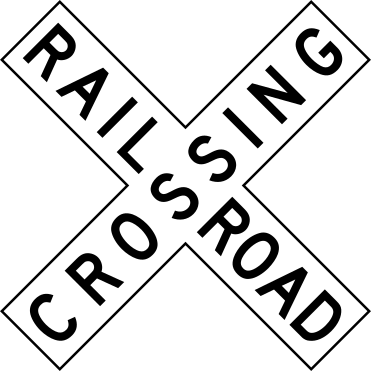
Railroad crossbuck
3 questions from the Maryland practice test
1. What does a red background on a Maryland traffic sign generally warn or require?
- Food, fuel, or another roadside service
- Construction or maintenance work ahead
- A destination, distance, or direction
- Stop, yield, do not enter, or wrong way
Show answer
Stop, yield, do not enter, or wrong way. Red is used for several high-priority traffic messages in Maryland: stop, yield, do not enter, and wrong way. It is not the color used to identify a work zone, a destination guide, or a service area. The exact words and shape still matter, because a red octagon gives a stop command while a red triangle gives a yield command. When red appears on a sign, slow your visual search, read the instruction, and follow the restriction before continuing.
2. What does the five-sided sign in the image warn you about?
- A railroad crossing ahead
- A recreational area entrance
- A school zone or school crossing
- A mandatory truck route
Show answer
A school zone or school crossing. The pentagon is the shape used for school zones and school crossings. Seeing this sign means slow down, watch carefully for children, and follow any school-area traffic control devices or posted speed restrictions. It does not identify recreation, rail crossings, or truck routes. The manual assigns other shapes to those messages, including a round sign for railroad warnings and a trapezoid for recreation and cultural areas. The five-sided outline is therefore a strong visual cue to increase attention around students.
3. In Maryland, what does a pennant-shaped traffic sign mark?
- The end of a school crossing
- The beginning of a no-passing zone
- A recreational parking area
- A lane reserved for bicycles
Show answer
The beginning of a no-passing zone. The Maryland manual lists the pennant as the No Passing sign: it marks the start of a no passing zone, and from that point you must not pass other vehicles, even if the road appears open. It does not signal that a school area has ended, which is the job of the pentagon school signs, it does not identify recreation parking, and it does not designate a bicycle lane. When you see the pennant, stay behind the vehicle ahead and wait until passing becomes legal and safe again.
Practice this topic
Lock it in with road signs questions from the free Maryland practice test. Every answer comes with a plain English explanation.
Source: the Maryland Driver's Manual, Section 4: Signs, Signals and Pavement Markings. This lesson is a plain English summary, not the law itself; where it differs, the manual and the statute govern. Last checked 2026-09-27.