
Key points
A police officer or a uniformed school crossing guard can direct you to do something different from a signal or sign.
Source: Handbook p. 17
“A police officer or other emergency personnel. A school crossing guard in uniform directing traffic near a school.”
Maryland Driver's Manual, Handbook p. 17When a signal is not working, stop at the stop line, or before the crosswalk if there is no stop line.
Source: Handbook p. 17
“You must stop at a clearly marked stop line. A stop line is a wide white line painted across the road that shows where you must stop at an intersection. If there is no clearly marked stop line, you must stop before entering a crosswalk.”
Maryland Driver's Manual, Handbook p. 17On a steady red, after a full stop you may turn right, or left from one one way street to another, unless a sign forbids it.
Source: Handbook p. 17
“Unless a sign prohibits turning on red, after coming to a complete stop, you may: Turn right, or Turn left from a one-way street to another one-way street.”
Maryland Driver's Manual, Handbook p. 17A steady yellow means the light is changing to red. If you are too close to stop safely, carefully continue.
Source: Handbook p. 17
“If you are too close to the intersection to stop safely, carefully continue through the intersection.”
Maryland Driver's Manual, Handbook p. 17On a steady green light, you still yield to pedestrians and vehicles already in the intersection.
Source: Handbook p. 17
“You must yield to pedestrians and vehicles already in the intersection.”
Maryland Driver's Manual, Handbook p. 17At a flashing red, after stopping, yield to all traffic and pedestrians and go when the way is clear.
Source: Handbook p. 18
“Yield to all other traffic and pedestrians. Proceed when the way is clear.”
Maryland Driver's Manual, Handbook p. 18A flashing yellow means slow down and proceed with caution.
Source: Handbook p. 18
“Flashing Yellow Signal You must slow down and proceed with caution.”
Maryland Driver's Manual, Handbook p. 18You must never drive in a lane under a red X signal.
Source: Handbook p. 18
“You must never drive in a lane under a red "X" signal.”
Maryland Driver's Manual, Handbook p. 18A steady yellow X means move out of that lane as soon as you safely can.
Source: Handbook p. 18
“A steady yellow "X" signal means you should move out of the lane as soon as you safely can.”
Maryland Driver's Manual, Handbook p. 18A flashing yellow X or two way left turn arrows mean the lane is for left turns.
Source: Handbook p. 18
“A flashing yellow "X" signal or two-way left-turn arrows mean you can use the lane for a left turn.”
Maryland Driver's Manual, Handbook p. 18
Recognize these signs
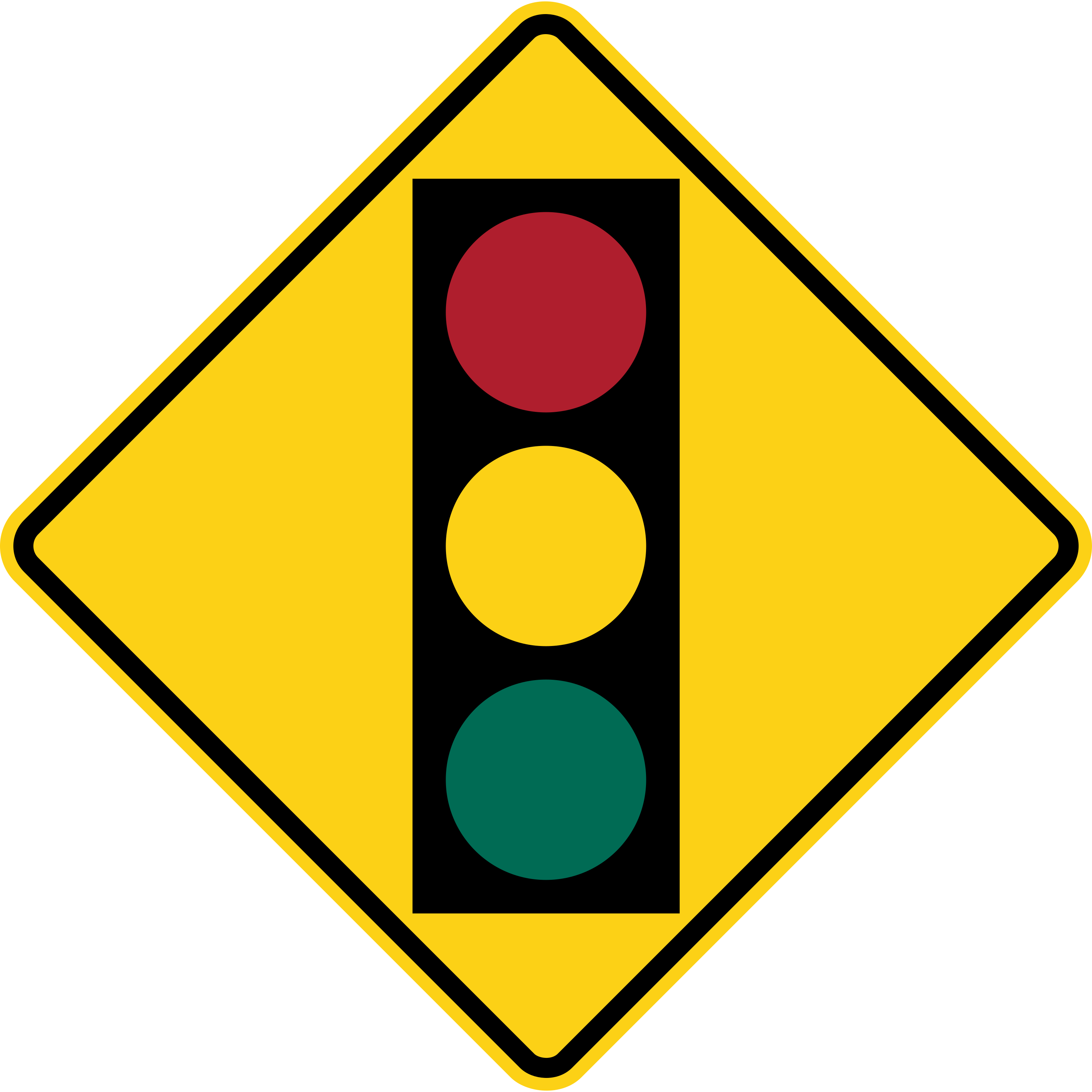
Signal ahead 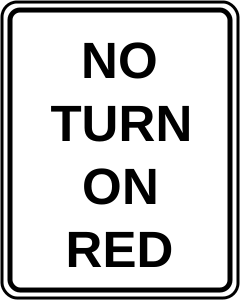
No turn on red
3 questions from the Maryland practice test
1. After stopping at a steady red signal, which turn may be permitted unless a sign prohibits it?
- A U-turn from the intersection
- Any left turn across two-way traffic
- A right turn, or a left turn from one one-way street to another
- A straight movement through the red signal
Show answer
A right turn, or a left turn from one one-way street to another. A steady red signal requires a complete stop and normally keeps the driver stopped. After that stop, Maryland permits a right turn, or a left turn from one one-way street to another one-way street, unless a sign prohibits the movement. In either case, yield to pedestrians and all other traffic. A general left turn across two-way traffic, a U-turn, or continuing straight would exceed the listed permission. Check for a stop line first, then the crosswalk, and make the permitted turn only when the path is clear.
2. What must a driver do at a flashing yellow signal in Maryland?
- Stop and remain stopped until the signal turns green
- Treat the signal as permission to accelerate
- Turn around before entering the intersection
- Slow down and proceed with caution
Show answer
Slow down and proceed with caution. A flashing yellow signal permits movement but requires a slower, attentive approach. The manual does not require the complete stop used for a flashing red signal, and it does not authorize extra speed. The choice that says to wait for green adds a stop requirement that is not part of this signal. As you approach, reduce speed, scan for vehicles and pedestrians, and enter only when the path is safe. The yellow flash should prompt caution, not automatic priority.
3. What does a steady yellow X signal mean?
- Stop in the lane and wait for opposing traffic
- Remain in the lane until the signal turns green
- Use the lane for through traffic at any time
- Move out of the lane as soon as safely possible
Show answer
Move out of the lane as soon as safely possible. A steady yellow X means the driver should move out of that lane as soon as it can be done safely. It is a lane-use instruction, not permission to continue indefinitely or a command to stop in the lane. The driver should check mirrors and neighboring traffic before changing position. The useful cue is the yellow X above the lane: plan an orderly exit from that lane while maintaining control and watching for other vehicles.
Practice this topic
Lock it in with signals and markings questions from the free Maryland practice test. Every answer comes with a plain English explanation.
Source: the Maryland Driver's Manual, Section 4: Signs, Signals and Pavement Markings. This lesson is a plain English summary, not the law itself; where it differs, the manual and the statute govern. Last checked 2026-09-27.