
Key points
At a stop sign, make a complete stop at the stop line. If there is none, stop before the crosswalk.
Source: Handbook p. 21
“You must make a complete stop at the stop line. If there is no stop line, stop before entering a crosswalk.”
Maryland Driver's Manual, Handbook p. 21The stop sign is the only 8 sided sign on the road.
Source: Handbook p. 21
“The stop sign is the only 8-sided sign you will see on the road.”
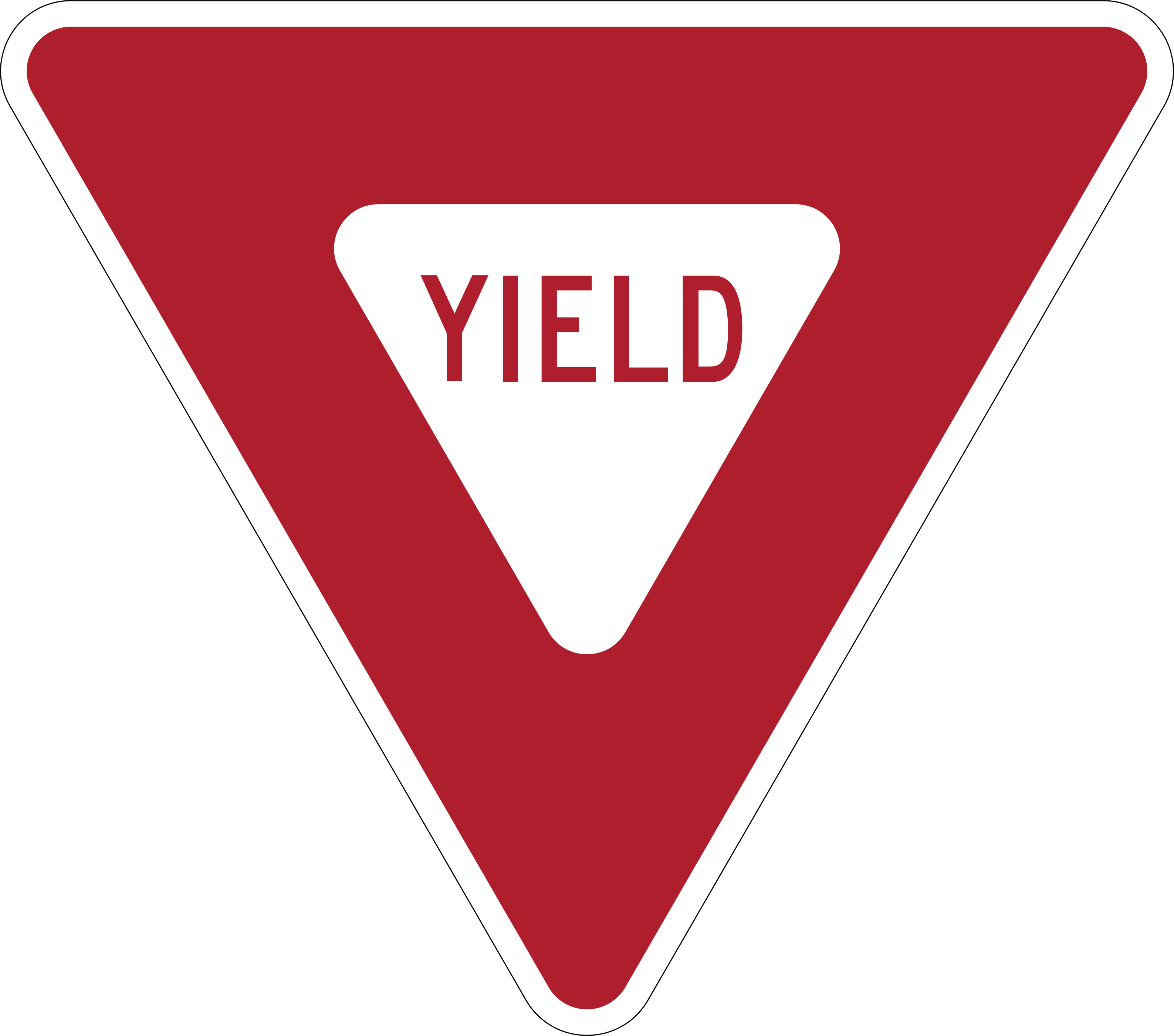
Maryland Driver's Manual, Handbook p. 21At a yield sign, slow down, look left and right, and yield to pedestrians, bicycles and vehicles.
Source: Handbook p. 21
“Slow down as you come to a yield sign. Look to the left and the right. Yield to pedestrians, bicycles, and vehicles.”
Maryland Driver's Manual, Handbook p. 21Regulatory signs are about traffic laws, and you must obey them.
Source: Handbook p. 21
“Regulatory Signs These signs are about traffic laws. You must obey them.”
Maryland Driver's Manual, Handbook p. 21An HOV lane sign means you may use the lane only with the number of people shown.
Source: Handbook p. 21
“You may only use this lane if you have the number of people that is marked on the sign.”
Maryland Driver's Manual, Handbook p. 21Warning signs give notice of a situation that might not be readily apparent.
Source: Handbook p. 22
“These signs provide notice to road users of a situation that might not be readily apparent.”
Maryland Driver's Manual, Handbook p. 22Mile marker signs appear every mile on interstates so help can find you.
Source: Handbook p. 23
“These are located every mile on interstate highways. They provide location information you can use if you need someone to find you.”
Maryland Driver's Manual, Handbook p. 23Where you see stay right signs, drive in the right lane unless passing.
Source: Handbook p. 16
“In areas where you see "stay right" signs, drive in the right-hand lane or lanes unless you are passing a vehicle.”
Maryland Driver's Manual, Handbook p. 16
Numbers to know
| Number | What it means | Manual |
|---|---|---|
| 8 sides | only the stop sign has this shape | Handbook p. 21 |
Recognize these signs
Yield 
Do not enter 
Wrong way 
One way 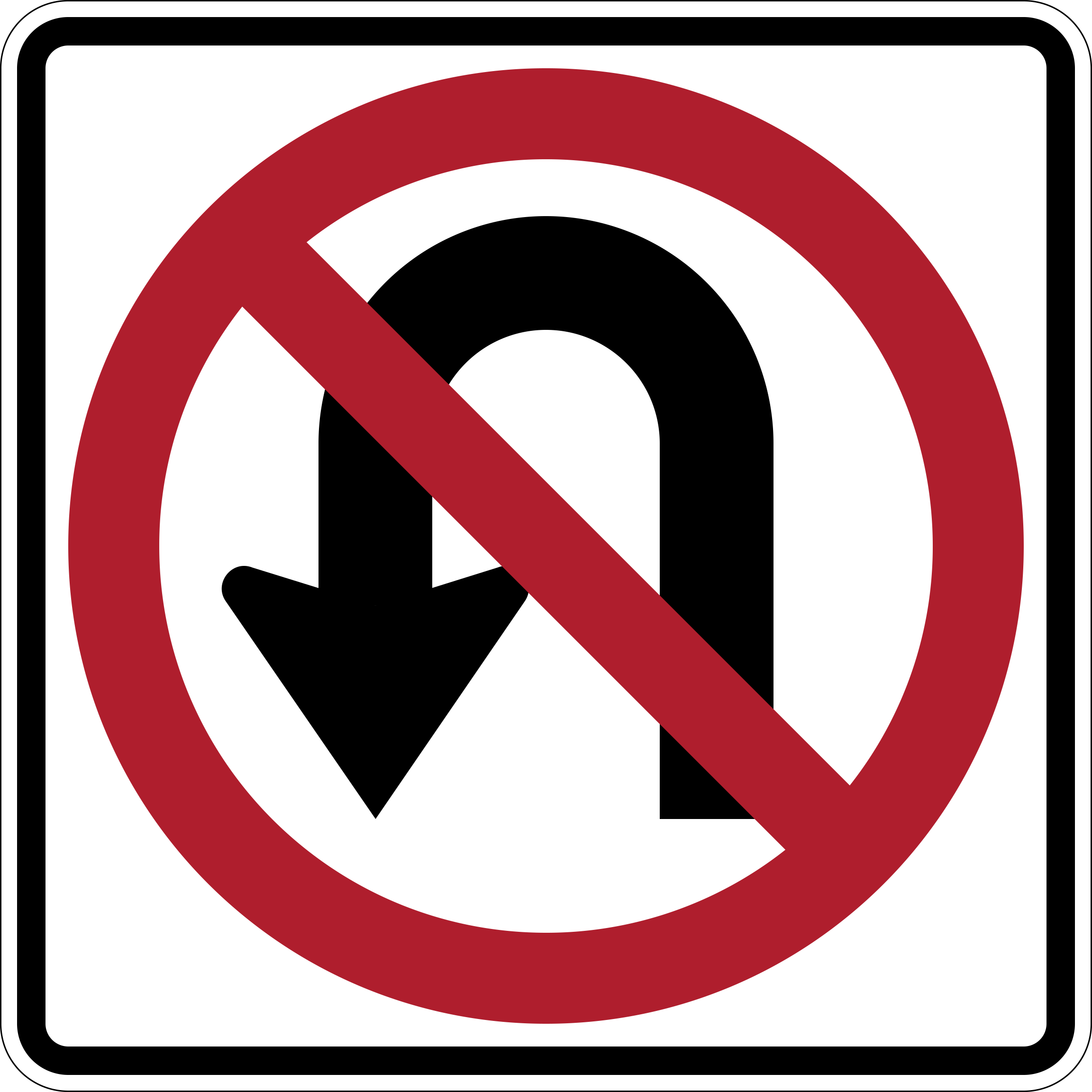
No U turn 
Stop ahead 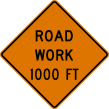
Road work ahead
3 questions from the Maryland practice test
1. At a Maryland yield sign, what must you do before proceeding?
- Stop every time, even when the road is empty
- Slow down and yield to pedestrians, bicycles, and vehicles
- Accelerate so other traffic must wait
- Proceed without looking if your lane is open
Show answer
Slow down and yield to pedestrians, bicycles, and vehicles. A yield sign calls for a slower approach and a careful look to both sides. Give way to pedestrians, bicycles, and vehicles, and continue only when doing so is safe. A complete stop may be needed, but stopping every time is not the sign's automatic instruction. Accelerating or skipping the scan would reverse the protective purpose of the sign. Remember the triangle: it signals a conditional stop and right-of-way decision, unlike the octagonal sign that requires a complete stop in every approach situation.
2. At a stop sign with no stop line or crosswalk, where must the driver stop?
- At the stop sign, even if it blocks the crosswalk
- In the crosswalk to see around traffic
- Before entering the intersection
- After entering the intersection to check for vehicles
Show answer
Before entering the intersection. A stop sign demands a complete stop. Maryland's stopping sequence uses the stop line first, the crosswalk next, and the intersection itself when neither is marked. Stopping after entering the intersection places the vehicle where cross traffic may need to travel. The practical cue is to scan for a line and crosswalk as the sign approaches, then stop before the intersection if both are absent. Yield to vehicles and pedestrians already there before continuing.
3. What do warning signs provide notice of?

- A situation that might not be readily apparent
- A guarantee that no hazard is present
- A vehicle registration requirement
- A direction to ignore traffic controls
Show answer
A situation that might not be readily apparent. Maryland states that warning signs provide notice to road users of a situation that might not be readily apparent. Their purpose is to reveal a condition or hazard early enough for a driver to look ahead, adjust speed, and choose a safe response. A warning does not guarantee that the road is clear, replace registration rules, or authorize ignoring other controls. Treat the sign as advance information, then obey the signal, marking, or regulatory sign that governs the actual location.
Practice this topic
Lock it in with road signs questions from the free Maryland practice test. Every answer comes with a plain English explanation.
Source: the Maryland Driver's Manual, Section 4: Signs, Signals and Pavement Markings. This lesson is a plain English summary, not the law itself; where it differs, the manual and the statute govern. Last checked 2026-09-27.