Every question below comes from the New Mexico question bank on this page. Open a question to see the correct answer and the explanation. Nothing here is hidden behind a signup.
1. What shape and colors identify a yield sign?
- A downward-pointing triangle that is red and white with red letters
- An eight-sided red sign with white letters
- A blue circle with a white arrow
- A green rectangle with black lettering
Show answer
A downward-pointing triangle that is red and white with red letters. The manual identifies a yield sign by its downward-pointing triangle, red and white design, and red lettering. Full explanation in Test 1
2. A learner with a New Mexico instructional permit is practicing in a car. Where must the supervising licensed driver sit?
- In the back seat behind the learner
- In the right front seat
- In any seat as long as the supervisor is awake
- Outside the vehicle giving directions
Show answer
In the right front seat. For a vehicle other than a motorcycle, the licensed supervising driver must occupy the right front seat beside the permit holder. Full explanation in Test 2
3. What do red circle-and-slash signs such as the one shown generally do?
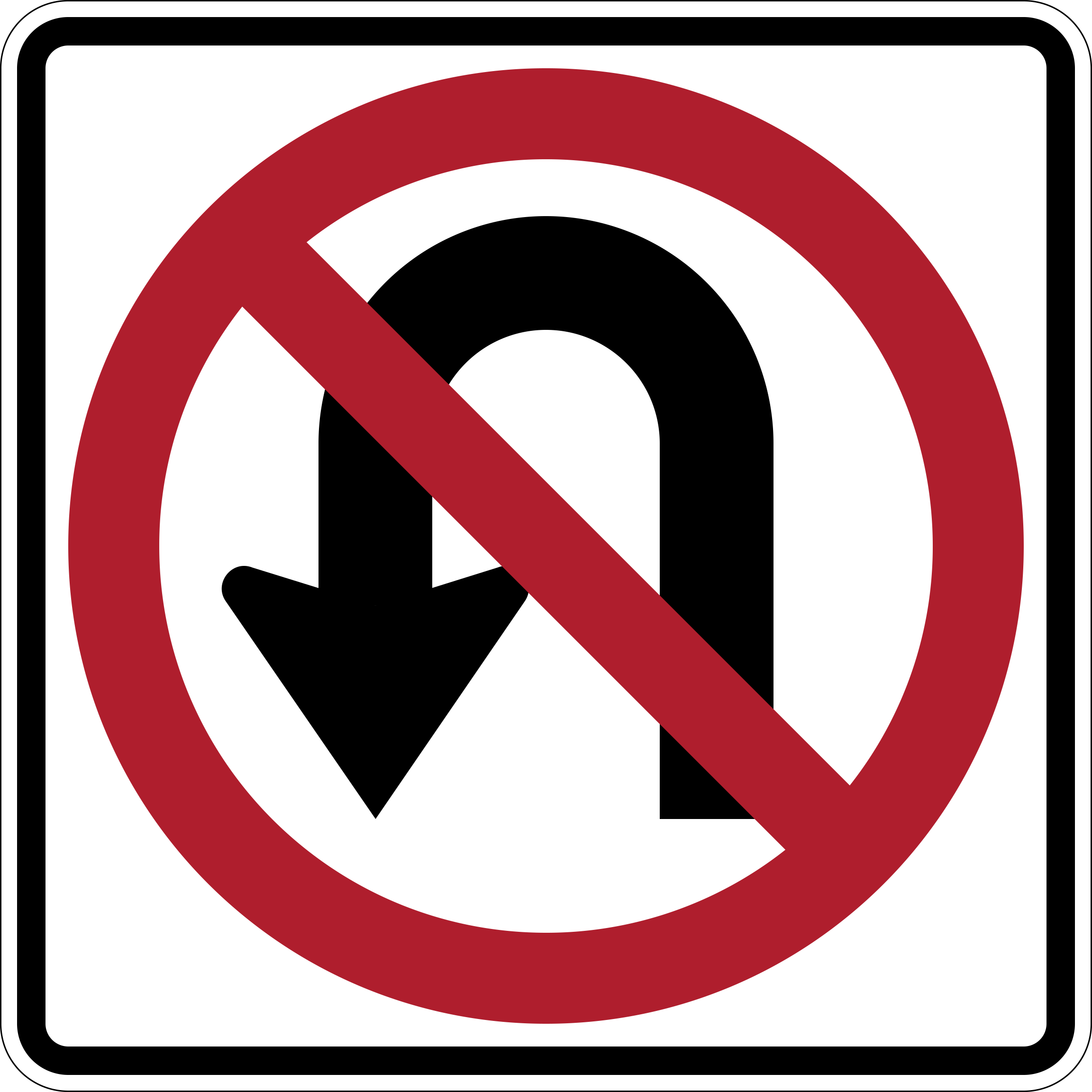
- Prohibit the pictured action, such as a U-turn
- Recommend the pictured action during heavy traffic
- Identify a route number for a state highway
- Mark a service available at the next exit
Show answer
Prohibit the pictured action, such as a U-turn. A red circle and slash over a symbol is a regulatory prohibition. Full explanation in Test 3
4. In a heavy rain, at about what speed can your tires lose all traction with the road?
- About 15 mph
- About 25 mph
- About 80 mph
- About 50 mph
Show answer
About 50 mph. The manual says that in a heavy rain tires can lose all traction with the road at about 50 mph, riding up on the water like water skis. Full explanation in Test 4
5. In a reversible lane, what does a steady yellow X mean?
- The lane is open for normal travel all day
- The lane use is changing, so move out when safe
- The lane is reserved only for buses
- The lane may be used only for parking
Show answer
The lane use is changing, so move out when safe. A steady yellow X over a reversible lane warns that use of that lane is changing. The driver should move out of it as soon as it is safe. Full explanation in Test 5
6. A driver turning left at an intersection faces an oncoming vehicle going straight. Who yields?
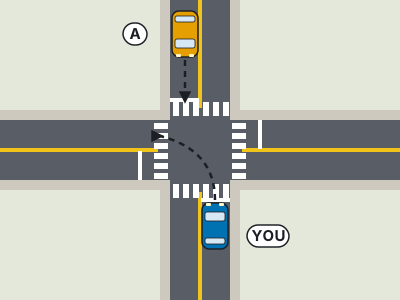
- Neither driver when both have a green light
- The oncoming driver going straight
- The driver who entered the intersection second
- The driver turning left
Show answer
The driver turning left. The left turning driver must yield to an oncoming vehicle that is continuing straight. Full explanation in Test 6
7. How fast do farm tractors, animal-drawn vehicles, and roadway maintenance vehicles usually travel?
- 25 mph or less
- About 45 mph
- The posted limit in every case
- At least 55 mph
Show answer
25 mph or less. These vehicles usually travel at 25 mph or less, which is why a driver should identify them early, reduce speed smoothly, or change lanes on Full explanation in Test 7
8. How does New Mexico handle a ticket for driving without insurance or without vehicle registration?
- It adds 12 points and an automatic one-year suspension
- It carries no points but requires the driver to appear in court
- It adds points, the same way a speeding ticket does
- It is a warning only and never goes to court
Show answer
It carries no points but requires the driver to appear in court. New Mexico uses points for common violations such as speeding or not wearing a seat belt, but offenses like driving without insurance or reg Full explanation in Test 8
9. After a drink, about how long does alcohol take to reach the brain?
- 1 to 2 minutes
- About 2 hours
- About 6 hours
- 20 to 40 minutes
Show answer
20 to 40 minutes. The manual says alcohol goes from the stomach into the blood and reaches the brain in 20 to 40 minutes. Full explanation in Test 9
10. When conditions are rainy, icy, or foggy, how should a driver treat a posted maximum speed?
- Treat it as a target speed that must be maintained
- Increase speed briefly to clear the bad weather
- Reduce speed when the conditions make the posted maximum unsafe
- Ignore the limit only when visibility is reduced
Show answer
Reduce speed when the conditions make the posted maximum unsafe. A posted maximum is based on ideal driving conditions, not a promise that the same speed is safe in every situation. Full explanation in Test 10
11. How long does a DWI conviction remain on a New Mexico driving record?
- Three years
- Seven years
- Twenty-five years
- Ten years
Show answer
Twenty-five years. The manual says any DWI conviction stays on the driving record for twenty five years. Full explanation in Test 1
12. What does a red arrow at a New Mexico traffic signal require a driver to do?
- Continue straight without stopping
- Turn after yielding to oncoming traffic
- Stop and wait without traveling in the arrow's direction
- Treat it as a flashing yellow signal
Show answer
Stop and wait without traveling in the arrow's direction. A red arrow requires a stop and prohibits movement in the direction shown by the arrow. Full explanation in Test 2
13. What is the lowest BAC threshold for New Mexico's under-21 alcohol driving rule?
- .02%
- .05%
- .08% only
- .12%
Show answer
.02%. The manual says a driver under 21 can be arrested in New Mexico for a BAC of .02%. The . Full explanation in Test 3
14. What must a driver do before moving from a stop sign into the intersection?
- Wait for crossing vehicles and pedestrians to clear
- Move immediately because the stop sign gives priority
- Yield only to vehicles approaching from the left
- Proceed if the driver has waited two seconds
Show answer
Wait for crossing vehicles and pedestrians to clear. Stopping is only the first part of the stop-sign rule. Full explanation in Test 4
15. If your headlights suddenly fail at night, what should you try first?
- Try the headlight switch a few times
- Keep driving with only the parking brake ready
- Turn off all vehicle lights immediately
- Brake hard in the travel lane
Show answer
Try the headlight switch a few times. For sudden headlight failure, the first listed action is to try the headlight switch several times. Full explanation in Test 5
16. What extra document is required for an instructional permit applicant under 18?
- A work schedule signed by an employer
- A notarized statement from every passenger
- A consent form signed by a parent or guardian
- A court order authorizing night driving
Show answer
A consent form signed by a parent or guardian. An applicant under 18 must have a consent form signed by a parent or guardian when applying for an instructional permit. Full explanation in Test 6
17. What should a driver do during a sudden stop in a vehicle equipped with ABS?
- Use only the parking brake
- Pump the pedal rapidly until the vehicle stops
- Release the pedal whenever it vibrates
- Press the brake pedal hard and keep pressing it
Show answer
Press the brake pedal hard and keep pressing it. With an antilock braking system, the manual directs the driver to press the brake pedal as hard as possible and keep pressure on it. Full explanation in Test 7
18. What do destination signs show drivers?
- Whether a vehicle has liability insurance
- Only the speed that applies in a work zone
- The exact place where passing becomes illegal
- Directions and distance to places such as cities, airports, or state lines
Show answer
Directions and distance to places such as cities, airports, or state lines. Destination signs give route guidance by showing directions and distances to locations such as cities, airports, state lines, parks, histori Full explanation in Test 8
19. How long should a person with epilepsy be stable and seizure free before being issued a New Mexico driver license?
- 1 month
- 3 months
- 6 months
- 5 years
Show answer
6 months. The manual says people with epilepsy should have frequent check ups, manage their medicine carefully, and be stable and seizure free for a 6 Full explanation in Test 9
20. What can happen in New Mexico if a vehicle is driven without the required liability insurance?
- Nothing, if the driver pays for damages later
- Non-issuance or suspension of the registration, surrender of the plates, and possible criminal penalties
- A written warning only
- Two points and no other action
Show answer
Non-issuance or suspension of the registration, surrender of the plates, and possible criminal penalties. The manual says failure to have insurance could result in non issuance or suspension of your vehicle registration, surrender of the license Full explanation in Test 10
21. What does an HOV lane sign tell drivers?
- The lane may be used by any vehicle at every hour
- The lane is reserved for vehicles with more than one person, with signs giving the required number and times
- The lane is only for vehicles carrying hazardous materials
- The lane marks a place where drivers must stop
Show answer
The lane is reserved for vehicles with more than one person, with signs giving the required number and times. HOV means High Occupancy Vehicles. The sign reserves the lane for vehicles carrying more than one person and states the passenger count, day Full explanation in Test 1
22. If a vehicle breaks down on a highway, what should the driver do when it is possible?
- Get the vehicle off the road and away from traffic
- Leave it in the travel lane with the engine off
- Stand behind it and wave at approaching vehicles
- Stop just beyond a hill so it is out of sight
Show answer
Get the vehicle off the road and away from traffic. For a highway breakdown, the manual's first protective measure is to get the vehicle off the road and away from traffic whenever possible. Full explanation in Test 2
23. A New Mexico provisional licensee needs to drive home from a job at 1:00 AM. What document makes this late drive allowed?
- A copy of a recent pay stub
- A signed statement from a police officer
- A signed statement from the licensee's employer
- No document, because working teens are fully exempt
Show answer
A signed statement from the licensee's employer. Provisional licensees may not drive between midnight and 5:00 AM, but driving to and from work is an exception when it is backed by a signed Full explanation in Test 3
24. What is the usual shape of the advance warning sign before a railroad crossing?
- A round yellow sign with an X and black RR letters
- An eight-sided red sign
- A blue rectangle with a white hospital symbol
- A green rectangle showing a route number
Show answer
A round yellow sign with an X and black RR letters. The advance railroad warning is a round yellow sign marked with an X and black RR letters. Full explanation in Test 4
25. What does a flashing red signal require at an intersection?
- Priority over all cross traffic
- The same response as a green light
- A slow roll without stopping if no vehicle is visible
- A complete stop before proceeding when it is safe
Show answer
A complete stop before proceeding when it is safe. A flashing red indication has the control effect of a stop sign. Full explanation in Test 5
26. What does the Four Second Sight Distance Rule tell a driver to do?
- Speed up whenever an object is visible four seconds away
- Slow down if the vehicle reaches the object before four seconds finish
- Use four seconds only when following a motorcycle
- Count four seconds after crossing a stop line
Show answer
Slow down if the vehicle reaches the object before four seconds finish. The sight-distance rule tests whether speed matches the distance the driver can clearly see. Full explanation in Test 6
27. What minimum liability coverage amount is listed for bodily injury to two or more people in one accident?
- $10,000
- $25,000
- $100,000
- $50,000
Show answer
$50,000. The financial responsibility table lists $50,000 for bodily injury to or death of two or more persons in one accident. Full explanation in Test 7
28. What does a dashed white line between lanes traveling in the same direction allow?
- Changing lanes when it is safe
- Passing into opposing traffic
- Parking beside the line
- Ignoring lane signals above the road
Show answer
Changing lanes when it is safe. A dashed white line separates lanes moving in the same direction and may be crossed to change lanes when the move is safe. Full explanation in Test 8
29. What do orange work area signs warn drivers may be present near the roadway?
- Workers or equipment operating on or near the roadway
- A permanent hospital service area
- A guaranteed lane for high occupancy vehicles
- A railroad crossing with no roadway activity
Show answer
Workers or equipment operating on or near the roadway. Orange work area signs identify construction, maintenance, or emergency operations and warn that people may be working on or near the roadwa Full explanation in Test 9
30. What should a driver do when a yellow arrow appears while turning in its direction?
- Continue with the protection of a green arrow
- Prepare to stop and yield to oncoming traffic before turning
- Turn without checking for approaching vehicles
- Treat the arrow as a flashing red signal
Show answer
Prepare to stop and yield to oncoming traffic before turning. A yellow arrow means the protection provided by a green arrow is ending. Full explanation in Test 10
31. If pumping failed brakes does not work, how should you use the parking brake?
- Ignore it and keep driving to a repair shop
- Yank it hard to lock the rear wheels
- Use it only after the vehicle has stopped
- Pull the parking brake handle slowly
Show answer
Pull the parking brake handle slowly. After pumping the brake pedal, the next listed step is to use the parking brake carefully. Full explanation in Test 1
32. Which tests must a New Mexico provisional license applicant pass in addition to the vision screening?
- No additional test after holding the permit
- Only a motorcycle skills test
- A fuel economy test and a parking meter test
- A written test and a road test
Show answer
A written test and a road test. The provisional license requirements include passing both a written test and a road test, in addition to a vision screening. Full explanation in Test 2
33. A New Mexico instructional permit holder is learning to ride a motorcycle. Where must the licensed supervising driver be?
- Following the learner
- Riding as a passenger on the learner's motorcycle
- Riding ahead of the learner to lead the way
- Waiting at the end of the practice route
Show answer
Following the learner. For motorcycles, New Mexico reverses the car arrangement: the licensed driver must follow the learner. Full explanation in Test 3
34. When standard traffic signal lights are mounted together, where is the green light located?
- Beside the red light
- In the middle
- At the top
- At the bottom
Show answer
At the bottom. New Mexico describes standard signal colors as green, yellow, and red from bottom to top when the lights are mounted together. Full explanation in Test 4
35. How does the New Mexico manual describe the shape and color of a stop sign?
- Round and yellow with black letters
- Eight-sided and red with white letters
- Downward-pointing triangle with red letters
- Square and blue with white letters
Show answer
Eight-sided and red with white letters. The manual identifies a stop sign by its eight sides and red face with white letters. Full explanation in Test 5
36. What validity period and renewal window does the manual give for a New Mexico driver license?
- Eight years only, renewable up to six months early
- Two or four years, renewable only during the final week
- Four or eight years, renewable up to 90 days early or 30 days late
- One year, renewable only after the license expires
Show answer
Four or eight years, renewable up to 90 days early or 30 days late. A New Mexico driver license is valid for either four or eight years. Full explanation in Test 6
37. When may a driver turn right at a steady red light?
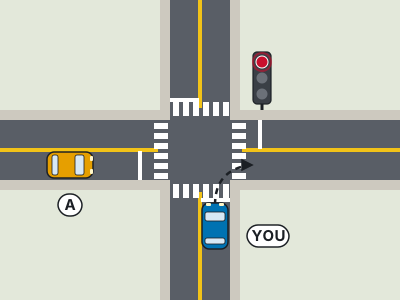
- Only after the signal has been red for one minute
- Whenever the driver slows and sees no car nearby
- After a full stop, if safe and no sign prohibits the turn
- Before stopping if the intended road is empty
Show answer
After a full stop, if safe and no sign prohibits the turn. A steady red requires a stop first. A right turn may follow only after the vehicle has fully stopped, the movement is safe, and no posted si Full explanation in Test 7
38. When entering a traffic circle, whom must you yield to?
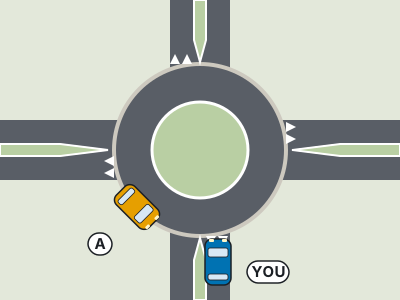
- No one, because entering traffic has priority
- Only drivers waiting outside the circle
- Vehicles behind you approaching the entrance
- Drivers already in the circle
Show answer
Drivers already in the circle. Traffic already circulating has the established path, so an entering driver must wait for a safe opening. Full explanation in Test 8
39. What should a driver do if a posted minimum speed is too fast to travel safely?
- Use another road
- Drive below the minimum in the same lane
- Stop in the travel lane
- Increase speed beyond the posted minimum
Show answer
Use another road. New Mexico advises drivers to use another road if the minimum posted speed is too fast for them. Full explanation in Test 9
40. What does a green arrow permit, assuming the driver continues to check for people and other hazards?
- A turn against the arrow
- A U-turn in any lane
- A turn in the arrow's direction
- Movement without yielding to pedestrians
Show answer
A turn in the arrow's direction. A green arrow gives protected movement in the direction it points, so it can authorize a turn without the usual opposing traffic conflict. Full explanation in Test 10
