Every question below comes from the Michigan question bank on this page. Open a question to see the correct answer and the explanation. Nothing here is hidden behind a signup.
1. How long is a Michigan temporary instruction permit valid?
- 180 days
- 30 days
- One year
- Two years
Show answer
180 days. A temporary instruction permit, or TIP, is valid for 180 days and allows you to practice driving with a licensed adult before taking the dri Full explanation in Test 1
2. What does the Michigan manual advise about changing gears at a railroad crossing?
- Shift to a lower gear while on the tracks
- Shift into neutral and coast across
- Avoid changing gears while crossing the tracks
- Change gears just before the far rail
Show answer
Avoid changing gears while crossing the tracks. A stall on railroad tracks can be deadly, and a missed shift is an easy way to stall. Full explanation in Test 2
3. If a train is coming at a Michigan railroad crossing, where must vehicles stop?
- On the tracks until the train passes
- Exactly 10 feet from the nearest rail
- At least 100 feet from the crossing in every case
- No more than 50 feet and no less than 15 feet from the tracks
Show answer
No more than 50 feet and no less than 15 feet from the tracks. When a train is coming, Michigan places the stopping range between 15 feet and 50 feet from the tracks. Full explanation in Test 3
4. How far does a passenger vehicle at 55 mph need to stop compared with a commercial vehicle, according to the Michigan manual?
- About 400 feet for both
- About 50 feet and 100 feet
- About 130 feet for a car and about 400 feet for a commercial vehicle
- About 1,000 feet for the truck
Show answer
About 130 feet for a car and about 400 feet for a commercial vehicle. A passenger vehicle traveling at 55 mph can stop in about 130 feet, while a commercial vehicle at the same speed takes about 400 feet to sto Full explanation in Test 4
5. How long do points remain on a Michigan driving record from the date of conviction?
- Six months
- Five years
- Two years
- Until the driver changes insurers
Show answer
Two years. Michigan keeps points on a driving record for two years from the date of conviction. Full explanation in Test 5
6. At a Michigan intersection where two vehicles arrive and stop at the same time, which vehicle yields?
- The vehicle on the right yields to the vehicle on the left
- Both vehicles proceed together
- The larger vehicle yields
- The vehicle on the left yields to the vehicle on the right
Show answer
The vehicle on the left yields to the vehicle on the right. When two vehicles reach and stop at an intersection at the same time, Michigan directs the vehicle on the left to yield to the vehicle on th Full explanation in Test 6
7. What distinction does Michigan claim from 1955 in driver education?
- It abolished driver education
- It raised the driving age to 21
- It became the first state to require teens under 18 to take driver education
- It issued the first license
Show answer
It became the first state to require teens under 18 to take driver education. In 1955 Michigan became the first state to require teens under age 18 to take driver education, and the state's graduated driver licensing s Full explanation in Test 7
8. What upcoming control does this warning sign identify?

- A yield sign has ended
- A stop sign is posted ahead
- A no-stopping zone begins immediately
- A traffic signal is permanently out of service
Show answer
A stop sign is posted ahead. STOP AHEAD warns that a stop sign is posted farther along the road. Full explanation in Test 8
9. What fine does a Michigan adult driver face for a first offense of using a hand-held phone while driving?
- $25
- $100
- $250
- $500
Show answer
$100. Michigan's hand-held phone law covers reading, texting, and making or answering a call. Full explanation in Test 9
10. Before turning left on a green light, what must you wait for?
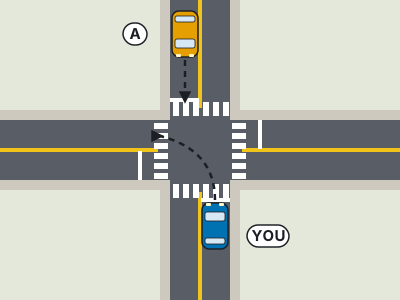
- Oncoming traffic to clear
- Every vehicle behind you to stop
- A flashing red signal to appear
- The road to become one-way
Show answer
Oncoming traffic to clear. A green light permits movement, but it does not give a left-turning driver priority over oncoming traffic. Full explanation in Test 10
11. Which color pattern is listed for Michigan regulatory signs?
- Blue and green only
- White and black, red, white and black, or red and white
- Fluorescent pink and brown
- Yellow and orange only
Show answer
White and black, red, white and black, or red and white. Michigan lists several color patterns for regulatory signs: white and black, red, white and black, or red and white. Full explanation in Test 1
12. How many points does a Michigan driver receive for failing to stop for a school bus?
- Two points
- Three points
- Four points
- Six points
Show answer
Three points. Failure to stop for a school bus, like disobeying a school crossing guard or failing to stop at a railroad crossing, is a three-point offens Full explanation in Test 2
13. When must a Michigan driver yield to a pedestrian at a crosswalk?
- Only when the pedestrian is already halfway across
- Only at an intersection with a stop sign
- At a marked crosswalk, even when the traffic light is green for the driver
- Never when the driver has a green light
Show answer
At a marked crosswalk, even when the traffic light is green for the driver. Michigan requires drivers to yield to a pedestrian in a marked crosswalk, including when the driver's traffic light is green. Full explanation in Test 3
14. Unless posted otherwise, what is the speed limit on a Michigan highway that is not a designated freeway?
- 45 mph
- 65 mph
- 70 mph
- 55 mph
Show answer
55 mph. Unless another limit is posted, Michigan streets that are not designated freeways, and all highways, default to 55 mph. Full explanation in Test 4
15. At a stop sign, where should you stop if there is no stop line or crosswalk?
- At a point where you can see approaching traffic
- Past the intersection so the front wheels are visible
- Beside the nearest parked vehicle
- Only at the edge of the pavement after turning
Show answer
At a point where you can see approaching traffic. When a stop line or crosswalk is absent, stop at a point that lets you see all approaching traffic without pulling into the intersection. Full explanation in Test 5
16. What traffic pattern does this sign establish?
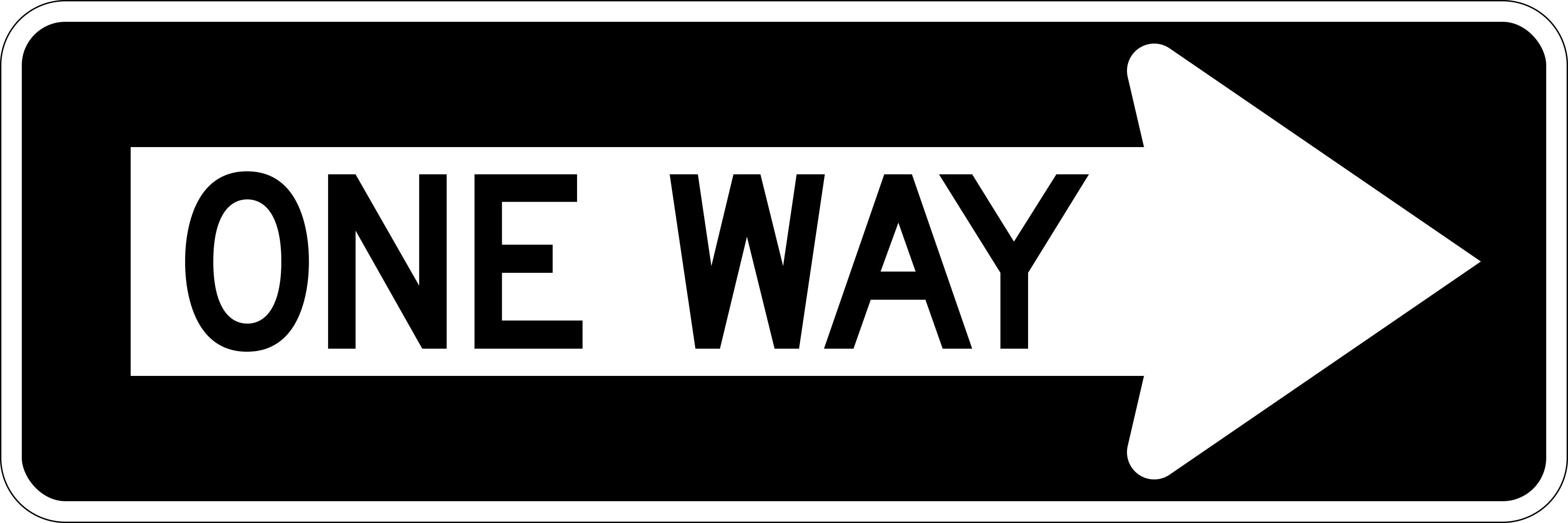
- Traffic alternates direction by time of day
- Traffic travels in the same direction in every lane
- Traffic may travel only toward a railroad crossing
- Traffic must turn around at the next intersection
Show answer
Traffic travels in the same direction in every lane. ONE WAY means every lane on that roadway carries traffic in the same direction shown by the arrow. Full explanation in Test 6
17. How should you respond to a flashing red traffic light?
- Slow down but continue without stopping
- Come to a full stop, then proceed when the road is clear
- Stop only if a pedestrian is present
- Treat it as a green arrow
Show answer
Come to a full stop, then proceed when the road is clear. A flashing red light requires the same first action as a stop sign: bring the vehicle to a full stop. Full explanation in Test 7
18. What does this pennant-shaped sign mark?
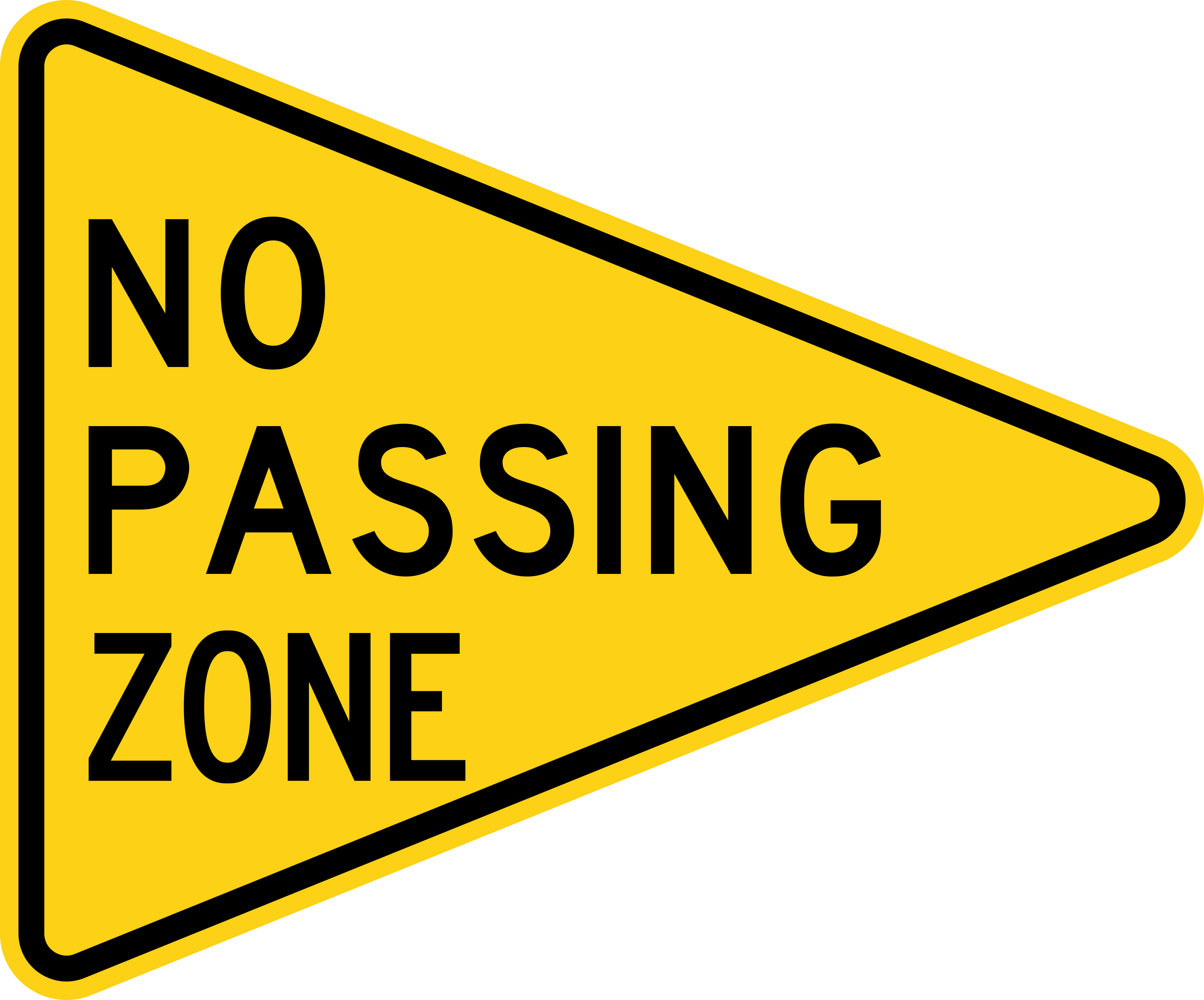
- The end of a no-passing zone
- A no-passing zone where passing is hazardous
- A recreational picnic area
- A lane where passing is required
Show answer
A no-passing zone where passing is hazardous. The yellow pennant marks a no-passing zone on the left side of the roadway. Full explanation in Test 8
19. How many points does a Michigan conviction for having an open alcohol container in a vehicle add?
- 3 points on the record
- 4 points on the record
- 6 points on the record
- 2 points on the record
Show answer
2 points on the record. An open alcohol container in the vehicle is listed among the two point violations, with six to 10 mph over the limit, a young driver refusin Full explanation in Test 9
20. What should you do first if confronted by an aggressive driver?
- Make an angry gesture so the driver knows you are not intimidated
- Follow the driver closely to record the license plate
- Stop in the traffic lane and argue through the window
- Get out of the way, avoid eye contact, and ignore gestures or verbal attacks
Show answer
Get out of the way, avoid eye contact, and ignore gestures or verbal attacks. An encounter with an aggressive driver should be defused by creating space and refusing to participate in the confrontation. Full explanation in Test 10
21. What traffic directions do yellow lines separate?
- A bicycle lane from a sidewalk
- Traffic lanes moving in the same direction only
- Traffic lanes moving in opposite directions
- A parking area from a driveway
Show answer
Traffic lanes moving in opposite directions. Yellow lines separate traffic lanes moving in opposite directions. Full explanation in Test 1
22. If your vehicle becomes disabled on the roadway, what should you do?
- Pull as far off the traveled portion as possible, activate four-way flashers, and stay belted
- Stand beside the vehicle to direct traffic yourself
- Walk along the freeway to find assistance
- Leave the vehicle in the travel lane with the engine running
Show answer
Pull as far off the traveled portion as possible, activate four-way flashers, and stay belted. For a disabled vehicle, Michigan advises pulling as far off the traveled portion as possible, activating the four-way emergency lights, and Full explanation in Test 2
23. If your vehicle begins hydroplaning on a wet road, which condition can contribute to the loss of control?
- Worn tires or low tire pressure
- A properly adjusted rearview mirror
- A full fuel tank and working turn signals
- A clean windshield and dry brakes
Show answer
Worn tires or low tire pressure. Hydroplaning happens when the tires ride on top of the water on a wet road, which the Michigan manual says can result in a loss of control. Full explanation in Test 3
24. How far behind a moving emergency vehicle with flashing lights and a siren must a Michigan driver stay?
- At least 100 feet
- At least 500 feet
- At least 200 feet
- At least 1,000 feet
Show answer
At least 500 feet. Drivers must stay at least 500 feet behind any moving emergency vehicle that is showing flashing warning lights and sounding a siren. Full explanation in Test 4
25. Where can a Michigan resident register to vote during the 14 days before an election?
- Online
- At any Secretary of State office
- Only at the city or township clerk's office
- By mail
Show answer
Only at the city or township clerk's office. When you apply for or renew a Michigan license or state ID you are automatically registered to vote unless ineligible or you decline. Full explanation in Test 5
26. What action is prohibited by this sign?
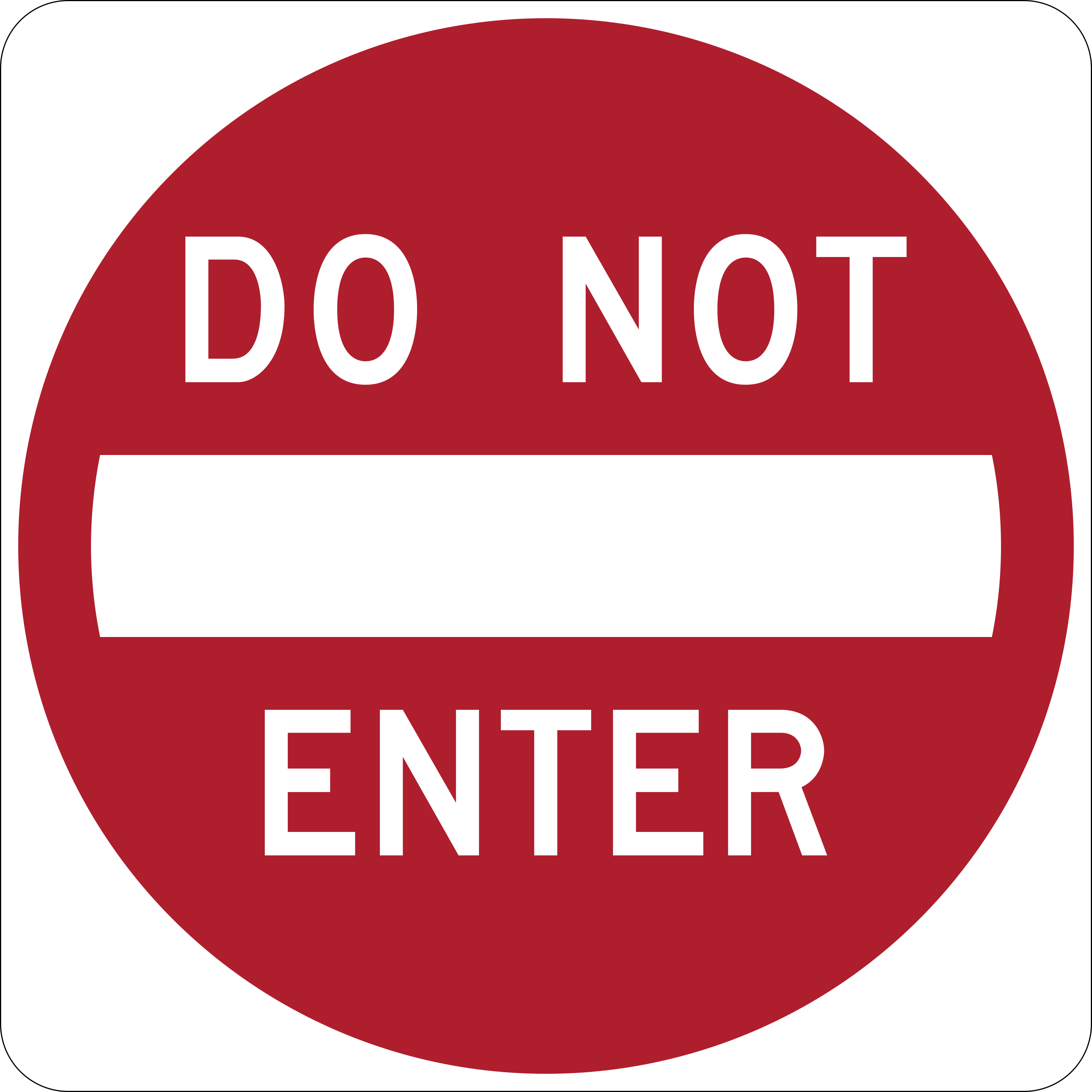
- Entering the posted area
- Stopping before you reach the sign
- Taking a different route
- Slowing down as you approach
Show answer
Entering the posted area. Michigan's sign chart describes DO NOT ENTER this way: you are not allowed to enter areas where this sign is posted. Full explanation in Test 6
27. What is the required response when an emergency vehicle approaches with flashing red or blue lights and a siren?
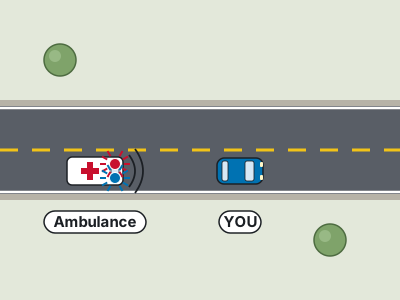
- Continue straight because the emergency vehicle can pass anywhere
- Move close to the right edge, clear the intersection, and stop
- Turn left across traffic to create a wider gap
- Stop immediately in the middle of the intersection
Show answer
Move close to the right edge, clear the intersection, and stop. The driver should move as close as possible to the right edge or curb, get clear of the intersection, and stop until the emergency vehicle p Full explanation in Test 7
28. Under Michigan's Basic Speed Law, how should a driver choose a speed?
- Use a careful and prudent speed for the conditions
- Always drive at the posted maximum
- Drive exactly 5 mph below the sign
- Match the fastest nearby vehicle
Show answer
Use a careful and prudent speed for the conditions. Michigan’s Basic Speed Law calls for a careful and prudent speed in all driving conditions. Full explanation in Test 8
29. In which seating positions does Michigan require passengers younger than 16 to be buckled up?
- Only in the front seat
- Only in the rear seat
- Only on freeways
- In all seating positions
Show answer
In all seating positions. All passengers younger than 16 must be buckled in every seating position, front and rear. Full explanation in Test 9
30. What maximum penalty can a Michigan driver face for a 3-point moving violation in a work zone that causes a person's death?
- Three points only
- A $100 civil fine and nothing more
- A felony with a fine up to $7,500, up to 15 years in prison, or both
- A 30 day suspension
Show answer
A felony with a fine up to $7,500, up to 15 years in prison, or both. Michigan law treats a moving violation carrying at least 3 points that causes a death in a work zone or school bus zone as a felony punishab Full explanation in Test 10
31. At what age may a Michigan teen begin Segment 1 driver education?
- 16 years
- 14 years and 8 months, with a parent's or guardian's permission
- 15 years and 6 months
- 13 years
Show answer
14 years and 8 months, with a parent's or guardian's permission. To apply for Segment 1 driver education you must be at least 14 years and 8 months old and have your parent's or guardian's permission. Full explanation in Test 1
32. What clue does a Michigan traffic sign’s shape provide?

- The exact distance to the next gas station
- Its meaning and purpose
- The age of the pavement beneath it
- The color of the vehicle that must obey it
Show answer
Its meaning and purpose. Michigan explains that a traffic sign’s shape provides a clue about its meaning and purpose. Full explanation in Test 2
33. What must a driver generally pay after being convicted of a Michigan traffic violation?
- Certain court fines and costs
- No charge if points are assessed
- A mandatory fuel tax
- Only a vehicle registration fee
Show answer
Certain court fines and costs. A traffic conviction creates a financial obligation in addition to any point entry on the driving record. Full explanation in Test 3
34. What should a driver do when approaching a YIELD sign?
- Slow down, check for traffic, and be prepared to stop
- Stop only after entering the intersection
- Accelerate so other traffic must yield
- Proceed without checking if the lane appears open
Show answer
Slow down, check for traffic, and be prepared to stop. A yield sign calls for a controlled approach: reduce speed, look for conflicting traffic, and be ready to stop. Full explanation in Test 4
35. At a steady red traffic signal in Michigan, where should you stop?
- Past the crosswalk so the front bumper is visible
- On the shoulder before the signal
- In the intersection if cross traffic has stopped
- Behind the crosswalk or stop line
Show answer
Behind the crosswalk or stop line. A red signal requires a stop, and the vehicle should remain behind the crosswalk or marked stop line. Full explanation in Test 5
36. How long must a Michigan teen hold a Level 1 Learner's License before applying for driver education Segment 2?
- At least 30 days
- At least six months
- At least three consecutive months
- At least one year
Show answer
At least three consecutive months. Segment 2 enrollment needs two things: a log of at least 30 supervised hours with 2 at night, and a Level 1 license held for at least three Full explanation in Test 6
37. Unless posted otherwise, what is the speed limit in a Michigan platted subdivision or condominium complex?
- 15 mph
- 35 mph
- 25 mph
- 45 mph
Show answer
25 mph. Michigan's standard limit in platted subdivisions and condominium complexes is 25 mph. Full explanation in Test 7
38. What does Michigan's implied consent law mean when you apply for or renew a driver license?
- You are considered to have agreed to a chemical test
- You may refuse every chemical test without a license consequence
- You must carry a breath-testing device in your vehicle
- You consent only after an officer proves impairment in court
Show answer
You are considered to have agreed to a chemical test. By applying for or renewing a Michigan driver license, a driver is treated as having consented to a chemical test when circumstances warrant Full explanation in Test 8
39. Where should you expect this crossbuck, and what hazard does it identify?
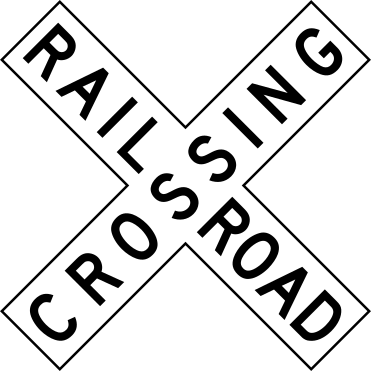
- At a freeway split with three exit lanes
- At a school crossing with three walking lanes
- At a railroad crossing with three train tracks
- At a work zone with three narrowed lanes
Show answer
At a railroad crossing with three train tracks. Michigan's sign chart describes this X-shaped RR Crossbuck as marking a railroad crossing consisting of three train tracks ahead. Full explanation in Test 9
40. What should you do when a steady yellow traffic light appears before you enter an intersection?
- Accelerate so the light cannot turn red first
- Stop, unless stopping cannot be done safely
- Continue at the same speed without checking traffic
- Reverse to the last intersection
Show answer
Stop, unless stopping cannot be done safely. A steady yellow signal warns that the light is about to turn red, so the normal response is to stop. Full explanation in Test 10
