
Key points
Do not return to the right lane until you can see the entire vehicle you passed in your rearview mirror.
Source: Handbook p. 32
“Once you have started passing a vehicle, do not cut back into the right-hand lane until you can see the entire vehicle you are passing in your rearview mirror.”
What Every Driver Must Know, Handbook p. 32You must return to your lane before you get within 200 feet of an oncoming vehicle.
Source: Handbook p. 32
“You must return to your lane before you get within 200 feet of any oncoming vehicles.”
What Every Driver Must Know, Handbook p. 32If you are being passed, do not speed up or race the passing driver.
Source: Handbook p. 32
“If you are being passed by another vehicle, do not increase your speed or race the driver who is passing you.”
What Every Driver Must Know, Handbook p. 32Passing on the right is allowed in certain cases, but never on the shoulder or off the road.
Source: Handbook p. 32
“Passing a vehicle on the right is allowed but don’t drive on the shoulder or off the road to do so.”
What Every Driver Must Know, Handbook p. 32Do not pass within 100 feet of an intersection or railroad crossing.
Source: Handbook p. 32
“You are within 100 feet of an intersection or railroad crossing.”
What Every Driver Must Know, Handbook p. 32Do not pass when your view is blocked within 100 feet of a bridge, viaduct or tunnel.
Source: Handbook p. 32
“Your view is blocked within 100 feet of a bridge, viaduct or tunnel.”
What Every Driver Must Know, Handbook p. 32Do not pass when a vehicle has stopped at a crosswalk or intersection for a pedestrian.
Source: Handbook p. 32
“A vehicle has stopped at a crosswalk or intersection to allow a pedestrian to cross.”
What Every Driver Must Know, Handbook p. 32You must drive in the right hand lane except in listed situations such as passing.
Source: Handbook p. 33
“You must drive in the right-hand lane except when: • Passing a vehicle in front of you.”
What Every Driver Must Know, Handbook p. 33Weaving from lane to lane to speed through traffic is illegal.
Source: Handbook p. 33
“Weaving from lane to lane to speed through traffic is illegal.”
What Every Driver Must Know, Handbook p. 33Keep your front wheels pointed straight ahead until you start a left turn.
Source: Handbook p. 34
“Keep your front wheels pointed straight ahead until you start your turn.”
What Every Driver Must Know, Handbook p. 34
Numbers to know
| Number | What it means | Manual |
|---|---|---|
| 200 feet | distance from oncoming traffic by which you must finish passing | Handbook p. 32 |
| 100 feet | no passing distance from intersections, railroad crossings, bridges, viaducts and tunnels | Handbook p. 32 |
Recognize these signs
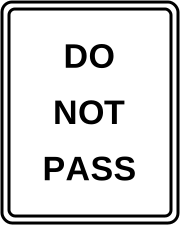
Do not pass 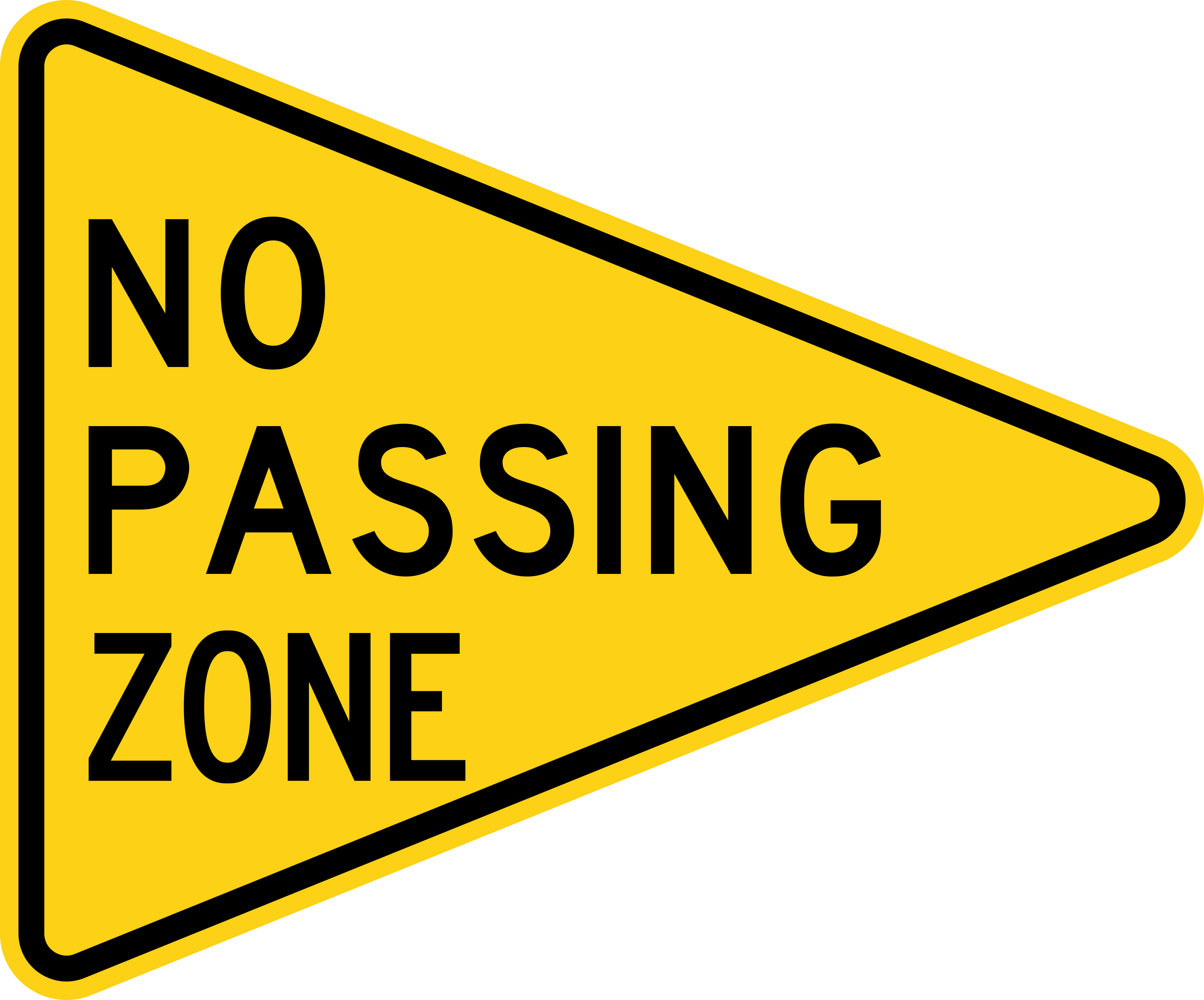
No passing zone
3 questions from the Michigan practice test
1. Before returning to the right lane after passing, what must a Michigan driver be able to see?
- Only the passed vehicle's front bumper in a side mirror
- The entire vehicle being passed in the rearview mirror
- The next intersection at least 500 feet away
- The driver's own rear tire in the passenger mirror
Show answer
The entire vehicle being passed in the rearview mirror. Michigan says not to cut back into the right lane until the entire vehicle being passed is visible in the rearview mirror. Seeing only a bumper in a side mirror leaves the pass incomplete and risks crowding the other vehicle. The driver's own tire and a distant intersection are unrelated checks. Wait until the full vehicle appears, then move back with adequate space and a clear path.
2. What is the normal lane position for a Michigan driver on a multi-lane road?
- The left-hand lane whenever it has the clearest pavement
- Any lane chosen by the driver without regard to traffic direction
- The center lane at all times to avoid merging
- The right-hand lane, except for listed situations such as passing or obstacles
Show answer
The right-hand lane, except for listed situations such as passing or obstacles. Michigan directs drivers to use the right-hand lane except when a listed reason requires another position, such as passing, an obstacle, a divided road with three or more lanes, or an approaching stopped emergency vehicle. The left lane is not a default cruising lane, and the center lane is not universally safe. Choose the exception first, then return right when the reason ends.
3. How close to an oncoming vehicle may a Michigan driver still be completing a pass?
- You must return to your lane before getting within 200 feet of any oncoming vehicle
- Within 50 feet
- Within 500 feet
- There is no distance rule
Show answer
You must return to your lane before getting within 200 feet of any oncoming vehicle. When passing, do not cut back into the right lane until you can see the entire vehicle you passed in your rearview mirror, and you must return to your lane before you get within 200 feet of any oncoming vehicle. Do not pass more than one vehicle at a time, and do not pass when oncoming traffic is close enough that trying to pass would place you and other vehicles in danger of crashing. Never pass where a solid yellow line is on your side.
Practice this topic
Lock it in with safe driving questions from the free Michigan practice test. Every answer comes with a plain English explanation.
Source: the What Every Driver Must Know, Chapter 4: Traffic Laws. This lesson is a plain English summary, not the law itself; where it differs, the manual and the statute govern. Last checked 2026-09-27.