
Key points
At a four way stop, the first driver to stop goes first; if two arrive together, the vehicle on the left yields to the one on its right.
Source: Handbook p. 30
“The driver who arrived at the intersection and stopped first has the right of way through the intersection. If two or more vehicles reached the intersection at the same time, the vehicle on the left should yield to the vehicle on its right.”
What Every Driver Must Know, Handbook p. 30At a malfunctioning signal, stop completely, yield to vehicles already there, and yield to the vehicle on your right if you arrive together.
Source: Handbook p. 30
“Come to a complete stop and yield to vehicles already at the intersection. Yield to the vehicle on your right if you both reach the intersection at the same time.”
What Every Driver Must Know, Handbook p. 30At a T intersection without signals or signs, yield to vehicles on the through road.
Source: Handbook p. 30
“At a T-intersection without any signals or signs, yield the right of way to vehicles on the through road.”
What Every Driver Must Know, Handbook p. 30When turning left on green, you may turn once all oncoming traffic has cleared.
Source: Handbook p. 30
“When the light is green, you may turn once all oncoming traffic has cleared.”
What Every Driver Must Know, Handbook p. 30Yield to a pedestrian in the crosswalk, even if your light is green.
Source: Handbook p. 31
“To a pedestrian in the crosswalk, even if your traffic light is green.”
What Every Driver Must Know, Handbook p. 31Funeral processions have the right of way over all vehicles except fire trucks, ambulances and police vehicles.
Source: Handbook p. 31
“Funeral processions have the right of way over all other vehicles, except for fire trucks, ambulances and police vehicles.”
What Every Driver Must Know, Handbook p. 31In a roundabout, entering traffic yields to traffic approaching from the left, including bicyclists and pedestrians.
Source: Handbook p. 35
“Vehicles entering from each leg of the intersection must yield to traffic approaching from the left. This includes any bicyclists or pedestrians who are present.”
What Every Driver Must Know, Handbook p. 35Always stay to the right of the center island; vehicles in the roundabout have the right of way.
Source: Handbook p. 35
“Always stay to the right of the center island. • Vehicles in the roundabout have the right of way.”
What Every Driver Must Know, Handbook p. 35Never make a left turn to enter a roundabout.
Source: Handbook p. 35
“Never make a left turn to enter a roundabout; this will place you in front of oncoming traffic.”
What Every Driver Must Know, Handbook p. 35If an emergency vehicle approaches while you are in a roundabout, do not stop; leave at the nearest exit and pull over.
Source: Handbook p. 35
“If an emergency vehicle is heard or seen approaching, do not stop. Leave the roundabout at the nearest exit, pull over to the right and stop”
What Every Driver Must Know, Handbook p. 35
Recognize these signs
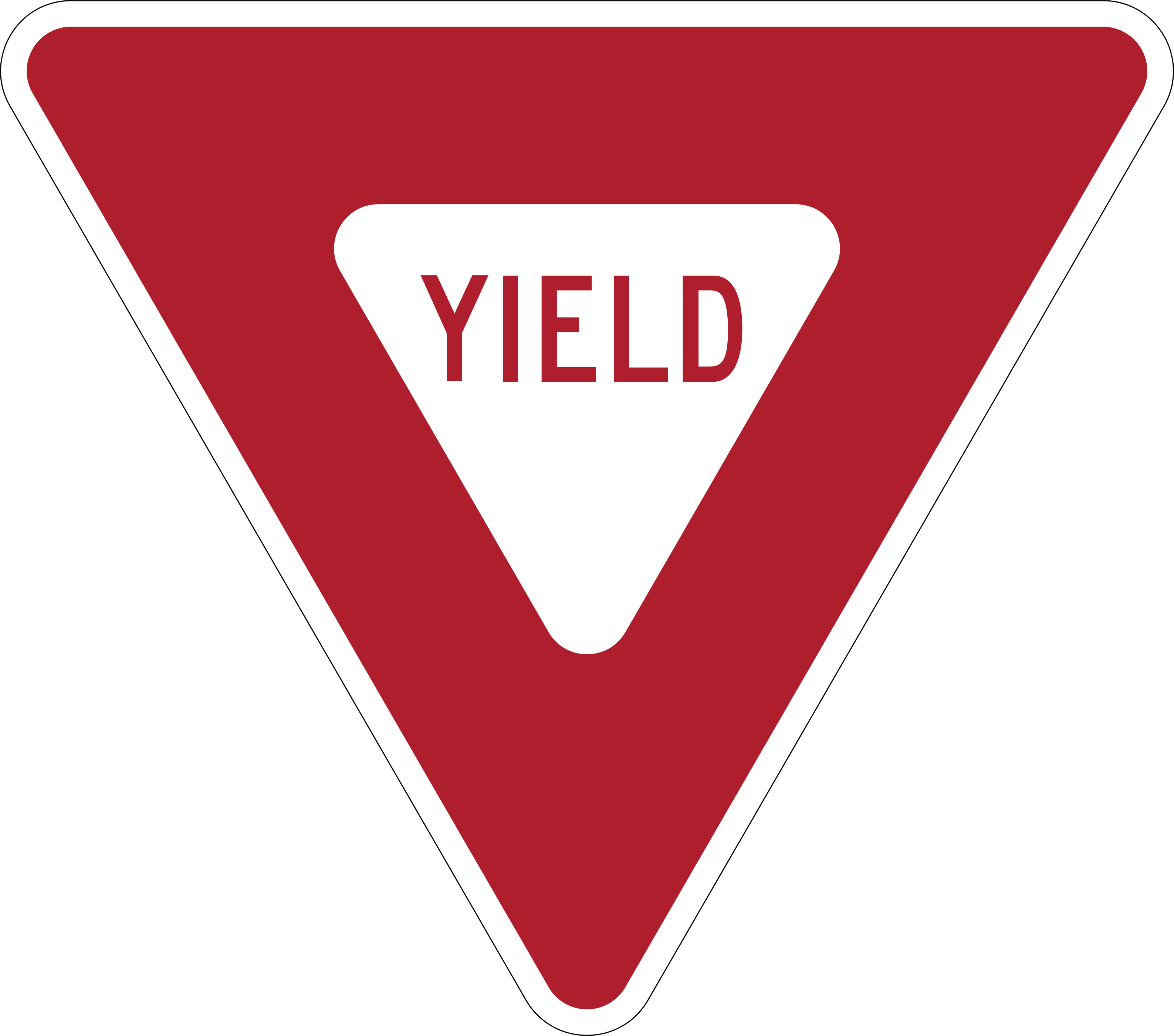
Yield 
Roundabout ahead 
Pedestrian crossing
3 questions from the Michigan practice test
1. At a Michigan intersection where two vehicles arrive and stop at the same time, which vehicle yields?
- The vehicle on the right yields to the vehicle on the left
- Both vehicles proceed together
- The larger vehicle yields
- The vehicle on the left yields to the vehicle on the right
Show answer
The vehicle on the left yields to the vehicle on the right. When two vehicles reach and stop at an intersection at the same time, Michigan directs the vehicle on the left to yield to the vehicle on the right. This priority does not depend on engine size, lane width, or which driver feels more confident. Stop first, identify the other vehicle’s position, and allow the right-side vehicle to proceed before entering. The practical cue is to look across the intersection after stopping: if another vehicle is on your right, wait and watch its path before moving.
2. Who has the right of way while traveling inside a Michigan roundabout?
- Vehicles waiting to enter
- Vehicles in the roundabout
- The vehicle approaching fastest
- Vehicles stopped on the shoulder
Show answer
Vehicles in the roundabout. Vehicles already in a Michigan roundabout have the right of way over vehicles waiting to enter. Entering traffic must slow at the yield line, look left, and merge only when a suitable gap appears. The approaching vehicle’s speed does not create priority, and a shoulder stop has no bearing on circulation. Once inside, keep right of the center island and avoid stopping unless necessary to prevent a collision or another danger. This sequence prevents an entering vehicle from cutting across the established counterclockwise flow.
3. If a Michigan traffic signal is not working and no officer is directing traffic, what must a driver do?
- Stop completely and yield to vehicles already at the intersection
- Continue through if the road appears clear
- Yield only to vehicles on the left
- Wait for a green light that may never appear
Show answer
Stop completely and yield to vehicles already at the intersection. A nonworking traffic signal becomes a stop-and-yield situation when no officer or other traffic-control device is present. Michigan directs the driver to make a complete stop and yield to vehicles already at the intersection. Continuing because the pavement looks clear skips the required stop. If vehicles arrive at the same time, yield to the vehicle on your right. The useful cue is to treat a dark signal as an uncontrolled intersection with a full stop, not as permission to maintain speed or wait for an absent green indication.
Practice this topic
Lock it in with right of way questions from the free Michigan practice test. Every answer comes with a plain English explanation.
Source: the What Every Driver Must Know, Chapter 4: Traffic Laws. This lesson is a plain English summary, not the law itself; where it differs, the manual and the statute govern. Last checked 2026-09-27.