
Key points
Yellow lines separate traffic lanes moving in opposite directions.
Source: Handbook p. 47
“Yellow lines separate traffic lanes moving in opposite directions.”
What Every Driver Must Know, Handbook p. 47A single broken yellow center line means you may pass if it is safe.
Source: Handbook p. 47
“A single broken yellow line usually marks the center line of a two-way roadway where a vehicle may pass if it is safe to do so.”
What Every Driver Must Know, Handbook p. 47If a solid yellow line is on your side of the center line, do not cross it to pass.
Source: Handbook p. 47
“If a solid yellow line is on your side of the center line, do not cross it to pass.”
What Every Driver Must Know, Handbook p. 47Solid white lines mark the right edge of the road, and crossing them to pass is illegal.
Source: Handbook p. 46
“Solid white lines mark the right edge of the road. Often called fog lines, these lines help you stay on the road at night or in bad weather. It is illegal to cross solid white lines when passing.”
What Every Driver Must Know, Handbook p. 46A left turn only center lane may not be used to pass or merge.
Source: Handbook p. 48
“Using this lane to pass other vehicles or as a merge lane is illegal and dangerous.”
What Every Driver Must Know, Handbook p. 48At a Michigan Left, you go past the intersection and use a median crossover to turn.
Source: Handbook p. 48
“Instead, to turn left, a person must drive straight through the intersection, or turn right, then make a U-turn at a median crossover.”
What Every Driver Must Know, Handbook p. 48At a red light, stop behind the crosswalk or stop line.
Source: Handbook p. 49
“Red light means stop. It is at the top of a traffic signal in Michigan. Stop your vehicle behind the crosswalk or stop line.”
What Every Driver Must Know, Handbook p. 49On yellow you must stop, but if you cannot stop safely, do not speed up; drive cautiously through.
Source: Handbook p. 49
“You are required to stop on a yellow light. If you cannot stop safely, do not speed up but drive cautiously through the intersection.”
What Every Driver Must Know, Handbook p. 49A flashing red light means come to a full stop and go when the road is clear.
Source: Handbook p. 50
“A flashing red light means come to a full stop. Proceed when the road is clear.”
What Every Driver Must Know, Handbook p. 50A flashing yellow arrow lets you turn left once oncoming traffic is clear, with an adequate gap and no pedestrians or bicyclists crossing.
Source: Handbook p. 50
“A flashing yellow arrow allows you to turn left when the oncoming traffic, which has a green light, is clear. Be sure that there is an adequate gap in the traffic and that there are no pedestrians or bicyclists crossing before making your turn.”
What Every Driver Must Know, Handbook p. 50
Recognize these signs
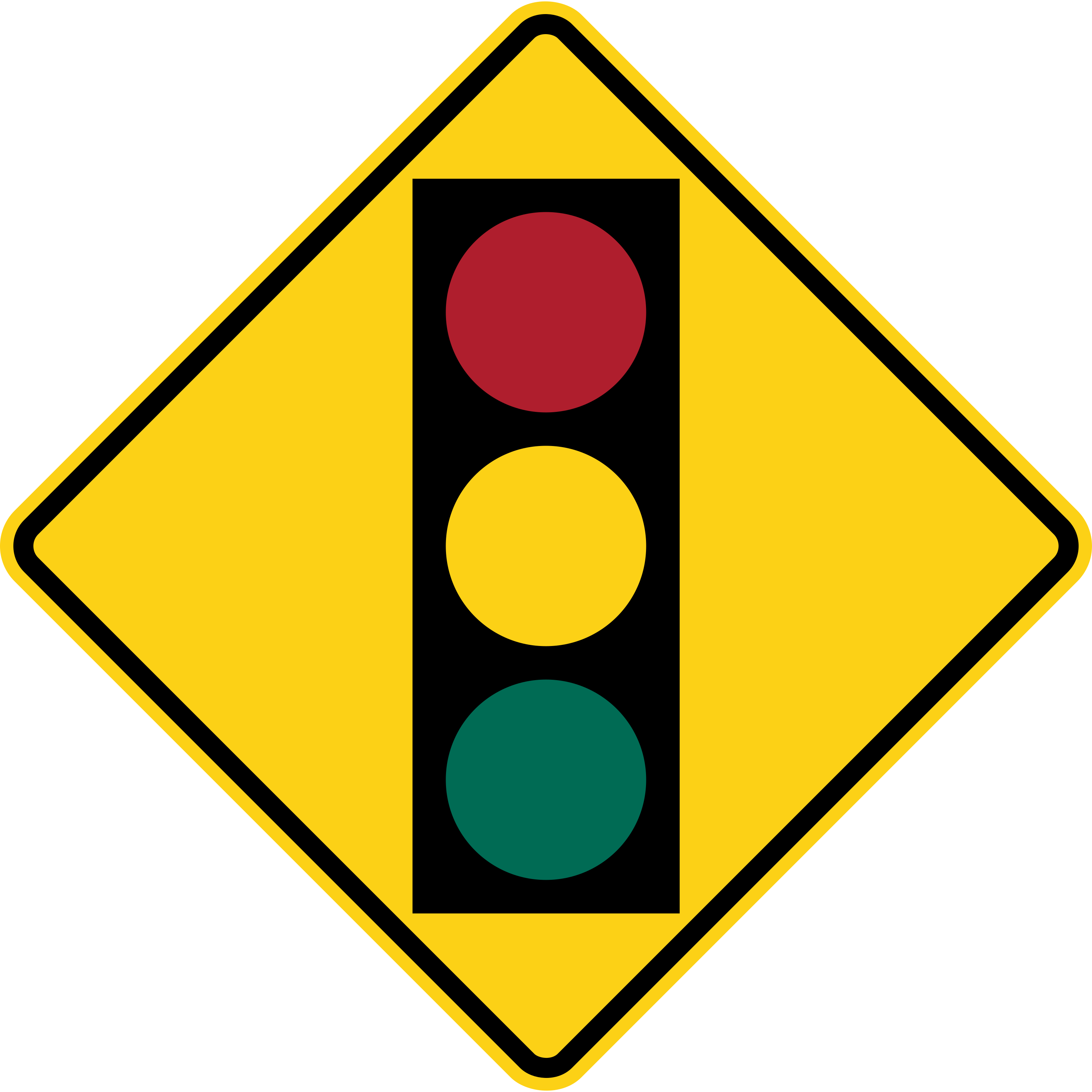
Signal ahead
3 questions from the Michigan practice test
1. What does a solid yellow line on your side of the centerline require before passing?
- Use it as a lane for turning left only
- Cross it whenever the road ahead is clear
- Do not cross it to pass
- Treat it as a broken white lane divider
Show answer
Do not cross it to pass. A solid yellow line on the driver’s side of the centerline marks a no-passing condition. The line is not an invitation to cross whenever a gap appears, and it is not equivalent to a broken white line, which separates same-direction lanes. A center lane reserved for left turns has its own markings and purpose. The important visual cue is the solid yellow line nearest your lane. Stay on your side until passing is permitted by the markings and roadway conditions. Do not confuse the limited situations for crossing a double yellow line, such as turning into a driveway, with permission to pass.
2. What should you do when a steady yellow traffic light appears before you enter an intersection?
- Accelerate so the light cannot turn red first
- Stop, unless stopping cannot be done safely
- Continue at the same speed without checking traffic
- Reverse to the last intersection
Show answer
Stop, unless stopping cannot be done safely. A steady yellow signal warns that the light is about to turn red, so the normal response is to stop. If an abrupt stop would be unsafe because you are already too close, continue cautiously through the intersection without increasing speed. Accelerating turns a warning into a rushed maneuver, while reversing creates a new hazard. Look at your distance and speed, then choose the safe stopping response before the signal changes.
3. What does a flashing yellow arrow allow a driver to do?
- Turn left without yielding to anyone
- Treat the arrow exactly like a solid red arrow
- Proceed straight from any lane
- Turn left after oncoming traffic is clear and pedestrians are safe
Show answer
Turn left after oncoming traffic is clear and pedestrians are safe. A flashing yellow arrow allows a left turn, but it is permissive rather than protected. Oncoming traffic may have a green light, so the turning driver must wait for an adequate gap and check for pedestrians and bicyclists in the crossing. The arrow does not remove the yield duty, and it is not the same as a solid red arrow. Confirm the path is clear before beginning the turn, then continue with care.
Practice this topic
Lock it in with signals and markings questions from the free Michigan practice test. Every answer comes with a plain English explanation.
Source: the What Every Driver Must Know, Chapter 5: Signs, Pavement Markings and Signals. This lesson is a plain English summary, not the law itself; where it differs, the manual and the statute govern. Last checked 2026-09-27.