
Test 15 of 25 · 20 questions · Free 2026
MD Permit Practice Test 15
Jump to the test ↓A fixed 20 question set from the Maryland bank with answers and plain English explanations. The real MD exam is 25 questions, 88 percent to pass; take the full length version on the main practice page.
Question 1 of 20 · 0 right so far
All 20 questions in test 15
Every question below comes from the Maryland question bank on this page. Open a question to see the correct answer and the explanation. Nothing here is hidden behind a signup.
1. You approach a yield sign in Maryland and traffic is crossing ahead from both sides. How should you approach?
- Slow down and look to the left and the right
- Keep your speed and look straight ahead
- Stop fully in every case before reaching the sign itself
- Look only to the left for oncoming cars
Show answer
Slow down and look to the left and the right. A yield approach starts with lower speed and a check in both directions. Looking left and right helps a driver judge gaps in crossing traffic and spot pedestrians or bicycles that may be entering the path. Keeping speed makes those gaps harder to judge, and looking only one way can miss a vehicle arriving from the other side. A stop is needed only when safety requires it, so a driver who slows early and scans both sides is better prepared to proceed when the way opens.
Study this in the handbook: Regulatory, warning and guide signs
2. How can you check whether your gap is large enough while moving in Maryland?
- Count the car lengths between you and the vehicle ahead
- Count off time as the vehicle ahead passes a fixed object
- Match whatever gap vehicles in the next lane happen to be using
- Judge by how loud the vehicle ahead sounds
Show answer
Count off time as the vehicle ahead passes a fixed object. A fixed roadside object gives you an honest check of the time gap you actually have. Count car lengths and the measure shrinks in value as speed rises, while sound and neighboring lanes tell you nothing reliable about your own stopping room. Start counting when the vehicle ahead passes the object and note where you are when the count ends. That simple habit turns an abstract gap into a number you can adjust whenever traffic, weather, or speed changes on the road ahead of you.
Study this in the handbook: Following distance, stopping distance and turns
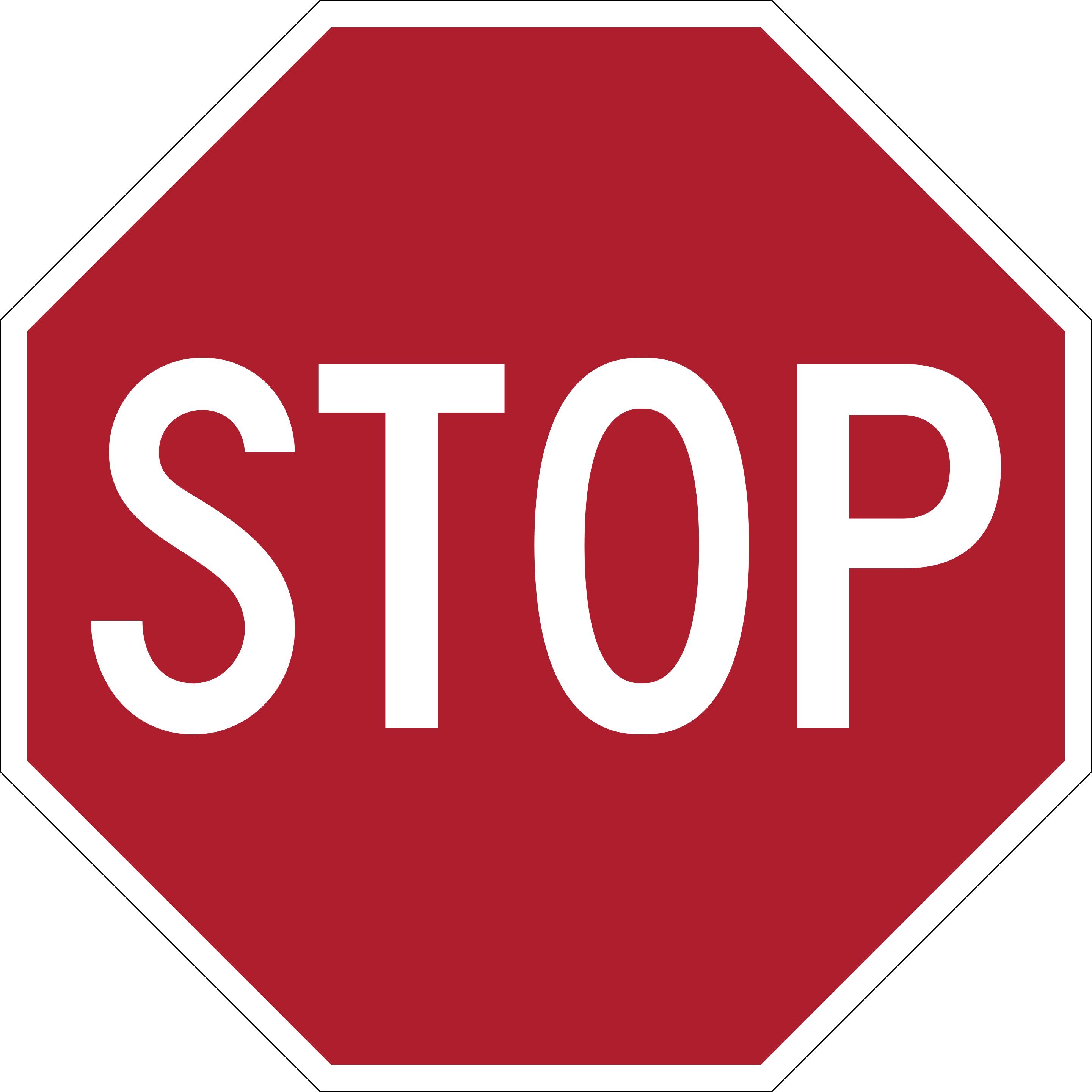
3. You reach the pictured sign at a Maryland corner. No stop line is painted, but a crosswalk is marked across your lane. Where must you stop?
- Wherever you can first see traffic on the cross street
- In the middle of the crosswalk for a better view
- At the edge of the cross street, past the crosswalk
- Before your vehicle enters the crosswalk
Show answer
Before your vehicle enters the crosswalk. At a Maryland stop sign, the stopping point depends on what is painted on the road. A stop line comes first. When there is no stop line, the driver stops before entering the crosswalk, which keeps the path clear for people on foot. Only when there is neither a stop line nor a crosswalk does the stop move up to the edge of the intersection. Stopping on the crosswalk or beyond it blocks walkers, and your view of the cross street does not set the spot. After stopping, yield to vehicles and pedestrians in the intersection.
Study this in the handbook: Regulatory, warning and guide signs
4. There is no signal at a street crossing in Maryland, and a person on foot is using a crossing place that has no painted lines. What is required of you?
- Stop for the person crossing there
- Continue if the person has not reached your lane
- Stop only when painted lines mark the crossing place
- Slow down and pass behind the person at speed
Show answer
Stop for the person crossing there. Crossing places at intersections exist even when paint is missing, and people on foot using them receive the same protection as those on painted lines. Without a signal to separate movements, the driver stops and lets the person finish crossing. Passing behind at speed or waiting until the person reaches your lane underestimates how quickly paths can meet. Scan every corner on approach, expect crossing places at intersections, and stop early enough to stay well clear.
Study this in the handbook: Pedestrians, emergency vehicles and school buses
5. Which experience behind the wheel signals that drowsiness is affecting you in Maryland?
- Remembering every exit you passed
- Keeping a steady lane position with ease
- Not remembering driving the last few miles
- Noticing hazards earlier than usual on the trip
Show answer
Not remembering driving the last few miles. Missing miles from memory means attention has been lapsing while the vehicle kept moving. That gap often travels with yawning, heavy eyelids, drifting, and wandering thoughts. Remembering exits, holding a lane with ease, and spotting hazards early describe alert driving instead. Treat a blank stretch of trip as a serious warning rather than a curiosity. Stop at a safe place, rest, or hand over driving before a lapse becomes a lane departure or a missed stop on Maryland roads.
Study this in the handbook: Aggressive, distracted and drowsy driving
6. Another driver nearby behaves unpredictably in Maryland traffic. What assumption should guide your driving?
- Expect that others may break the rules
- Assume others will always follow every rule
- Assume others will move out of your way
- Expect others to watch out for you
Show answer
Expect that others may break the rules. One of Maryland's defensive driving habits is not to assume that other drivers will do what they are supposed to do. Expecting that someone may break a rule, such as braking late, drifting, or turning without a signal, keeps you ready to respond. Assuming that everyone will follow every rule, move out of your way, or watch out for you hands your safety to others. Pair that mindset with turn signals, a safe distance, and constant attention to what is around you.
Study this in the handbook: Defensive driving and who goes first
7. Your car stalls on railroad tracks and a train may be near. What should occupants do first in Maryland?
- Stay inside and keep trying to restart the engine now
- Get out of the vehicle and move away from the tracks
- Push the car along the tracks toward the crossing signs
- Stand beside the car and signal the train to stop soon
Show answer
Get out of the vehicle and move away from the tracks. If you have an emergency on or near a railroad crossing, Maryland says to get out of the vehicle and move away from the tracks. Trains cannot stop quickly, so staying inside to restart the engine, pushing the car along the rails, or standing nearby to signal the train keeps people in danger. Trains can come from either direction and may be closer and traveling faster than they appear. Once everyone is clear, report the emergency using the information on the blue and white Emergency Notification System sign.
Study this in the handbook: Bad weather, skids and hydroplaning
8. You brake hard in a Maryland car with anti-lock brakes, and the brake pedal vibrates while you hear a rumble. What does that mean?
- The brakes are failing and need repair at once
- You should lift your foot off the brake pedal
- The ABS is working to keep the wheels from locking
- A tire has gone flat and is losing air quickly
Show answer
The ABS is working to keep the wheels from locking. Anti-lock braking systems help prevent your wheels from locking up so you can control your car. When the vehicle's computer detects that one or more wheels are locking, ABS pumps the brakes much faster so they do not lock. When ABS engages, you may hear a rumble from the brakes and the brake pedal will vibrate under your foot. Those are normal signs that the system is working, not signs of brake failure or a flat tire. Check your owner's manual for details.
Study this in the handbook: Supervising drivers, insurance, seat belts and child seats
9. A bicyclist is riding in a marked bike lane beside your Maryland travel lane. As you pass, how much space must you leave?
- At least 3 feet, the same as on the road
- None, because the bike lane line separates you
- At least 1 foot, since the rider has a lane
- At least 10 feet in every single case
Show answer
At least 3 feet, the same as on the road. Maryland requires at least 3 feet between your vehicle and a bicycle when passing. That same room applies when the bicycle is in a bike lane, on the shoulder, or in the same lane as your car. A painted bike lane line does not replace the 3 feet. If your position leaves less room than that, slow down and wait until you can pass with the full distance, and check your mirror for the bicycle before moving back.
Study this in the handbook: Trucks, motorcycles, bicycles and mopeds
10. You come up behind a bicyclist on a two-lane Maryland road while a car is approaching in the other lane. How should you pass?
- Squeeze past now, leaving about a foot of space
- Honk so the rider moves onto the shoulder
- Slow down and wait until oncoming traffic is clear
- Pass quickly between the rider and the oncoming car
Show answer
Slow down and wait until oncoming traffic is clear. Maryland says to pass a bicyclist like you would any slow-moving vehicle. Be prepared to slow down and wait until oncoming traffic is clear, then leave at least 3 feet between your vehicle and the bicycle when passing. Squeezing between the rider and an oncoming car makes that space impossible, and honking can startle a rider into a crash. Once past, make sure you see the bicycle in your rear-view mirror before returning to your lane.
Study this in the handbook: Trucks, motorcycles, bicycles and mopeds
11. You are stopped behind a Maryland school bus. Its flashing red lights turn off, but the bus has not started moving yet. May you start moving?
- No, you must wait until the bus drives away
- Yes, once its flashing red lights are off
- No, wait until the bus driver waves you past
- Yes, but only by passing on its left at once
Show answer
Yes, once its flashing red lights are off. Maryland drivers may not start moving again until the school bus starts moving or turns off its flashing red lights. Either event ends the required stop, so when the red lights go off you may move even if the bus is still standing there. Move carefully and check the area around the bus before you go. A wave from the bus driver is not what releases you; the red lights going off or the bus moving does.
Study this in the handbook: Pedestrians, emergency vehicles and school buses
12. Your tire goes flat just as you pass a Maryland exit, beside the painted triangle between the ramp and the highway. That area is wide and empty. Should you stop there?
- Yes, it is wide enough to be safe
- Yes, but only for a quick tire check
- Yes, if you turn on your hazard lights while stopped
- No, never stop in that painted triangle
Show answer
No, never stop in that painted triangle. Maryland says to never stop or park in the triangular painted zones where a ramp exits the road, no matter how empty they look. If your vehicle becomes disabled, do your best to move it to the shoulder, and if you can reach an off-ramp or parking lot, consider doing that even if it means driving on a flat tire or damaging a rim. Being farther from traffic makes you safer. Turn on your flashers once you have stopped.
13. A special center lane has solid lines on the outside and broken lines on the inside in Maryland. What kind of lane is it?
- A reversible lane for through traffic
- A two-way left turn lane
- A bicycle lane open to cars
- A parking lane for both directions
Show answer
A two-way left turn lane. The paired pattern of solid outside lines and broken inside lines marks the edges of a two-way left turn lane. Drivers from either direction may enter it to turn left, sharing it with opposing left turning vehicles. Because through traffic does not belong there, enter only to prepare your turn and watch for a driver opposite doing the same. The broken inside edge lets you cross in, while the solid outside edge keeps through lanes separate.
Study this in the handbook: Lines and pavement markings
14. Lights flash along a work zone as you enter it. What should that tell you in Maryland?
- The zone is ending, so speed may rise
- Only speed cameras are operating
- Workers are present ahead
- You may ignore the posted signs briefly
Show answer
Workers are present ahead. Flashing lights inside a work zone signal that people are working there. That warning calls for close attention, obedience to zone signs, and a reduced speed suited to the activity. Workers may be near moving lanes with equipment that limits their ability to step away. Conditions can change quickly, with shifted lanes, closures, and slow equipment entering traffic. Treating the flashing display as a cue to sharpen observation, rather than as decoration, gives a driver more time to respond to a worker, a flagger, or a sudden stop ahead.
Study this in the handbook: Railroads, work zones, roundabouts, highways and processions
15. How can illegal drugs and some medicines affect driving ability in Maryland?
- They can dull alertness and slow reactions
- They affect only drivers who mix them with alcohol
- They mainly improve focus on long trips
- They change only the ability to read signs
Show answer
They can dull alertness and slow reactions. Drugs reach the core skills driving depends on. Alertness fades, concentration scatters, coordination weakens, and reaction time stretches longer. Any one of those losses can turn a routine hazard into a crash. Mixing with alcohol is not required before the harm appears. Sign reading is only a small part of a much wider decline. Because several abilities can drop at once, a driver may not notice how much performance has already gone missing.
Study this in the handbook: Alcohol, drugs and driving
16. A driver hurries well over the limit on a Maryland road, figuring the trip will take much less time. What does experience with this choice usually show?
- It reliably saves a large amount of time
- It improves judgment by keeping the driver alert
- It has no effect on the choices a driver makes
- It barely saves time and often pushes risky choices
Show answer
It barely saves time and often pushes risky choices. Maryland's manual says excessive speed does not save time and often leads to decisions that put people at risk. Driving over the speed limit is one of the most common causes of vehicle crashes, and it decreases your ability to recognize and react to a hazard. Speeding does not sharpen judgment, and it does shape the choices a driver makes, often for the worse. Leaving earlier for a trip removes the pressure to hurry and keeps your speed at or below the posted limit.
Study this in the handbook: Defensive driving and who goes first
17. You need to reach an exit in Maryland but a long group of motorcyclists occupies the lane beside you. How should you change lanes?
- Merge into the first small gap you see
- Honk so the group splits around your car
- Signal early and wait for room
- Speed past the whole group before signaling
Show answer
Signal early and wait for room. Organized rides move as a loose formation, and forcing into a small gap can startle riders with little room to react. Signaling early tells the group what you need, and waiting lets riders open a space you can enter safely. For a small group, slowing and letting it pass first may be simpler. Treat the exit as reachable a moment later rather than risking a squeeze between riders at highway speed.
Study this in the handbook: Pedestrians, emergency vehicles and school buses
18. Why can it be hard to tell how far away an approaching motorcycle is in Maryland traffic?
- Motorcycles must ride without headlights by day
- Its small size makes speed and distance harder to judge
- Riders always travel faster than the speed limit
- Motorcycles are louder, which confuses drivers
Show answer
Its small size makes speed and distance harder to judge. Motorcycles are smaller than cars and trucks, so it can be harder to judge their speed and distance. A motorcycle may be closer or moving faster than it looks, which is why Maryland tells drivers to yield to an oncoming motorcycle when turning left and to look twice before changing lanes or merging. Motorcycles can be hidden in your blind spot or missed in a quick look because of their size. Riders are not required to ride without lights and are not always speeding.
Study this in the handbook: Pedestrians, emergency vehicles and school buses
19. Near a Maryland tunnel, a single solid white line separates your lane from the lane beside you going the same direction. How should you treat that line?
- As permission to change lanes freely
- As a line you may never cross for any reason
- As a center line dividing opposing traffic
- As a sign that changing lanes is discouraged
Show answer
As a sign that changing lanes is discouraged. A single solid white line separates lanes where all vehicles are going the same direction, but lane changing is discouraged. The same marking also shows the right edge of the road. It differs from double solid white lines, which mean you are not allowed to change lanes, and it does not divide opposing traffic, which is the job of yellow lines. Near a tunnel or other tight spot, stay in your lane, and if a change is truly needed, check carefully and signal first.
Study this in the handbook: Lines and pavement markings
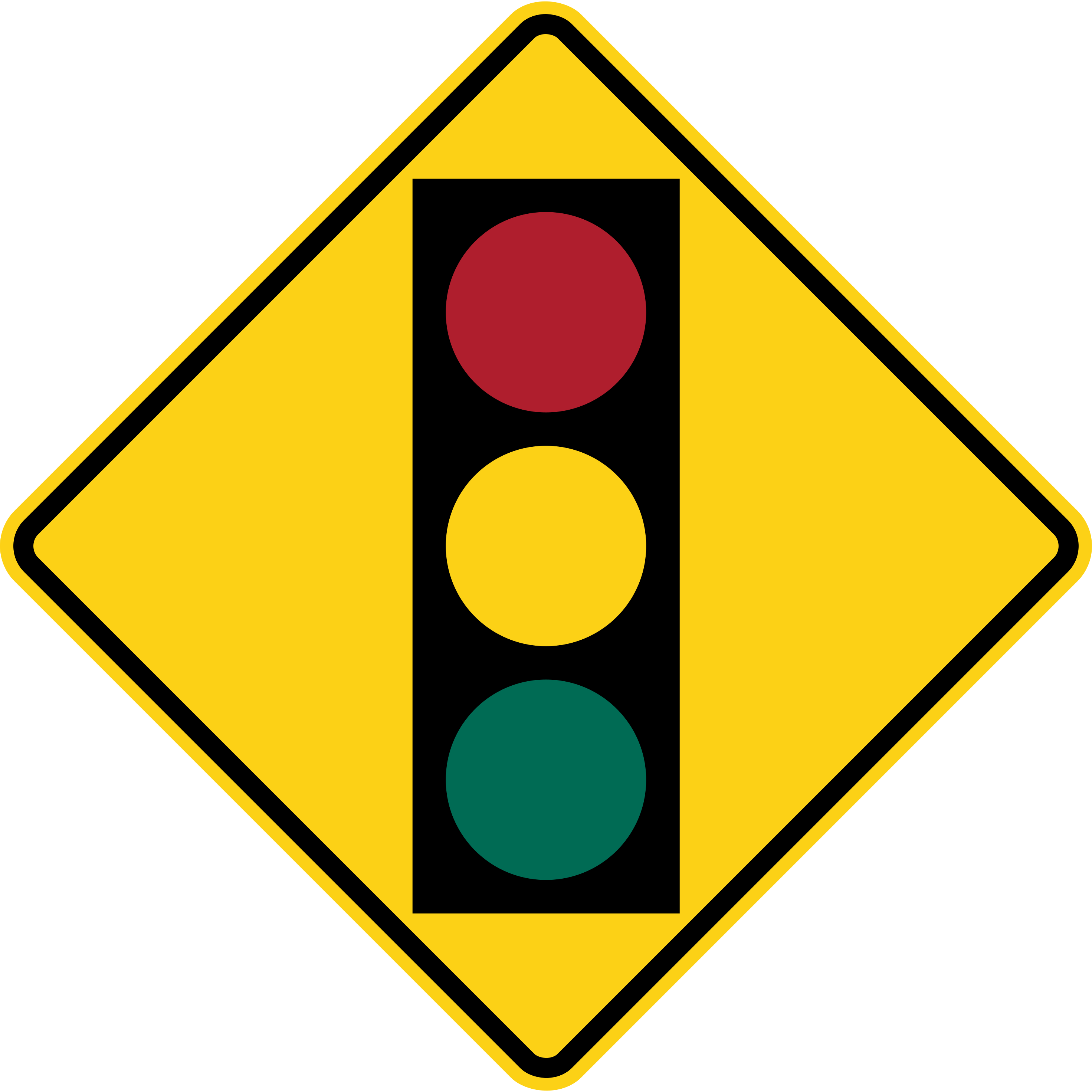
20. You see the pictured yellow diamond sign on a Maryland road. What is it warning you about?
- A work zone flagger is ahead
- A railroad crossing is ahead
- A school crossing is ahead
- A traffic signal is ahead
Show answer
A traffic signal is ahead. Warning signs give notice of a situation that might not be readily apparent, and the yellow diamond is a warning shape. The Signal Ahead sign shows a traffic light symbol, telling you that an intersection controlled by a signal is coming before you can see the signal itself. Slow down, look for the signal, and be ready to stop if it is red or turning yellow. Railroad crossings use a round warning sign, school crossings use fluorescent yellow-green signs, and a flagger warning shows a person with a flag.
Study this in the handbook: Regulatory, warning and guide signs
Every question is written from the official Maryland Driver's Manual. Need paper? Printable MD practice test with answer key.
Last verified 2026-10-05. How we check every question · Study all 500 as flashcards
Frequently asked questions
How many questions are on this Maryland practice test?
This fixed set has 20 questions. It is test 15 of 25 from the 500 question Maryland bank. The real MD exam asks 25 questions and you need 22 correct.
What is the passing score for the real Maryland test?
88% or higher That figure comes from the official Maryland source cited on the DMV facts page.
How does this fixed test relate to the full Maryland bank?
Each numbered test is a fixed set of questions in a fixed order, so you can retake the same test later and compare. Every test mixes road signs and the other topics in about the same proportion as the full bank. Tests 1 to 25 together cover every question in the Maryland bank once. The full practice page mixes the whole bank at random.
Last verified 2026-10-05. See the Maryland DMV facts page for sourced state details.
Return to the full Maryland practice test · Study road signs