
Test 22 of 25 · 20 questions · Free 2026
MD Permit Practice Test 22
Jump to the test ↓A fixed 20 question set from the Maryland bank with answers and plain English explanations. The real MD exam is 25 questions, 88 percent to pass; take the full length version on the main practice page.
Question 1 of 20 · 0 right so far
All 20 questions in test 22
Every question below comes from the Maryland question bank on this page. Open a question to see the correct answer and the explanation. Nothing here is hidden behind a signup.
1. A large truck is stopped at a Maryland intersection with space on its right. You want to move up along that side. Why is that unsafe?
- The truck driver can see you clearly there and will wait
- Trucks are not allowed to turn right from that position
- The truck may begin its turn and leave you caught between it and the curb
- Traffic signals do not apply to vehicles on a truck's right side
Show answer
The truck may begin its turn and leave you caught between it and the curb. Maryland warns never to try to cut in along the right side of a truck at an intersection as the driver begins the turn. You could find yourself caught between the turning truck and the curb. Trucks make wide turns and need more space than cars, so the gap beside them can disappear quickly. Stay back and let the truck finish its turn before you move up.
Study this in the handbook: Pedestrians, emergency vehicles and school buses
2. You park a car with a manual transmission on a Maryland street. Besides setting the parking brake, what should you do with the transmission?
- Leave it in neutral
- Put it in gear
- Shift it to park
- Leave the clutch pedal pressed
Show answer
Put it in gear. Maryland tells drivers to set the parking brake and then place the vehicle in gear if it has a manual transmission. The same sentence says to use park if the car has an automatic transmission. A manual car has no park position, and neutral leaves the car free to roll if the brake fails or is bumped. Holding the clutch down is not something you can do after you leave the vehicle.
Study this in the handbook: Passing rules and parking
3. A Maryland driver age 30 is stopped and testing shows a BAC of exactly 0.08. How is that driving classified?
- Driving under the influence of alcohol
- Impaired only if a crash has occurred
- Lawful because the reading is not above the limit
- A paperwork issue handled without criminal charges
Show answer
Driving under the influence of alcohol. Maryland treats a BAC of .08 or higher as driving under the influence. The threshold includes the exact reading of .08, so a driver does not need to exceed it before the classification applies. A crash is not required for the rule to matter. The safer reading is simple: at or beyond that level, the driver should not be operating the vehicle at all. Planning a sober ride removes the need to guess where a personal reading might fall.
Study this in the handbook: Alcohol, drugs and driving
4. You take the wrong exit off a Maryland highway. What should you do?
- Stop on the ramp and back up to the highway
- Cut across the painted area back to the lanes
- Make a U-turn on the exit ramp
- Continue off the ramp, then find a way back
Show answer
Continue off the ramp, then find a way back. If you exit at the wrong place, Maryland says to continue until you are off the exit ramp and then look for a way to re-enter the road. Never stop and back up on any part of the highway, and the ramp is part of it. Cutting across the painted area where a ramp leaves the road or turning around on the ramp puts you against the flow of traffic. To avoid the problem, move to the right lane well before the exit you plan to take.
Study this in the handbook: Railroads, work zones, roundabouts, highways and processions
5. Your vehicle cannot keep up with highway traffic flow in Maryland. Which lane should you use whenever possible?
- The left lane, to stay visible to faster drivers
- Whichever lane has the fewest vehicles at the moment
- The right lane, since you are slower than the flow
- The shoulder, driving at a reduced speed
Show answer
The right lane, since you are slower than the flow. Keeping a slower vehicle to the right lets faster traffic pass on the left in the pattern drivers expect. That order reduces weaving, tailgating, and surprise encounters with a slow vehicle in the fast lane. The shoulder is for emergencies, never for travel. If a vehicle truly cannot approach highway pace, choosing a lower-speed route may serve everyone better than blocking the stream. Use turn signals early so faster drivers can plan their pass around you smoothly.
Study this in the handbook: Railroads, work zones, roundabouts, highways and processions
6. You have just overtaken a bicyclist riding on the shoulder in Maryland and now need to turn right at the next corner. What should you avoid?
- Checking your right side before the turn
- Moving toward the right edge before turning
- Waiting for the rider to clear before turning
- Turning right at once after passing the rider
Show answer
Turning right at once after passing the rider. Turning across a rider's line just after passing invites a collision, since the rider is still moving forward on your right. A turn started from the through lane sweeps directly into that path. Checking the right side, edging right beforehand, and waiting are protective habits rather than mistakes. If the rider is still beside or behind you, let the rider fully clear the corner before your wheels begin to turn.
Study this in the handbook: Trucks, motorcycles, bicycles and mopeds
7. Under Maryland law, how are bicycles classified when ridden on the road?
- As pedestrians using the roadway
- As toys exempt from signal rules
- As emergency vehicles with priority everywhere
- As vehicles that must follow traffic signals
Show answer
As vehicles that must follow traffic signals. Bicycles count as vehicles on Maryland roads, so riders follow the same signals and road rules as drivers. At the same time, riders are easier to miss, quieter, and unprotected by a vehicle body, so drivers must take extra care around them. Calling them pedestrians or toys understates both their rights and their duties. Expect riders to use the road lawfully, and drive as if a small mistake near them could cause serious harm.
Study this in the handbook: Pedestrians, emergency vehicles and school buses
8. Under Maryland's seat belt law, who in a moving car must be buckled up?
- The driver and all passengers, or child seats
- Only the driver and the front passenger
- Only passengers under 16 years old
- Only people riding on highways
Show answer
The driver and all passengers, or child seats. By Maryland law, the driver and all passengers of a motor vehicle must wear a safety belt or be buckled in a child safety seat. The rule covers the back seat as well as the front and applies on every kind of road. Wearing a seat belt is the single most effective way to prevent death and serious injury in a crash, and it takes only about three seconds to buckle up before each trip.
Study this in the handbook: Supervising drivers, insurance, seat belts and child seats
9. In a Maryland traffic circle with more than one lane, how should you time your move toward the outside when leaving?
- Change lanes inside the circle right at the exit opening you want
- Signal right and move outward after passing the exit before yours
- Signal left while moving to the outside lane early
- Exit from the inside lane without signaling
Show answer
Signal right and move outward after passing the exit before yours. A multi-lane circle works best when each vehicle holds its lane while circulating. Lane changes inside the circle create crossing paths with vehicles that expect you to stay put. Prepare for your exit by signaling right at the right moment, then move outward after passing the exit just before yours. That timing tells drivers behind and beside you what comes next without cutting across them. Enter the exit lane smoothly and keep watching for people crossing near the exit.
Study this in the handbook: Railroads, work zones, roundabouts, highways and processions
10. Your car breaks down on a Maryland interstate and you call for a tow truck. Which roadside sign can help you tell the driver where you are?
- The nearest mile marker sign
- The next overhead lane use sign
- The last speed limit sign you passed
- The nearest brown recreation sign
Show answer
The nearest mile marker sign. Mile marker signs are placed every mile on interstate highways. They give location information you can share when you need someone to find you, such as a tow truck or emergency personnel. Telling the dispatcher the route and the nearest mile marker pins down your position far better than describing a speed limit or lane sign. Speed limit signs only state the maximum speed, overhead signs give destinations and lane use, and brown signs point to recreation areas.
Study this in the handbook: Regulatory, warning and guide signs
11. A steady green arrow is lit in Maryland. How may you proceed?
- Only after making a full stop at the stop line
- At any speed you choose, since the arrow fully protects the turn
- Go with caution that way, yielding inside the intersection
- In the direction opposite to where the arrow points
Show answer
Go with caution that way, yielding inside the intersection. A green arrow gives a driver permission to move the way it points, but permission never removes the need for care. People on foot and vehicles already inside the intersection still hold protection, so an arrow driver yields to them before and during the turn. No full stop is required before moving, yet speed should stay modest enough to react to anyone clearing the intersection late. Moving against the arrow direction ignores the signal entirely, and treating the arrow as a shield invites conflict with lawful users ahead.
Study this in the handbook: Traffic signals, arrows and lane use lights
12. What counts as distracted driving in Maryland?
- Taking your eyes, hands, or mind away from driving
- Checking mirrors and blind areas at regular intervals
- Listening to directions before starting out
- Glancing at a road sign while passing
Show answer
Taking your eyes, hands, or mind away from driving. Distraction is broader than looking away. A mind busy with a conversation, hands busy with objects, or eyes busy with a screen all leave less capacity for hazards. Mirror checks, trip preparation before starting, and brief sign glances belong to attentive driving when done with judgment. Notice how small tasks compete for the same attention you need for scanning, gap keeping, and speed choice. Park the extra task, silence what you can, and give the road your eyes, hands, and thinking together.
Study this in the handbook: Alcohol, drugs and driving
13. A wide white line is painted across your lane at a junction. What does that line show in Maryland?
- The start of a lane reserved for bicycles beside traffic
- The point where a school zone speed begins
- Where to stop for a stop sign or red signal
- The edge of a parking lane beside shops
Show answer
Where to stop for a stop sign or red signal. A stop line gives a precise stopping place so vehicles halt before crossing areas and before entering the conflict zone. It applies at stop signs and at red lights, tying the painted mark to the controlling device. Stopping on or beyond it can hide people on foot and can block turning vehicles. The line works with the sign or signal rather than replacing either one. Judging the front of the vehicle against that white band helps keep the stop consistent at busy and quiet junctions alike.
Study this in the handbook: Lines and pavement markings
14. Which of these does the Maryland manual list as an example of aggressive driving?
- Driving slowly in the right lane
- Using headlights in daylight
- Signaling well before a turn
- Tailgating the vehicle ahead
Show answer
Tailgating the vehicle ahead. Maryland lists speeding, tailgating, ignoring traffic signals and devices, making unsafe lane changes, not yielding the right-of-way, and unsafe or illegal passing as examples of aggressive driving. Tailgating, or following too closely, is one of them. Keeping right at a slower pace, using headlights, and signaling early are normal, cooperative habits rather than aggressive ones. The manual's advice is to respect and cooperate with all other people using the road and to avoid competing with other drivers.
Study this in the handbook: Alcohol, drugs and driving
15. Near tracks in Maryland, which vehicles must stop before every crossing?
- Buses, school buses, and trucks carrying hazardous materials
- Only vehicles carrying children to a school activity
- Any vehicle traveling slower than the posted speed limit
- Only trucks with more than two axles on the vehicle
Show answer
Buses, school buses, and trucks carrying hazardous materials. In Maryland, buses, school buses, and trucks carrying hazardous materials must stop before every railroad crossing, even when no train is in sight. Drivers behind them should be aware that these vehicles may be stopping and leave room instead of pulling around. Speed and axle count are not the test; the type of vehicle and its cargo are. All drivers should still look for a train at any time, since trains can come from either direction and may be closer and faster than they appear.
Study this in the handbook: Bad weather, skids and hydroplaning
16. Before passing another vehicle where passing is allowed in Maryland, what must a driver judge first?
- That the trip will still finish on schedule
- That the other driver has noticed the horn
- The time and space needed, without crowding other traffic
- That the vehicle ahead is traveling below the posted speed limit
Show answer
The time and space needed, without crowding other traffic. A pass borrows space that other traffic may need, so the judgment comes before the move. The driver estimates how long the pass will take and how much clear road it needs, and starts only when the move can finish without crowding anyone else. Arrival schedules, horn contact, and the speed of the vehicle ahead do not prove the gap is big enough. A pass that fits the available time and space leaves room for oncoming traffic and for a safe return to the original lane.
Study this in the handbook: Passing rules and parking
17. You pass a yellow sign with a symbol you do not recognize on a Maryland road. What does its yellow color tell you?
- It points to services such as food and gas
- It gives a general warning of what lies ahead
- It marks a construction work area
- It shows a route number and road type
Show answer
It gives a general warning of what lies ahead. Maryland uses the main background color of a sign to show what kind of information it has. Yellow means a general warning of what to expect ahead, so even an unfamiliar yellow sign tells you to slow down, look ahead, and be ready to act. Blue signs point to services, orange marks construction and maintenance work areas, and route markers identify the route number and type of road. Read the symbol as you get closer for the details.
Study this in the handbook: Sign colors and shapes
18. At a Maryland crosswalk signal, your light changes from solid red to flashing red. What should you do?
- Keep waiting until the light turns green
- Stop, then go on with caution once the crosswalk is clear
- Drive through without stopping, since the walkers are done
- Slow down without stopping and watch for walkers
Show answer
Stop, then go on with caution once the crosswalk is clear. A crosswalk signal stops traffic so pedestrians can cross the road safely. For drivers, it moves from flashing yellow, meaning slow down, to solid yellow, meaning get ready to stop, to solid red, meaning stop. When it changes to flashing red, drivers stop and then proceed with caution. That means making a full stop, checking that people on foot have finished crossing, and then continuing. Waiting for green is not required, but rolling through without stopping skips the stop that flashing red calls for.
19. You are leaving a private driveway in Maryland and want to join the public road beside it. Who has priority?
- Any vehicle that arrives after you at the driveway exit
- Pedestrians on the sidewalk only, not vehicles on the road
- Vehicles that are parked along the public road
- Drivers already traveling on the road you are joining
Show answer
Drivers already traveling on the road you are joining. Leaving private property places the joining driver in the waiting role. Traffic already moving along the public road continues first, and the exiting driver chooses a gap that requires no one else to brake or swerve. Vehicles arriving later or parked nearby do not change that order. Stop where you can see along the road in both directions, check for people crossing the driveway path, and enter smoothly when the way is fully clear.
Study this in the handbook: Defensive driving and who goes first
20. You want to turn right onto a street at a Maryland intersection. The pictured sign on that corner has its arrow pointing left. What should you do?
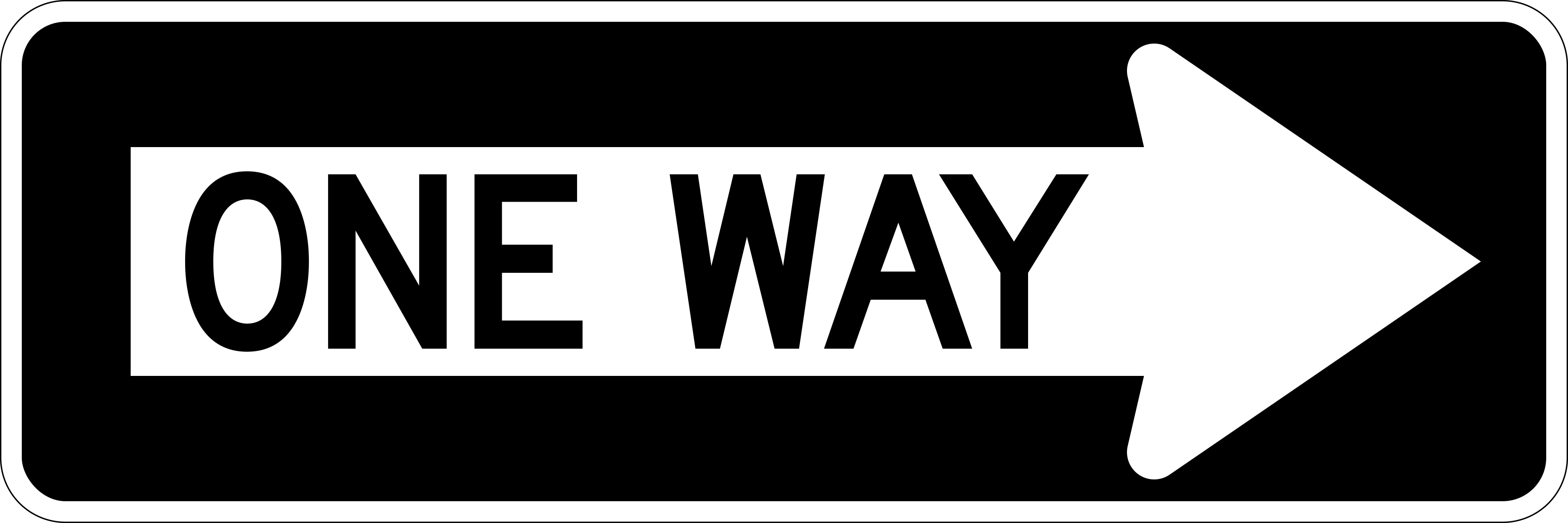
- Turn right but keep to the far right edge of the street
- Do not turn right, since that street only carries traffic to the left
- Turn right if no vehicles are coming toward you
- Turn right only after a full stop at the corner
Show answer
Do not turn right, since that street only carries traffic to the left. A One Way sign shows the single direction traffic may travel on that street. Traffic can only go the way the arrow points, so when the arrow points left, turning right would put you against every vehicle using that street. Keeping to the edge, stopping first, or seeing no traffic at the moment does not change the direction the street carries. Choose another route, or turn the way the arrow points if that takes you where you need to go. Maryland uses black signs like this one for One Way messages.
Study this in the handbook: Regulatory, warning and guide signs
Every question is written from the official Maryland Driver's Manual. Need paper? Printable MD practice test with answer key.
Last verified 2026-10-05. How we check every question · Study all 500 as flashcards
Frequently asked questions
How many questions are on this Maryland practice test?
This fixed set has 20 questions. It is test 22 of 25 from the 500 question Maryland bank. The real MD exam asks 25 questions and you need 22 correct.
What is the passing score for the real Maryland test?
88% or higher That figure comes from the official Maryland source cited on the DMV facts page.
How does this fixed test relate to the full Maryland bank?
Each numbered test is a fixed set of questions in a fixed order, so you can retake the same test later and compare. Every test mixes road signs and the other topics in about the same proportion as the full bank. Tests 1 to 25 together cover every question in the Maryland bank once. The full practice page mixes the whole bank at random.
Last verified 2026-10-05. See the Maryland DMV facts page for sourced state details.
Return to the full Maryland practice test · Study road signs