
Printable MD Permit Practice Test
25 questions in the real MD exam format, 88 percent (22 of 25) to pass. Answer key on the last page. Last verified 2026-09-05 against the official Maryland driver manual.
1. What following gap should you use behind a bus or delivery van that stops often?
- Four or five seconds, and possibly more if needed
- The same three seconds required in every condition
- One second because the vehicle is moving slowly
- One car length regardless of speed
2. Under Maryland's seat belt restriction for Provisional License holders under 18, who must be buckled up?
- Only the driver
- Only passengers in the front seat
- Only passengers under 16
- The driver and every passenger, with children in child safety seats
3. What is a safe speed choice when a road has pedestrians or animals nearby?
- Increase speed to pass the area quickly
- Reduce speed so you have more time to respond
- Maintain the posted limit regardless of visibility
- Match the fastest nearby vehicle
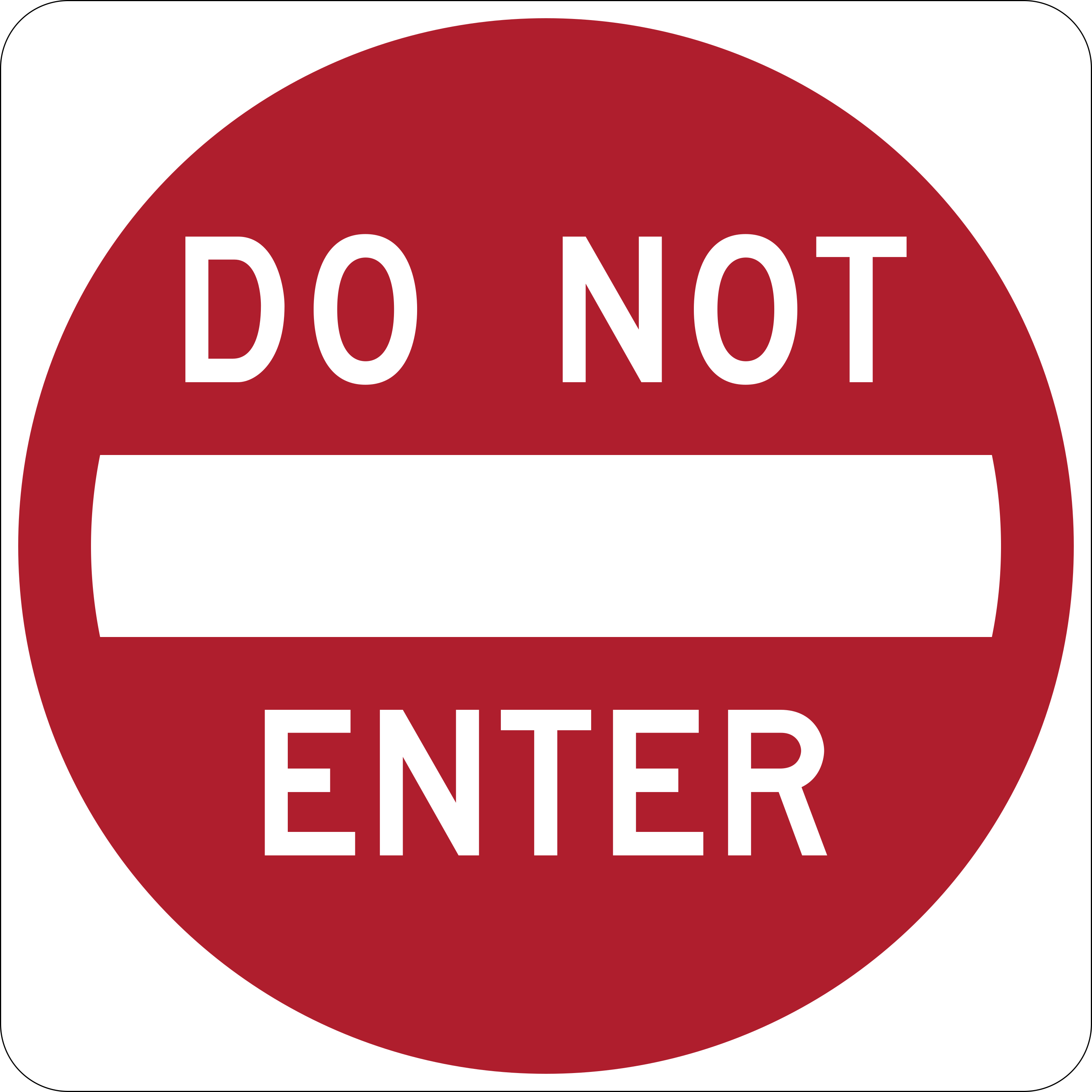
4. What does the pictured red sign communicate?
- The road is one-way in your direction
- Parking is permitted for five minutes
- A railroad crossing is ahead
- Do not enter
5. If a vehicle begins to hydroplane, which response is recommended?
- Accelerate sharply to force the tires through the water
- Apply the brakes firmly while turning toward the shoulder
- Take your foot off the gas and keep the vehicle straight
- Turn quickly from side to side to regain contact
6. What does the five-sided sign in the image warn you about?

- A railroad crossing ahead
- A recreational area entrance
- A school zone or school crossing
- A mandatory truck route
7. What vision does Maryland require to qualify for a driver's license?
- 20/20 in one eye
- Binocular vision, at least 20/40 in each eye, and a continuous field of vision of at least 140 degrees
- 20/70 in either eye with 90 degrees
- Any vision with corrective lenses
8. What does the round railroad warning sign tell a driver?

- A railroad crossing is ahead
- The vehicle must enter a roundabout
- A railroad crossing has just ended
- Trains have priority only at night
9. By Maryland law, what must a bicycle's brakes be able to do?
- Stop the bicycle within 50 feet at 20 mph
- Stop the bicycle within 3 feet at any speed
- Stop the bicycle within 15 feet at 10 mph on dry, level, clean pavement
- Stop the bicycle within 100 feet on wet pavement
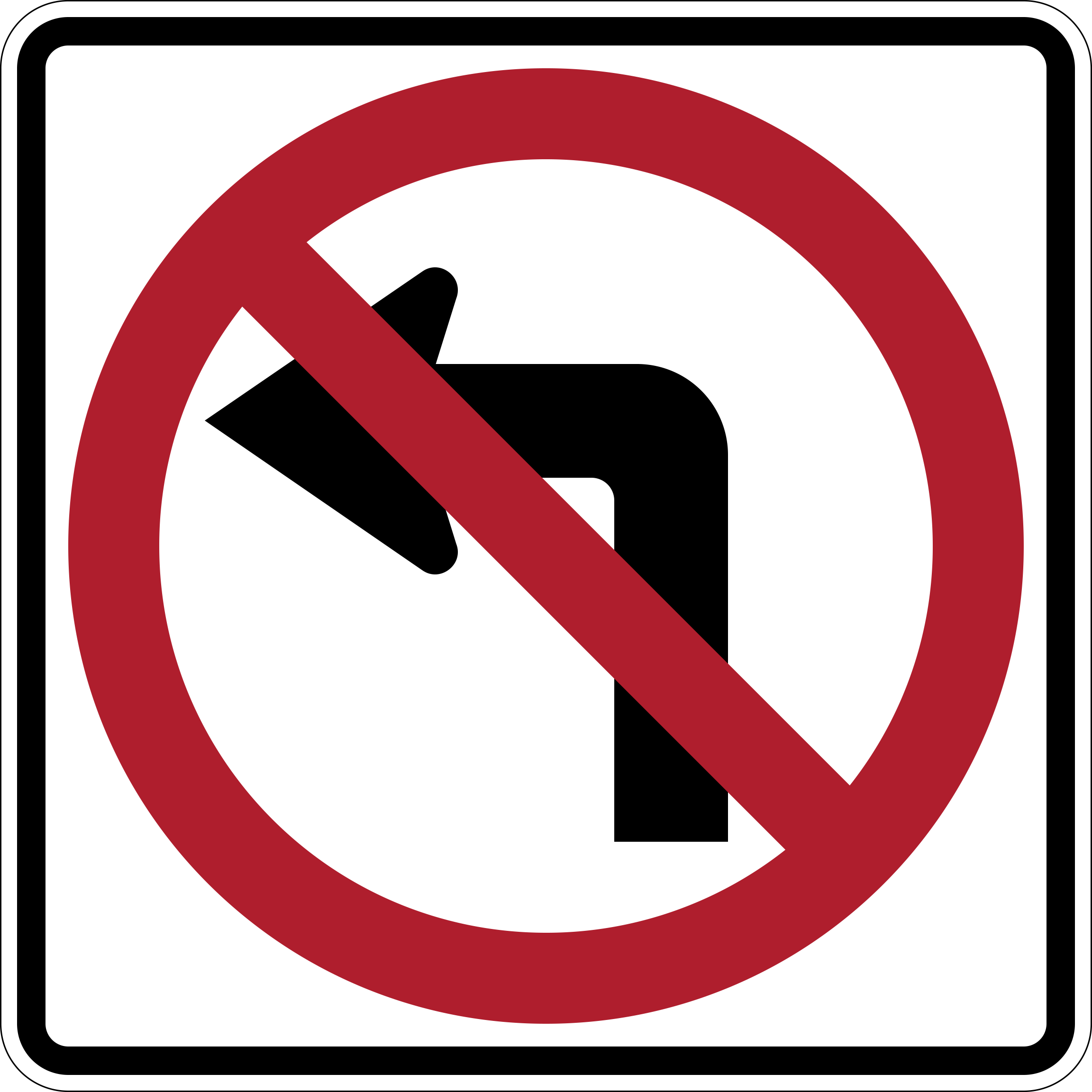
10. What do Maryland traffic signs use to communicate information?
- Only flashing lights
- Engine sounds and tire size
- Symbols and words
- Vehicle registration numbers
11. Your 11-year-old asks to ride in the front seat of your Maryland car on a short trip. What does the manual advise?
- The front is fine for short trips
- Ride in front with the seat pushed back
- Ride buckled up in a rear seat
- Ride in front with a lap belt only
12. Your signal is green and you are turning in Maryland while a person on foot crosses the street you are entering. What applies?
- The person must hurry because your signal is green
- You may turn closely in front of the person
- The person should wait on the curb until all turns finish
- You must give way to the person while turning
13. You are turning right into a Maryland driveway, and your path crosses a bike lane where a bicyclist is approaching from behind. What should you do?
- Let the rider pass, then cross the bike lane
- Stop in the bike lane until the rider stops
- Honk so the rider moves out of the bike lane
- Turn first, since the rider can slow down
14. Darkness, fog, or heavy rain cuts your view of the road in Maryland. What does that situation demand from you?
- The same casual attention used on a clear day
- More concentration and preparation than normal driving
- Faster reactions instead of advance preparation
- Reliance on other drivers to light your way
15. You approach a yield sign in Maryland and traffic is crossing ahead from both sides. How should you approach?
- Slow down and look to the left and the right
- Keep your speed and look straight ahead
- Stop fully in every case before reaching the sign itself
- Look only to the left for oncoming cars
16. You see the pictured warning sign on a two-way Maryland road. What does it tell you?

- The divided road ends ahead
- The road divides around a median ahead
- Two lanes merge into one ahead
- A detour begins at the next turn
17. Passing is barred in Maryland when the view ahead is blocked as a driver comes within how far of a bridge, elevated road, or tunnel?
- Within 50 feet of the bridge or tunnel entrance
- Within 100 feet of the structure
- Within 200 feet of the structure
- Within 500 feet of the structure
18. What do trapezoid-shaped signs point drivers to in Maryland?
- School zones and school crossings marked by five-sided signs
- Construction and maintenance work areas shown on orange warning signs
- Recreation and cultural interest areas and National Forest routes
- Services such as food, gas, lodging, and rest areas nearby
19. Even when the rules seem to give you priority at a crossing in Maryland, how should you treat that priority?
- Never assume it is automatic; judge each situation
- Assume everyone will notice you and honor it
- Enter without slowing whenever the rules favor you
- Use your horn to claim it before entering
20. You are nearing tracks in Maryland and a train is approaching. Why is extra caution needed there?
- Trains steer around vehicles that are on the tracks
- Trains cannot stop quickly, so drivers must use extra caution
- Trains always slow down before reaching a road crossing
- Crossing gates will push a stopped vehicle clear of the tracks
21. A solid yellow line runs along one edge of a Maryland one-way road or ramp. What does it mark?
- The right edge of the road
- The left edge of the road
- The spot where traffic must stop
- A lane where passing is allowed
22. A large truck is stopped at a Maryland intersection with space on its right. You want to move up along that side. Why is that unsafe?
- The truck driver can see you clearly there and will wait
- Trucks are not allowed to turn right from that position
- The truck may begin its turn and leave you caught between it and the curb
- Traffic signals do not apply to vehicles on a truck's right side
23. Your vehicle stops running on a Maryland interstate shoulder. Why is walking beside the road so risky?
- Shoulders are reserved for police only
- Traffic nearby travels at very high speeds
- Walking makes your vehicle harder to tow
- Flashers stop working once you exit
24. You have stopped at a red light in Maryland and plan a permitted right turn. A bicyclist is coming from your left along the cross street. What should you do?
- Turn now, because bicycles must yield to cars
- Let the bicyclist pass, then turn when it is clear
- Turn quickly before the bicyclist reaches you
- Sound your horn so the bicyclist slows down
25. You approach a crossing in Maryland where a person using a white cane is stepping off the curb slowly. How should you drive?
- Be especially alert and allow extra crossing time
- Proceed normally since signals control the crossing
- Honk gently to hurry the person along
- Pass behind the person as soon as space opens
Answer key
- 1. A
- 2. D
- 3. B
- 4. D
- 5. C
- 6. C
- 7. B
- 8. A
- 9. C
- 10. C
- 11. C
- 12. D
- 13. A
- 14. B
- 15. A
- 16. B
- 17. B
- 18. C
- 19. A
- 20. B
- 21. B
- 22. C
- 23. B
- 24. B
- 25. A