
Test 5 of 10 · 20 questions · Free 2026
MD Permit Practice Test 5
Jump to the test ↓A fixed 20 question set from the Maryland bank with answers and plain English explanations. The real MD exam is 25 questions, 88 percent to pass; take the full length version on the main practice page.
Question 1 of 20 · 0 right so far
All 20 questions in test 5
Every question below comes from the Maryland question bank on this page. Open a question to see the correct answer and the explanation. Nothing here is hidden behind a signup.
1. If a vehicle begins to hydroplane, which response is recommended?
- Accelerate sharply to force the tires through the water
- Apply the brakes firmly while turning toward the shoulder
- Take your foot off the gas and keep the vehicle straight
- Turn quickly from side to side to regain contact
Show answer
Take your foot off the gas and keep the vehicle straight. Hydroplaning occurs when the tires lose contact with the pavement on a sheet of water. Ease off the accelerator, avoid braking, keep the vehicle going straight, and slow until control returns. Firm braking or quick steering can make the loss of traction worse, and acceleration adds speed while the tires are already floating. Before wet weather, maintain the tires and reduce speed so hydroplaning is less likely. If it starts, the calm response is to remove power and wait for grip to return.
Study this in the handbook: Bad weather, skids and hydroplaning
2. Which maneuvers are required on the Maryland driving test, and in what size spaces?
- Pull in parking, back in parking and a three point turn, in a 10 by 20 foot space with the turn in a 16 by 20 foot space
- Only a three point turn
- Parallel parking in a 25 foot space
- Only parallel parking
Show answer
Pull in parking, back in parking and a three point turn, in a 10 by 20 foot space with the turn in a 16 by 20 foot space. Parallel parking is no longer required on the Maryland driving test, though it is taught in the driver education course. You must successfully perform pull in parking, back in parking and a three point turn. The parking is done in a 10 by 20 foot space and the turn in a 16 by 20 foot space. These moves show how well you judge space, use mirrors and turn signals, steer, brake, and control the vehicle.
Study this in the handbook: Supervising drivers, insurance, seat belts and child seats
3. What does a steady yellow traffic signal indicate?
- Stop if you can do so safely, or continue carefully if too close to stop
- Accelerate every time to beat the red signal
- Stop only after entering the intersection
- Treat the signal as a green light until it turns red
Show answer
Stop if you can do so safely, or continue carefully if too close to stop. A steady yellow means the signal is changing from green to red. It gives time to stop safely and lets vehicles already in the intersection clear before red. If the vehicle is too close to stop safely, the driver should carefully continue through. The acceleration choice encourages rushing into a changing intersection. The key cue is distance: stop when safe, but do not create a dangerous sudden stop when already too close.
Study this in the handbook: Traffic signals, arrows and lane use lights
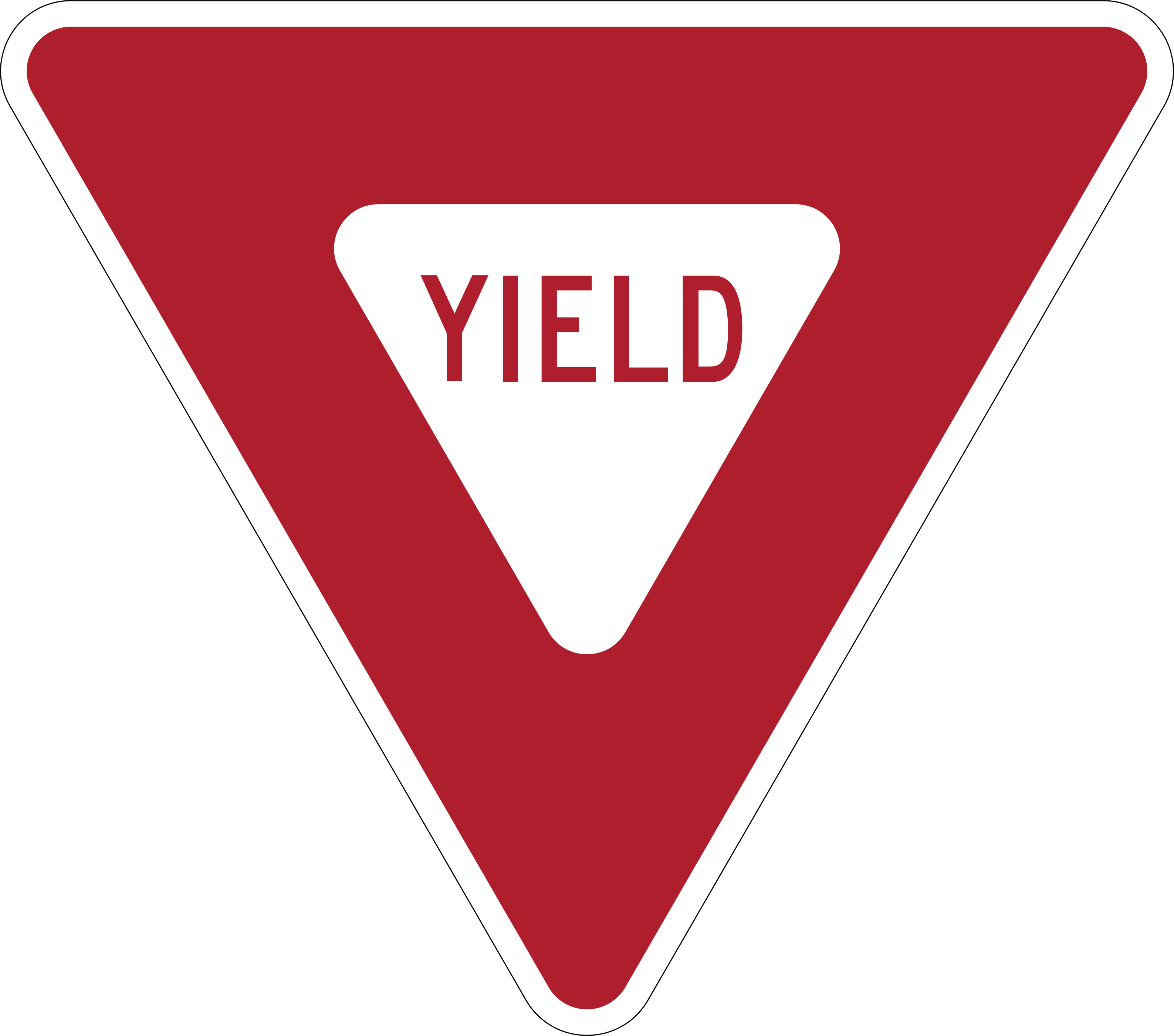
4. At a Maryland yield sign, which action is required?
- Speed up to enter before other traffic
- Stop for exactly five seconds every time
- Slow down, look both ways, and yield before proceeding safely
- Ignore pedestrians if vehicles are absent
Show answer
Slow down, look both ways, and yield before proceeding safely. A yield sign calls for a controlled approach rather than a mandatory stop of a fixed duration. The driver slows, checks left and right, and gives way to pedestrians, bicycles, and vehicles. The five-second choice invents a timing rule, while the option about ignoring pedestrians omits people who may have priority. Use the sign as a cue to assess the whole intersection, then continue only after the traffic and crossing path are safe. Stopping may still be necessary when the gap is not adequate.
Study this in the handbook: Regulatory, warning and guide signs
5. What is a common effect of driving over Maryland's speed limit?
- It guarantees a shorter stopping distance
- It increases the likelihood of decisions that put people at risk
- It makes hazards easier to recognize
- It eliminates the need to adjust speed for conditions
Show answer
It increases the likelihood of decisions that put people at risk. The manual identifies speeding as a common cause of crashes and warns that excessive speed leads to decisions that put people at risk. More speed does not guarantee a shorter stop or better hazard recognition. It can reduce the time available to notice a problem and respond, while increasing the consequences of a collision. Drivers must still account for weather, traffic, visibility, and roadway design. A practical cue is to treat extra speed as lost reaction time, not saved travel time, especially when a hazard may appear with little warning.
Study this in the handbook: Aggressive, distracted and drowsy driving
6. What is the Maryland rule for a flashing red traffic signal?
- Slow down but keep moving without yielding
- Stop, yield to traffic and pedestrians, then proceed when clear
- Treat it as a steady green signal
- Stop only if another vehicle is visible
Show answer
Stop, yield to traffic and pedestrians, then proceed when clear. A flashing red signal has the stopping and yielding meaning of a stop-controlled approach. The driver stops at the line, crosswalk, or before the intersection, then yields to other traffic and pedestrians. Moving through without yielding is not permitted merely because the signal is flashing. Waiting for a visible vehicle is too narrow because a pedestrian may be crossing or traffic may be approaching from another direction. After stopping, proceed only when the route is clear and safe.
Study this in the handbook: Traffic signals, arrows and lane use lights
7. When following another vehicle at night, when must Maryland drivers use low beams?
- Never, because the 500-foot rule covers every situation
- Only when the vehicle ahead taps its brakes
- At 500 feet after passing the vehicle
- When the vehicle ahead is 300 feet or less in front
Show answer
When the vehicle ahead is 300 feet or less in front. Maryland requires low beams when following a vehicle that is 300 feet or less ahead. This protects the driver in front from glare through mirrors. The 500-foot distance belongs to approaching traffic, not following traffic, and a brake tap is not the required signal. Classify the traffic relationship first, then apply the matching distance. The shorter following distance is the detail that separates these two headlight rules.
Study this in the handbook: Headlights, night driving and fog
8. What is the maximum penalty for a first offense of driving under the influence of alcohol in Maryland while transporting a minor?
- A written warning for a first offense
- Up to 2 years in prison, a $2,000 fine, or both
- Up to 2 months in prison, a $500 fine, or both
- Up to 1 year in prison, a $1,200 fine, or both
Show answer
Up to 2 years in prison, a $2,000 fine, or both. Maryland Transportation Article section 21-902 makes driving under the influence of alcohol while transporting a minor its own offense. For a first offense, the penalty is up to 2 years in prison, a fine up to $2,000, or both. Without a child in the vehicle, a first offense of driving under the influence carries up to 1 year and $1,200, so a child passenger raises both limits. The 2 month and $500 figures belong to the lesser impaired driving offense, and no warning is written into the law. If anyone in the vehicle is a child, arrange a sober driver before the first drink.
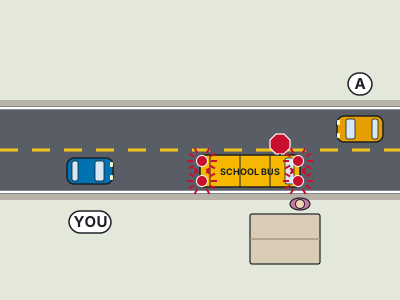
9. A school bus is stopped with flashing red lights. How far away must a following driver stop?
- At least 50 feet from the back of the bus
- At least 5 feet from the back of the bus
- At least 10 feet from the back of the bus
- At least 20 feet from the back of the bus
Show answer
At least 20 feet from the back of the bus. A driver approaching the rear of a stopped school bus with flashing red lights must stop at least 20 feet from the bus. The stopping distance is measured from the back when you are behind it, not from the nearest child or the front bumper. Stay stopped until the bus moves or turns off its flashing red lights. The 20-foot cue applies to both directions, with the reference point changing to the front for oncoming traffic.
Study this in the handbook: Pedestrians, emergency vehicles and school buses
10. An adult Maryland Provisional License holder reaches a third moving violation. What can happen?
- A second driver improvement program only
- A 30-day suspension followed by a 90-day restriction
- Up to a 180-day suspension or revocation of the license
- A $110 fine and one point only
Show answer
Up to a 180-day suspension or revocation of the license. For provisional drivers 18 or older, a third or later moving violation conviction or probation before judgment can bring up to a 180-day suspension or revocation of the license. A repeat improvement program alone is too light, because the program is the first offense penalty. A 30-day suspension followed by a 90-day restriction is the second offense penalty for drivers under 18. The $110 fine with one point is the Move Over Law penalty, not a provisional license sanction.
Study this in the handbook: Provisional license restrictions, implied consent and penalties
11. What penalty does Maryland list for littering on state roads?
- A $25 fine
- Community service only
- A warning for a first offense
- A fine up to $1,500 or 30 days in prison
Show answer
A fine up to $1,500 or 30 days in prison. The manual's Did You Know note says highway workers remove over two million pounds of litter from Maryland state roads each year, and fines for littering can cost up to $1,500 or 30 days in prison. A small $25 fine, community service only, or a warning for a first offense is not the penalty the manual lists. Keep a bag in the car for trash and secure any load so nothing blows out of the vehicle.
Study this in the handbook: The vision screening, knowledge test and skills test
12. A Maryland Move Over Law violation causes no crash, death, or serious injury. What penalty does the manual list?
- $750 and three points
- $150 and three points
- $110 and one point
- $110 and three points
Show answer
$110 and one point. The basic Maryland Move Over Law penalty the manual lists is a $110 fine and one point on the driver's license. The higher $150 fine with three points applies when the violation causes a crash, so it does not fit a violation that caused no crash. A combination of $110 with three points is not a listed penalty. Treat any violation seriously: points are tracked by the MVA and can build toward suspension or revocation, and the whole purpose of the law is to protect people working beside a stopped vehicle with flashing lights.
Study this in the handbook: Crashes, traffic stops and the Move Over Law
13. What can happen when a driver under 21 is stopped after drinking alcohol?
- The driver may continue driving if a passenger is sober
- There is no license consequence until BAC reaches 0.08
- The driver receives only a warning for a first stop
- The driver's license may be suspended or revoked
Show answer
The driver's license may be suspended or revoked. For a person younger than 21, drinking any alcohol is against the law. If law enforcement stops that driver after drinking, the manual says the license will be suspended or revoked, and the driver may also face an alcohol restriction violation. The 0.08 figure is not a safe harbor for someone under 21. The age cue is decisive: the under-21 rule begins with any alcohol, not a particular BAC number.
Study this in the handbook: Alcohol, drugs and driving
14. A funeral procession has its headlights and hazard lights on. What must other drivers do?
- Yield until the procession has passed, unless they can safely proceed without crossing it
- Enter the intersection first if their signal is green
- Yield only to the lead vehicle
- Pass the procession on the shoulder when traffic is slow
Show answer
Yield until the procession has passed, unless they can safely proceed without crossing it. Other drivers must yield to vehicles in a funeral procession, even when their own signal is green. The duty continues until the procession passes, unless a driver can proceed safely without crossing its path. A green signal therefore does not give permission to cut through the group. Watch for the procession’s lights, remain patient, and make sure your path will not intersect the moving line of vehicles.
Study this in the handbook: Railroads, work zones, roundabouts, highways and processions
15. A Maryland minor has no parent or legal guardian. Who else may co-sign the license application?
- A spouse who is 18 or older, or a responsible adult such as an employer
- Any licensed friend over 16
- The driving school instructor only
- No one, so the minor must wait until 18
Show answer
A spouse who is 18 or older, or a responsible adult such as an employer. Maryland requires a co-signer for applicants under 18. If the minor is married and the husband or wife is 18 or older, the spouse can co-sign with proof of marriage. With no parent, guardian or spouse, a responsible adult may co-sign, and the manual names an adult employer as an example, with proof such as a death certificate or emancipation papers. A friend over 16 is not an adult. The manual does not single out instructors, and the minor does not have to wait until 18.
Study this in the handbook: From provisional license to full driver's license
16. If fog becomes too thick to drive safely in Maryland, what should the driver do?
- Speed up to leave the fog before other traffic arrives
- Stop in the travel lane with high beams on
- Pull completely off the road at a safe location and turn on emergency flashers
- Follow the center line using high beams
Show answer
Pull completely off the road at a safe location and turn on emergency flashers. When fog prevents safe travel, the manual directs the driver to leave the traffic path completely and use emergency flashers to warn others. Stopping in a lane exposes the vehicle to a rear-end collision, while speeding reduces the time available to react to hidden traffic. High beams can worsen glare in fog and do not solve the visibility problem. Reduce speed before visibility collapses, use low beams, and choose a safe place fully off the road rather than stopping where moving vehicles expect a lane to remain open.
Study this in the handbook: Headlights, night driving and fog
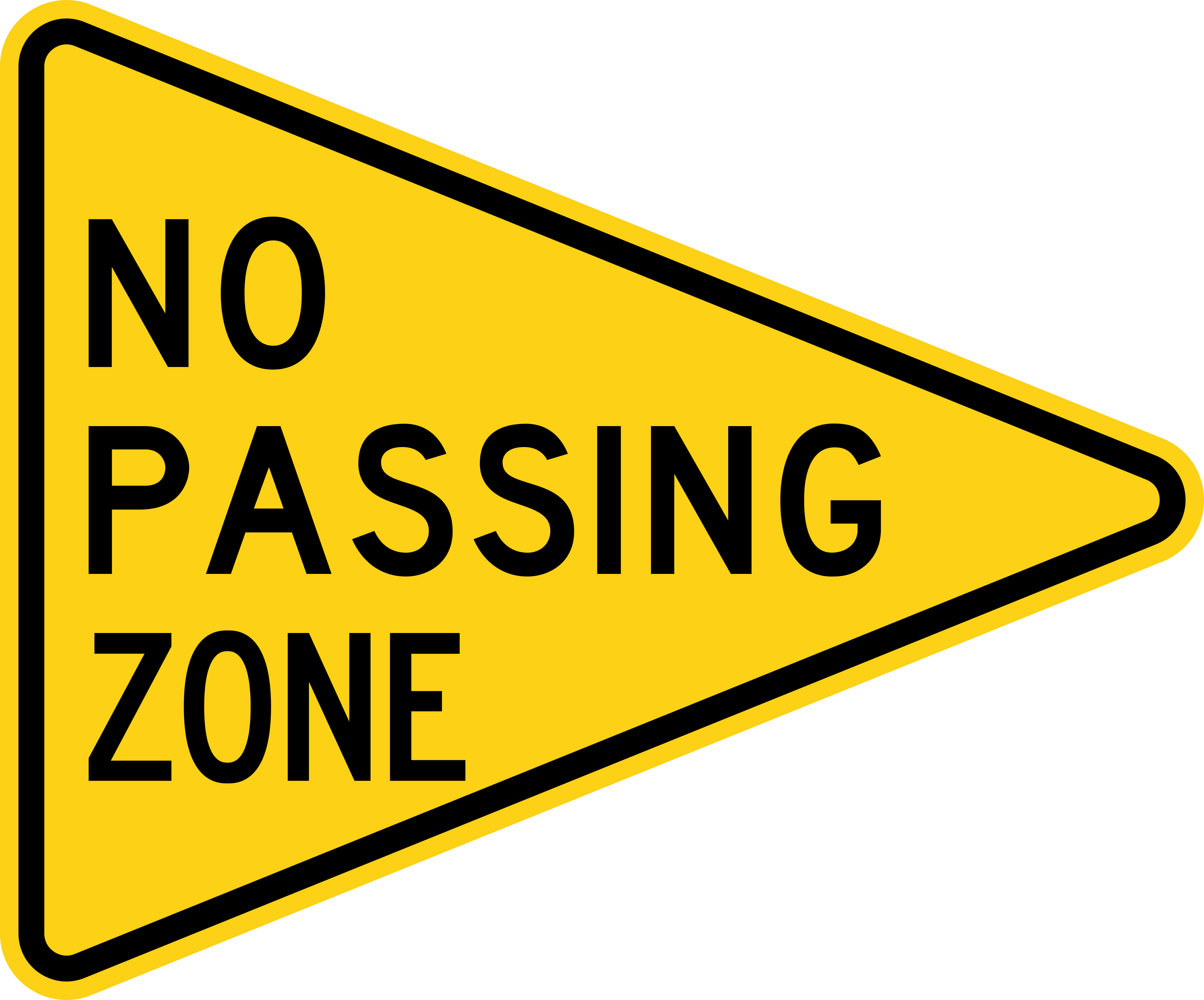
17. In Maryland, what does a pennant-shaped traffic sign mark?
- The end of a school crossing
- The beginning of a no-passing zone
- A recreational parking area
- A lane reserved for bicycles
Show answer
The beginning of a no-passing zone. The Maryland manual lists the pennant as the No Passing sign: it marks the start of a no passing zone, and from that point you must not pass other vehicles, even if the road appears open. It does not signal that a school area has ended, which is the job of the pentagon school signs, it does not identify recreation parking, and it does not designate a bicycle lane. When you see the pennant, stay behind the vehicle ahead and wait until passing becomes legal and safe again.
Study this in the handbook: Sign colors and shapes
18. When a KEEP RIGHT instruction is posted, where should you drive unless passing?
- Across the median to avoid traffic
- In the left-hand lane at all times
- On the shoulder beside the obstruction
- In the right-hand lane or lanes
Show answer
In the right-hand lane or lanes. Maryland directs drivers in areas with stay-right signs to use the right-hand lane or lanes unless they are passing a vehicle. The instruction does not mean driving on the shoulder, crossing a median, or remaining in the left lane. A keep-right message often works with an obstruction or divided roadway, so positioning early helps preserve a clear path and reduces last-second lane changes. After passing, return to the right when safe. Read the sign as a lane-position instruction, not as permission to leave the roadway.
Study this in the handbook: Passing rules and parking
19. What does orange indicate on a traffic sign?
- Construction or maintenance work
- A hospital or other driver service
- A destination, distance, or exit
- A recreation or cultural interest area
Show answer
Construction or maintenance work. Orange is reserved for construction and maintenance work area warnings. When an orange sign appears, the driver should expect changed conditions, temporary controls, workers, or lane changes and should pay close attention. Blue signs identify services, green signs guide drivers to destinations and exits, and brown signs point toward recreation or cultural interests. Color is therefore an early classification tool before the words or symbols are read. The cue is orange means work activity, so reduce distractions and prepare for an altered roadway.
Study this in the handbook: Sign colors and shapes
20. What should a driver do near a slow-moving horse-drawn or farm vehicle?
- Pass immediately because the vehicle is limited to 25 miles per hour
- Change speed or position if needed and pass only when safe
- Use the horn continuously to make it move faster
- Follow closely so other traffic cannot enter the gap
Show answer
Change speed or position if needed and pass only when safe. Horse-drawn vehicles and farm vehicles are among Maryland's slow-moving vehicles. Drivers should stay aware, change speed or position if necessary, and pass only when it is safe. The sign on some such vehicles means they travel 25 miles per hour or less, but that does not make an immediate pass lawful or prudent. The cue is patience: identify the slower road user early, create space, and wait for a safe passing opportunity.
Study this in the handbook: Railroads, work zones, roundabouts, highways and processions
QualitySpace is expanding to Maryland
We are a California-based independent insurance brokerage working on licensing in more states. We cannot help with Maryland insurance yet. Leave your email and we will let you know when we can.
Every question is written from the official Maryland Driver's Manual. Need paper? Printable MD practice test with answer key.
Last verified 2026-10-05. How we check every question · Study all 200 as flashcards
Frequently asked questions
How many questions are on this Maryland practice test?
This fixed set has 20 questions. It is test 5 of 10 from the 200 question Maryland bank. The real MD exam asks 25 questions and you need 22 correct.
What is the passing score for the real Maryland test?
88% or higher That figure comes from the official Maryland source cited on the DMV facts page.
How does this fixed test relate to the full Maryland bank?
Each numbered test is a fixed set of questions in a fixed order, so you can retake the same test later and compare. Every test mixes road signs and the other topics in about the same proportion as the full bank. Tests 1 to 10 together cover every question in the Maryland bank once. The full practice page mixes the whole bank at random.
Last verified 2026-10-05. See the Maryland DMV facts page for sourced state details.
Return to the full Maryland practice test · Study road signs