
Test 1 of 10 · 20 questions · Free 2026
MD Permit Practice Test 1
Jump to the test ↓A fixed 20 question set from the Maryland bank with answers and plain English explanations. The real MD exam is 25 questions, 88 percent to pass; take the full length version on the main practice page.
Question 1 of 20 · 0 right so far
All 20 questions in test 1
Every question below comes from the Maryland question bank on this page. Open a question to see the correct answer and the explanation. Nothing here is hidden behind a signup.
1. What following gap should you use behind a bus or delivery van that stops often?
- Four or five seconds, and possibly more if needed
- The same three seconds required in every condition
- One second because the vehicle is moving slowly
- One car length regardless of speed
Show answer
Four or five seconds, and possibly more if needed. Vehicles that stop frequently require more room because their speed and position can change repeatedly. The manual advises four or five seconds, with still more space when conditions call for it. The ordinary three to four second recommendation is a baseline for ideal conditions, not an upper limit for a delivery vehicle. One second leaves little time for a sudden stop, and a car length is not a reliable measure because its meaning changes as speed changes. Watch the vehicle ahead and expand the gap before it brakes again.
Study this in the handbook: Following distance, stopping distance and turns
2. You are in an intersection when an emergency vehicle approaches using its siren and flashing lights. What should you do?
- Turn around and drive against traffic to clear a path
- Stop where you are in the intersection immediately
- Follow the emergency vehicle through the intersection
- Move toward the edge, stay out of intersections, and remain stopped until it passes
Show answer
Move toward the edge, stay out of intersections, and remain stopped until it passes. Emergency vehicles using their signals have priority, but a driver should not create a blockage by stopping in the intersection. Move as close as possible to the road edge, keep out of the intersection, and remain stopped until the emergency vehicle has passed. Stopping in the middle would obstruct its route. Following it could place you in danger, and driving against traffic introduces a separate collision risk. If you are already committed to the intersection, clear it safely first, then take the required position at the edge and wait.
Study this in the handbook: Pedestrians, emergency vehicles and school buses
3. Which license is issued to a new driver who has never held a driver license?
- A Provisional Driver’s License
- A commercial driver license
- A temporary learner card
- A motorcycle instruction card
Show answer
A Provisional Driver’s License. Maryland describes the Provisional Driver’s License as the stage issued to new drivers who have never held a driver license. It permits unsupervised driving but includes restrictions, such as limits on passengers and nighttime driving. A commercial license is a different credential for qualified commercial operation. A learner card is held before the provisional stage and requires supervision. The motorcycle card does not describe this graduated licensing stage. Keep the sequence in mind: the learner permit comes first, the provisional license follows the required practice and testing, and the regular driver license is the final stage.
Study this in the handbook: From provisional license to full driver's license
4. A Maryland road has a posted maximum speed of 50 miles per hour. May a moped or scooter be ridden there?
- No, unless the road also has a shoulder
- Yes, because the posted maximum is within the permitted limit
- No, because mopeds are limited to roads under 50 miles per hour
- Yes, but only during daylight
Show answer
Yes, because the posted maximum is within the permitted limit. Maryland permits mopeds and scooters on roads with a posted maximum speed limit of 50 miles per hour or less. That includes a road posted at exactly 50 mph, not only roads below 50 mph. The presence of a shoulder does not determine eligibility, and the rule is not limited to daylight hours. The practical check is the number on the speed limit sign: 50 mph qualifies, while any posted maximum above 50 mph does not. Riders must still follow traffic laws and use care because these vehicles are difficult to see.
Study this in the handbook: Trucks, motorcycles, bicycles and mopeds
5. What does a flashing yellow X over a reversible lane allow?
- Use of the lane for a left turn
- Travel in the lane only to pass a slower vehicle
- Travel in the lane in either direction without checking traffic
- Stopping in the lane until a green arrow appears
Show answer
Use of the lane for a left turn. A flashing yellow X, like two-way left-turn arrows, identifies a lane that may be used for a left turn. Traffic from the opposite direction may also be turning into that shared space, so the driver must use care. The passing choice invents a permission the signal does not provide. A reversible lane is not automatically open in both directions, and stopping for a green arrow confuses this indication with a different lane signal. The practical cue is to treat the lane as a shared left-turn area and watch for opposing traffic.
Study this in the handbook: Traffic signals, arrows and lane use lights
6. What share of fatal crashes does the Maryland manual attribute to distracted driving?
- One tenth
- Nearly all
- One third
- About 2 percent
Show answer
One third. One third of fatal crashes are caused by distracted driving, and cell phone use is one of the leading causes. Other deadly distractions include eating, applying makeup, dealing with children and adjusting controls. Maryland bans hand held phone use, including texting, while driving. Make a plan before you drive so nothing competes for your attention on the road, and pull over if something must be handled.
Study this in the handbook: Aggressive, distracted and drowsy driving
7. What information does a yellow traffic sign generally give a driver?
- A final legal ruling that replaces traffic signals
- A required service stop for fuel or food
- A destination distance and route direction
- A general warning about conditions or hazards ahead
Show answer
A general warning about conditions or hazards ahead. Yellow is Maryland's general warning color. It tells the driver to anticipate a condition or hazard ahead and be ready to adjust speed, lane position, or attention. Blue signs point to services, green signs provide destinations and directions, and regulatory instructions use other sign conventions. A yellow sign does not cancel a traffic signal or require a fuel stop. When yellow appears, scan farther ahead than usual and prepare for the roadway feature shown by the symbol or words.
Study this in the handbook: Sign colors and shapes
8. Under Maryland's implied consent law, what happens if a police officer submits a certified statement that you refused a test?
- Nothing, because the test is voluntary
- The MVA will suspend your license
- You receive only a warning on a first refusal
- Your license is canceled for life
Show answer
The MVA will suspend your license. Driving or trying to drive on a road or on private property used by the public counts as agreement to take a drug or alcohol test when an officer asks. If the officer submits a certified statement that you refused, the MVA will suspend your license. The test is therefore not voluntary in the sense of being free of consequences, and the manual gives no first-refusal warning. Cancellation is a different and harsher action that the manual ties to fraud or false application information.
9. A Maryland Provisional License holder age 19 is convicted of a second moving violation. What penalty follows?
- A 180-day suspension and a 180-day restriction
- A 30-day suspension of the license
- Revocation and retesting
- Only a driver improvement program
Show answer
A 30-day suspension of the license. Maryland has separate penalty ladders for provisional drivers under 18 and those 18 or older. For an adult provisional driver, the first offense requires a driver improvement program and a second offense brings a 30-day suspension. The ladder for adults is shorter than the one for minors. A 180-day suspension with a 180-day restriction is the third offense penalty for minors. Revocation with retesting is for a minor's fourth offense, and the improvement program alone is the first offense penalty.
Study this in the handbook: Provisional license restrictions, implied consent and penalties
10. For Maryland's required night practice hours, what time period counts as night?
- From sunset to sunrise only
- From 9:00 p.m. to 5:00 a.m.
- From 30 minutes before sunset to 30 minutes after sunrise
- From 12:00 midnight to 5:00 a.m.
Show answer
From 30 minutes before sunset to 30 minutes after sunrise. Maryland defines the night practice window by the sun, not by the clock. Practice counts toward the night requirement when it happens in the period that starts 30 minutes before sunset and ends 30 minutes after sunrise. Plain sunset to sunrise leaves out the half hours on each side. A fixed 9:00 p.m. start is not used. Midnight to 5:00 a.m. is the Provisional License night restriction, a separate rule about when a new driver may drive unsupervised.
Study this in the handbook: The learner's instructional permit and practice hours
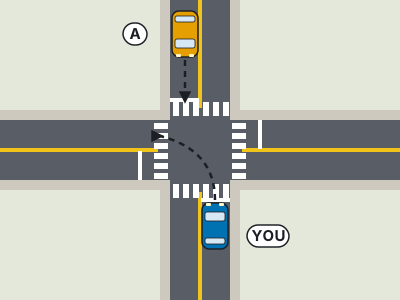
11. While making a left turn, which traffic has priority over you?
- No traffic, once your front wheels enter the intersection
- Only vehicles behind you
- Only vehicles turning right from the cross street
- Drivers in the opposing traffic lane
Show answer
Drivers in the opposing traffic lane. A left-turning driver must yield to traffic coming from the opposite direction. Entering the intersection does not erase that duty, and the driver behind you does not determine who proceeds. Wait for the opposing lane to clear, continue to watch for pedestrians and bicyclists, and complete the turn only when the movement is safe. The key cue is the conflict between your left turn and oncoming travel.
Study this in the handbook: Defensive driving and who goes first
12. What does a single solid white line separating same-direction lanes indicate?
- Passing is allowed only by crossing into opposing traffic
- Traffic on the other side travels toward you
- A lane change is required immediately
- Lane changing is discouraged
Show answer
Lane changing is discouraged. A single solid white line separates lanes moving in the same direction and discourages changing lanes. It is guidance to remain in the lane unless a safe, lawful maneuver requires otherwise. Yellow center-line rules apply to opposing traffic, so the oncoming-traffic choice describes the wrong marking. The line does not command an immediate lane change, and it does not authorize crossing into an opposing lane. The cue is white means same direction, while solid means treat the lane boundary as a reason to stay put.
Study this in the handbook: Lines and pavement markings
13. What must other vehicles do when a funeral procession is crossing their path?
- Yield until the procession has passed
- Cut between vehicles if the signal is green
- Honk so the procession stops
- Pass through the procession before its last vehicle arrives
Show answer
Yield until the procession has passed. Other vehicles must yield the right-of-way to a funeral procession even when they have a green signal, continuing to yield until all vehicles have passed unless they can proceed without crossing the procession's path. Cutting into the line or using a horn creates a conflict with a protected group. The cue is to identify the procession as one moving unit, slow down, and wait until the route no longer intersects it.
Study this in the handbook: Railroads, work zones, roundabouts, highways and processions
14. How long must a Maryland provisional driver stay violation free before the license converts to a full driver's license?
- 6 months
- 30 days
- 18 months without a moving violation conviction or probation before judgment
- 5 years
Show answer
18 months without a moving violation conviction or probation before judgment. To convert a provisional license to a full driver's license, you must have held it for at least 18 months and not have been convicted of any moving violations, or granted probation before judgment for any, within the past 18 months. When the requirements are met the MVA switches the license automatically and mails a card that you must carry with the provisional license.
Study this in the handbook: From provisional license to full driver's license
15. Under Maryland's Move Over Law, which stopped vehicles are covered when their lights are flashing?
- Only police cars and ambulances
- Only school buses loading passengers
- Only tow trucks on interstate highways
- Any vehicle stopped, standing, or parked on the road
Show answer
Any vehicle stopped, standing, or parked on the road. Maryland's rule applies broadly to vehicles that are stopped, standing, or parked on a road while their lights are flashing. It is not restricted to police, ambulances, tow trucks, interstate locations, or school bus loading zones. When approaching one, move to a lane that is not immediately adjacent if that is safe. If moving over cannot be done safely, slow down and be prepared to stop. The key recognition cue is the combination of a roadside vehicle and flashing lights, regardless of the vehicle's ordinary purpose.
Study this in the handbook: Crashes, traffic stops and the Move Over Law
16. How old must you be for a Maryland Type 2 Learner's Instructional Permit, and how long does it last?
- At least 15, lasting one year
- At least 18, lasting 90 days
- At least 16 years and 6 months, and it lasts up to 180 days
- At least 16, lasting two years
Show answer
At least 16 years and 6 months, and it lasts up to 180 days. The Type 2 Learner's Instructional Permit is for a driver who already has a driver's license and wants a different class of license. You must be at least 16 years and 6 months old, and the permit lasts for up to 180 days. Once you have held it for at least 14 days, you can take the driving test for the full license. The two year length belongs to the Type 1 permit for people who have never had a noncommercial license.
Study this in the handbook: The learner's instructional permit and practice hours
17. What should a driver do when a road condition makes the posted speed unsafe?
- Maintain the posted limit regardless of conditions
- Reduce speed below the posted limit
- Increase speed to leave the hazard faster
- Drive faster than the limit if other traffic does
Show answer
Reduce speed below the posted limit. The posted limit assumes ideal conditions, so it does not guarantee that the same speed is safe in every situation. Maryland’s manual directs drivers to recognize adverse conditions and reduce speed when needed. Curves, hills, slippery roads, pedestrians, heavy traffic, and railroad crossings are examples that may call for extra caution. Read the roadway ahead, choose a speed that leaves time to react, and never use surrounding traffic as permission to exceed the limit.
Study this in the handbook: Defensive driving and who goes first
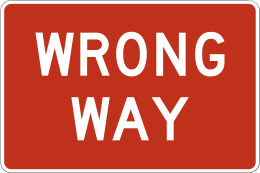
18. What kind of information can the main background color of a traffic sign indicate?
- The driver’s license class required
- The type of information on the sign
- The vehicle’s fuel type
- The road’s pavement thickness
Show answer
The type of information on the sign. Maryland explains that the main background color of a traffic sign can quickly tell you what kind of information it has. Red communicates stop, yield, do not enter, or wrong way. Yellow gives a general warning, orange identifies construction and maintenance work areas, and green provides destinations, distances, and directions. The sign color is not a license or vehicle classification. Build the habit of reading color before the wording and symbol, because that first cue helps you anticipate whether the sign regulates, warns, guides, or identifies a service.
Study this in the handbook: Sign colors and shapes
19. What does the Maryland manual say about U-turns?
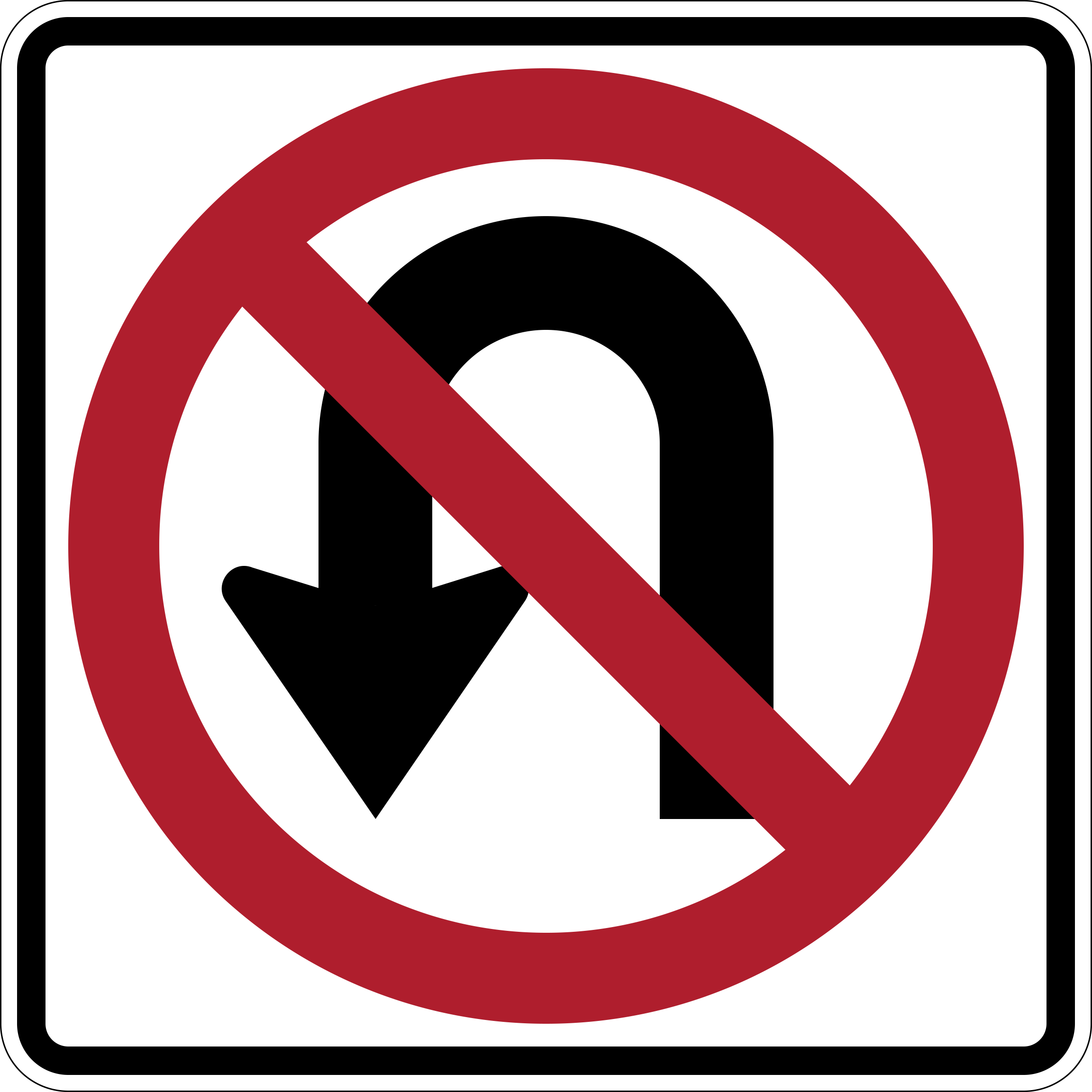
- They can be extremely dangerous and are not legal everywhere
- They are always required at a dead end
- They are legal at every intersection
- They may be made without checking traffic
Show answer
They can be extremely dangerous and are not legal everywhere. Maryland warns that U-turns can be extremely dangerous and are not legal everywhere. The manual tells a driver who must make one to first check whether U-turns are allowed, then signal, stop, and yield before completing the maneuver. That means a driver cannot assume every intersection permits a reversal or make the turn without checking. The remaining choices treat a U-turn as automatic or universally legal. Look for the legal opening, confirm visibility, and yield to traffic before changing direction.
Study this in the handbook: Following distance, stopping distance and turns
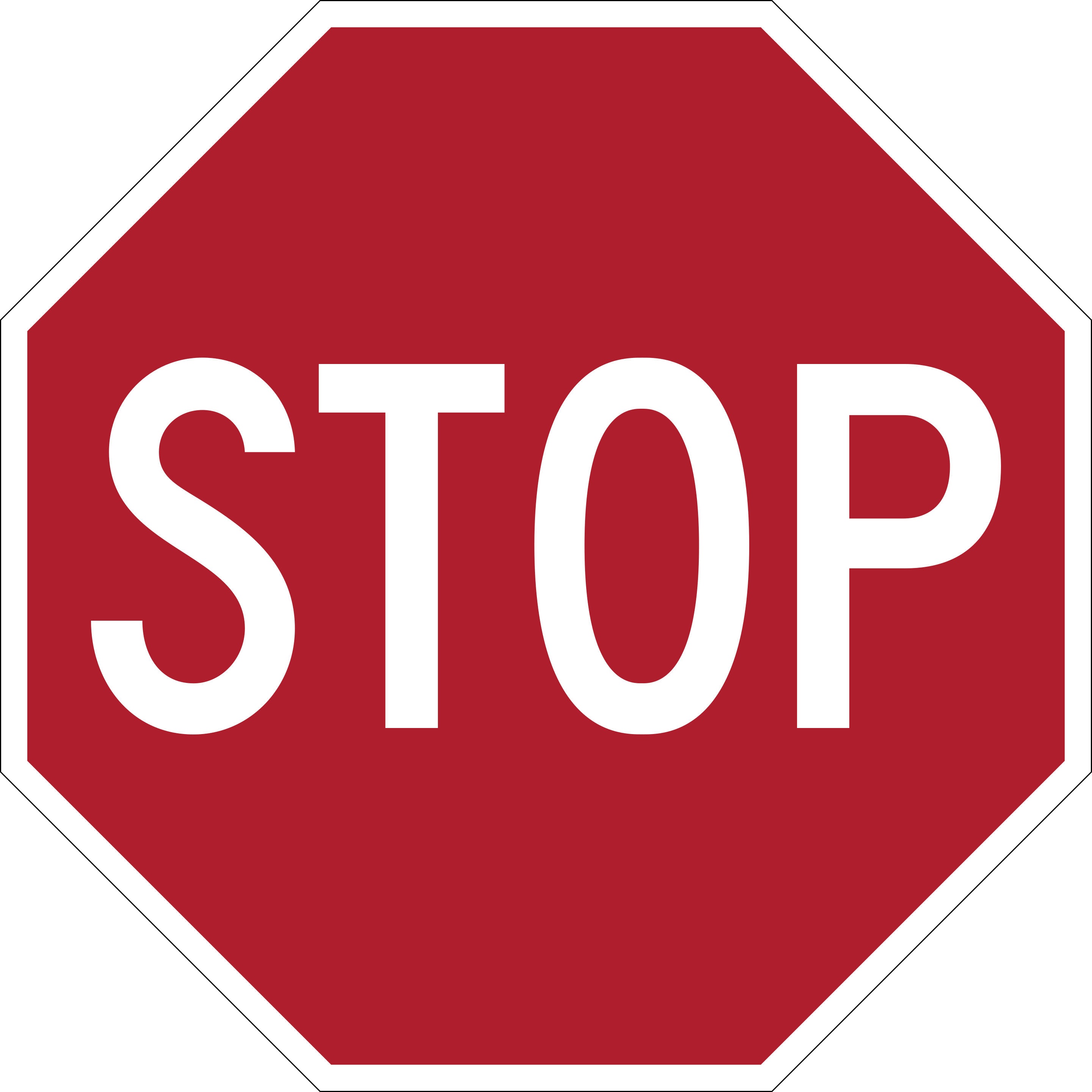
20. What does an octagonal traffic sign mean?
- No passing
- Yield
- Stop
- Railroad crossing ahead
Show answer
Stop. Maryland states that the octagonal, or eight-sided, shape always means stop. The driver must make a complete stop, then obey the stop sign’s location rules and yield before entering when necessary. A triangle means yield, a pennant marks a no-passing zone, and a round sign warns of a railroad crossing. Shape recognition matters when a sign is partly obscured or encountered quickly. Count the eight sides, prepare for a full stop, and do not treat the sign as a request to slow without stopping.
Study this in the handbook: Sign colors and shapes
QualitySpace is expanding to Maryland
We are a California-based independent insurance brokerage working on licensing in more states. We cannot help with Maryland insurance yet. Leave your email and we will let you know when we can.
Every question is written from the official Maryland Driver's Manual. Need paper? Printable MD practice test with answer key.
Last verified 2026-10-05. How we check every question · Study all 200 as flashcards
Frequently asked questions
How many questions are on this Maryland practice test?
This fixed set has 20 questions. It is test 1 of 10 from the 200 question Maryland bank. The real MD exam asks 25 questions and you need 22 correct.
What is the passing score for the real Maryland test?
88% or higher That figure comes from the official Maryland source cited on the DMV facts page.
How does this fixed test relate to the full Maryland bank?
Each numbered test is a fixed set of questions in a fixed order, so you can retake the same test later and compare. Every test mixes road signs and the other topics in about the same proportion as the full bank. Tests 1 to 10 together cover every question in the Maryland bank once. The full practice page mixes the whole bank at random.
Last verified 2026-10-05. See the Maryland DMV facts page for sourced state details.
Return to the full Maryland practice test · Study road signs