
Test 6 of 10 · 20 questions · Free 2026
WV Permit Practice Test 6
Jump to the test ↓A fixed 20 question set from the West Virginia bank with answers and plain English explanations. The real WV exam is 25 questions, 76 percent to pass; take the full length version on the main practice page.
Question 1 of 20 · 0 right so far
All 20 questions in test 6
Every question below comes from the West Virginia question bank on this page. Open a question to see the correct answer and the explanation. Nothing here is hidden behind a signup.
1. Which situation is specifically listed as a reason to slow down even before a driver reaches the posted speed limit?
- Leaving a parking space after checking traffic
- Driving on a clear, empty straight road
- Approaching and crossing an intersection
- Traveling below the normal flow on a wide road
Show answer
Approaching and crossing an intersection. The handbook names approaching and crossing an intersection as a situation requiring extra caution and reduced speed. Intersections bring turning vehicles, pedestrians, signals, and cross traffic into the same space, so the posted maximum may be too fast for what is unfolding. The empty straight road lacks the listed hazard, and traveling below the normal flow on a wide road is not one of the listed situations. A useful cue is to scan every direction and cover the brake before entering the intersection, especially when sight lines are limited.
Study this in the handbook: Basic speed law and school zones
2. What should a driver expect after seeing a crossroad warning?

- Other vehicles may enter or leave the highway
- The road is closed to all crossing traffic
- Only pedestrians may use the next intersection
- The next junction is a railroad crossing by definition
Show answer
Other vehicles may enter or leave the highway. A crossroad warning signals an intersection where other vehicles may enter or leave the highway. It does not close the road, limit the junction to pedestrians, or prove that railroad tracks are present. Reduce speed, look left and right for crossing traffic, and be ready to yield according to the control at the intersection. The plus-shaped symbol is an advance scan cue.
3. What must an under-18 driver do after surrendering a Level 2 GDL license?
- Wait 30 days and resume Level 2
- Apply directly for a Level 3 license
- Start over with a Level 1 GDL instruction permit
- Retake only the vision test
Show answer
Start over with a Level 1 GDL instruction permit. An under-18 driver who surrenders a Level 2 GDL intermediate license must start over with a Level 1 GDL instruction permit. The handbook does not allow a direct jump to Level 3, a short waiting period followed by automatic reinstatement, or a vision-only retest. Starting over means returning to the supervised beginning of the graduated process and meeting its requirements again. The age condition matters: the stated consequence applies when the driver is under 18. Read the surrender rule separately from the ordinary passenger and nighttime restrictions.
Study this in the handbook: Graduated Driver's License levels
4. What vision is required to qualify for a West Virginia driver's license?
- 20/20 vision in both eyes
- At least 20/70 in each eye
- No vision requirement
- At least 20/40 vision in one eye
Show answer
At least 20/40 vision in one eye. To qualify for a driver's license in West Virginia you must have at least 20/40 vision in one eye. Perfect 20/20 vision is not required, and the standard is met with one eye. If you need corrective lenses to reach 20/40, the license will carry a restriction requiring them. The vision and knowledge tests are given by driver examiners at DMV locations, and no phones, smart glasses or other electronic devices are allowed in the exam room.
Study this in the handbook: Vision, knowledge and road tests
5. What does an octagonal traffic sign mean in West Virginia?
- Yield without stopping unless another vehicle is close
- Stop completely before proceeding when it is safe
- Watch for a school zone ahead
- Enter a no-passing zone
Show answer
Stop completely before proceeding when it is safe. The octagonal shape is reserved for stop signs, which require a complete stop. After stopping, the driver must give the right-of-way to pedestrians and cross traffic before moving again. An upside-down triangle is the yield shape, a pentagon warns of a school zone, and a pennant marks the beginning of a no-passing zone. Shape recognition matters when rain, fog, darkness, or fading light makes a sign's words hard to see. Stop where the roadway rules require and move only after checking all directions.
Study this in the handbook: Sign shapes, colors and pavement markings
6. A West Virginia Level 2 driver qualifies for a Level 3 GDL. Must the driver upgrade?
- Yes, the upgrade is automatic on the qualifying date
- No, the driver may keep Level 2 and follow its restrictions until 18
- Yes, or the Level 2 license is revoked
- No, but the driver must then restart at Level 1
Show answer
No, the driver may keep Level 2 and follow its restrictions until 18. The handbook makes the Level 3 GDL optional. A qualified driver may apply for it at a DMV Regional Office or Testing Center, or keep the Level 2 license and follow its restrictions until age 18. The upgrade is not automatic, since the driver must visit an office to apply. Declining it does not trigger revocation, and restarting at Level 1 applies only when a Level 2 license under 18 is surrendered.
Study this in the handbook: Graduated Driver's License levels
7. What license penalty does West Virginia add for filing false or fraudulent insurance information?
- A warning letter only
- A 30 day suspension
- A permanent revocation
- An additional 90 day suspension
Show answer
An additional 90 day suspension. Filing false or fraudulent insurance information brings an additional 90 day license suspension, revocation of the vehicle registration, and possible prosecution with a fine of up to $1,000 and up to one year in jail. A warning letter is far lighter than the stated penalty. Thirty days understates the suspension, and the handbook does not list a permanent revocation for this offense.
Study this in the handbook: Crash reports, insurance and phone use
8. When may a West Virginia DUI offender avoid serving a minimum revocation period?
- By paying a larger fine
- By applying and being approved for the Interlock Program before the revocation begins
- By completing a defensive driving class
- By requesting a hearing after the revocation starts
Show answer
By applying and being approved for the Interlock Program before the revocation begins. If a driver applies and is approved for the Interlock Program before the scheduled revocation begins, the driver does not have to serve a minimum revocation period and can have the device installed and keep driving. A driver who applies too late may have to serve a minimum revocation and then complete the program. The handbook does not offer a fine payment or a defensive driving class as a substitute.
Study this in the handbook: Implied consent, DUI penalties and interlock
9. When should a driver turn on the headlights according to the handbook?
- When it begins to get dark or visibility may be impaired
- Only after another driver flashes headlights
- Only while traveling on an Interstate Highway
- Only between midnight and 5 a.m.
Show answer
When it begins to get dark or visibility may be impaired. The handbook says headlights should be used when it begins to get dark or whenever visibility may be impaired, including conditions such as fog, smoke, and extreme cloudiness. The rule helps a driver see and helps other road users see the vehicle. Waiting for another driver is too late, and the rule is not limited to Interstate travel or a narrow overnight period. Turn on the headlights early when light or weather starts reducing visibility, and keep the lighting system clean and in proper repair.
Study this in the handbook: Headlights and light conditions
10. Where does a NO U-TURN sign prohibit the maneuver?
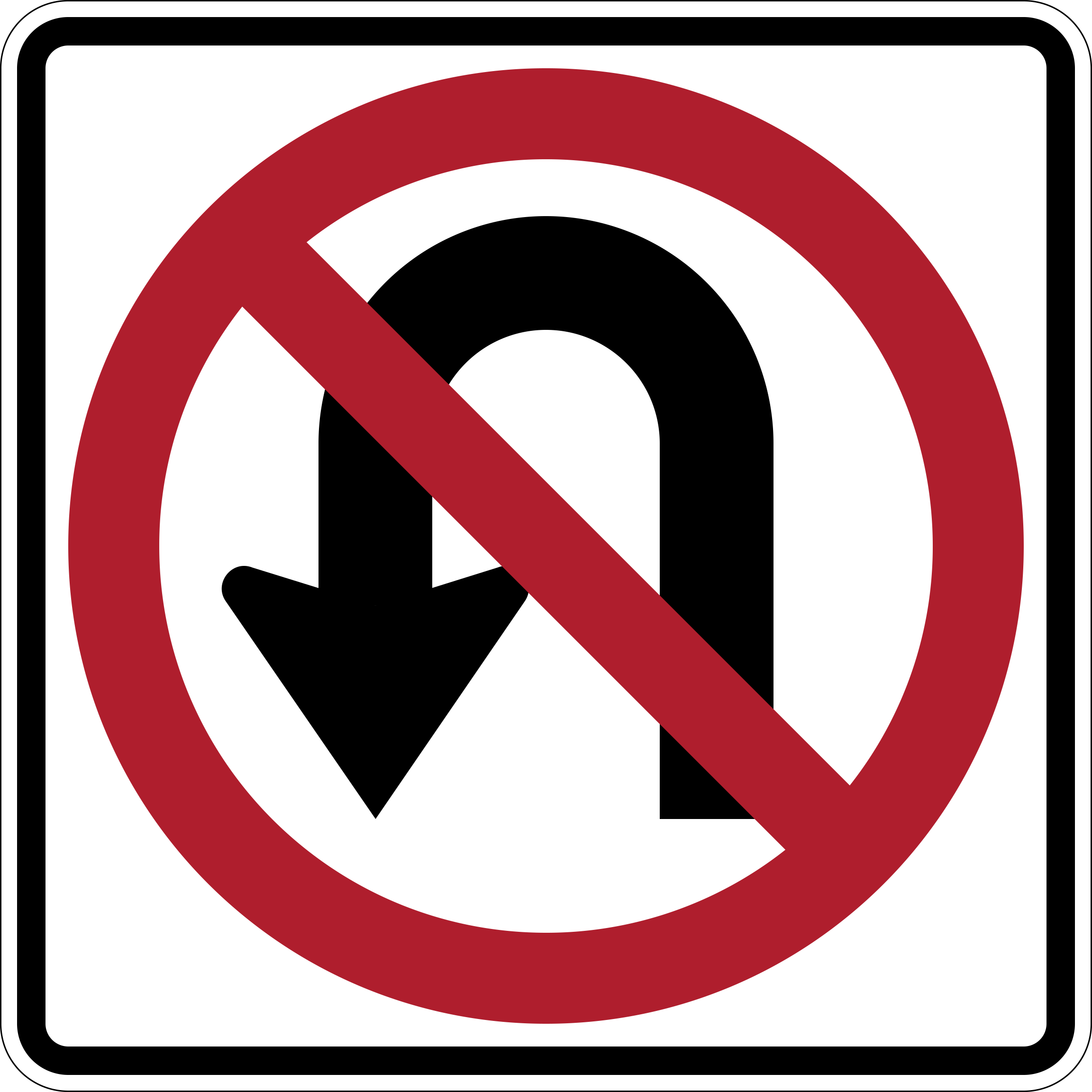
- Only when a railroad gate is lowered
- Only in a marked parking space
- Only on an interstate entrance ramp
- In the middle of a street or intersection
Show answer
In the middle of a street or intersection. The sign prohibits turning around in the middle of a street or at an intersection. The restriction is not limited to parking spaces, interstate ramps, or railroad gates. A driver who misses a turn should continue to a location where turning around is lawful and safe rather than forcing a reversal where the sign is posted. The crossed U-shaped arrow is the visual cue.
Study this in the handbook: Sign shapes, colors and pavement markings
11. A blind pedestrian carrying a white cane is crossing outside a marked crosswalk. What is the driver's duty?
- Sound the horn and pass before the pedestrian reaches the lane
- Continue because right-of-way exists only inside painted lines
- Yield because the pedestrian has the right-of-way regardless of the crosswalk
- Yield only if a guide dog is also present
Show answer
Yield because the pedestrian has the right-of-way regardless of the crosswalk. The handbook gives a blind pedestrian using a white cane or walking stick the right-of-way on a highway, street, or road whether or not the person is in a crosswalk. Painted lines are not the condition that creates this protection. A guide dog is one possible aid, not a requirement when the cane is present. Sounding the horn does not authorize passing through the person's path. Slow early, stop when needed, and allow the pedestrian to clear the roadway before continuing.
12. Which person is exempt from West Virginia's handheld phone ban while driving?
- A firefighter or ambulance driver performing official duties
- A driver reading entertainment messages while moving
- A driver playing an electronic game at a red light
- A driver transmitting personal data without hands-free equipment
Show answer
A firefighter or ambulance driver performing official duties. West Virginia's Electronically Distracted Driving Act exempts law-enforcement officers, firefighters, emergency medical services personnel, ambulance drivers, and similar public safety first responders while they perform official duties. Other exemptions cover reporting a crash, fire, medical emergency, or serious road hazard, and a person in a lawfully parked vehicle. Stopping at a red light is not parking, so gaming or reading messages there is still a violation. Personal data use without a hands-free feature is exactly what the law prohibits. The exemption follows the job and the duty, not the urgency a driver feels.
Study this in the handbook: Crash reports, insurance and phone use
13. Why should drivers learn sign shapes and colors in addition to reading sign lettering?
- Shapes are used only to decorate signs
- Most signs can be recognized even when words are hard to see
- Colors tell drivers the exact posted speed everywhere
- Lettering is never needed when driving
Show answer
Most signs can be recognized even when words are hard to see. Sign recognition cannot depend entirely on clear lettering because darkness, fog, rain, snow, and fading light can hide words. Shape and color provide a quick second source of information, allowing a driver to anticipate a stop, restriction, warning, or guide message. They do not replace reading when the wording is visible, and colors do not state one universal speed. Reduce speed, keep scanning, and use the visible design to prepare your response before you reach the sign.
Study this in the handbook: Sign shapes, colors and pavement markings
14. If a train is approaching while your vehicle is stalled on railroad tracks, what should you do?
- Remain in the vehicle and call for help
- Wait until the train is close before leaving
- Try to push the vehicle clear while staying beside it
- Get out and move to a safe location
Show answer
Get out and move to a safe location. A stalled vehicle on railroad tracks creates an immediate danger because a train cannot stop quickly enough to avoid it. The handbook directs the driver to look both ways and, when a train is coming, leave the vehicle and proceed to a safe location. Remaining inside offers little protection, and trying to push the car wastes time while keeping you near the track. Do not wait for the locomotive to approach. The practical cue is to abandon the vehicle promptly, move away from the tracks, and contact the appropriate emergency authorities from safety.
Study this in the handbook: At a crash scene
15. What do solid yellow lines on your side of the roadway require?
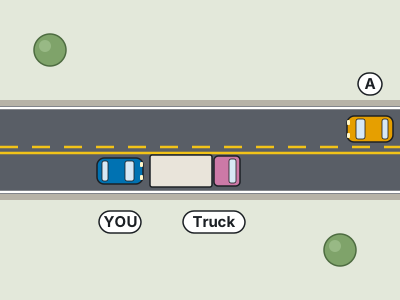
- Pass if you signal first
- Do not pass
- Use the opposing lane for a left turn
- Change lanes before the next intersection
Show answer
Do not pass. A solid yellow line on your side means passing is prohibited. The marking separates opposing traffic and warns that crossing to overtake is not an available maneuver there. Signaling does not cancel a pavement restriction, so the choice “Pass if you signal first” is unsafe. A center left-turn lane is identified by a different combination of solid and broken lines, not simply by any solid yellow line. The safest memory aid is direct: broken yellow may permit a safe pass, while solid yellow on your side says do not pass.
Study this in the handbook: Sign shapes, colors and pavement markings
16. What should a driver do before passing a bicyclist on a West Virginia roadway?
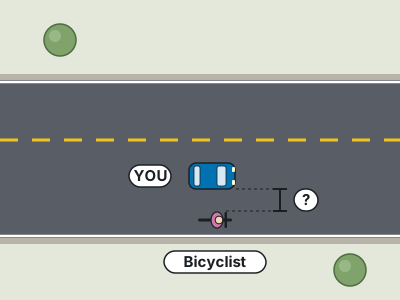
- Slow down, make sure the bicyclist is aware, and leave plenty of room
- Sound the horn continuously and pass within the same lane
- Accelerate so the bicyclist has less time beside the vehicle
- Wait only for a traffic signal before moving around the bicyclist
Show answer
Slow down, make sure the bicyclist is aware, and leave plenty of room. West Virginia tells drivers to slow down, make sure the bicyclist knows the vehicle is approaching, and leave plenty of room while passing. The choice about accelerating reverses the safety priority because extra speed reduces the time available to react if the rider moves around a pothole or changes position. A horn can provide notice, but it is not a substitute for space and controlled speed. Think of the pass as a wide, patient maneuver: check the roadway, give the rider room, and wait if opposing traffic prevents a safe path.
Study this in the handbook: School buses, bicycles, motorcycles and trucks
17. On an interstate, which lane should slower traffic normally use?
- The right-hand lane
- The left-hand lane
- The shoulder whenever traffic is heavy
- Any lane selected without signaling
Show answer
The right-hand lane. The handbook directs slower interstate traffic to the right-hand lane, except when a driver is passing another vehicle. Staying right gives faster traffic a predictable passing path and reduces abrupt lane changes. The left lane is not the normal place for slower traffic, and the shoulder is reserved for disabled vehicles rather than routine travel. Choosing any lane without signaling ignores the need to communicate and check surrounding traffic. Watch the signs, maintain a steady legal speed, and move left only for a lawful pass.
Study this in the handbook: Entering, exiting and driving on interstates
18. When should a driver stop at a crash scene?
- Only when a crowd has already gathered
- Whenever traffic behind the driver is moving slowly
- When involved in the crash or able to render assistance
- Any time the driver wants to inspect the vehicles
Show answer
When involved in the crash or able to render assistance. Stopping is appropriate when you are involved or can provide assistance. Unnecessary stopping adds vehicles and people to an already dangerous location, which can contribute to another collision. A slow queue, a crowd, or curiosity is not enough by itself. If you do stop to help, place the vehicle safely, alert emergency services as appropriate, and avoid creating a new obstruction. The safest response is useful assistance, not an unplanned inspection from the travel lane.
Study this in the handbook: Crash reports, insurance and phone use
19. According to the West Virginia handbook, what does driving drowsy do to a driver?
- It decreases reaction time and increases crash risk
- It only affects night driving
- It improves focus for short trips
- It has no effect if the radio is on
Show answer
It decreases reaction time and increases crash risk. After enough hours awake, driving skills become comparable to those of someone under the influence of drugs or alcohol. Driving drowsy decreases your reaction time and increases your crash risk; you often cannot react in time to apply the brakes or steer away from a potential crash, and drowsy driving crashes can be very serious. The effect is not limited to night, and a radio or short trip does not restore alertness. Stop and rest.
Study this in the handbook: Drowsy driving, fatigue and emotions
20. What hazard should a driver expect when traveling through a rural area?
- Traffic moving only at the posted minimum speed
- Only marked pedestrian crossings
- Slow farm machinery, stray livestock, or game animals
- No unusual hazards if the road is straight
Show answer
Slow farm machinery, stray livestock, or game animals. Rural driving can combine slow farm machinery with animals that wander onto or near the roadway, while other motorists may be traveling quickly. The choice about marked pedestrian crossings is too narrow because it omits the hazards the handbook specifically associates with rural areas. A straight stretch does not remove the need to scan ahead and around the road. Reduce speed when sight distance is limited, watch the shoulders and fields, and be ready for an animal or equipment to enter your path without much warning.
Study this in the handbook: Weather, road, vehicle and traffic conditions
QualitySpace is expanding to West Virginia
We are a California-based independent insurance brokerage working on licensing in more states. We cannot help with West Virginia insurance yet. Leave your email and we will let you know when we can.
Every question is written from the official West Virginia Driver's Licensing Handbook. Need paper? Printable WV practice test with answer key.
Last verified 2026-10-05. How we check every question · Study all 209 as flashcards
Frequently asked questions
How many questions are on this West Virginia practice test?
This fixed set has 20 questions. It is test 6 of 10 from the 209 question West Virginia bank. The real WV exam asks 25 questions and you need 19 correct.
What is the passing score for the real West Virginia test?
19 out of the 25 questions correctly to pass (76%) That figure comes from the official West Virginia source cited on the DMV facts page.
How does this fixed test relate to the full West Virginia bank?
Each numbered test is a fixed set of questions in a fixed order, so you can retake the same test later and compare. Every test mixes road signs and the other topics in about the same proportion as the full bank. Tests 1 to 10 together cover 200 of the 209 questions in the West Virginia bank, each once. The full practice page mixes the whole bank at random.
Last verified 2026-10-05. See the West Virginia DMV facts page for sourced state details.
Return to the full West Virginia practice test · Study road signs