
Printable WV Permit Practice Test
25 questions in the real WV exam format, 76 percent (19 of 25) to pass. Answer key on the last page. Last verified 2026-09-05 against the official West Virginia driver manual.
1. What is the safest response when there is no room to pass a bicyclist because traffic is approaching?
- Follow within one car length until the cyclist moves aside
- Pass immediately by moving onto the shoulder
- Sound the horn and squeeze between the bicycle and traffic
- Wait until the approaching traffic has gone by
2. What should a driver do when approaching a stop sign?
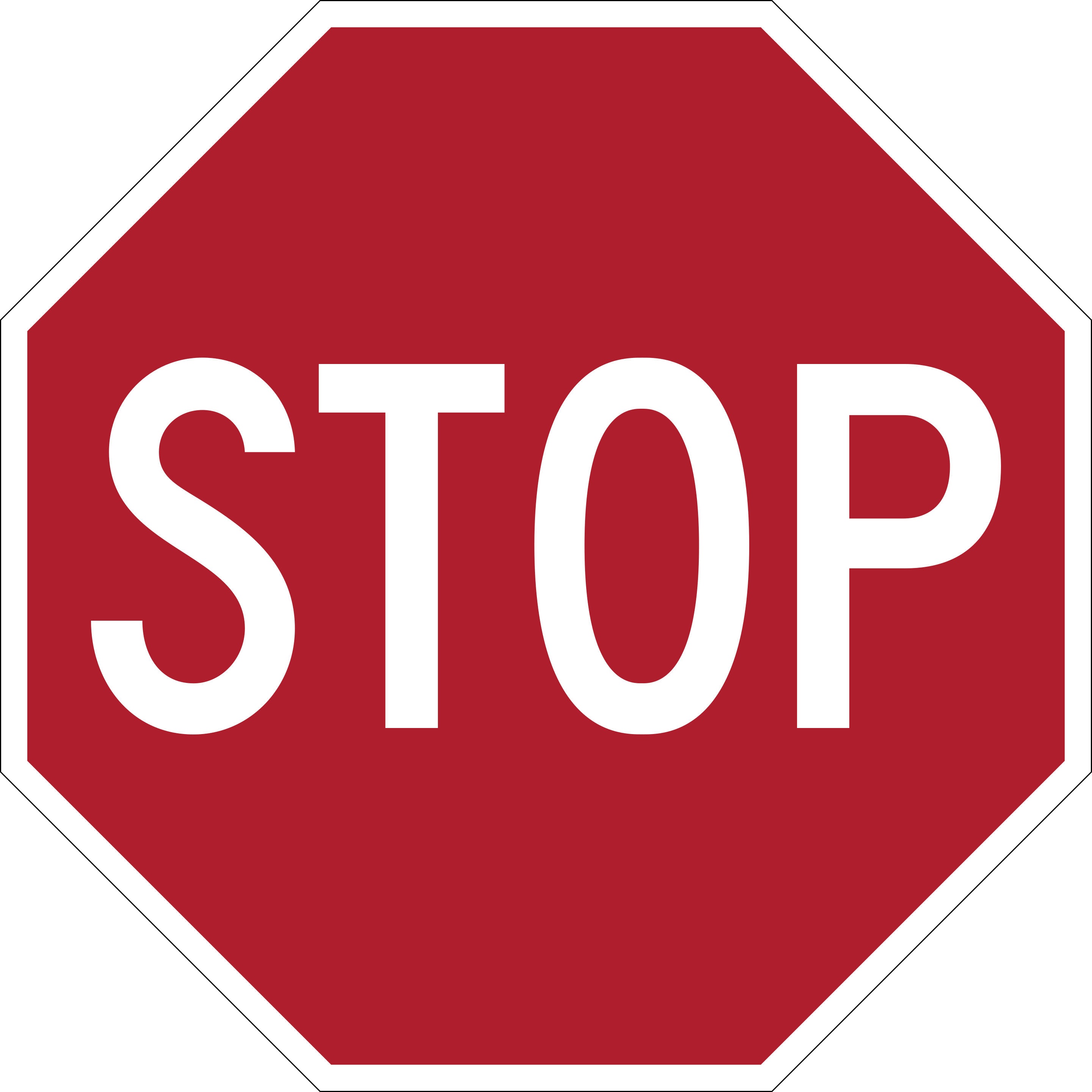
- Stop completely, then yield to pedestrians and cross traffic
- Slow down and roll through if no one is visible
- Stop only after entering the intersection
- Stop only when another vehicle is waiting
3. The West Virginia DMV sends you a notice asking for proof of insurance mid-year. Why?
- The DMV may verify insurance at any time during the registration year, and you must submit proof of coverage
- Only vehicles over 10 years old are checked
- Notices go out only after a crash
- The notice is a billing error
4. What minimum following interval does the handbook advise in darkness or rain?
- At least six seconds in every condition
- Exactly two seconds
- At least four seconds
- No additional interval is needed if headlights are on
5. Which report is specifically listed as an allowed use of an electronic communications device?
- Composing an email while moving through traffic
- Sending a personal text to arrange dinner
- Watching a video while stopped at a light
- Reporting a fire, traffic crash, serious road hazard, or emergency to authorities
6. Which situation is specifically listed as a reason to slow down even before a driver reaches the posted speed limit?
- Leaving a parking space after checking traffic
- Driving on a clear, empty straight road
- Approaching and crossing an intersection
- Traveling below the normal flow on a wide road
7. When does a Level 1 GDL instruction permit expire under the handbook's stated schedule?
- On the applicant's 18th birthday
- On the applicant's 16th birthday
- Five years after issuance
- At the end of the calendar year
8. Where should drivers use extreme care to avoid colliding with a pedestrian?
- Only at gas stations
- Only on empty rural roads
- In school zones, bus stops, playgrounds, and parks
- Only in a vehicle inspection lane
9. Why might a NO RIGHT TURN sign be posted?
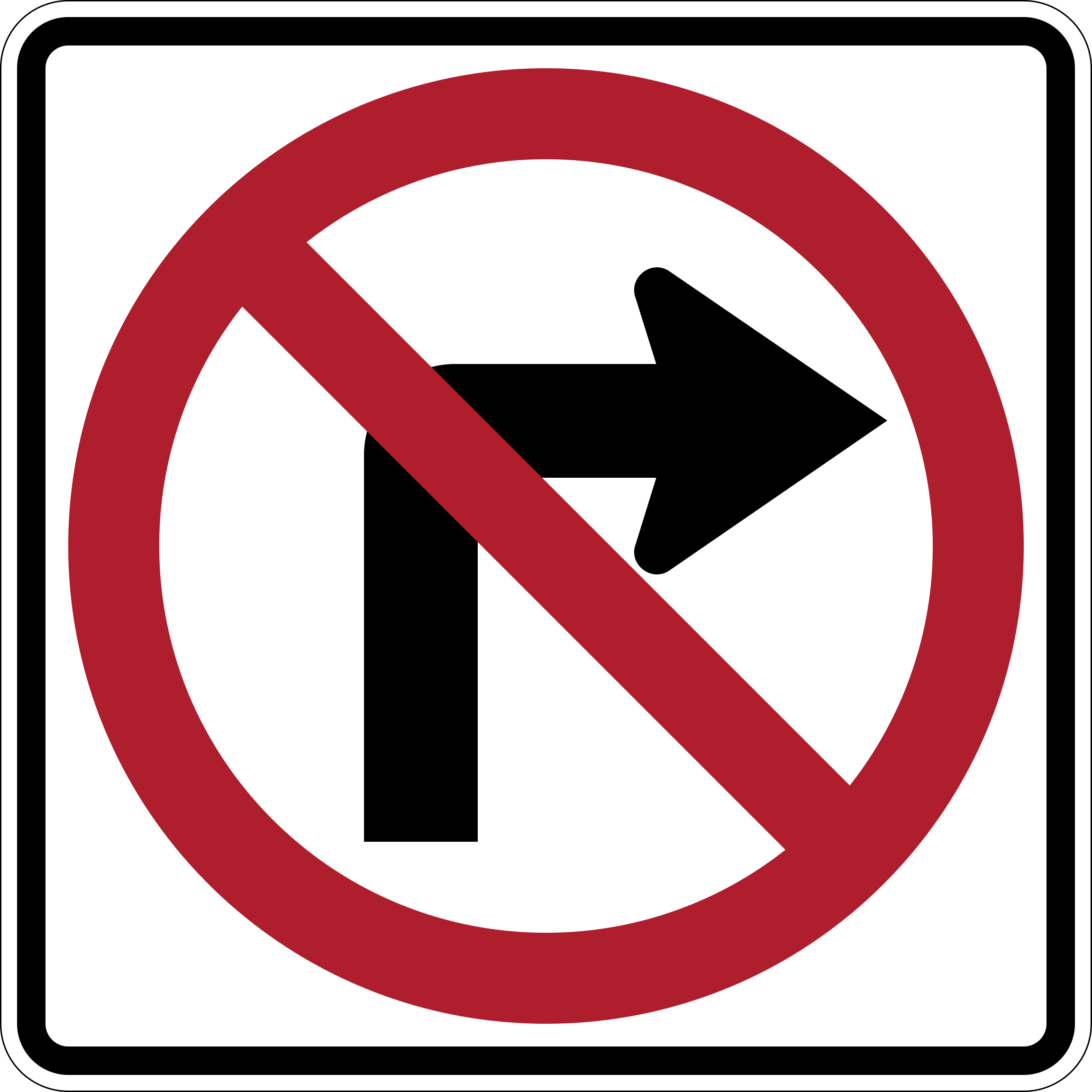
- The road has no painted center line
- The turn is unsafe or the street is one way
- The next block has a legal parking area
- The intersection is always controlled by a railroad gate
10. Where may a West Virginia resident apply for an instruction permit, driver's license, or identification card?
- At any DMV regional office
- Only at the Charleston headquarters
- Only through the county school board
- Only at a county courthouse
11. What do white pavement lines generally separate?
- Only railroad tracks from road lanes
- Traffic lanes moving in opposite directions
- Traffic lanes moving in the same direction
- Pedestrian areas from all vehicle traffic
12. A West Virginia teen surrenders a Level 1 GDL instruction permit and later reapplies. How long must the new Level 1 permit be held?
- 30 days, with no conviction requirement
- 180 consecutive days without a conviction
- 90 consecutive days without a conviction
- Until the 18th birthday, with no minimum
13. When must a Level 2 GDL holder drive with a supervising adult?
- Between 5:00 a.m. and 10:00 a.m.
- Only during school hours
- Between 10:00 p.m. and 5:00 a.m.
- Only after midnight on weekends
14. What information do square and rectangular traffic signs generally provide?
- A guarantee that the lane ahead is free of hazards
- A warning that a train is approaching the crossing
- Traffic regulations and guidance about speed or direction
- A marker showing only the name of a nearby town
15. What does a ONE WAY sign tell a driver about the cross street?
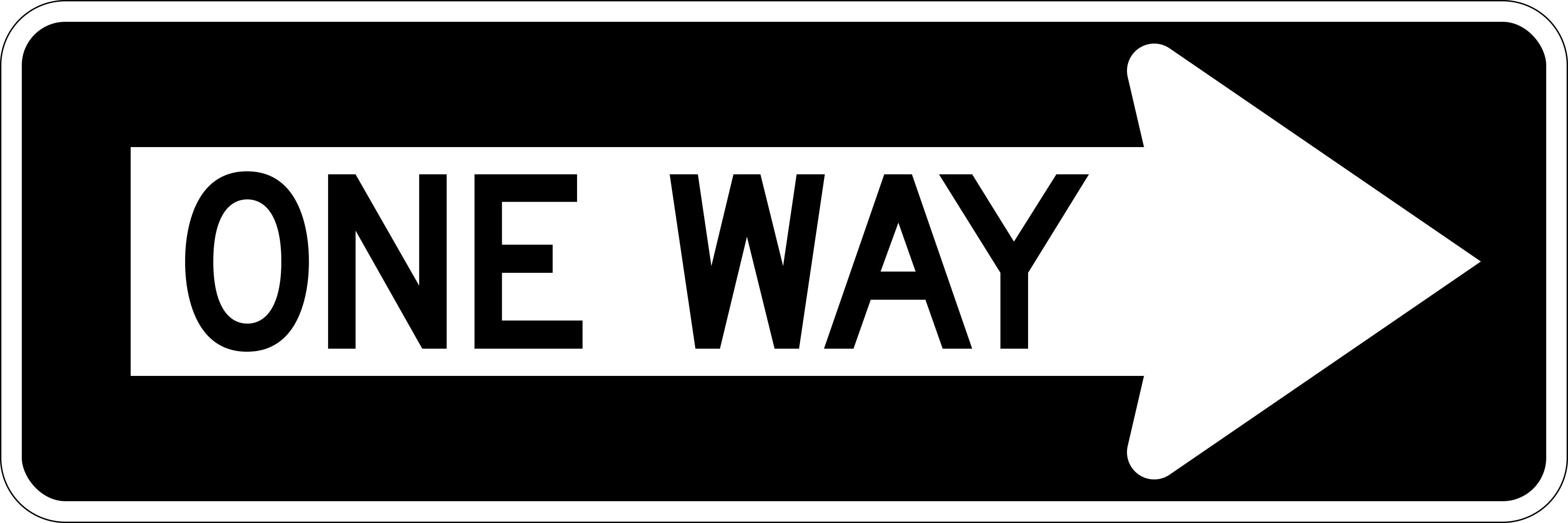
- Vehicles may travel either way until dark
- Traffic must stop in both directions
- The street is reserved for buses
- Traffic runs in one direction only
16. What should a driver expect after seeing a crossroad warning?

- Other vehicles may enter or leave the highway
- The road is closed to all crossing traffic
- Only pedestrians may use the next intersection
- The next junction is a railroad crossing by definition
17. In West Virginia, is an insurance card shown on your phone valid proof of insurance?
- No, only a paper certificate is accepted
- Yes, an image on a wireless device is valid proof
- Only if it is also printed within 24 hours
- Only during a vehicle inspection
18. What should a driver do when a posted speed limit is lower than a statutory designated speed?
- Choose whichever limit feels comfortable
- Use the statutory number instead
- Follow the posted lower limit
- Add the two limits together
19. What does a Wrong Way or Do Not Enter sign tell a driver?
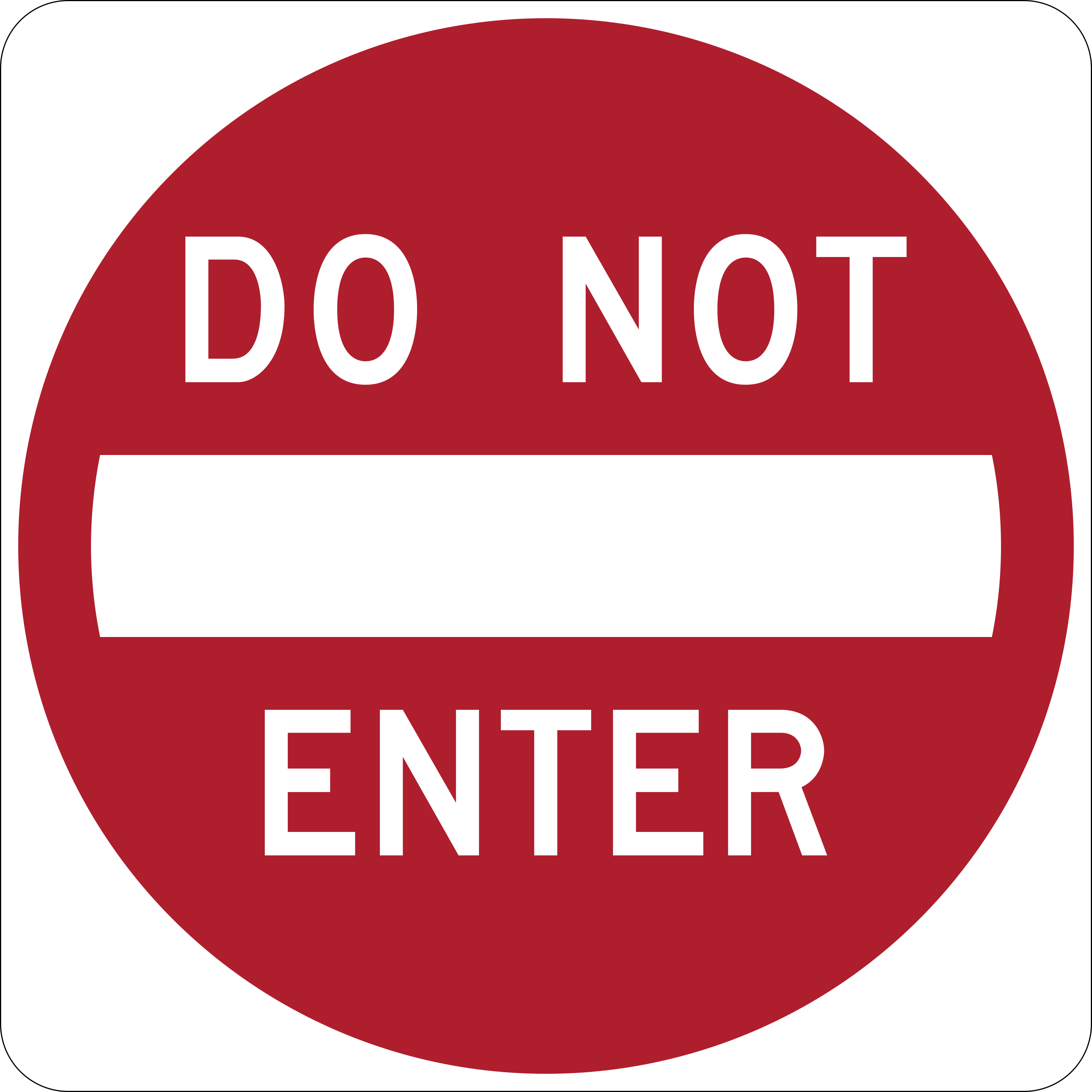
- The driver may enter after stopping briefly
- The lane is reserved for emergency vehicles
- Traffic in that direction is prohibited
- The roadway becomes one way after the next intersection
20. How does the handbook characterize a BAC greater than 0.05 percent but less than 0.08 percent?
- It is treated exactly like a BAC of 0.08 percent
- It is automatically harmless for an adult driver
- It is relevant evidence for presuming impaired driving
- It matters only for commercial license holders
21. If a lane closes in an interstate construction zone, when should a driver move into the open lane?
- At the last possible moment beside the barricade
- As soon as possible after the advance signs provide notice
- Only after entering the closed lane completely
- After stopping in the closed lane to wait for a gap
22. A West Virginia driver is convicted of speeding 15 to 19 mph over the limit. How many points are assessed?
- Three points
- Five points
- Six points
- Two points
23. If two vehicles reach an uncontrolled intersection at the same time, which driver should yield?
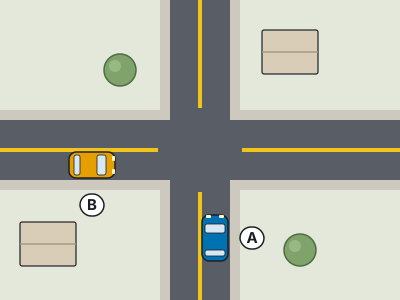
- The driver on the left yields to the driver on the right
- The driver on the right yields to the driver on the left
- The larger vehicle always proceeds first
- The vehicle traveling faster proceeds first
24. Which method does the handbook recommend for checking a normal following distance?
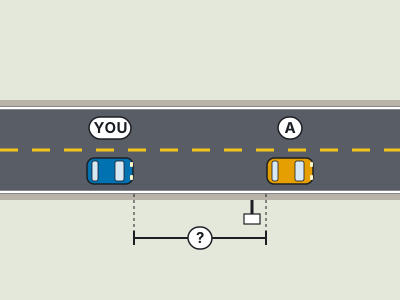
- Use a fixed object and count three to four seconds
- Keep one car length for every trip
- Match the lead vehicle's bumper distance exactly
- Wait until the lead vehicle brakes before judging space
25. What is the driver being warned about by this signal symbol?
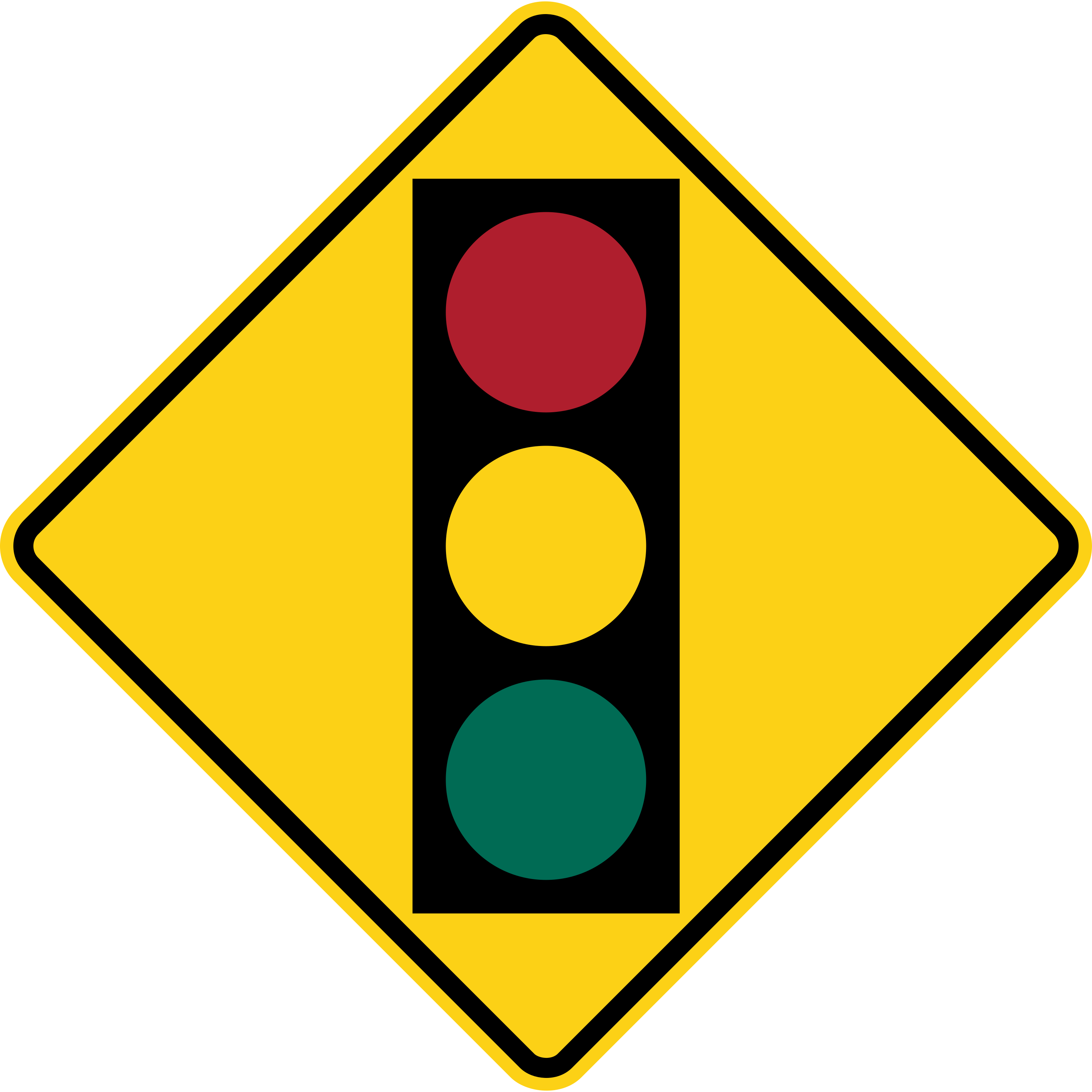
- A traffic signal ahead
- A broken streetlight
- A vehicle inspection station
- A railroad train already blocking the road
Answer key
- 1. D
- 2. A
- 3. A
- 4. C
- 5. D
- 6. C
- 7. A
- 8. C
- 9. B
- 10. A
- 11. C
- 12. B
- 13. C
- 14. C
- 15. D
- 16. A
- 17. B
- 18. C
- 19. C
- 20. C
- 21. B
- 22. B
- 23. A
- 24. A
- 25. A