
Test 12 of 25 · 20 questions · Free 2026
CO Permit Practice Test 12
Jump to the test ↓A fixed 20 question set from the Colorado bank with answers and plain English explanations.
Question 1 of 20 · 0 right so far
All 20 questions in test 12
Every question below comes from the Colorado question bank on this page. Open a question to see the correct answer and the explanation. Nothing here is hidden behind a signup.
1. How does reckless driving differ from a simple mistake?
- It requires proof that the driver was angry at someone else
- It applies only to crashes in which someone is injured or killed
- Operating a vehicle so as to endanger people or property, intended or not
- It covers only speeds that are over 100 mph
Show answer
Operating a vehicle so as to endanger people or property, intended or not. The handbook defines reckless driving as operating a vehicle in such a way that puts either people or property in danger, whether intentional or not. Intent is not required. A driver who endangers others carelessly can be reckless, which is why the handbook says whether intentional or not, and it is not limited to injury crashes or speeds above any set number.
Study this in the handbook: Distracted, reckless and aggressive driving
2. A city bus ahead signals left with its rear yield sign lit, wanting your lane. What should you do?
- Hold your speed and pass the bus before it moves over
- Flash your lights at the bus and claim the lane
- Stop behind the bus and wait until it parks somewhere
- Yield and let the bus move into the lane
Show answer
Yield and let the bus move into the lane. The handbook says you must yield right-of-way to a transit bus if it is signaling to enter a traffic lane and the yield sign on the rear of the bus is illuminated. Let the bus move in rather than racing past it. The rear yield sign is lit only when the bus driver wants to move back into traffic, so slow down and give the bus room as soon as you see it and the signal.
Study this in the handbook: Right of way at intersections, roundabouts and mountain roads
3. A friend pours 5 ounces of wine and calls it half a drink. How does Colorado count that pour?
- One standard drink, equal to 12 ounces of beer
- Half of a drink, which is weaker than a beer
- Two standard drinks when measured by volume
- A drink that contains almost no alcohol at all
Show answer
One standard drink, equal to 12 ounces of beer. The handbook defines a standard drink as 12 ounces of beer, 5 ounces of wine, or 1.5 ounces of distilled spirits. A 5 ounce pour of wine therefore counts as one standard drink. Because drinks differ in size, counting by standard drink is a better way to keep track of how much alcohol you have taken than counting glasses. A standard drink holds about the same amount of alcohol in each form, so wine, beer, and spirits all count the same when you add up what you drank, and a large pour counts as more than one.
Study this in the handbook: Losing your license, seat belts and child restraints
4. Why do large trucks and buses need more room than automobiles for everyday maneuvers?
- They need more room to turn, change lanes, and maneuver
- They may use two lanes for every turn they make
- Their drivers sit too low to see the lanes that are beside them
- They travel faster than cars and need room to stop
Show answer
They need more room to turn, change lanes, and maneuver. The handbook says trucks and buses require more room than automobiles to turn, change lanes and perform other driving maneuvers. Give them space and avoid cutting in front of them. A big vehicle sweeping through a turn or changing lanes needs the space beside it, so cutting in front of it can leave it with nowhere to go. Staying out of a large vehicle's way, and giving it room to maneuver, protects both you and the other road users. Leave extra room whenever a truck or bus is beside you.
Study this in the handbook: Bicyclists, motorcycles, trucks and pedestrians
5. Oncoming headlights glare into your eyes on a dark two-lane road. Where should your gaze go?
- Directly into the brightest of the oncoming headlights
- At the center line that runs right beside the other car
- Down at the instruments on your dashboard
- Below the glare, using the painted edge lines to guide you
Show answer
Below the glare, using the painted edge lines to guide you. The handbook says never to look directly into an approaching car's headlights. As the vehicle draws near, drop your sight below the glare and use the painted edge lines to guide your vehicle. Looking into the lights can leave you briefly unable to see, so shift your eyes down and to the right edge line, and slow down if the glare is bad.
Study this in the handbook: Freeways, lane changes and passing
6. Who must wear a fastened seat belt in a Colorado vehicle fitted with factory belts?
- The driver, front seat passengers, and children under 16
- Only the driver, and only on public roadways
- Front passengers, but only when on a freeway
- Children under 16, but only when they are riding in the back
Show answer
The driver, front seat passengers, and children under 16. Colorado law requires a fastened seat belt in all motor vehicles with a factory-equipped seat belt system, while in operation on public roadways, for the driver, front seat passengers, and children under 16. The seat belt requirement covers vehicles with factory-equipped belts while on public roadways, so everyone in the front seat and any child under 16 should fasten up before the vehicle moves, no matter the length of trip.
Study this in the handbook: Losing your license, seat belts and child restraints
7. Two vehicles meet on a steep, narrow mountain road with no room to pass. Ordinarily, which driver yields?
- The uphill driver, in every case on that kind of road
- The driver who is in the smaller of the two vehicles
- Whoever reaches the narrow part of the road second
- The downhill driver, by backing up or stopping to give room
Show answer
The downhill driver, by backing up or stopping to give room. The handbook says that on a steep, narrow road where vehicles cannot pass, the vehicle going downhill must yield the right-of-way by backing up to a wider place or by stopping, so that the uphill vehicle can go by. The downhill driver has an easier time stopping or backing up on a slope, which is why the handbook gives the uphill driver the right of way.
Study this in the handbook: Right of way at intersections, roundabouts and mountain roads
8. A raised median separates you from a school bus flashing red lights across the way. Must you stop?
- Yes, every road user must always stop for the red lights
- Only when children are crossing the median area
- No, a median or other physical barrier removes the duty
- Yes, but you may roll slowly past the bus
Show answer
No, a median or other physical barrier removes the duty. The handbook says you are not required to stop if there is a median or other physical barrier separating the bus from your vehicle. Traffic on your side of a raised median may continue past a stopped bus on the other side. Check the situation before assuming the rule applies, because the exemption needs a physical barrier or median between your direction of travel and the bus.
Study this in the handbook: Right of way at intersections, roundabouts and mountain roads
9. A four-lane highway posts 50 mph, and you plan a lane change ahead. How far ahead must the signal run?
- For 100 feet, which is the distance used on city streets
- For 200 feet before the turn or lane change
- For only 50 feet, since you are at highway speed
- Only during the lane change itself, not before it
Show answer
For 200 feet before the turn or lane change. The handbook says that on four lane highways where the posted speed limit is faster than 40 mph, you must signal for 200 feet before making a turn or lane change. The longer distance is needed because you travel faster on these highways, so drivers behind you need more time to notice and respond. Count about 200 feet before you move over.
Study this in the handbook: Emergency vehicles, school buses and work zones
10. A yellow arrow lights in your turn lane. What is it announcing?
- It shows that a green arrow will follow shortly
- It warns that a red arrow is about to appear
- It means that the turn lane is closing for the night
- It shows that oncoming traffic is receiving a yellow
Show answer
It warns that a red arrow is about to appear. The handbook says a lighted yellow arrow means a red arrow is about to appear. Stop if you are not already in the intersection. Prepare to stop as the arrow changes, unless you are already in the intersection and it would be unsafe to stop, in which case you should finish the turn. After it appears, the red arrow follows, so be ready to stop and wait for the next green arrow before you turn.
Study this in the handbook: Fitness to drive, distractions and basic control
11. You realize you have been following the vehicle ahead too closely for blocks. Besides time, what else did it cost you?
- It improves your view of the road past the vehicle ahead
- It shortens the stopping distance that you need
- It limits your view and leaves too little time to react
- It helps the traffic behind you to flow faster
Show answer
It limits your view and leaves too little time to react. The handbook says following the vehicle in front of you too closely limits your vision of the road and does not allow you enough time to react to avoid a crash. Leaving space gives both a better view and more time to respond. Give yourself room to see around the vehicle ahead and respond to what happens in front of it, since a short gap takes away both your view and your time to react.
Study this in the handbook: Scanning, following distance, phones and traffic stops
12. You plan a route by the big directional panels over a Colorado freeway. What background color marks those guide signs?
- Blue, like the signs for roadside services
- Green, with white lettering
- Yellow, like the signs that warn of hazards
- Orange, like the signs that are used in work zones
Show answer
Green, with white lettering. The handbook says guide signs have a green background and provide directional and mileage information to specific destinations. Look for green signs over the freeway to help you plan your route, and expect other colors, such as blue or yellow, to signal different things. If you see a large green panel over the road, expect it to give directions or distances to cities and exits, and use it to prepare for the lane changes you need to make before you reach your exit.
Study this in the handbook: Regulatory signs: stop, yield and speed
13. You realize you must stop for a child chasing a ball into the street. Which distance decides whether you stop in time?
- Only the distance your brakes need once they bite hard
- The full distance from realizing you must stop until the car actually stops
- The following gap you kept back at the last traffic light
- Only the distance traveled in the first second after you see her
Show answer
The full distance from realizing you must stop until the car actually stops. The handbook defines stopping distance as the distance your vehicle travels from the time you realize you must stop until your vehicle actually comes to a stop. That includes the reaction time before braking. Be aware that the child's sudden entry means every second counts, so a driver who is looking ahead and traveling at a safe speed has the best chance of stopping in time.
Study this in the handbook: Emergency vehicles, school buses and work zones
14. With a standard transmission parked on a slope, which gears does Colorado specify?
- Reverse gear headed uphill and low gear headed downhill
- Neutral in both directions with only the brake set
- The highest gear available in both directions of slope
- Low gear headed uphill and reverse gear headed downhill
Show answer
Low gear headed uphill and reverse gear headed downhill. For a standard transmission, the handbook says to leave the vehicle in low gear when headed uphill and in reverse gear when headed downhill. The gear helps the engine hold the vehicle in place along with the parking brake. The two gears work with the curb or the parking brake to keep a parked vehicle from rolling, so choose the gear that fits the direction of the slope.
Study this in the handbook: Signaling, turns, U turns and parking
15. While driving, where else besides ahead should a driver keep looking?
- Only at the vehicle that is directly in front of your own vehicle
- Down at the speedometer once every second or so
- To both sides and beyond the curb for entering traffic or walkers
- At roadside signs for most of the length of the trip
Show answer
To both sides and beyond the curb for entering traffic or walkers. The handbook explains that other vehicles or pedestrians might cross or enter your path at any time, so you should be looking for them on both sides and beyond the curb, not only straight ahead. It also says to look left, right and then left again when entering an intersection, and to look for smaller road users such as pedestrians, bicyclists and motorcyclists as you scan.
Study this in the handbook: Scanning, following distance, phones and traffic stops
16. At a crash scene, what should a helper check before providing further care?
- Whether the victim has life-threatening emergencies
- The victim's driver license and proof of insurance
- The damage estimates for both of the vehicles involved
- Whether the witnesses at the scene agree on who was at fault
Show answer
Whether the victim has life-threatening emergencies. The handbook says to check the victim for life threatening emergencies before providing further care. Serious problems such as severe bleeding or trouble breathing come first, ahead of any other help. Only after the life-threatening problems have been dealt with should a helper turn to other care, so look first for the most serious conditions. Checking for life threatening problems first ensures that the most urgent needs are met before anything else is done for the person who is hurt, and that is why it is the first thing to do.
Study this in the handbook: Crash duties, the Move It Law and the Move Over Law
17. When is it illegal to use the oncoming lane to pass?
- Only when the posted speed limit is above 55 mph
- Only when the vehicle ahead is a truck or bus
- Only during the hours of darkness or in heavy fog
- When approaching a hill crest or curve that hides oncoming traffic
Show answer
When approaching a hill crest or curve that hides oncoming traffic. The handbook says it is illegal to use the oncoming travel lane to pass others if you are approaching the crest of a hill, a curve, or any other situation where visibility of oncoming traffic is obstructed. Passing in such places risks a head-on crash, because you cannot see a vehicle until it is too late. Wait until you can see well enough ahead to pass safely, and be patient on hills and curves even if the vehicle in front is slow.
Study this in the handbook: Hills, curves, snow, ice and mountain roads
18. Why can snow plows be hard to see while working?
- Plows travel without any warning lights turned on
- Their size and speed can raise clouds of blowing snow that hide them
- Plows use the opposite lane of the road at all times
- Snow clouds appear only during the night hours
Show answer
Their size and speed can raise clouds of blowing snow that hide them. The handbook says to be especially cautious around snow plows because their size and speed can create clouds of blowing snow that can conceal the plow. Stay well back from a plow, because the cloud of snow can hide it, and wait for a safe place before you pass it, where passing is legal. Never pass a plow in a blinding cloud of snow, and keep a safe distance behind it.
Study this in the handbook: Right of way at intersections, roundabouts and mountain roads
19. Below the round advance warning at a crossing, a smaller sign reads No Train Horn. What changes at this crossing?
- Train horns do not blow there, so rely on the lights and gates
- Trains are banned from that crossing altogether
- The crossing is closed to every kind of vehicle
- Train horns sound only during the daylight hours
Show answer
Train horns do not blow there, so rely on the lights and gates. The handbook says crossings in designated quiet zones have a No Train Horn sign posted below the advance warning signs. Train horns do not blow at these crossings, so look and listen for the lights and gates. Because you will not hear the horn, never rely on it as your warning. Look and listen for a train, and watch the lights and gates as you would at any other railroad crossing.
Study this in the handbook: Railroad crossings and light rail
20. The green sign shown lists place names with numbers beside them. What kind of information is it providing?
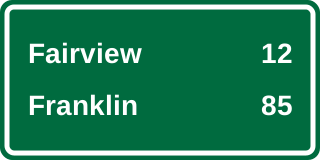
- Directions and mileage to specific destinations
- Warnings about hazards on the road ahead of you
- Directions to hospitals and to gas stations
- Laws that apply at that exact location
Show answer
Directions and mileage to specific destinations. The handbook says guide signs have a green background and provide directional and mileage information to specific destinations. Look for these signs when you need to find your way, since green signs are for guidance and give you mileage to a place, not warnings or rules. Typical examples are the large green panels over a freeway that name cities and give the distance to each, so use them to plan your route and to choose your exit well ahead of time.
Study this in the handbook: Regulatory signs: stop, yield and speed
Every question is written from the official Colorado Driver Handbook. Need paper? Printable CO practice test with answer key.
Last verified 2026-10-05. How we check every question · Study all 500 as flashcards
Frequently asked questions
How many questions are on this Colorado practice test?
This fixed set has 20 questions. It is test 12 of 25 from the 500 question Colorado bank.
How does this fixed test relate to the full Colorado bank?
Each numbered test is a fixed set of questions in a fixed order, so you can retake the same test later and compare. Every test mixes road signs and the other topics in about the same proportion as the full bank. Tests 1 to 25 together cover every question in the Colorado bank once. The full practice page mixes the whole bank at random.
Last verified 2026-10-05. See the Colorado DMV facts page for sourced state details.
Return to the full Colorado practice test · Study road signs