
Key points
Under the Basic Speed Law you may never drive faster than is safe for current conditions.
Source: Handbook p. 67
“In California, you may never drive faster than is safe for the current road conditions. This is known as the Basic Speed Law.”
California Driver's Handbook, Handbook p. 67Unless posted otherwise, the maximum on most California highways is 65 mph.
Source: Handbook p. 67
“Unless otherwise posted, the ideal maximum speed limit on most California highways is 65 mph.”
California Driver's Handbook, Handbook p. 67The limit is 55 mph on a two-lane undivided highway and for vehicles towing trailers.
Source: Handbook p. 67
“It is 55 mph on a two-lane undivided highway and for vehicles towing trailers.”
California Driver's Handbook, Handbook p. 67The limit is 25 mph within 500 feet of a school while children are outside or crossing. Some school zones go as low as 15 mph.
Source: Handbook p. 50
“The speed limit is 25 mph within 500 feet of a school while children are outside or crossing the street. Some school zones may have speed limits as low as 15 mph.”
California Driver's Handbook, Handbook p. 50The limit is 15 mph at a blind intersection.
Source: Handbook p. 51
“The speed limit for a blind intersection is 15 mph.”
California Driver's Handbook, Handbook p. 51The limit in an alley is 15 mph.
Source: Handbook p. 51
“The speed limit in an alley is 15 mph.”
California Driver's Handbook, Handbook p. 51The limit is 15 mph within 100 feet of a railroad crossing when you cannot see the tracks for 400 feet each way.
Source: Handbook p. 51
“The speed limit is 15 mph within 100 feet of a railroad crossing and you cannot see the tracks for 400 feet in both directions.”
California Driver's Handbook, Handbook p. 51In business or residential districts the limit is 25 mph unless posted otherwise.
Source: Handbook p. 52
“Business or Residential Districts The speed limit is 25 mph, unless otherwise posted.”
California Driver's Handbook, Handbook p. 52On a wet road slow by 5 to 10 mph. On packed snow cut your speed by half, and on ice drive no more than 5 mph.
Source: Handbook p. 61
“Wet road: Reduce your speed by 5 to 10 mph. • Packed snow: Reduce your speed by half. • Ice: Reduce your speed to no more than 5 mph.”
California Driver's Handbook, Handbook p. 61If you cannot see farther than 100 feet, it is not safe to drive faster than 30 mph.
Source: Handbook p. 62
“If you cannot see farther than 100 feet, it is not safe to drive faster than 30 mph.”
California Driver's Handbook, Handbook p. 62
Numbers to know
| Number | What it means | Manual |
|---|---|---|
| 65 mph | maximum on most California highways | Handbook p. 67 |
| 55 mph | two-lane undivided highway and towing limit | Handbook p. 67 |
| 25 mph | school zone limit when children are present | Handbook p. 50 |
| 500 feet | distance from a school where the 25 mph limit applies | Handbook p. 50 |
| 15 mph | lowest school zone limit in some areas | Handbook p. 50 |
| 15 mph | blind intersection limit | Handbook p. 51 |
| 15 mph | alley limit | Handbook p. 51 |
| 100 feet | distance from a railroad crossing where the 15 mph limit applies | Handbook p. 51 |
| 400 feet | track visibility below which the 15 mph limit applies | Handbook p. 51 |
| 25 mph | business and residential district limit | Handbook p. 52 |
| 5 to 10 mph | reduction on a wet road | Handbook p. 61 |
| 5 mph | maximum speed on ice | Handbook p. 61 |
| 30 mph | top safe speed when you can see only 100 feet | Handbook p. 62 |
Recognize these signs
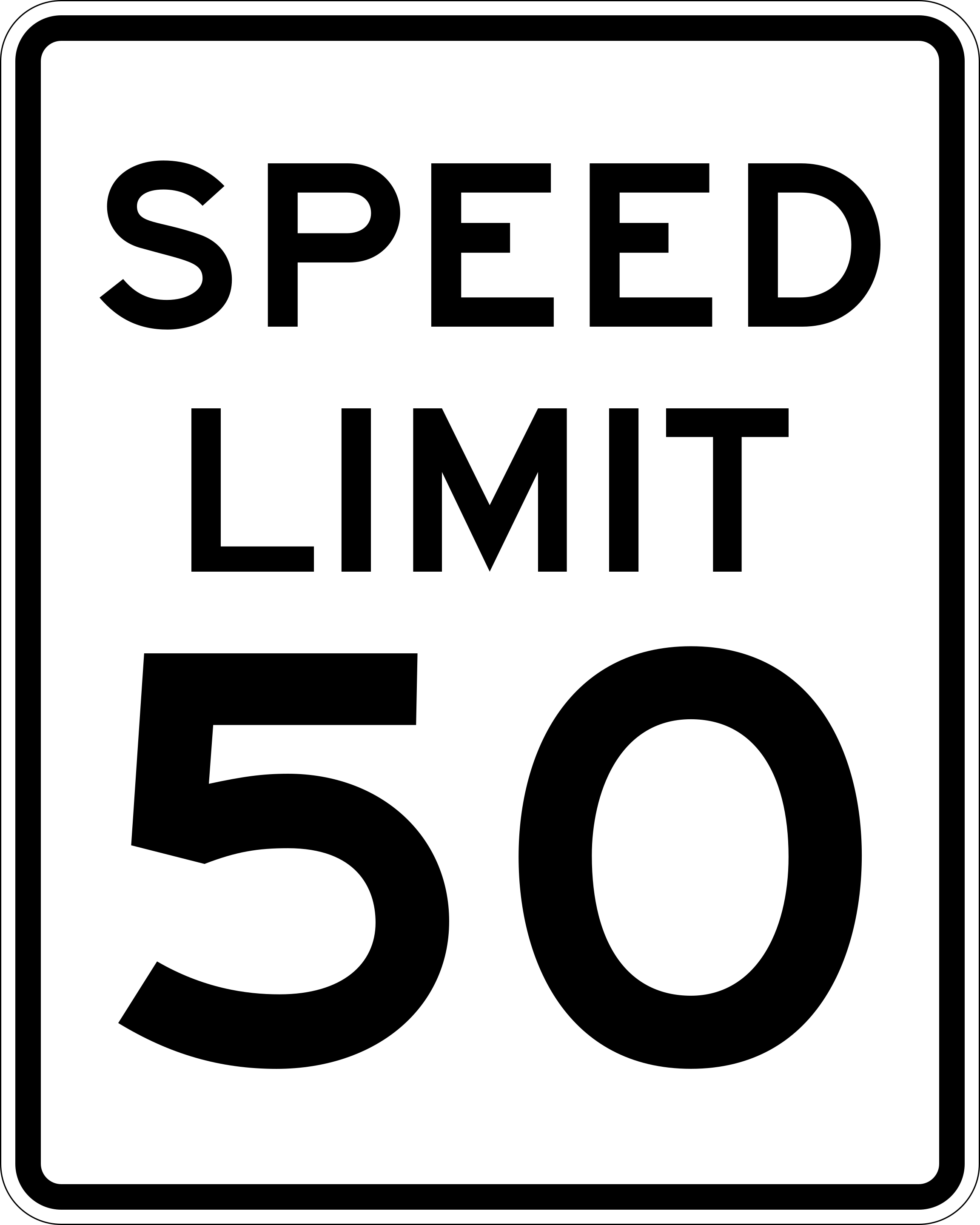
Speed limit 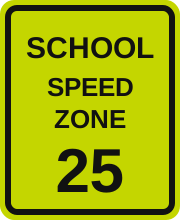
Reduced speed school zone
3 questions from the California practice test
1. What does California's Basic Speed Law require?
- Drive faster than traffic when passing is legal
- Always drive exactly at the posted speed limit
- Use the same speed in clear weather and fog
- Never drive faster than is safe for current road conditions
Show answer
Never drive faster than is safe for current road conditions. The Basic Speed Law means the posted limit is not permission to drive too fast for conditions. You may need to slow for weather, road surface, congestion, pedestrians, or bicyclists. Driving exactly at the sign speed can still be unlawful if fog, rain, or crowding makes that speed unsafe. The cue is changing conditions around you. Match speed to what you can see, stop for, and control.
2. What is the usual speed limit within 500 feet of a school while children are outside or crossing?
- 15 mph at every school
- 35 mph
- 25 mph in the school zone condition
- 45 mph unless a guard is present
Show answer
25 mph in the school zone condition. The usual California school-zone limit is 25 mph within 500 feet while children are outside or crossing. Some zones can be posted as low as 15 mph, so 15 mph is not the universal answer unless signs or local conditions require it. The cue is children near the school. Reduce speed, watch for crossing guards and buses, and be ready to stop when children may enter the roadway.
3. What is the speed limit within 100 feet of an uncontrolled railroad crossing when you cannot see the tracks for 400 feet in both directions?
- 25 mph near schools, not this crossing
- 15 mph
- 35 mph
- 55 mph
Show answer
15 mph. California sets a 15 mph limit within 100 feet of a railroad crossing when you cannot see the tracks for 400 feet in both directions. The 25 mph figure is for many school zones, not this low-visibility rail setting. Your cue is poor sight distance near tracks. Slow early, scan both directions, and remember that gates, warning signals, or a flagman may permit a higher speed only when they control the crossing.
Practice this topic
Lock it in with speed limits questions from the free California practice test. Every answer comes with a plain English explanation.
Source: the California Driver's Handbook, Section 7: Laws and Rules of the Road. This lesson is a plain English summary, not the law itself; where it differs, the manual and the statute govern. Last checked 2026-09-27.