
Test 4 of 25 · 20 questions · Free 2026
CA Permit Practice Test 4
Jump to the test ↓A fixed 20 question set from the California bank with answers and plain English explanations. The real CA exam has 36 questions for applicants 18 and older and 46 for applicants under 18. A passing score is 80%. Take the full length version on the main practice page.
Parent of a new California driver? Adding a teen to the family policy changes the price. Get a free quote or call 714-666-6669. English and Vietnamese.
Question 1 of 20 · 0 right so far
All 20 questions in test 4
Every question below comes from the California question bank on this page. Open a question to see the correct answer and the explanation. Nothing here is hidden behind a signup.
1. You approach a crosswalk with flashing warning lights. What must you do?
- Flash your headlights continuously
- Honk until they cross
- Look for pedestrians and be prepared to stop, lights or not
- Speed up to clear the crosswalk fast
Show answer
Look for pedestrians and be prepared to stop, lights or not. Flashing crosswalk lights are advisory beacons, not traffic signals: they warn you pedestrians may be present, but their absence never cancels your duty to look. Some pedestrians cross without pressing the button, and children may not know the lights exist. Slow on approach, scan both curbs and the refuge islands, and stop for anyone in or entering your half of the roadway.
2. What does a solid yellow traffic signal light mean?
- Speed up to clear the intersection
- Stop immediately even in the intersection
- Prepare to turn; through traffic must stop
- Caution: the light is about to turn red; stop if you can do so safely
Show answer
Caution: the light is about to turn red; stop if you can do so safely. Yellow is the transition warning between green and red, giving drivers already close a moment to clear while telling everyone farther back to stop. The rule turns on whether a safe stop is possible: brake smoothly when distance allows, but continue cautiously through when stopping would mean slamming the brakes or halting inside the intersection. Speeding up to beat the red gambles against cross traffic already preparing to move, and yellow commands nothing about turning. Treat every yellow as a stop decision first, and only proceed when stopping itself would be unsafe.
3. You have a tire blowout at highway speed. What does the handbook warn you NOT to do?
- Steer straight and ease your foot off the accelerator gradually
- Brake suddenly or jerk your foot off the accelerator
- Grip the steering wheel firmly with both hands
- Turn on your hazard flashers after you stop
Show answer
Brake suddenly or jerk your foot off the accelerator. A blowout at speed is a control emergency, not a stopping emergency, so the worst thing you can do is trade it for a skid. The handbook warns against panic reactions because sudden braking or abruptly lifting off the accelerator can break the remaining traction and throw the vehicle into a spin. The safe response is to hold the wheel firmly with both hands, ease off the gas pedal, and let the car slow gradually before steering onto the shoulder and stopping fully off the road.
4. When you see a yellow traffic-signal-ahead sign, what should you expect?
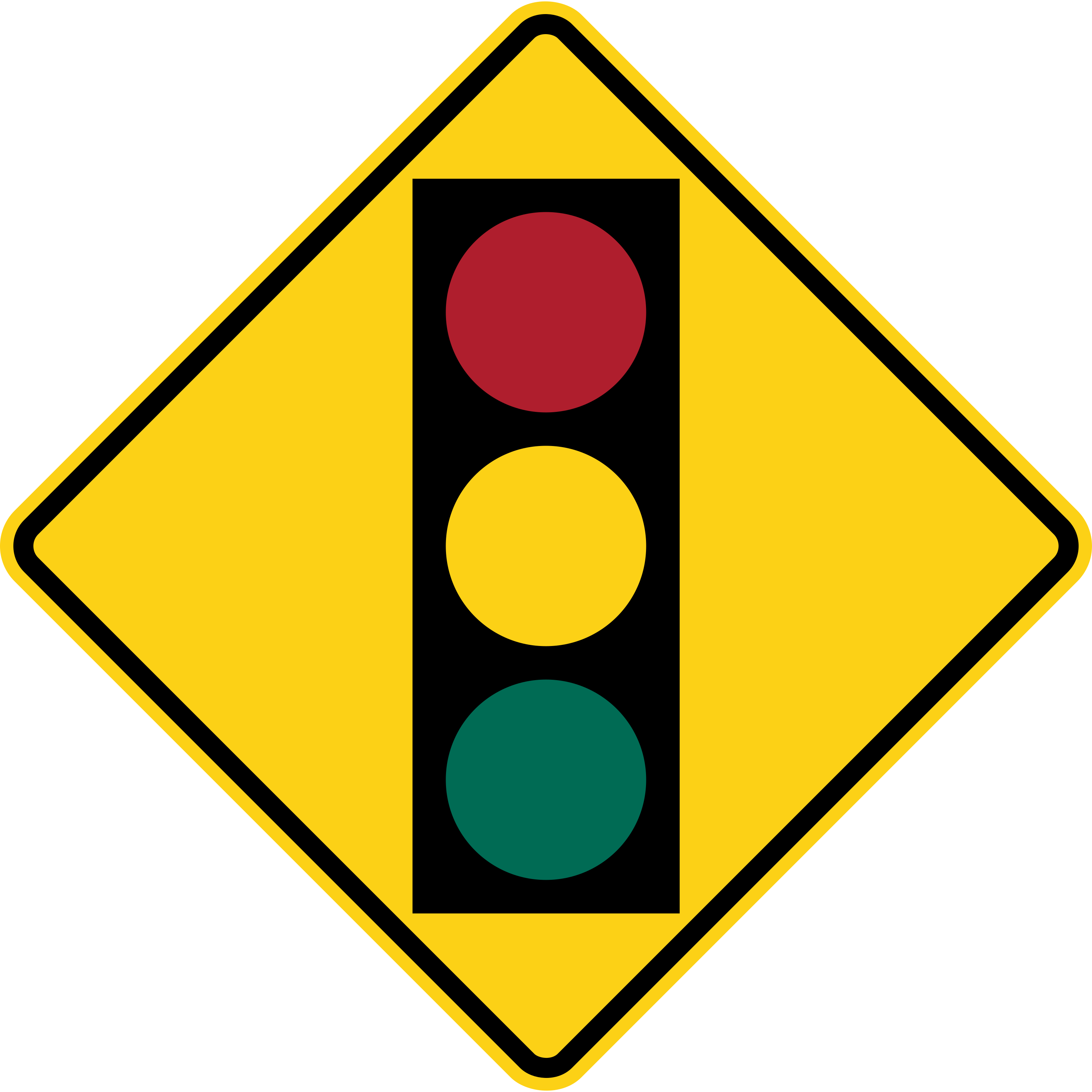
- A traffic signal is ahead, so prepare to slow or stop
- A stop sign replaces the next signal at all times
- A railroad signal controls the next crossing
- A lane-use control signal begins immediately above you
Show answer
A traffic signal is ahead, so prepare to slow or stop. The handbook lists Traffic Signal Ahead among its yellow warning signs. It warns that a signalized intersection is coming, so check your speed and prepare for slowing or stopped traffic and for the light to change. The stop-sign choice describes a different control and can make you react to the wrong one. A railroad crossing and an overhead lane-use signal are also different devices. The cue is the signal-head symbol on a yellow background, which gives you time to react before you reach the light itself.
5. What is the maximum speed on a two-lane undivided highway in California?
- 45 mph
- 50 mph
- 65 mph
- 55 mph
Show answer
55 mph. Two-lane undivided highways put opposing traffic just a painted line apart with no median to absorb mistakes, so California caps them at 55 mph. The same 55 mph limit covers vehicles towing trailers even on faster roads. Sixty-five belongs to multilane divided highways, while 45 and 50 understate the rule and would needlessly bunch traffic. On these roads, also watch for no-passing zones, slow heavy vehicles, and narrow shoulders that make the 55 mph ceiling a maximum for good conditions only.
6. At what BAC does California presume a commercial-license driver is driving under the influence?
- 0.01% or higher
- 0.04% or higher
- 0.08% or higher
- 0.10% or higher
Show answer
0.04% or higher. Drivers of vehicles requiring a commercial license answer to a stricter 0.04% limit because heavy trucks and buses multiply the harm of any impairment. The familiar 0.08% threshold applies to ordinary adult drivers, while 0.01% is the zero-tolerance line for drivers under 21. There is no 0.10% tier in California law. Commercial drivers should treat any drinking before driving as disqualifying: at half the regular limit, even one drink can end a career, and a DUI in a personal car still jeopardizes the commercial privilege.
7. California's alcohol rules extend to which of these?
- Boats, jet skis, water skis, and similar vessels
- Bicycles on bike paths only
- Golf carts on private courses
- Horse-drawn carriages
Show answer
Boats, jet skis, water skis, and similar vessels. Impairment endangers everyone on the water just as on pavement, so California bans drinking alcohol or taking drugs while operating boats, jet skis, water skis, aquaplanes, and similar vessels. The waterways have their own enforcement and their own serious collision consequences, detailed further in the Harbors and Navigation Code. Bicycles, golf carts, and carriages follow different rules and locations. Anyone heading out on the water should designate a sober operator the same way drivers designate a sober driver for the road home.
8. After becoming a California resident or getting a job in California, how long do you have to register an out-of-state vehicle?
- 30 days
- 5 days
- 20 days
- Until the out-of-state registration expires
Show answer
20 days. The handbook gives a 20 day deadline to register a vehicle after you become a California resident or get a job in the state. The five day choice applies to notifying DMV after selling a vehicle, so it is the wrong paperwork event. A concrete cue is the moment residency or California employment starts, since that date begins the registration clock for the out-of-state vehicle.
9. A railroad crossing gate is lowered, but no train is visible. What should you do?
- Drive around the gate after looking both ways.
- Wait, and call the posted railroad emergency number or 911 if no train appears.
- Cross slowly if another driver has already crossed.
- Stop 5 feet from the gate and then proceed.
Show answer
Wait, and call the posted railroad emergency number or 911 if no train appears.. A lowered railroad gate controls the crossing even when you cannot see a train. Do not drive around it or under it. California directs drivers to use the emergency phone number posted at the crossing, or 911, when gates stay down and no train is approaching. The option about following another driver is unsafe because a second vehicle's choice does not remove the warning. Use the gate position as the cue: down means stay off the tracks.
10. You miss your intended turn after entering an intersection. What should you do?
- Stop in the intersection and back up to the lane you wanted
- Keep driving until you can turn around safely and legally
- Make an immediate U-turn from any lane
- Signal and reverse only if no vehicle is directly behind you
Show answer
Keep driving until you can turn around safely and legally. Once you are moving through an intersection, continue and recover by turning around later where it is safe and legal. The backing-up choice creates a sudden conflict in a place drivers and pedestrians expect forward movement. The cue is realizing the mistake after you have already committed; abandon the missed turn, continue with traffic, and choose a lawful place to correct your route.
11. Where must most children under 8 years old ride when using a child passenger restraint system?
- In the front seat if an adult is driving.
- In the front passenger seat with the air bag on.
- In any seat if the trip is under 10 miles.
- In a rear seat.
Show answer
In a rear seat.. California requires children under 8, or shorter than 4 feet 9 inches, to be secured in a child passenger restraint system in a rear seat unless a listed exception applies. The front-seat option is too broad; the handbook allows front-seat placement only in limited cases such as no rear seat or medical reasons. The cue is the child's age or height: under 8 or below 4 feet 9 inches points you first to a proper restraint in the back.
12. How should you drive through sharp curves to prevent skidding?
- Slow down approaching and through them; avoid fast turns and quick stops
- Speed up to get through faster
- Brake hard in the middle of the curve
- Steer with one hand for better feel
Show answer
Slow down approaching and through them; avoid fast turns and quick stops. Curves demand less speed because turning grip and braking grip draw from the same limited tire traction, especially on wet or gravel-strewn pavement. Slowing before the curve and holding steady through it preserves a traction reserve for surprises. Hard mid-curve braking or jerky steering spends that reserve instantly and starts the skid the handbook is teaching you to prevent. Downshift before the curve as well so engine braking shares the slowing work.
13. After parallel parking, how should your vehicle sit relative to the curb?
- Within 3 feet of the curb
- Touching the curb with both tires
- At least 24 inches from the curb
- Parallel and within 18 inches of the curb
Show answer
Parallel and within 18 inches of the curb. The 18-inch standard keeps parked cars tight to the curb so the travel lane stays clear for passing traffic, buses, and emergency vehicles. During parallel parking, you begin straightening when your rear wheel reaches 18 inches from the curb, then pull forward and back until the car sits parallel. Finish by turning off the vehicle and setting the parking brake.
14. How is a standard bike lane marked?
- A single solid white line that becomes a dash-line near intersections
- Double solid yellow lines down the middle
- A row of white triangles across the lane
- Orange cones placed by cyclists
Show answer
A single solid white line that becomes a dash-line near intersections. The solid white stripe reserves the lane for bicycles along the block, then breaks into dashes near the intersection where cars may merge across to turn right. Drivers must look back, signal, and enter the bike lane within 200 feet of the turn rather than cutting across at the corner. Double yellow lines separate opposing traffic, and triangle rows are yield lines, not bike markings.
15. When turning left from a two-way street, which lane should you finish in to reduce collision risk?
- The right lane closest to the curb.
- Any open lane on the new road.
- The left lane closest to the middle of the street in your direction.
- The center lane until traffic clears.
Show answer
The left lane closest to the middle of the street in your direction.. For a left turn from a two-way street, California shows drivers ending in the left lane closest to the middle of the street going in their direction. The any-open-lane option belongs to certain turns onto one-way streets with three or more lanes, not this basic two-way-to-two-way turn. The cue is the street type you are leaving: from a two-way street, start near the center and finish near the center on the new roadway.
16. What do NEV USE ONLY and NEV ROUTE signs warn you about?
- Slow-moving vehicles; adjust your speed to share the road
- No vehicles of any kind
- Freeway entrances only
- Bicycle racing courses
Show answer
Slow-moving vehicles; adjust your speed to share the road. NEV USE ONLY and NEV ROUTE signs mark corridors where golf carts, scooters, and neighborhood electric vehicles legally travel at 25 mph or less. Faster drivers must slow early and share patiently rather than pressuring these small vehicles. Watch for the signs near retirement communities, campuses, and beach towns where slow vehicles cluster. These corridors often sit near retirement communities, campuses, and beach towns.
17. Your car is disabled on the freeway shoulder. Where should you wait?
- Get out and stand behind the car
- Stay inside belted until help arrives
- Push the car to the next exit
- Stand in the travel lane to flag help
Show answer
Stay inside belted until help arrives. The belted cabin is the safest place on a high-speed shoulder: it shields occupants from passing traffic and debris while keeping everyone together for rescuers. Exiting into the narrow shoulder or the lane trades that shell for open exposure. Call 511 or use a call box, run flashers, and wait for the Freeway Service Patrol or a tow. The Freeway Service Patrol and tow operators expect occupants waiting inside.
18. Besides the curfew and passenger limits, what else is a California provisional driver under 18 barred from doing?
- Driving on any freeway
- Driving outside their home county
- Driving more than 50 miles from home
- Driving for pay or driving vehicles that need a commercial Class A, B, or C license
Show answer
Driving for pay or driving vehicles that need a commercial Class A, B, or C license. A provisional license holder under 18 may not drive for pay and may not operate vehicles that require a commercial Class A, B, or C license. The California provisional rules place no freeway ban on minors, so that choice invents a restriction. There is also no county line or 50 mile radius in the provisional rules. The other two restrictions are the 11 p.m. to 5 a.m. limit during the first 12 months and the ban on passengers under 20 without a qualifying adult.
19. Starting May 2025, when must your license or ID be REAL ID compliant?
- To buy groceries
- To vote in any election
- To board domestic flights and enter military bases and most federal facilities
- To park in state parks
Show answer
To board domestic flights and enter military bases and most federal facilities. The federal REAL ID Act sets the May 2025 deadline after which standard licenses no longer clear airport security or federal checkpoints. Californians who want one card for driving and federal access must apply with proof of identity, residency, and legal presence. A passport remains an alternative for flights and federal entry. Passports remain an accepted alternative for flights and federal building entry.
20. Why do some crosswalks beep, chirp, or speak messages?
- They warn drivers to speed up
- They are decorative crossing music
- They help blind or visually impaired pedestrians cross
- They signal trains to stop
Show answer
They help blind or visually impaired pedestrians cross. Audible signals speak the crossing state aloud: beeps and chirps mark the WALK phase while verbal messages may name the street. Blind and low-vision pedestrians time their crossing to these sounds instead of lights they cannot see. Drivers who hear them should expect a pedestrian in the crosswalk and yield accordingly. Drivers who hear crossing audio should expect a pedestrian entering the crosswalk.
New California driver? Insurance is the next step
Once the permit or license is in hand, the family policy changes. QualitySpace is an independent California broker (Kevin Vu, CDI #4037122): teen-driver additions, first-time policies, and multi-car bundles quoted across many carriers in one call.
Get a free quote or call 714-666-6669. English and Vietnamese.
Every question is written from the official California Driver's Handbook. Need paper? Printable CA practice test with answer key.
Last verified 2026-09-08. How we check every question · Study all 500 as flashcards
Frequently asked questions
How many questions are on this California practice test?
This fixed set has 20 questions. It is test 4 of 25 from the 500 question California bank. The real CA exam has 36 questions for applicants 18 and older and 46 for applicants under 18. A passing score is 80%.
What is the passing score for the real California test?
A passing score is 80%. That figure comes from the official California source cited on the DMV facts page.
How does this fixed test relate to the full California bank?
Each numbered test is a fixed set of 20 questions in a fixed order, so you can retake the same test later and compare. Every test mixes road signs and the other topics in about the same proportion as the full bank. Tests 1 to 25 together cover every question in the California bank once. The full practice page mixes the whole bank at random.
Last verified 2026-09-08. See the California DMV facts page for sourced state details.
Return to the full California practice test · Study road signs