
Test 1 of 25 · 20 questions · Free 2026
IL Permit Practice Test 1
Jump to the test ↓A fixed 20 question set from the Illinois bank with answers and plain English explanations. The real IL exam is 35 questions, 80 percent to pass; take the full length version on the main practice page.
Question 1 of 20 · 0 right so far
All 20 questions in test 1
Every question below comes from the Illinois question bank on this page. Open a question to see the correct answer and the explanation. Nothing here is hidden behind a signup.
1. What Illinois vision result limits a driver to daylight only?
- Acuity of 20/40
- Acuity between 20/41 and 20/70
- Peripheral vision over 140 degrees
- Any use of corrective lenses
Show answer
Acuity between 20/41 and 20/70. Illinois requires minimum visual acuity of 20/40 with or without corrective lenses and at least 140 degrees of peripheral vision, which the manual describes as the ability to see to the side. A driver with acuity between 20/41 and 20/70 is limited to daylight driving only. Instead of the screening at a facility, an applicant may submit a Vision Specialist Report completed by a licensed optometrist, ophthalmologist, or physician dated within six months of the visit. Wearing glasses or contact lenses adds a restriction to the license, not a daylight limit.
Study this in the handbook: Vision screening, written exam and driving exam
2. A 19-year-old in Illinois is convicted of possessing alcohol while riding in a car. What is the minimum suspension?
- 30 days
- Three months
- No suspension, because the driver was a passenger
- Six months
Show answer
Six months. When a person under 21 is convicted of possessing, consuming, purchasing, or receiving alcohol while an occupant of a motor vehicle, Illinois imposes a suspension of at least six months. Court supervision for the same offense brings a three month suspension, so three months is the supervision outcome, not the conviction outcome. Thirty days is too short. Being a passenger does not help, because the rule covers any occupant of a vehicle.
Study this in the handbook: Drivers under 21 and alcohol
3. An Illinois driver under 21 is convicted of two moving violations within 24 months. What is the minimum consequence?
- A warning letter
- A 30-day suspension
- A 7-day suspension
- Permanent revocation
Show answer
A 30-day suspension. For a driver under 21, two or more moving violation convictions within 24 months bring a suspension of at least 30 days, and the length grows with the seriousness of the offenses. A warning letter understates the rule, and seven days is below the minimum. Permanent revocation is not the stated consequence. Drivers 21 and older can be suspended after three convictions in 12 months, so younger drivers face a stricter standard. A driver remedial education course may be required for reinstatement.
Study this in the handbook: Teen curfews, passenger limits and phone rules
4. How close to a STOP sign or traffic control signal may you park in Illinois?
- No closer than 10 feet
- No closer than 15 feet
- No closer than 20 feet
- No closer than 30 feet
Show answer
No closer than 30 feet. Illinois prohibits standing or parking within 30 feet of a STOP sign, YIELD sign, or traffic control signal. Fifteen feet is the fire hydrant distance. Twenty feet applies to a fire station driveway or a crosswalk at an intersection. Ten feet is not on the list. Parking is also banned within 50 feet of the nearest rail of a railroad crossing and in front of any driveway.
Study this in the handbook: Passing, turning, roundabouts and parking
5. What is the proper first action when law enforcement stops your vehicle?
- Stop immediately in the traffic lane without signaling
- Exit the vehicle before the officer reaches it
- Continue driving until the officer uses a second signal
- Slow down, signal, and pull safely onto the right shoulder
Show answer
Slow down, signal, and pull safely onto the right shoulder. For a traffic stop, slow down, activate the turn signal, and pull safely onto the right shoulder. If the shoulder is absent or too narrow, continue to the next safe location. Stopping in a travel lane, exiting without being asked, or waiting for another signal can create danger or appear uncooperative. Keep the vehicle controlled and choose a place where passing traffic and the officer can remain safe.
Study this in the handbook: Phones, distracted driving and traffic stops
6. What default speed limit applies to other highways and rural areas in Illinois when no different sign is posted?
- 55 mph
- 45 mph
- 65 mph
- 70 mph
Show answer
55 mph. The Illinois table gives other highways and rural areas a default limit of 55 mph, unless a sign sets a different limit. Four-lane highways are listed separately at 65 mph, and interstates or tollways at 70 mph. The classification in the question is therefore important. Even under a default number, safe conditions are required and local authorities may post a different lawful limit. Check the roadway type and signs before relying on the table.
Study this in the handbook: Speed limits, school zones and work zones
7. What must a driver do before turning on a flashing yellow arrow?
- Stop and wait until a steady green arrow appears
- Turn only after yielding to pedestrians and vehicles in the intersection or crosswalk
- Turn immediately because the arrow gives absolute priority
- Yield only to vehicles, not people in the crosswalk
Show answer
Turn only after yielding to pedestrians and vehicles in the intersection or crosswalk. A flashing yellow arrow permits the indicated turn, but it does not remove the duty to yield. The driver must check the intersection and crosswalk, then turn only after pedestrians and vehicles with priority have been allowed through. Waiting for a steady green arrow is more restrictive than Illinois requires, while turning immediately ignores conflicting traffic. Treat the arrow as permission to proceed cautiously after a careful yield, not as a protected movement.
Study this in the handbook: Traffic signals and arrows
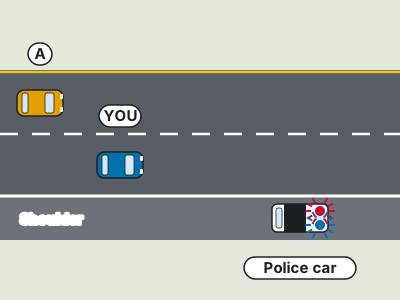
8. How long should a driver maintain reduced speed after passing a stationary emergency vehicle?
- Only while the emergency vehicle’s siren is audible
- Only until the front bumper reaches the vehicle
- Until the driver sees a green traffic signal
- Until safely past any stationary emergency vehicles
Show answer
Until safely past any stationary emergency vehicles. Illinois requires a reduced speed to continue until the driver is safely past stationary emergency vehicles. Ending the reduction at the front bumper leaves the rest of the scene alongside moving traffic. A green signal does not cancel the safety duty, and the rule applies to visual signals even when no siren can be heard. Scan beyond the stopped vehicle, keep the pace controlled through the full scene, and accelerate only after the vehicle and workers are safely behind you.
Study this in the handbook: Speed limits, school zones and work zones
9. At an Illinois STOP sign with no stop line, where must you stop?

- After entering the intersection so cross traffic can see you
- Only beside the sign post
- Before entering the crosswalk
- At least one car length past the crosswalk
Show answer
Before entering the crosswalk. A STOP sign requires a complete stop at the stop line when one is marked. If there is no stop line, the stopping point moves to before the crosswalk. If the location has neither a stop line nor a crosswalk, stop before entering the intersection. A response that puts the vehicle in the intersection reverses the rule and exposes the car to crossing traffic. Stopping beside the sign post is not the standard unless that point also happens to be the required line. Remember the sequence: line, crosswalk, then intersection edge.
Study this in the handbook: Sign shapes and colors
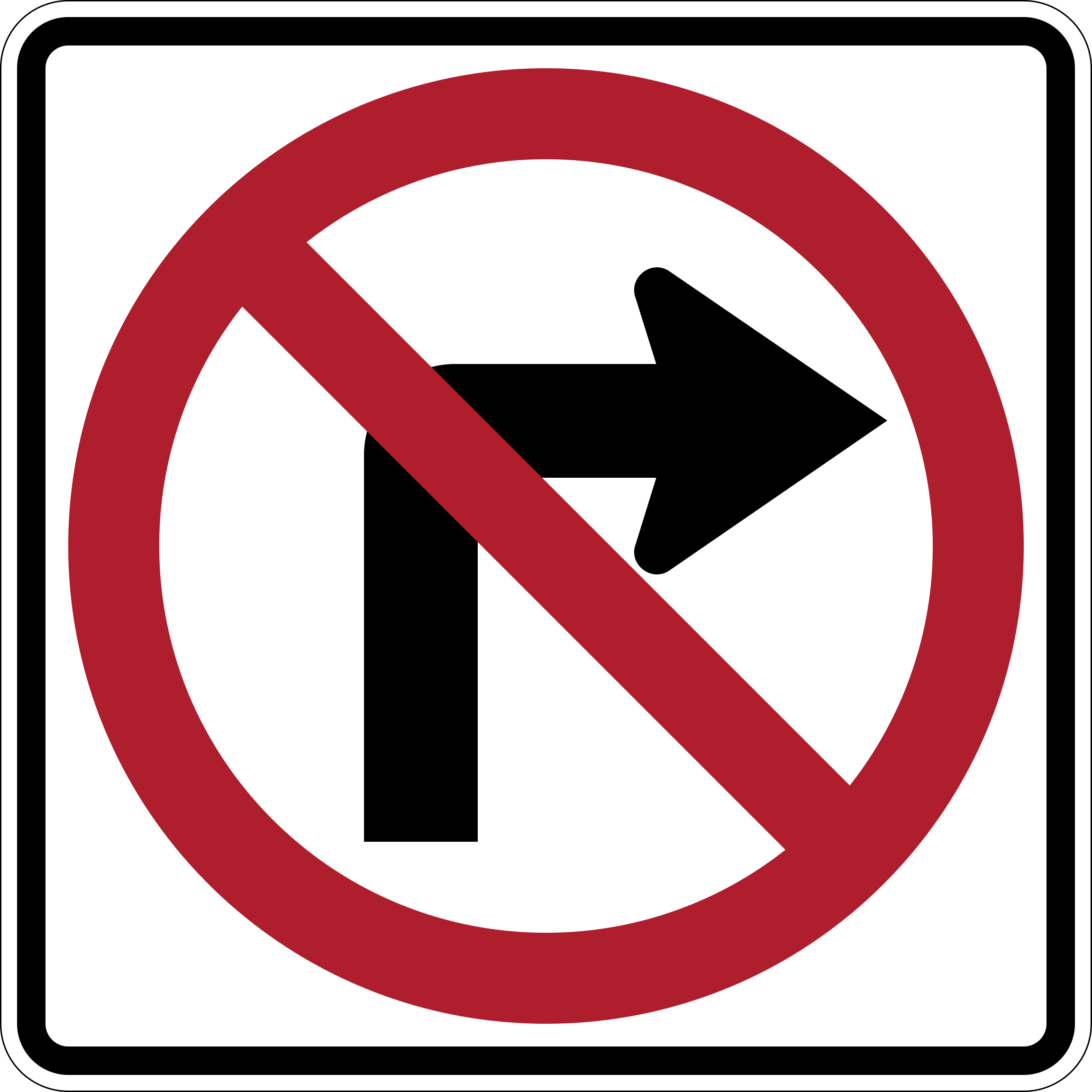
10. What movement is barred by an Illinois NO RIGHT TURN sign?
- Turning left from a one-way street at every signal
- Going straight through the intersection
- Turning right in the direction shown by the crossed-out arrow
- Parking on the right side of the street
Show answer
Turning right in the direction shown by the crossed-out arrow. A NO RIGHT TURN sign bars a right turn at the location where it is posted. The manual explains that no right or left turn signs prohibit turns in the direction shown by the arrow, so the arrow is the key detail. The sign does not by itself prohibit a left turn, straight travel, or parking on the right side. A separate traffic signal or another regulatory sign could control those actions. Approach with enough space to choose a permitted path, and do not treat an empty intersection as permission to ignore the restriction.
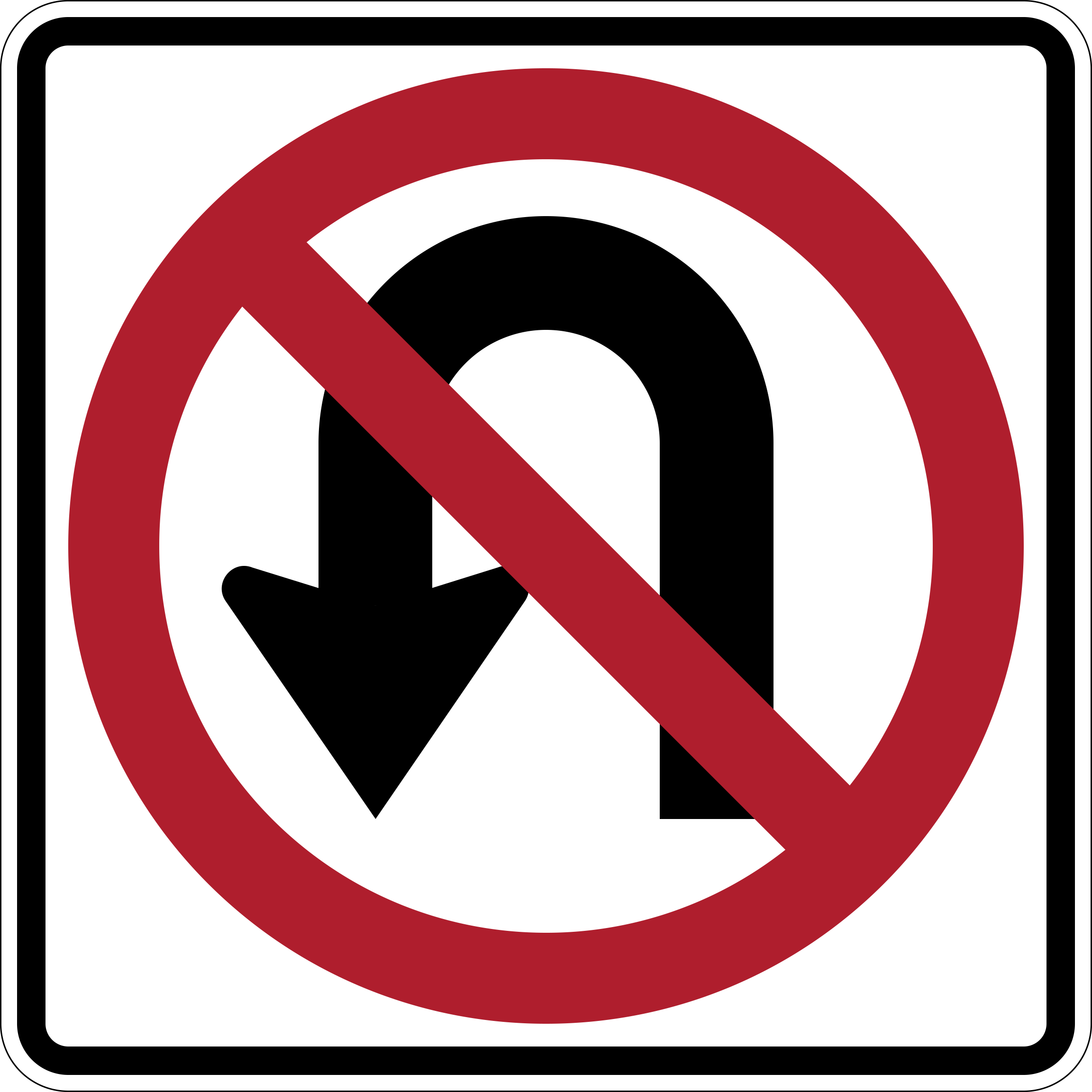
11. What movement is prohibited by an Illinois NO U-TURN sign?
- Making a left turn at a normal intersection
- Stopping at the shoulder to check directions
- Changing lanes before a divided highway begins
- Turning the vehicle around to travel in the opposite direction
Show answer
Turning the vehicle around to travel in the opposite direction. A NO U-TURN sign prohibits the U-shaped movement that reverses the vehicle's direction. Illinois describes these signs on divided highways or expressways, including openings in a median that are reserved for authorized vehicles such as police, ambulances, snow plows, and maintenance equipment. The left-turn choice is broader than the pictured movement and is not what this sign alone bans. Lane changes and a safe shoulder stop are separate actions. When the sign is present, continue to a permitted location rather than using the opening to turn around.
12. When rain, snow, or other conditions make the roadway hazardous, what speed adjustment is required?
- Double the speed to reduce time on the roadway
- Drive at the posted limit regardless of conditions
- Drive more slowly even if the posted limit is higher
- Match the fastest vehicle nearby
Show answer
Drive more slowly even if the posted limit is higher. Illinois says the posted number is not the only consideration in choosing a safe speed. Weather and traffic conditions may require a driver to travel below that limit, even when the sign has not changed. The posted limit is a maximum, not a promise that the surface will provide normal traction or visibility. Doubling speed increases stopping distance rather than improving safety, and copying the fastest nearby vehicle can add risk. Check the surface, visibility, and traffic, then select a speed that leaves room to react.
Study this in the handbook: Speed limits, school zones and work zones
13. How long does an Illinois driver have to report a crash after it happens?
- Within 24 hours
- Within 30 minutes
- Within 10 days
- Only when police ask for a report
Show answer
Within 30 minutes. Illinois gives a driver 30 minutes after a crash occurs to report it. Notify police right away, and if no officer comes to the scene, report at the nearest police station as soon as possible. In a rural area, call the county sheriff or the Illinois State Police. If the driver cannot make the report, a passenger must. Failing to report a crash can mean a fine of up to $2,500 and up to a year in jail, so waiting a day or more is far too long.
Study this in the handbook: Crashes, reports and insurance
14. What are the minimum ages for an Illinois Restricted Driving Permit and a Monitoring Device Driving Permit?
- An RDP cannot be issued under age 16, and an MDDP cannot be issued under age 18
- Both are available at 15
- Both require age 25
- Both require age 21
Show answer
An RDP cannot be issued under age 16, and an MDDP cannot be issued under age 18. A Restricted Driving Permit, which allows limited driving during a suspension or revocation for work, school or medical needs, cannot be issued to a person under age 16, and a Monitoring Device Driving Permit for DUI offenders with an ignition interlock cannot be issued to a person under age 18. An Occupational Driving Permit covers professional drivers suspended for three moving violations.
15. How long is an Illinois instruction permit valid?
- Up to six months
- Up to nine months
- Up to 24 months
- Until the holder turns 18, regardless of issue date
Show answer
Up to 24 months. An Illinois instruction permit is valid for up to 24 months. Nine months is the minimum holding period for a 15-to-17-year-old before obtaining a license, not the permit’s full validity period. Six months is not the listed term, and turning 18 does not automatically define every permit’s expiration. Keep the two concepts separate: 24 months describes the permit’s possible life, while nine consecutive months describes a required holding period for younger applicants.
Study this in the handbook: Instruction permit and the graduated license program
16. What does a broken yellow centerline generally allow on an Illinois roadway?
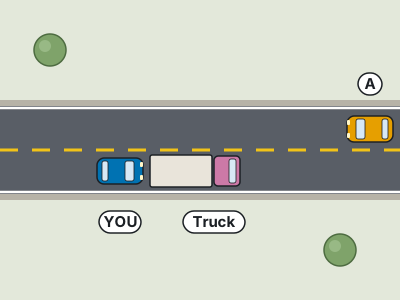
- Passing when it is safe
- Travel only in the shoulder
- Crossing only to park on the opposite side
- Passing only after stopping completely
Show answer
Passing when it is safe. A broken yellow line separates opposing traffic lanes and permits passing when it is safe. The marking does not require a complete stop before every pass, and it does not designate the shoulder or a parking maneuver. Safety still controls: the driver must assess sight distance, oncoming traffic, and other roadway conditions before crossing the centerline. The visual cue is the combination of yellow and broken segments, which means opposing directions with a passing opportunity, unlike solid yellow no-passing lines.
Study this in the handbook: Pavement markings
17. On an Illinois two-lane road, you meet a school bus stopped in the opposite direction with its stop arm out. What must you do?
- Stop and stay stopped until the arm is withdrawn and the lights are off, or the bus driver signals you on
- Slow to 20 mph and pass carefully
- Keep going, because only traffic behind the bus must stop
- Stop, then go once the children have left the road
Show answer
Stop and stay stopped until the arm is withdrawn and the lights are off, or the bus driver signals you on. On a two-lane road, traffic in both directions must stop for a school bus that is loading or unloading. Illinois says a driver approaching from the opposite direction must come to a complete stop and stay stopped until the stop signal arm is no longer extended and the flashing lights are off, or until the bus driver signals vehicles to pass. Illegally passing a stopped bus brings a license suspension and a $300 fine.
Study this in the handbook: School buses, emergency vehicles and railroad crossings
18. On an Illinois divided highway, who may use a median opening that has a NO U-TURN sign?
- Any driver who needs to turn around
- Passenger cars but not trucks
- Only authorized vehicles such as police cars, ambulances, and snow plows
- Any driver after coming to a full stop
Show answer
Only authorized vehicles such as police cars, ambulances, and snow plows. NO U-TURN signs are posted on divided highways and expressways, often where an opening in the median leads to the other side. Illinois says those openings are only for authorized vehicles, such as police cars, ambulances, snow plows, construction and maintenance equipment, and other emergency vehicles. Every other vehicle is barred from using them. A driver who needs to reverse direction should continue to an exit or interchange instead.
19. You miss your exit on an Illinois expressway. What should you do?
- Stop on the shoulder and back up to the ramp
- Continue to the next available exit
- Cut across the painted area to reach the ramp
- Turn around through a median opening
Show answer
Continue to the next available exit. A missed exit is an inconvenience, not an emergency. Illinois tells drivers to keep going and use the next available exit, then find a way back on local roads. Backing up on an expressway is against the law because traffic behind is moving at high speed and does not expect a car traveling in reverse. Median openings on divided highways are reserved for authorized vehicles such as police, ambulances, and snow plows.
Study this in the handbook: Following distance, night driving and weather
20. What happens to the Illinois driving privileges of someone convicted of a fourth DUI?
- Lifetime revocation
- A 10-year revocation
- A five-year revocation
- A one-year suspension
Show answer
Lifetime revocation. A fourth or later DUI conviction in Illinois results in lifetime revocation of driving privileges. Ten years is the minimum for a third conviction, five years for a second within 20 years, and one year for a first. A one year suspension is far below any DUI conviction penalty in the manual. A DUI conviction also stays on the driving record permanently, and a third DUI can be charged as Aggravated DUI.
Study this in the handbook: DUI, implied consent and summary suspension
QualitySpace is expanding to Illinois
We are a California-based independent insurance brokerage working on licensing in more states. We cannot help with Illinois insurance yet. Leave your email and we will let you know when we can.
Every question is written from the official Illinois Rules of the Road. Need paper? Printable IL practice test with answer key.
Last verified 2026-10-05. How we check every question · Study all 500 as flashcards
Frequently asked questions
How many questions are on this Illinois practice test?
This fixed set has 20 questions. It is test 1 of 25 from the 500 question Illinois bank. The real IL exam asks 35 questions and you need 28 correct.
What is the passing score for the real Illinois test?
80% must be answered correctly to be eligible for a Class D license (92 Ill. Adm. Code 1030.80) That figure comes from the official Illinois source cited on the DMV facts page.
How does this fixed test relate to the full Illinois bank?
Each numbered test is a fixed set of questions in a fixed order, so you can retake the same test later and compare. Every test mixes road signs and the other topics in about the same proportion as the full bank. Tests 1 to 25 together cover every question in the Illinois bank once. The full practice page mixes the whole bank at random.
Last verified 2026-10-05. See the Illinois DMV facts page for sourced state details.
Return to the full Illinois practice test · Study road signs