
Key points
Unless posted otherwise, interstates and tollways are 70 mph and four-lane highways are 65 mph.
Source: Handbook p. 24
“Interstates and tollways: 70 mph. • Highways with four lanes: 65 mph.”
Illinois Rules of the Road, Handbook p. 24Other highways and rural areas are 55 mph, city and town areas 30 mph, and alleys 15 mph.
Source: Handbook p. 24
“Other highways and rural areas: 55 mph. • City/town areas: 30 mph. • Alleys: 15 mph.”
Illinois Rules of the Road, Handbook p. 24School zones are 20 mph on school days between 6:30 a.m. and 4 p.m. when children are present and signs are posted.
Source: Handbook p. 24
“School zones: 20 mph (on school days between 6:30 a.m. and 4 p.m. when children are present and signs are posted).”
Illinois Rules of the Road, Handbook p. 24In a school zone, reduce speed to 20 mph and stop and yield to anyone in the crosswalk.
Source: Handbook p. 26
“reduce speed to 20 mph, and stop and yield the right of way to any children or adults in the crosswalk area.”
Illinois Rules of the Road, Handbook p. 26Slow down when approaching an intersection, a curve, the top of a hill or a narrow winding road.
Source: Handbook p. 24
“You must slow down when approaching and crossing an intersection, going around a curve, approaching the top of a hill, or traveling on a narrow and winding roadway.”
Illinois Rules of the Road, Handbook p. 24Work zone speed limits apply 24 hours a day, seven days a week, whether or not workers are present.
Source: Handbook p. 25
“Motorists must obey the posted construction zone speed limit 24 hours a day, seven days a week, regardless of the presence of workers.”
Illinois Rules of the Road, Handbook p. 25Doubling your speed quadruples your stopping distance.
Source: Handbook p. 84
“Doubling your speed quadruples your vehicle’s stopping distance.”
Illinois Rules of the Road, Handbook p. 84Match the flow of traffic, but never go over the posted maximum.
Source: Handbook p. 84
“Your speed should be adjusted for the conditions and match the flow of traffic, as long as it does not surpass the maximum posted speed limit.”
Illinois Rules of the Road, Handbook p. 84
Numbers to know
| Number | What it means | Manual |
|---|---|---|
| 70 mph | interstate and tollway limit | Handbook p. 24 |
| 65 mph | four-lane highway limit | Handbook p. 24 |
| 55 mph | other highways and rural limit | Handbook p. 24 |
| 30 mph | city and town limit | Handbook p. 24 |
| 15 mph | alley limit | Handbook p. 24 |
| 20 mph | school zone limit | Handbook p. 24 |
| 6:30 a.m. to 4 p.m. | hours the school zone limit applies | Handbook p. 24 |
| 24 hours | work zone limits apply around the clock | Handbook p. 25 |
Recognize these signs
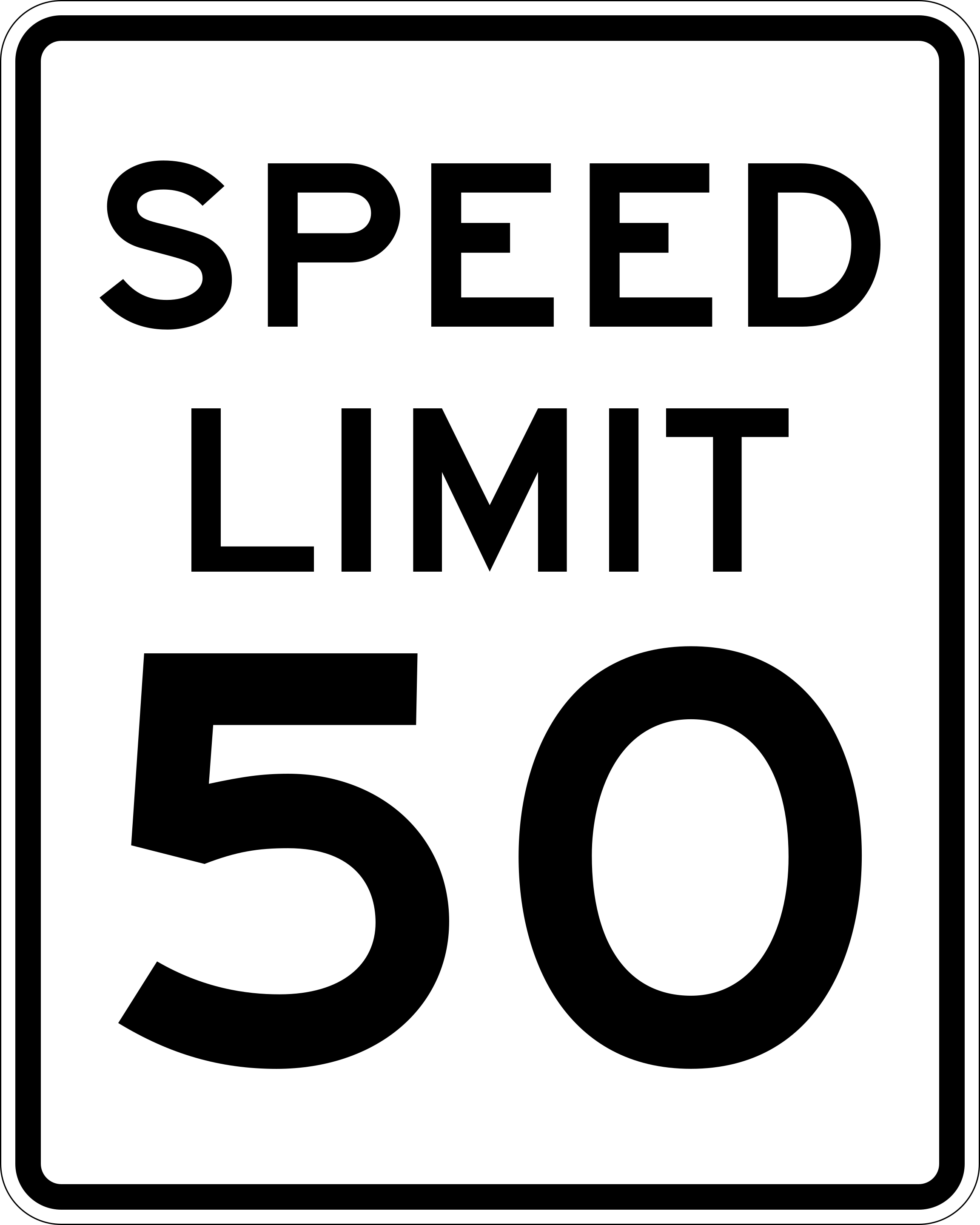
Speed limit 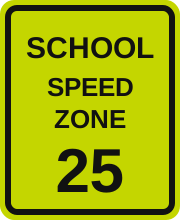
School zone
3 questions from the Illinois practice test
1. What is the default Illinois speed limit for highways with four lanes, unless a different limit is posted?
- 55 mph
- 70 mph
- 30 mph
- 65 mph
Show answer
65 mph. Illinois’s general speed table assigns 65 mph to highways with four lanes unless another limit is posted. The 70 mph figure belongs to interstates and tollways, while 55 mph covers other highways and rural areas. Thirty mph is the city or town figure. Road classification matters more than a driver’s personal estimate of what feels comfortable. Read the sign first, then use the table only when no different posted limit controls that stretch.
2. What default speed limit applies to other highways and rural areas in Illinois when no different sign is posted?
- 55 mph
- 45 mph
- 65 mph
- 70 mph
Show answer
55 mph. The Illinois table gives other highways and rural areas a default limit of 55 mph, unless a sign sets a different limit. Four-lane highways are listed separately at 65 mph, and interstates or tollways at 70 mph. The classification in the question is therefore important. Even under a default number, safe conditions are required and local authorities may post a different lawful limit. Check the roadway type and signs before relying on the table.
3. What speed applies in a posted Illinois school zone when the listed conditions are present?
- 15 mph
- 25 mph
- 20 mph
- 30 mph
Show answer
20 mph. The school-zone limit described in the handbook is 20 mph. That figure applies in a marked school zone during the stated school-day conditions, rather than automatically applying around every school property. The 15 mph option belongs to alleys, while 30 mph is the ordinary city or town figure. A practical cue is to connect the school-zone sign and children being present with the lower 20 mph limit. Always watch for a different posted local rule as well.
Practice this topic
Lock it in with speed limits questions from the free Illinois practice test. Every answer comes with a plain English explanation.
Source: the Illinois Rules of the Road, Chapter 4: Traffic Laws. This lesson is a plain English summary, not the law itself; where it differs, the manual and the statute govern. Last checked 2026-09-27.