
Test 3 of 25 · 20 questions · Free 2026
IL Permit Practice Test 3
Jump to the test ↓A fixed 20 question set from the Illinois bank with answers and plain English explanations. The real IL exam is 35 questions, 80 percent to pass; take the full length version on the main practice page.
Question 1 of 20 · 0 right so far
All 20 questions in test 3
Every question below comes from the Illinois question bank on this page. Open a question to see the correct answer and the explanation. Nothing here is hidden behind a signup.
1. An Illinois driver under 21 wants court supervision for a serious traffic offense. What is required?
- Paying double the fine
- Nothing, since supervision is automatic
- Attending traffic safety school
- Retaking the written exam
Show answer
Attending traffic safety school. Illinois allows a driver under 21 only one court supervision for serious traffic offenses. To get it, the driver must attend traffic safety school, and a driver under 18 must appear in court with a parent or legal guardian. Supervision is not automatic and is not bought with a double fine. A written exam retake is not the requirement. Court supervision for certain alcohol violations also delays a full graduated license for nine months for a driver under 18.
Study this in the handbook: Teen curfews, passenger limits and phone rules
2. When may a driver return to the right-hand lane after passing another vehicle?
- As soon as the front bumper clears the other vehicle
- Before the passed vehicle disappears from the driver’s side mirror
- Only after the passed driver flashes a courtesy signal
- After the entire passed vehicle is visible in the rearview mirror
Show answer
After the entire passed vehicle is visible in the rearview mirror. After passing on a two-lane highway, Illinois requires the driver to wait until the entire vehicle just passed is visible in the rearview mirror before moving back to the right-hand lane. Returning as soon as the front bumper clears can cut across the other vehicle, while relying on the side mirror alone leaves part of the vehicle outside the required view. A courtesy flash is not permission and is not the test. Use the full vehicle image in the rearview mirror as the cue, then merge smoothly with a safe gap.
Study this in the handbook: Passing, turning, roundabouts and parking
3. Which device-use rule applies to a driver age 19 or older in Illinois?
- All cellphone use is prohibited regardless of age
- Texting is allowed when traffic is moving slowly
- Holding a phone is allowed if it is used for navigation
- Hands-free devices or Bluetooth technology is allowed, while handheld cellphone use and texting remain prohibited
Show answer
Hands-free devices or Bluetooth technology is allowed, while handheld cellphone use and texting remain prohibited. For people age 19 and older, Illinois allows hands-free devices or Bluetooth technology, but the general ban on handheld cellphones, texting, and other electronic communications while operating remains. Navigation does not create a handheld exception, and slow traffic does not legalize texting. The under-19 rule is stricter because it prohibits any wireless or cellphone use while driving, including hands-free use, except for an emergency contact. Check both age and device method before relying on an exception.
Study this in the handbook: Phones, distracted driving and traffic stops
4. What minimum suspension applies when an Illinois driver under 21 has any trace of alcohol while operating a motor vehicle?
- A minimum suspension of three calendar months
- One month
- A half-year suspension
- No suspension unless BAC reaches .08 percent
Show answer
A minimum suspension of three calendar months. For a driver under 21, any trace of alcohol while operating a motor vehicle brings a minimum three-month suspension. The .08 percent choice incorrectly imports the adult chemical-test threshold and ignores Illinois’s separate under-21 rule. Six months is associated with other suspension triggers, including a qualifying chemical test, while one month understates the minimum. The practical cue is zero-trace treatment for under-21 driving: any detected alcohol can start the stated three-month minimum.
Study this in the handbook: Drivers under 21 and alcohol
5. What THC concentration in whole blood makes it illegal to drive in Illinois?
- 1 nanogram or more per milliliter
- 5 nanograms or more per milliliter
- 20 nanograms or more per milliliter
- Any amount, but only for drivers under 18
Show answer
5 nanograms or more per milliliter. Illinois makes it illegal to drive with a THC concentration of 5 nanograms or more per milliliter of whole blood, or 10 nanograms or more per milliliter of another bodily substance. One nanogram is below the limit, and 20 is well above it. The rule applies to all drivers, not just teens. A test at or over these levels also triggers a six month statutory summary suspension, the same as a BAC of .08 or more.
Study this in the handbook: DUI, implied consent and summary suspension
6. How close to a fire station driveway may you stand or park in Illinois?
- 10 feet
- 15 feet
- 20 feet
- 50 feet
Show answer
20 feet. Illinois bans standing or parking within 20 feet of a fire station driveway, and the same 20 foot distance applies to a crosswalk at an intersection. Fire trucks need room to swing out quickly, and drivers approaching a crosswalk need to see people stepping off the curb. Other distances on the same list cover different hazards: 15 feet from a fire hydrant, 30 feet from a STOP sign, YIELD sign or signal, and 50 feet from the nearest rail of a railroad crossing.
Study this in the handbook: Passing, turning, roundabouts and parking
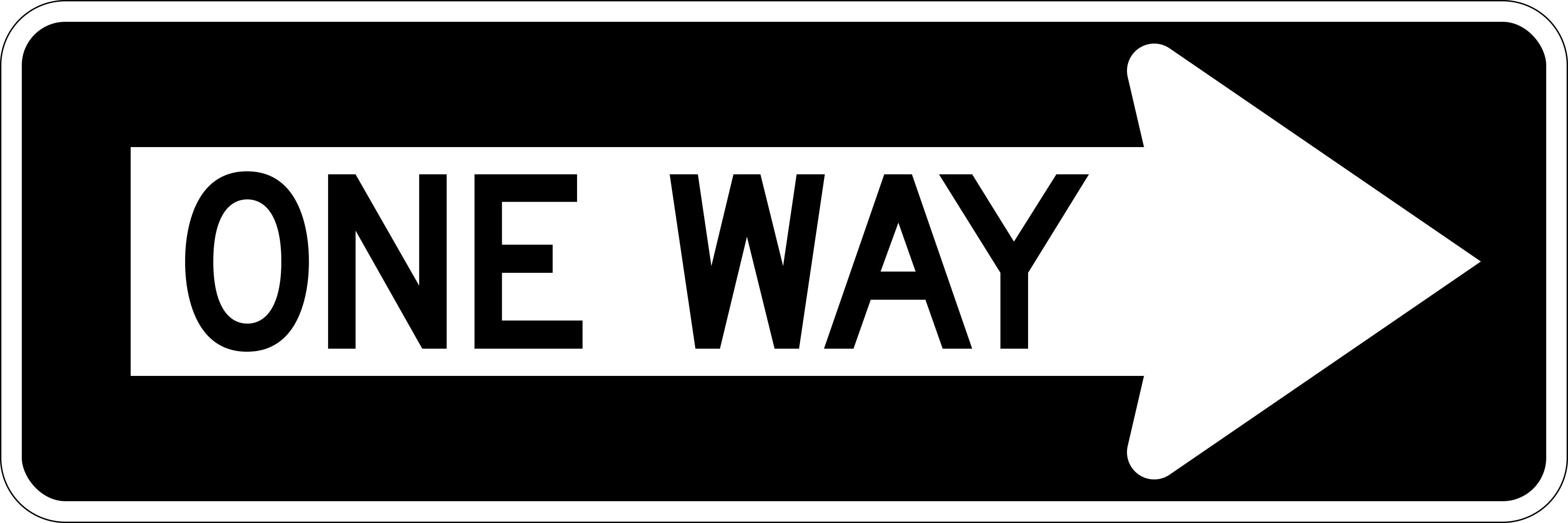
7. How should a driver follow an Illinois ONE-WAY sign?
- Use the street in either direction until another sign appears
- Turn against the arrow when the intersection is empty
- Drive there only during daylight hours
- Travel only in the direction shown by the arrow
Show answer
Travel only in the direction shown by the arrow. An Illinois ONE-WAY sign identifies a street or driveway where traffic must travel in the arrow's direction. The rule applies even when the roadway looks empty, and the street may not be used in either direction while waiting for another sign. An empty intersection also cannot override the sign, making the turn-against-the-arrow choice unsafe and unlawful. The sign has no daylight limitation. Before turning onto such a roadway, compare the arrow with your planned movement and keep the vehicle aligned with that indicated flow until another lawful instruction changes it.
8. Until what age must an Illinois child generally use a rear-facing child restraint?
- Until age 2, unless the child weighs more than 40 pounds or is more than 40 inches tall
- Until age 1 regardless of weight or height
- Until age 4 unless the child can sit in the front seat
- Until age 8 in every circumstance
Show answer
Until age 2, unless the child weighs more than 40 pounds or is more than 40 inches tall. Illinois requires a child to remain properly secured in a rear-facing child restraint until age 2, with an exception when the child weighs more than 40 pounds or is more than 40 inches tall. Age 1 is too early, and age 4 or age 8 overstates this particular rear-facing requirement. Check both the child's age and the two physical exceptions before changing restraint type.
Study this in the handbook: Seat belts, air bags and child seats
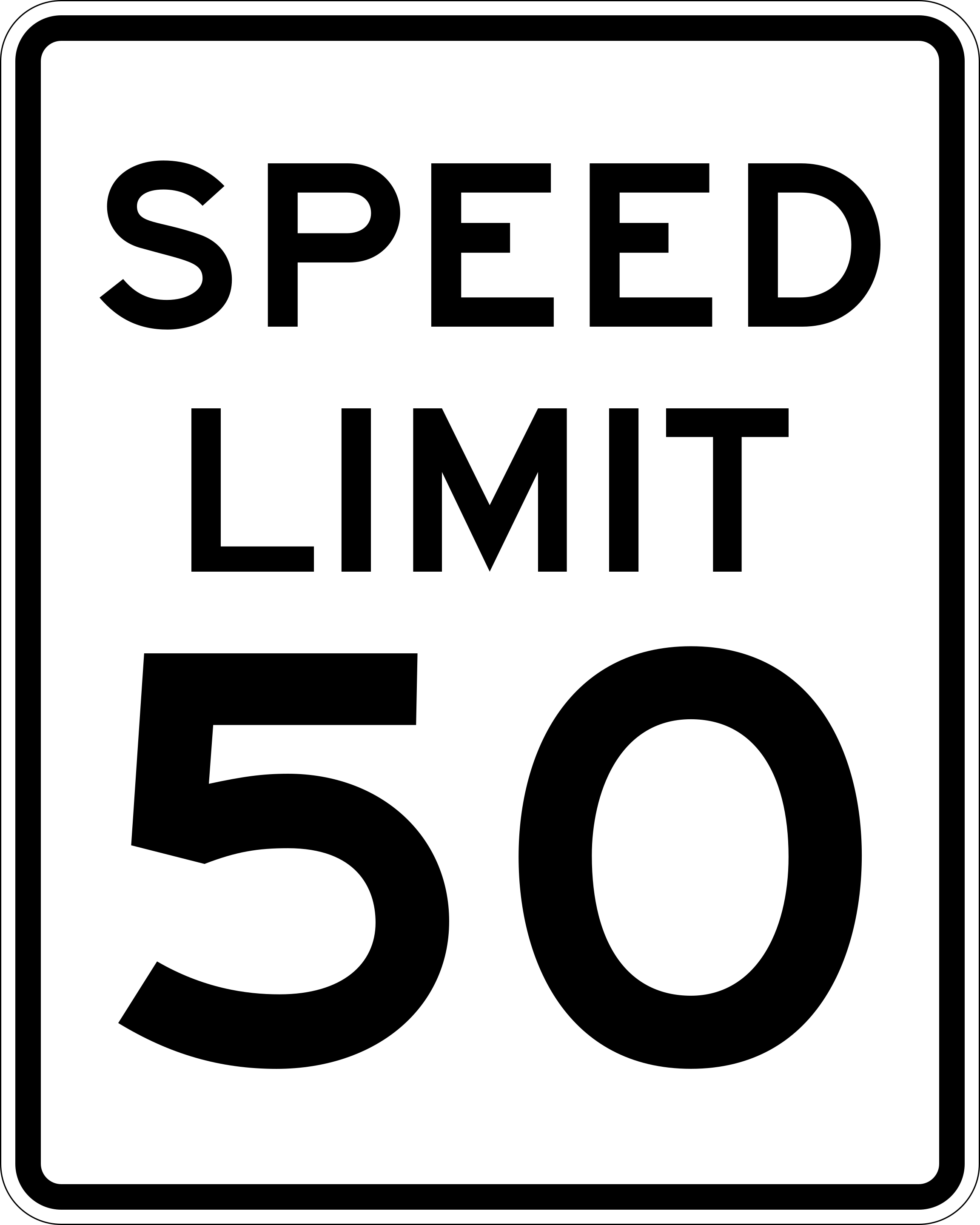
9. What do Illinois speed limit signs show on freeways and controlled-access highways?
- A suggested speed that never has legal effect
- Only the speed allowed for commercial trucks
- The speed required whenever the road is wet
- Maximum and minimum speed limits for all types of vehicles
Show answer
Maximum and minimum speed limits for all types of vehicles. Illinois speed limit signs on freeways and controlled-access highways can show maximum and minimum speeds for all types of vehicles. A displayed number therefore is not merely a suggestion, and it is not limited to trucks. The wet-road choice confuses a posted limit with the separate duty to adjust speed for conditions. Drivers must still choose a safe speed and obey any applicable minimum. Read the sign as a regulatory instruction, then consider traffic, weather, visibility, and road surface before deciding how to operate within the posted range.
10. What is an Illinois Occupational Driving Permit?
- A permit for farm equipment
- A permit for drivers under 16
- A permit letting a professional driver suspended for three moving violations drive for work
- A permit to drive after a DUI without an interlock
Show answer
A permit letting a professional driver suspended for three moving violations drive for work. An Occupational Driving Permit allows a professional driver whose license has been suspended for three moving violations to operate a vehicle in conjunction with employment. It differs from the Restricted Driving Permit, which covers work, school and medical needs during other suspensions and cannot be issued under 16, and from the Monitoring Device Driving Permit for DUI offenders, which cannot be issued under 18.
11. What do yellow roadway signs generally communicate?
- Required parking permissions
- Directions to services along the roadway
- Warnings about road conditions and dangers ahead
- A prohibition against every left turn
Show answer
Warnings about road conditions and dangers ahead. Yellow is used for warning signs. These signs alert drivers to road conditions and dangers ahead, so the driver should read the symbol, scan forward, and prepare to adjust speed or position. Yellow does not identify guide services, parking permission, or a universal turn prohibition. The color supplies the category, while the wording or symbol supplies the specific hazard to expect.
Study this in the handbook: Sign shapes and colors
12. What information is typically provided by a blue guide sign?
- A warning about a school zone
- Services along the roadway
- The distance to upcoming destinations
- A required stop at an intersection
Show answer
Services along the roadway. Blue is used for guide signs that tell drivers about services along the roadway. A blue sign can point toward useful facilities or assistance rather than impose a traffic command. Yellow-green warns about pedestrian, bicycle, school, or school-bus locations, while a red sign carries regulatory instructions such as a stop requirement. Green guide signs provide location, route, direction, or distance information. Do not confuse the two guide colors: blue points to services, and green helps you navigate toward places. On a test question, the phrase services along the roadway is the key clue for blue.
13. Outside a business or residential area in Illinois, how far before a turn must you signal?
- At least 200 feet
- At least 50 feet
- At least 100 feet
- At least 500 feet
Show answer
At least 200 feet. Illinois requires a continuous turn signal at least 100 feet before turning in a business or residential area, and at least 200 feet before turning in other areas. Outside a business or residential area, the 200 foot figure is the one that applies. Fifty feet is too short anywhere, and 100 feet is the business or residential figure only. Five hundred feet is not the signaling rule. Hand signals are given with the left arm.
Study this in the handbook: Passing, turning, roundabouts and parking
14. Which speeding in a construction zone record can lead to an Illinois license suspension?
- Any single violation, even with no workers present
- A second violation within two years of the first, when workers are present
- Three violations in ten years
- Only a violation over 50 mph
Show answer
A second violation within two years of the first, when workers are present. Illinois lists a second construction zone speeding violation within two years of the previous one, when workers are present, as grounds for suspension. A single violation does not trigger this suspension by itself, and the rule concerns workers being present. Three in ten years and a 50 mph cutoff are not the stated standard. Construction zone limits apply 24 hours a day, seven days a week, and every construction zone is a no passing zone.
15. How is Illinois vehicle use tax figured on a private sale?
- On the model year if the price is under $15,000, and on the selling price if $15,000 or more
- Always on the selling price
- Always a flat $25
- On the buyer's income
Show answer
On the model year if the price is under $15,000, and on the selling price if $15,000 or more. When you purchase a vehicle in Illinois you owe tax within the required time: if the selling price is less than $15,000 the tax is based on the model year of the vehicle, and if the selling price is $15,000 or more the tax is based on the selling price. The standard passenger plate fee is $151, and a temporary registration permit is valid for 90 days.
16. If smoke appears from a vehicle while driving, what is the safest immediate response?
- Continue to the next service station
- Open the hood while remaining in traffic
- Pull off the road, turn off the engine, and move away
- Fight the fire before leaving the vehicle
Show answer
Pull off the road, turn off the engine, and move away. The manual says vehicle fires can be very dangerous. When smoke appears, pull off the road, turn off the engine, move away from the vehicle, and call 911. Driving on to a service station skips every one of those steps. Opening the hood while still in traffic is not among the listed actions, and the manual specifically says not to fight the fire yourself. Once everyone is at a safe distance, remain clear of the vehicle and wait for emergency responders.
Study this in the handbook: Crashes, reports and insurance
17. When entering a roundabout, whom must a driver yield to?
- Only vehicles approaching from the left
- All traffic, including pedestrians and bicycles
- No one, because entering traffic has priority
- Only vehicles already stopped outside the circle
Show answer
All traffic, including pedestrians and bicycles. Vehicles entering or exiting an Illinois roundabout must yield to all traffic, and the manual specifically includes pedestrians and bicycles. Entering drivers should slow down, read the signs and pavement markings, and wait for a safe opening before turning right into the circle. Priority does not belong automatically to a vehicle entering, and the rule is broader than watching one side or only stopped vehicles. Look for users already circulating and for people crossing near the entry or exit.
Study this in the handbook: Passing, turning, roundabouts and parking
18. What are Illinois' rules for low speed electric or gas bicycles?
- A driver's license and plates
- Any motor size and any age
- A motor under 5 horsepower and a rider over 18
- A motor under 1 horsepower and a rider at least age 16
Show answer
A motor under 1 horsepower and a rider at least age 16. Low speed electric or gas bicycles must have a motor of less than 1 horsepower and must be operated by a person at least age 16. Class 1 electric bicycles assist only while pedaling and stop at 20 mph, and Class 3 assist while pedaling up to 28 mph. Bicycles are prohibited on controlled access highways and expressways, and riders must obey the same signs and signals as drivers.
19. When may an Illinois driver drive over a fire hose at an emergency scene?
- Whenever the hose is flat against the pavement
- Only when permitted by the fire official in command
- Whenever no firefighter is standing directly on it
- Only after turning on the vehicle's hazard flashers
Show answer
Only when permitted by the fire official in command. Illinois prohibits driving over fire hoses unless the fire official in command of the scene permits it. A flat hose, flashing hazards, or the absence of a nearby firefighter does not provide that authorization. Stop and follow directions from the official in command, even if crossing appears convenient or the roadway is otherwise open. The same section tells drivers approaching an emergency vehicle with lights or sirens to pull to the right and, at an intersection with two way traffic, remain stopped until it passes through.
Study this in the handbook: Speed limits, school zones and work zones
20. What does a WRONG WAY sign tell an Illinois driver?
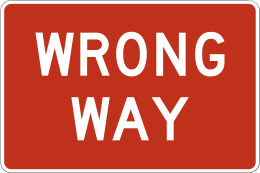
- The vehicle is traveling in the wrong direction
- The roadway has a rough surface ahead
- The driver may pass traffic on either side
- A lane is reserved for trucks only
Show answer
The vehicle is traveling in the wrong direction. A WRONG WAY sign means the vehicle is traveling against the permitted direction. Illinois places this sign on expressway ramps shortly beyond a DO NOT ENTER sign, and it can also appear after a wrong turn into a one-way street, alley, or driveway. The rough-road and truck-lane choices describe different signs and conditions. Passing permission is not conveyed by this sign. Once seen, the driver should stop the unsafe movement as soon as it can be done safely and seek a legal way to turn around or leave the route.
QualitySpace is expanding to Illinois
We are a California-based independent insurance brokerage working on licensing in more states. We cannot help with Illinois insurance yet. Leave your email and we will let you know when we can.
Every question is written from the official Illinois Rules of the Road. Need paper? Printable IL practice test with answer key.
Last verified 2026-10-05. How we check every question · Study all 500 as flashcards
Frequently asked questions
How many questions are on this Illinois practice test?
This fixed set has 20 questions. It is test 3 of 25 from the 500 question Illinois bank. The real IL exam asks 35 questions and you need 28 correct.
What is the passing score for the real Illinois test?
80% must be answered correctly to be eligible for a Class D license (92 Ill. Adm. Code 1030.80) That figure comes from the official Illinois source cited on the DMV facts page.
How does this fixed test relate to the full Illinois bank?
Each numbered test is a fixed set of questions in a fixed order, so you can retake the same test later and compare. Every test mixes road signs and the other topics in about the same proportion as the full bank. Tests 1 to 25 together cover every question in the Illinois bank once. The full practice page mixes the whole bank at random.
Last verified 2026-10-05. See the Illinois DMV facts page for sourced state details.
Return to the full Illinois practice test · Study road signs