
Test 6 of 25 · 20 questions · Free 2026
IL Permit Practice Test 6
Jump to the test ↓A fixed 20 question set from the Illinois bank with answers and plain English explanations. The real IL exam is 35 questions, 80 percent to pass; take the full length version on the main practice page.
Question 1 of 20 · 0 right so far
All 20 questions in test 6
Every question below comes from the Illinois question bank on this page. Open a question to see the correct answer and the explanation. Nothing here is hidden behind a signup.
1. What does an Illinois driver owe a pedestrian in an unmarked crosswalk on the driver's side when no signals control traffic?
- No duty unless the pedestrian is carrying a crossing flag
- A yield, including a complete stop when necessary
- Priority only if the roadway has painted crosswalk lines
- A horn warning, followed by immediate passage
Show answer
A yield, including a complete stop when necessary. Illinois requires a driver to yield when a pedestrian is in an unmarked crosswalk on the driver’s side and no traffic-control signals are operating there. The painted-lines choice is too narrow because the rule expressly covers an unmarked crossing. Yielding means slowing or stopping so the person can proceed safely, not merely sounding the horn. Scan both sides near intersections and crossing areas, since the absence of white paint does not erase a pedestrian’s protection.
Study this in the handbook: Right of way and pedestrians
2. After an Illinois DUI conviction, how long must the driver file Financial Responsibility Insurance?
- For six months
- For three years
- For one year
- For ten years
Show answer
For three years. An Illinois DUI conviction requires filing Financial Responsibility Insurance, the SR-22, for three years. Six months and one year are too short, and ten years is the minimum revocation for a third conviction, not the insurance period. Before privileges are restored, the driver must also complete an alcohol or drug evaluation, finish a rehabilitation or education program, have a hearing with the Secretary of State, and pay a reinstatement fee.
Study this in the handbook: DUI, implied consent and summary suspension
3. What must a motorist do when encountering an organized funeral procession?
- Drive between procession vehicles to reach the next lane
- Join the procession to gain its right of way
- Pass every vehicle when a gap appears
- Yield to all vehicles in the procession
Show answer
Yield to all vehicles in the procession. Illinois gives priority to the vehicles in a funeral procession, so an approaching motorist must yield to all of them. Joining the line is prohibited, and driving between its vehicles is also forbidden unless a law enforcement officer directs it. Passing is not a shortcut around the rule. Slow down, remain outside the procession, and wait until the entire organized line has cleared your path.
Study this in the handbook: Speed limits, school zones and work zones
4. After an Illinois license is revoked, when can the driver usually apply for a new license?
- After 30 days
- After a minimum of one year, unless otherwise noted
- After 90 days
- Never
Show answer
After a minimum of one year, unless otherwise noted. In Illinois, a revocation is an indefinite withdrawal of driving privileges, and the driver may be eligible to reapply after at least one year unless another period applies. Thirty and 90 days describe suspension lengths, not the revocation waiting period. Never is too strong for most revocations, although a fourth DUI brings lifetime revocation. A suspension, by contrast, is a temporary loss that ends after a set time and a reinstatement fee.
5. During the first 12 months of Illinois initial licensing, how many passengers under 20 are generally allowed?
- Two people under 20
- One person under 20
- Three people under 20
- No passengers under 20
Show answer
One person under 20. For the first 12 months of licensing, or until the driver turns 18, Illinois limits the vehicle to one person under age 20. The rule has an important family exception for a sibling, stepsibling, child, or stepchild of the driver. Two and three passengers exceed the ordinary limit, while no passengers is stricter than the manual requires. On a test, identify the one-person baseline first, then check whether the listed passenger falls within the family exception.
Study this in the handbook: Teen curfews, passenger limits and phone rules
6. When must bright lights be dimmed in Illinois?
- 500 feet before meeting an oncoming vehicle and 300 feet before passing a vehicle
- 1,000 feet in both cases
- Only when the other driver flashes
- 100 feet in both cases
Show answer
500 feet before meeting an oncoming vehicle and 300 feet before passing a vehicle. Bright lights must be dimmed 500 feet before meeting an oncoming vehicle and 300 feet before passing a vehicle. Night driving is difficult because things may appear differently than in daylight, and glare from lights may interfere with vision. Never overdrive your headlights, keep them clean and aimed properly, dim the dashboard lights, and use the edge lines and center lines of the roadway as guides.
Study this in the handbook: Following distance, night driving and weather
7. Which following-distance rule should a driver use in good road and weather conditions?
- The three-second rule
- A one-car-length rule
- A one-second rule at every speed
- The distance shown by the vehicle behind
Show answer
The three-second rule. Illinois uses the three-second rule to judge a safe gap in good conditions. The driver selects a fixed object, watches the vehicle ahead pass it, and counts until the driver reaches that object. A one-car-length estimate changes with speed and does not provide the manual’s method. Poor weather or roadway conditions require even more space, so three seconds is a starting point rather than a license to follow closely.
Study this in the handbook: Following distance, night driving and weather
8. How far before a rural Illinois railroad crossing may the round advance warning sign be placed?
- 50 feet
- Directly at the crossing
- One mile
- Up to 750 feet
Show answer
Up to 750 feet. The round yellow advance warning sign with a black X and the letters RR means a highway railway crossing is ahead, and in rural areas it may be placed up to 750 feet before the crossing. Slow down, look both ways and listen, and never start across unless you can clear the tracks. The crossing itself is marked with a crossbuck and often gates and lights.
Study this in the handbook: Sign shapes and colors
9. What does an Illinois diamond-shaped roadway sign warn a driver about?
- A required full stop at the next intersection
- A route number and direction to a destination
- Services available at the next exit
- Hazards or possible hazards on or near the roadway
Show answer
Hazards or possible hazards on or near the roadway. The diamond shape identifies a warning sign. Its message alerts drivers to hazards or possible hazards on or near the roadway, so the appropriate response is to slow down and use caution. It is not the shape used for a stop instruction, a service guide, or a route marker. When the diamond appears, scan ahead for the condition described and adjust speed before reaching it.
Study this in the handbook: Sign shapes and colors
10. How should a driver treat a flashing red traffic signal?
- Slow down but continue without stopping
- Treat it as a green arrow
- Stop, yield to traffic in the intersection or crosswalk, and proceed when safe
- Stop only if a train is visible
Show answer
Stop, yield to traffic in the intersection or crosswalk, and proceed when safe. A flashing red signal requires a complete stop followed by yielding to traffic within the intersection or crosswalk. The driver may proceed only when the movement is safe. Merely slowing is the rule for neither this signal nor a stop sign, and a green arrow has a different meaning. The railroad reference is too narrow because flashing red signals also control ordinary intersections. Stop at the proper point, check for vehicles and pedestrians, then continue when the path is clear.
Study this in the handbook: Traffic signals and arrows
11. Besides sunset to sunrise and whenever wipers are needed, when should Illinois drivers use headlights?
- When objects 1,000 feet away cannot be seen
- When objects 200 feet away cannot be seen
- Only when street lights are out
- Whenever the temperature is below freezing
Show answer
When objects 1,000 feet away cannot be seen. Illinois vehicles must have two headlights that are on from sunset to sunrise and whenever rain, snow, fog, or other conditions require windshield wipers. The manual adds a visibility test: headlights should also be used when objects 1,000 feet away cannot be seen. That covers dusk, heavy overcast, smoke, or dust, when other drivers may not see a vehicle without lights. Bright beams must still be dimmed for oncoming traffic and for vehicles ahead.
Study this in the handbook: Required vehicle equipment
12. Which situation is specifically allowed for using a non-hands-free cellphone in Illinois?
- Reading a social-media message at a red light
- Watching a video while moving in slow traffic
- Reporting an emergency
- Holding the phone on speaker while driving
Show answer
Reporting an emergency. Illinois lists reporting an emergency as an exception to the ban on cellphone use that is not hands-free. The other options still involve prohibited manual use or electronic activity while driving. A red light does not make video viewing or message reading acceptable, and speakerphone is not hands-free when the device is held. Use the emergency exception only for that purpose, and remember that pulling over safely is the better response whenever circumstances permit.
Study this in the handbook: Phones, distracted driving and traffic stops
13. What does Illinois allow at a constantly lit red arrow?
- Any movement in the arrow direction without stopping
- Proceeding straight through the intersection
- A left turn from any two-way street
- A right turn after a complete stop and yielding to traffic and pedestrians
Show answer
A right turn after a complete stop and yielding to traffic and pedestrians. A constantly lit red arrow normally blocks the movement shown by the arrow. Illinois makes an exception for a right turn, but the driver must come to a complete stop and yield to oncoming traffic and pedestrians before proceeding. The left-turn exception is narrower than the distractor suggests: it applies when turning from one one-way street onto another one-way street with traffic moving to the left. A red arrow never authorizes a straight movement through the intersection. Read the arrow direction and then check whether the specific one-way exception applies.
Study this in the handbook: Traffic signals and arrows
14. When may an Illinois driver travel at the maximum allowable speed?
- Only under safe conditions
- Whenever the road is dry, regardless of traffic
- Only when traveling below the posted minimum
- Whenever the driver has a vehicle with advanced safety features
Show answer
Only under safe conditions. Illinois permits the maximum allowable speed only when conditions are safe. A dry road by itself is not enough if traffic, visibility, pedestrians, weather, or the roadway create danger. The posted maximum is a ceiling, not a promise that traveling at that number is appropriate every moment. The equipment-based option also misses the driver’s duty to evaluate the surroundings. Before choosing speed, scan the road, adjust for hazards, and use a lower speed whenever the situation requires more time or control.
Study this in the handbook: Seat belts, air bags and child seats
15. How long are Illinois driving privileges suspended after a chemical test discloses a qualifying result?
- Thirty days
- Three months
- Two years
- Six calendar months
Show answer
Six calendar months. Illinois imposes a six-month statutory summary suspension when a chemical test discloses a qualifying BAC, THC, or other covered substance result. The three-month option is not the period stated for this chemical-test suspension. A refusal is handled separately and generally brings a one-year suspension for a first offense, while two years is not the period in this rule. Keep the trigger and consequence together: a qualifying chemical test leads to six months. This administrative suspension is separate from any criminal DUI case that may follow.
Study this in the handbook: DUI, implied consent and summary suspension
16. At what age can an Illinois resident apply for an instruction permit without taking a driver education course?
- 15 or older
- 16 or older
- 17 years and 3 months or older
- 21 or older
Show answer
17 years and 3 months or older. Illinois lets an applicant who is 17 years and 3 months or older apply for an instruction permit without a driver education course. Applicants 15 to 17 need proof that they are enrolled in, or will start within 30 days, an approved course. Fifteen and 16 are too young to skip the course. Twenty one is not the threshold, although first time drivers who are 18, 19, or 20 must take a six hour Adult Driver Education Course before licensing.
Study this in the handbook: Instruction permit and the graduated license program
17. Why should an Illinois driver begin slowing after seeing a SIGNAL AHEAD sign?
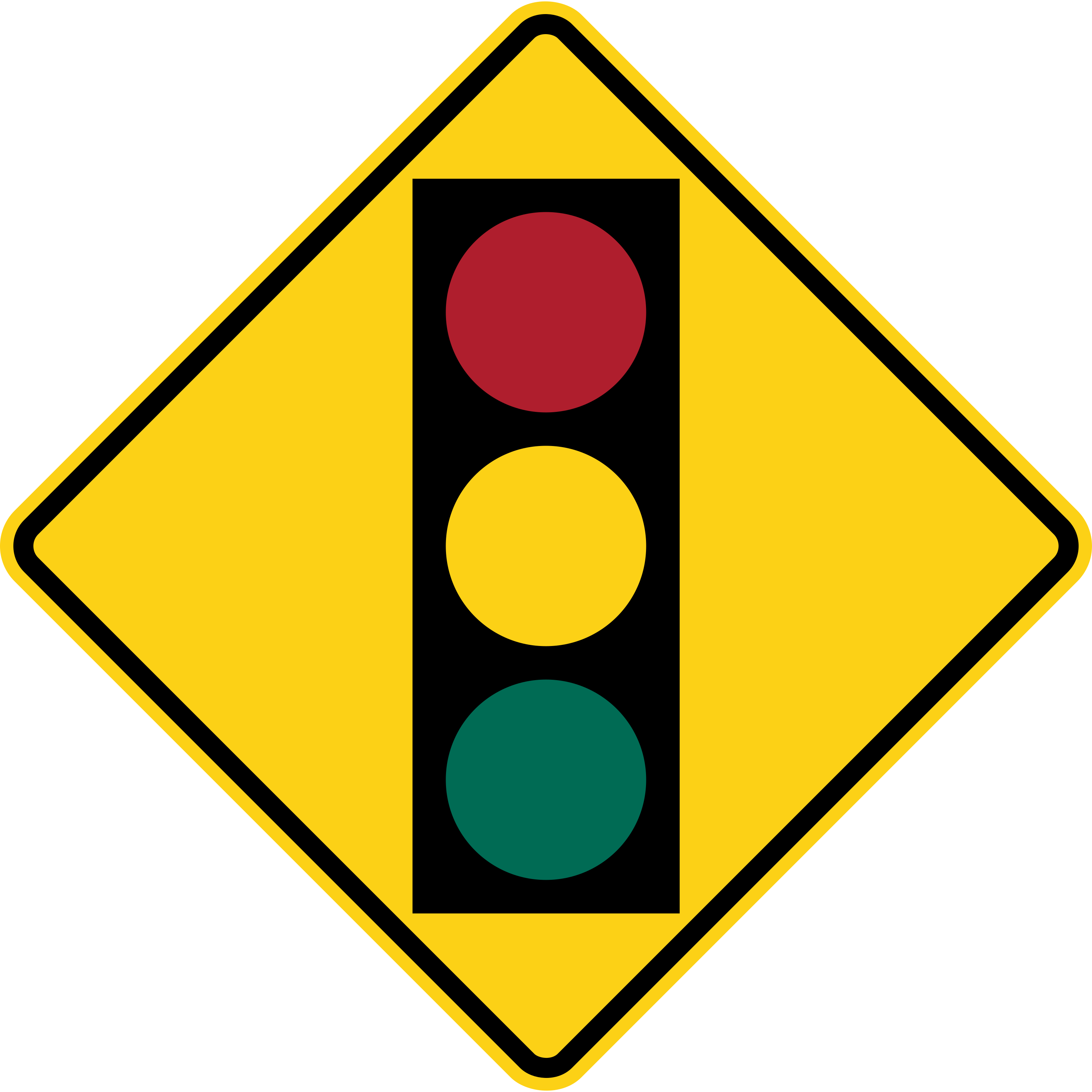
- It warns that a traffic signal is approaching, even if it is not yet visible
- It marks a police checkpoint where every vehicle must stop
- It means the next streetlight is permanently out of service
- It permits the driver to ignore the upcoming signal
Show answer
It warns that a traffic signal is approaching, even if it is not yet visible. A SIGNAL AHEAD sign warns of an approaching traffic control signal. The signal may be hidden from view, but the warning is close enough that the driver should begin slowing down. The out-of-service, checkpoint, and ignore-the-signal choices assign meanings that the sign does not have. Treat the warning as preparation time: check traffic, adjust speed smoothly, and be ready to obey the actual light when it becomes visible. This matters especially on high-speed roads, where more distance is needed to stop or respond to a red signal.
18. What does an Illinois NO LEFT TURN sign prohibit?
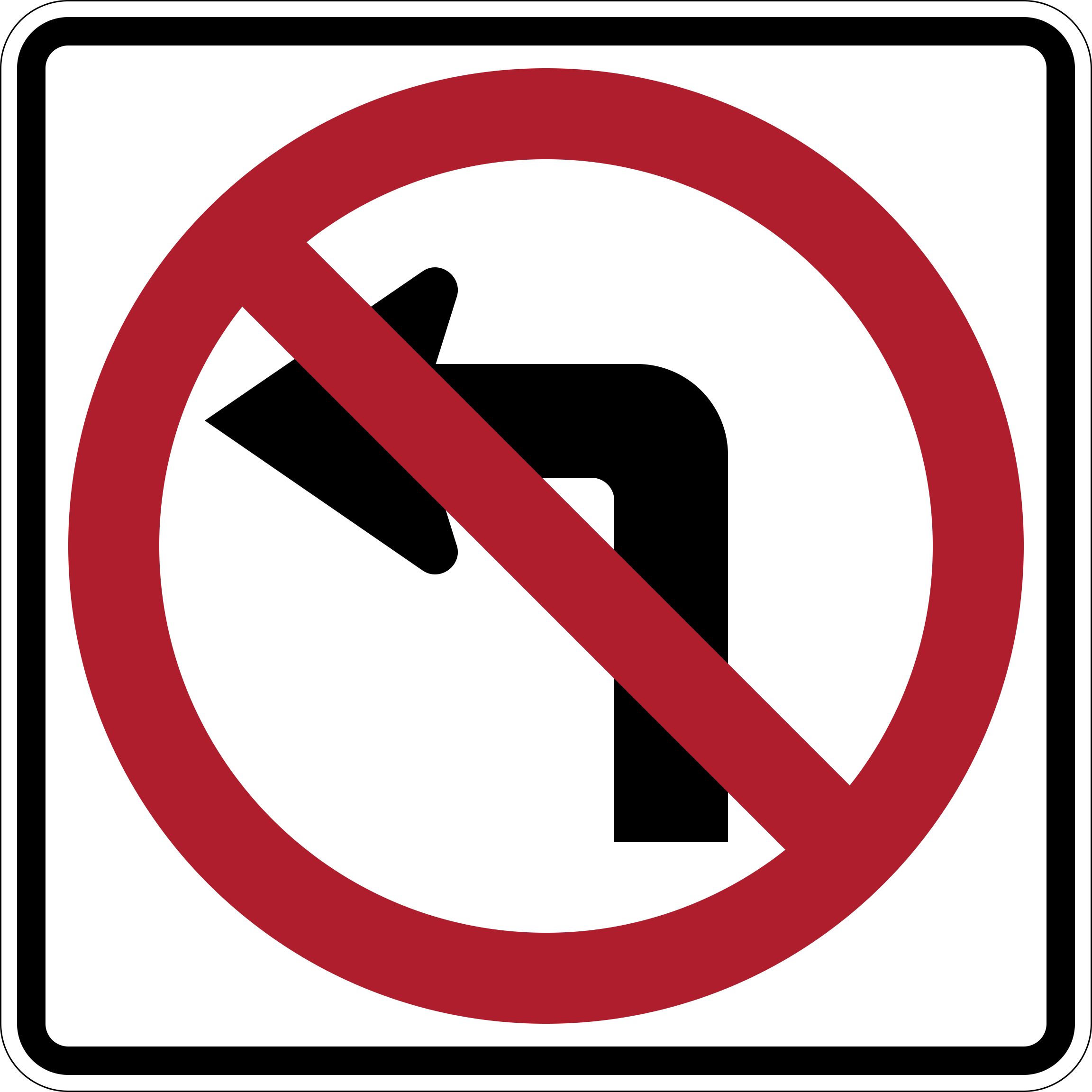
- Turning left in the direction shown by the crossed-out arrow
- Driving straight through the intersection
- Making a U-turn on every nearby street
- Turning right at every intersection on the roadway
Show answer
Turning left in the direction shown by the crossed-out arrow. Illinois no-turn signs use the arrow inside the red circle and slash to identify the movement that is not allowed. With a left arrow, the restriction is a left turn at that location. It does not automatically ban right turns, straight travel, or every U-turn on nearby streets. Those choices expand the restriction beyond the pictured action. Check for additional signs or signals before choosing another movement, and remember that a sign at one intersection controls that location rather than every intersection along the road.
19. How loud may a vehicle sound system be in Illinois?
- Any volume with the windows closed
- It may not be audible 75 feet or more from a vehicle being driven on a highway
- There is no limit
- Audible up to 500 feet
Show answer
It may not be audible 75 feet or more from a vehicle being driven on a highway. It is illegal to operate or permit any sound system, such as a radio, tape player or disc player, at a volume that can be heard 75 feet or more from a vehicle being driven on a highway. The test is whether the sound reaches 75 feet, so closed windows do not make a louder volume legal, there is a limit, and 500 feet is far beyond it. At railroad crossings the manual also suggests rolling down windows and listening so other noises do not block out the sound of a train.
Study this in the handbook: Required vehicle equipment
20. When may a vehicle be driven in an Illinois two-way left-turn lane?
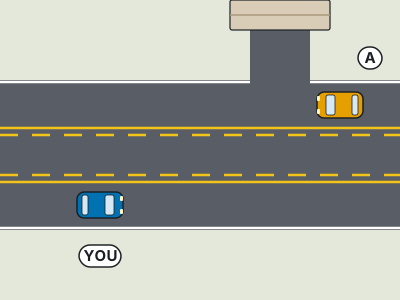
- Whenever passing traffic is slower in the through lane
- To travel through the corridor for as long as necessary
- When preparing for or making a left turn, or a permitted U-turn
- Only when a police vehicle is behind the driver
Show answer
When preparing for or making a left turn, or a permitted U-turn. A two-way left-turn lane is a shared turning area, not a substitute travel lane. Illinois permits entering it when preparing for or making a left turn from or into the roadway, and when preparing for or making a U-turn where the law allows one. Using it to pass or continue straight changes its purpose and increases conflict with opposing turners. A police vehicle behind you does not create permission. Signal early, check for traffic in both directions, and leave the lane once the turning movement is complete.
Study this in the handbook: Right of way and pedestrians
QualitySpace is expanding to Illinois
We are a California-based independent insurance brokerage working on licensing in more states. We cannot help with Illinois insurance yet. Leave your email and we will let you know when we can.
Every question is written from the official Illinois Rules of the Road. Need paper? Printable IL practice test with answer key.
Last verified 2026-10-05. How we check every question · Study all 500 as flashcards
Frequently asked questions
How many questions are on this Illinois practice test?
This fixed set has 20 questions. It is test 6 of 25 from the 500 question Illinois bank. The real IL exam asks 35 questions and you need 28 correct.
What is the passing score for the real Illinois test?
80% must be answered correctly to be eligible for a Class D license (92 Ill. Adm. Code 1030.80) That figure comes from the official Illinois source cited on the DMV facts page.
How does this fixed test relate to the full Illinois bank?
Each numbered test is a fixed set of questions in a fixed order, so you can retake the same test later and compare. Every test mixes road signs and the other topics in about the same proportion as the full bank. Tests 1 to 25 together cover every question in the Illinois bank once. The full practice page mixes the whole bank at random.
Last verified 2026-10-05. See the Illinois DMV facts page for sourced state details.
Return to the full Illinois practice test · Study road signs