
Key points
Work zone signs are usually diamond or rectangular, orange with black letters or symbols.
Source: Handbook p. 38
“These construction, maintenance, or emergency operation signs alert you to work zones ahead and warn you that people are working on or near the roadway. They are generally diamond or rectangular shaped and orange with black letters or symbols.”
Kansas Driving Handbook, Handbook p. 38In a work zone, a person with a sign or flag may direct traffic, and you must follow their instructions.
Source: Handbook p. 39
“In work zones, traffic may be controlled by a person with a sign or flag to tell you which direction to travel, to slow down or stop. You must follow their instructions.”
Kansas Driving Handbook, Handbook p. 39Reduce speed in work zones, be ready to stop suddenly and do not tailgate.
Source: Handbook p. 39
“Reduce your speed in work zones and be prepared to stop suddenly. Do not tailgate in work zones.”
Kansas Driving Handbook, Handbook p. 39Guide signs are square or rectangular and green, brown or blue.
Source: Handbook p. 42
“Guide Signs These signs are square and rectangular and are green, brown, or blue.”
Kansas Driving Handbook, Handbook p. 42If Exit is written on the left side of an exit sign, the exit lane or ramp is on the left.
Source: Handbook p. 42
“If the word “Exit” is written on the left side of an exit sign, the exit lane or ramp is to the left”
Kansas Driving Handbook, Handbook p. 42Blue service signs are square or rectangular with white lettering or symbols and show services such as rest areas, gas stations, hotels or hospitals.
Source: Handbook p. 42
“Service Signs - These blue signs are square or rectangular shaped with white lettering or symbols. They show the location of various services such as rest areas, gas stations, hotels or hospitals.”
Kansas Driving Handbook, Handbook p. 42Signs for an unplanned incident are fluorescent pink with black lettering.
Source: Handbook p. 43
“hazardous material spill, or other unplanned incident. These signs are fluorescent pink with black lettering.”
Kansas Driving Handbook, Handbook p. 43Keep obeying mobile work zone signs until you see the End Road Work sign.
Source: Handbook p. 92
“Observe the posted signs until you see the one that says, “End Road Work.””
Kansas Driving Handbook, Handbook p. 92Green or brown destination signs show direction and distance to places such as cities, airports, and state and county lines.
Source: Handbook p. 42
“Destination Signs - These green or brown signs are square or rectangular shaped with white lettering or symbols. They show direction and distance to various locations such as cities, airports, state, and county lines”
Kansas Driving Handbook, Handbook p. 42
Recognize these signs
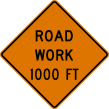
Road work ahead 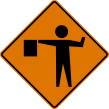
Flagger ahead 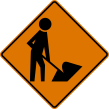
Workers ahead 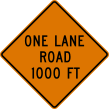
One lane road ahead 
Detour 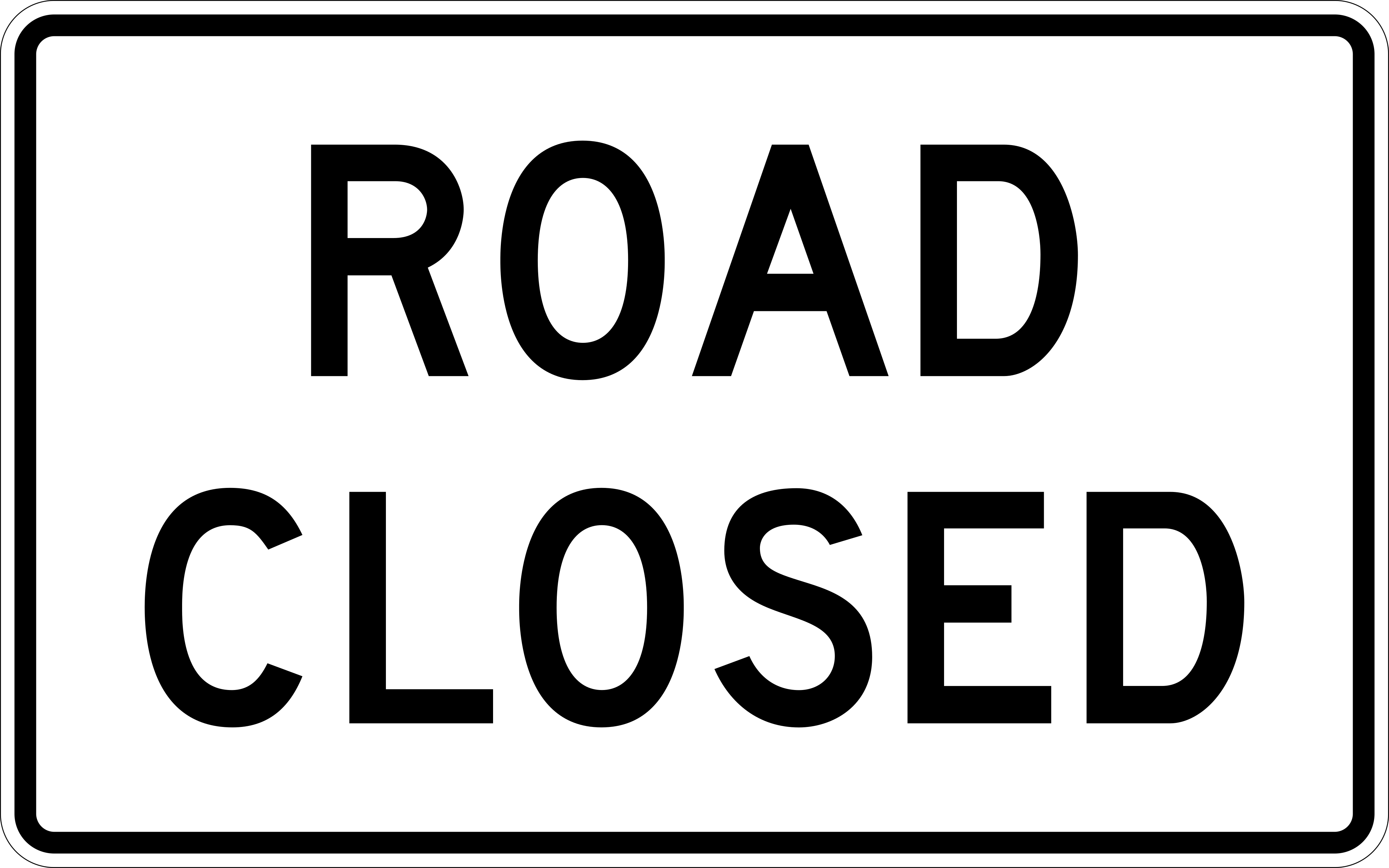
Road closed 
End road work 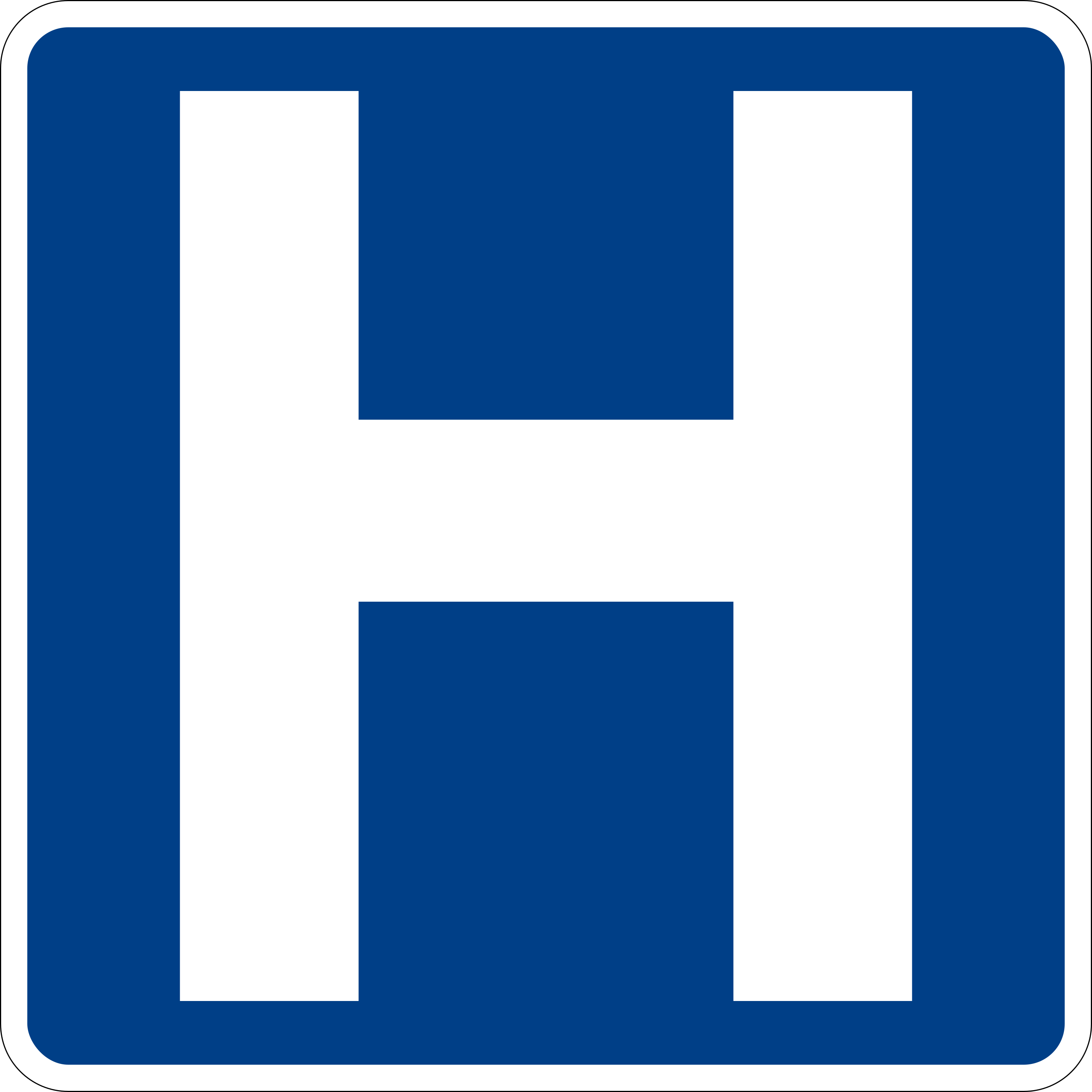
Hospital
3 questions from the Kansas practice test
1. What does an orange diamond or rectangular sign generally identify?
- A work zone ahead
- A route to a hospital
- A railroad crossing only
- A permanent parking regulation
Show answer
A work zone ahead. Orange diamond and rectangular signs identify work zones connected with construction, maintenance, or emergency operations. They warn that workers may be on or near the roadway and can accompany messages about reduced speed, detours, equipment, or changing pavement. A hospital route is guide information, railroad crossings use their own warning devices, and permanent parking rules are regulatory. Treat orange as a work zone cue. Reduce speed, watch for people and equipment, follow temporary directions, and be ready for traffic to stop or shift unexpectedly.
2. What information is shown by a blue service sign?
- The location of services such as gas stations or hospitals
- The maximum speed allowed on the roadway
- A hazard requiring an immediate stop
- The name and distance of the next city
Show answer
The location of services such as gas stations or hospitals. Blue service signs point drivers to facilities such as rest areas, gas stations, hotels, and hospitals. They are guide signs, so they provide location information rather than imposing a speed limit or warning of a road hazard. Green or brown destination signs identify places and distances, while yellow signs alert drivers to possible danger. If a blue panel appears ahead, use it to locate a needed service and continue making ordinary traffic checks as you approach the exit or entrance.
3. What are green destination signs used to show?
- Workers and equipment in a construction area
- Prohibited turns and U-turns
- Directions and distances to locations such as cities or airports
- The location of restrooms and fuel only
Show answer
Directions and distances to locations such as cities or airports. Green destination signs are guide signs that show directions and distances to places such as cities, airports, state or county lines, and special areas. They help a driver follow a route without changing the legal meaning of speed or turning signs. Blue service signs identify facilities, and orange signs mark work activity. A green sign can also identify an exit and indicate whether the ramp is on the left or right. Read the destination and lane position early so the required maneuver is smooth.
Practice this topic
Lock it in with road signs questions from the free Kansas practice test. Every answer comes with a plain English explanation.
Source: the Kansas Driving Handbook, Section 6: Rules of the Road. This lesson is a plain English summary, not the law itself; where it differs, the manual and the statute govern. Last checked 2026-09-27.