
Key points
Give every signal at least 100 feet before you turn or move.
Source: Handbook p. 17
“All signals must be given at least 100 feet before making the actual move or turn.”
Kansas Driving Handbook, Handbook p. 17Do not make a U turn on a curve, near a hilltop, or anywhere other drivers cannot see you for at least 500 feet.
Source: Handbook p. 17
“Do not make a “U” turn on a curve, near the top of a hill or anywhere you cannot be seen by other drivers for at least 500 feet.”
Kansas Driving Handbook, Handbook p. 17On a two lane road you may pass on the left only if you can finish safely without exceeding the speed limit.
Source: Handbook p. 17
“you may pass traffic on the left if the pass can be completed safely and without exceeding the speed limit”
Kansas Driving Handbook, Handbook p. 17Do not return to the right lane until you can see the entire front of the passed vehicle in your rearview mirror.
Source: Handbook p. 17
“wait until you can see the entire front of the vehicle you have just passed in your rearview mirror”
Kansas Driving Handbook, Handbook p. 17No passing within 100 feet of a bridge, viaduct or tunnel when your view is blocked, or within 100 feet of an intersection or railroad crossing.
Source: Handbook p. 17
“Within 100 feet of a bridge, viaduct, or tunnel if your view is obstructed. Within 100 feet of crossing any intersection or railroad grade crossing.”
Kansas Driving Handbook, Handbook p. 17No passing within 100 feet of an emergency vehicle stopped on the roadside with its emergency lights on.
Source: Handbook p. 17
“Within 100 feet of an emergency vehicle that is stopped on the side of the roadway and has its emergency lights on.”
Kansas Driving Handbook, Handbook p. 17No passing where a solid yellow line is on your side of the centerline.
Source: Handbook p. 17
“Where there is a solid yellow line on your side of the centerline.”
Kansas Driving Handbook, Handbook p. 17The pennant shaped No Passing Zone sign marks where a no passing zone begins and sits on the left side of the road.
Source: Handbook p. 17
“The “No Passing Zone” is the only pennant-shaped warning sign. It marks the beginning of a no passing zone and is placed on the left side of the road facing the driver.”
Kansas Driving Handbook, Handbook p. 17You must be back in your lane before coming within 200 feet of an oncoming vehicle.
Source: Handbook p. 17
“You must return to your driving lane before coming within 200 feet of any vehicle approaching from the opposite direction.”
Kansas Driving Handbook, Handbook p. 17Do not drive on the shoulder to pass except in an emergency or when directed by traffic authorities.
Source: Handbook p. 17
“Do not drive on the shoulder to pass except during an emergency or when directed by traffic authorities.”
Kansas Driving Handbook, Handbook p. 17
Numbers to know
| Number | What it means | Manual |
|---|---|---|
| 100 feet | minimum signaling distance before a turn | Handbook p. 17 |
| 500 feet | you must be visible this far to make a U turn | Handbook p. 17 |
| 100 feet | no passing this close to a bridge, tunnel, intersection or railroad crossing | Handbook p. 17 |
| 100 feet | no passing this close to a stopped emergency vehicle with lights on | Handbook p. 17 |
| 200 feet | return to your lane before getting this close to oncoming traffic | Handbook p. 17 |
Recognize these signs
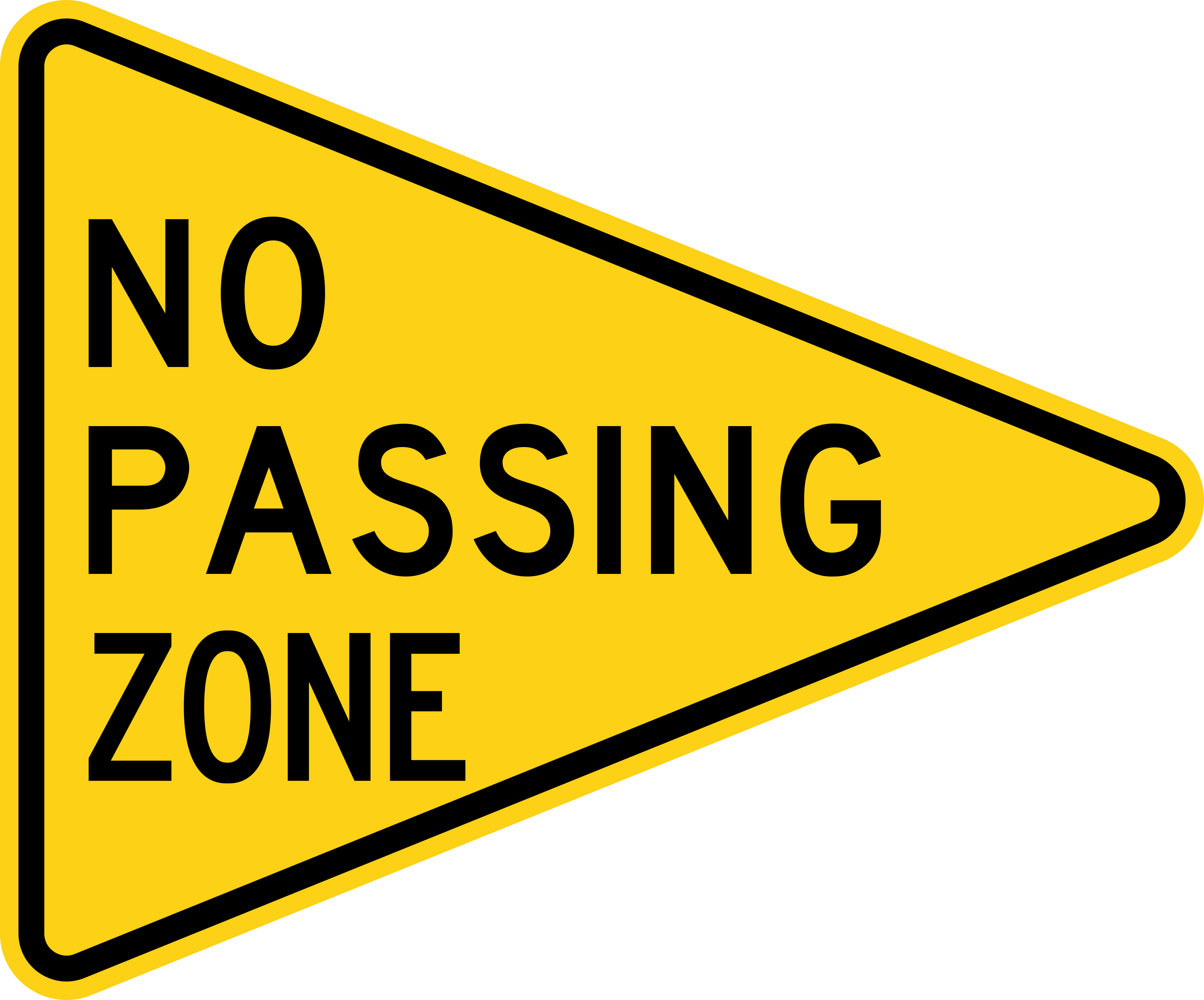
No passing zone (pennant) 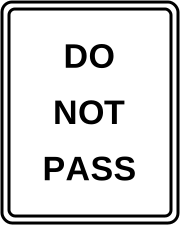
Do not pass 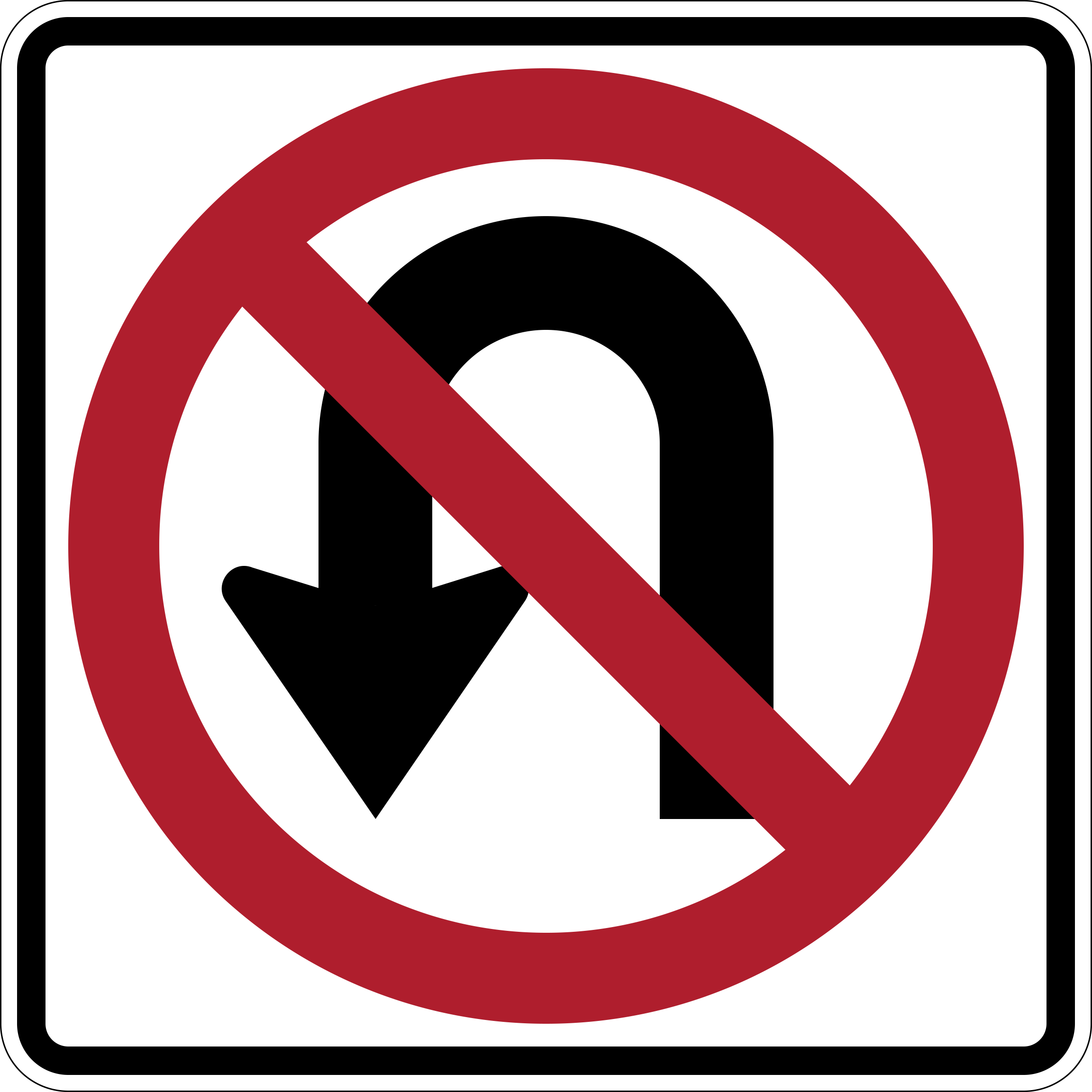
No U turn
3 questions from the Kansas practice test
1. How close to an intersection or railroad crossing is passing prohibited?
- Within 100 feet
- Within 50 feet
- Within 25 feet
- Within 200 feet
Show answer
Within 100 feet. Kansas lists passing within 100 feet of crossing an intersection or railroad grade crossing as prohibited. The 25- and 50-foot options understate the protected area, while 200 feet belongs to a different rule involving an approaching vehicle and returning to the driving lane with double solid yellow lines. Look ahead for the crossing or intersection before moving left, and wait until the restricted distance has passed and the view is clear.
2. If a solid yellow line is on your side of the centerline, what does the Kansas handbook say about passing?
- Do not pass from that side
- Pass whenever the road is dry
- Pass only after sounding the horn
- Cross the line for any lane change
Show answer
Do not pass from that side. When a solid yellow line is on your side of the centerline, you should not pass. The marking separates opposing traffic and indicates that passing from your side is prohibited in that arrangement. Dry pavement does not override the line, and a horn does not create permission. Crossing for an ordinary lane change is also not the handbook's instruction. Watch which side carries the solid line, because a dashed line on your side can allow passing only when a safe gap and clear lane exist.
3. Kansas bars a U-turn anywhere other drivers cannot see your vehicle for at least what distance?
- 100 feet
- 200 feet
- 500 feet
- 1,000 feet
Show answer
500 feet. Do not make a U-turn on a curve, near the top of a hill, or anywhere other drivers cannot see you for at least 500 feet. One hundred feet is the signaling distance and 200 feet is the gap for returning to your lane when an oncoming vehicle approaches, so neither is the U-turn standard. One thousand feet overstates it. Local ordinances and posted signs can also prohibit U-turns.
Practice this topic
Lock it in with signals and markings questions from the free Kansas practice test. Every answer comes with a plain English explanation.
Source: the Kansas Driving Handbook, Section 2: State Laws and Rules of the Road. This lesson is a plain English summary, not the law itself; where it differs, the manual and the statute govern. Last checked 2026-09-27.