
Key points
Yield to a vehicle that has already entered the intersection from a different road.
Source: Handbook p. 18
“The driver of a vehicle approaching an intersection must yield the right-of-way to a vehicle that has already entered the intersection from a different highway.”
Kansas Driving Handbook, Handbook p. 18When two vehicles enter at about the same time from different roads, the driver on the left yields to the vehicle on the right.
Source: Handbook p. 18
“When two vehicles enter an intersection from different roadways at approximately the same time the driver on the left shall yield the right-of-way to the vehicle on the right.”
Kansas Driving Handbook, Handbook p. 18At an intersection with no traffic controls, yield to the vehicle on your right.
Source: Handbook p. 18
“When entering an intersection with no traffic controls you must yield to the vehicle on your right.”
Kansas Driving Handbook, Handbook p. 18A driver turning left must yield to vehicles coming from the opposite direction; if both enter at the same time, the car going straight has the right of way.
Source: Handbook p. 18
“The driver of a vehicle turning left must yield the right-of-way to vehicles approaching from the opposite direction. If both cars enter the intersection at the same time, the car going straight through has the right-of-way.”
Kansas Driving Handbook, Handbook p. 18At a 4 way stop the driver who arrives first goes first, and if more than one arrives together the vehicle on the right goes first.
Source: Handbook p. 33
“At a 4-way stop, the driver reaching the intersection first should be given the right-of-way by other drivers approaching the 4-way stop. If more than one vehicle arrives at the same time, the vehicle on the right goes first.”
Kansas Driving Handbook, Handbook p. 33Even on a green light, do not enter an intersection unless there is room to get all the way across.
Source: Handbook p. 18
“Even though you may have a green light, you may not enter an intersection if there isn't room to get all the way across.”
Kansas Driving Handbook, Handbook p. 18At stop signs on a through street, stop completely and go only when you will not interfere with other traffic.
Source: Handbook p. 18
“If you are entering a through street or highway at which there are stop signs, you must stop completely and proceed when you can do so without interfering with other traffic.”
Kansas Driving Handbook, Handbook p. 18You only gain the right of way when another road user gives it to you.
Source: Handbook p. 33
“You only gain the right-of-way when another roadway user gives you the right-of-way.”
Kansas Driving Handbook, Handbook p. 33Always yield to pedestrians, even when they are jaywalking.
Source: Handbook p. 33
“You must yield to pedestrians always. Even if they are jaywalking or crossing the street where they should not be, you must stop for them.”
Kansas Driving Handbook, Handbook p. 33
Numbers to know
| Number | What it means | Manual |
|---|---|---|
| 4-way stop | first to arrive goes first; ties go to the vehicle on the right | Handbook p. 33 |
Recognize these signs
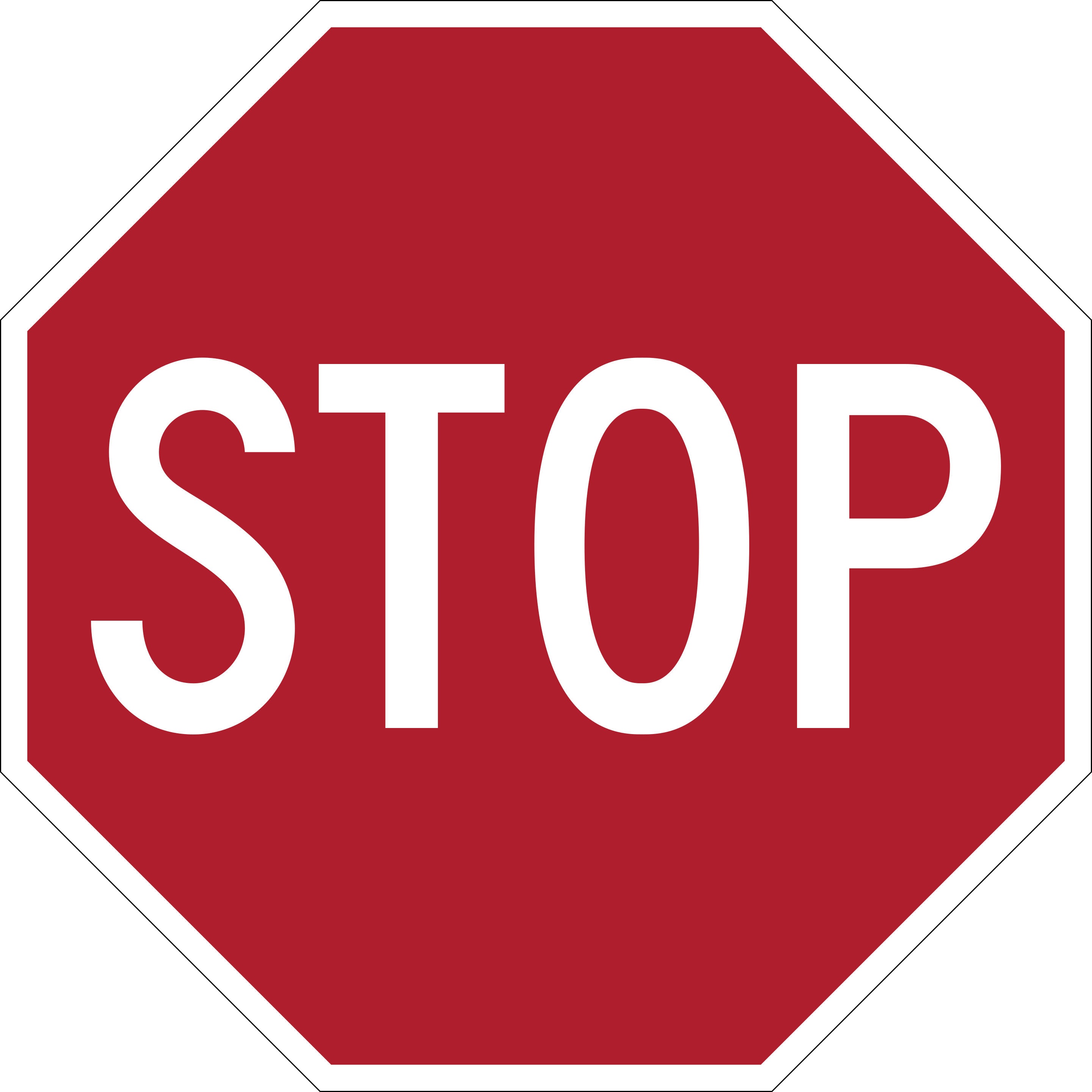
Stop 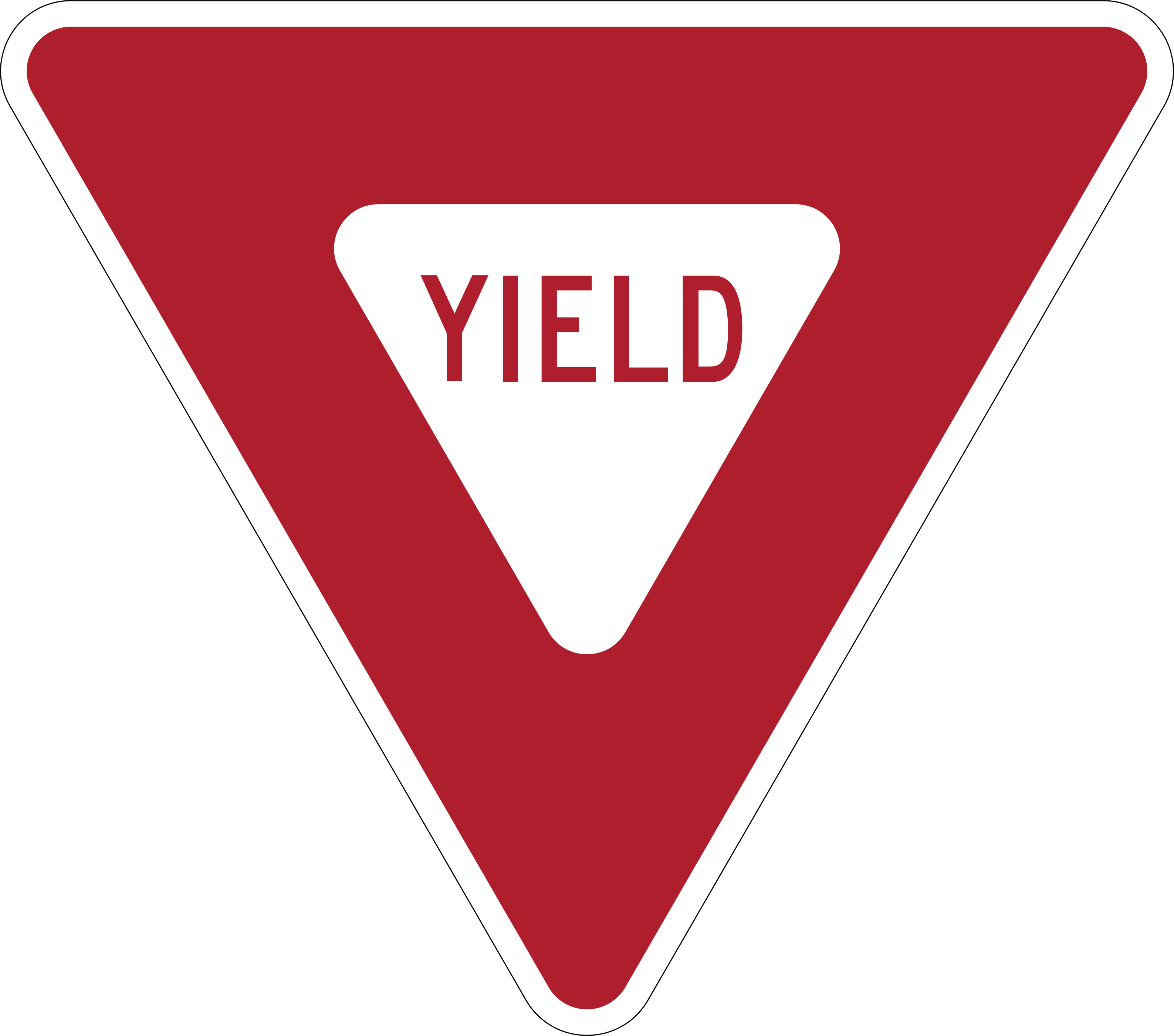
Yield 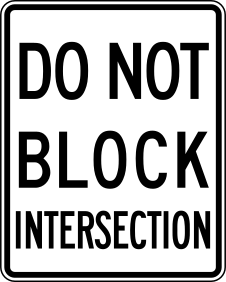
Do not block intersection
3 questions from the Kansas practice test
1. Two vehicles enter an uncontrolled intersection from different roads at about the same time. Who yields?
- The vehicle turning right always yields
- The driver on the right yields to the driver on the left
- The faster vehicle goes first
- The driver on the left yields to the driver on the right
Show answer
The driver on the left yields to the driver on the right. At an uncontrolled intersection, Kansas gives priority to the vehicle on the right when vehicles enter at approximately the same time. The driver on the left must yield. The reverse-right choice swaps the rule. Speed does not decide the encounter, so the faster vehicle has no special privilege. The turning choice also invents a blanket rule that is not in this passage. A simple visual cue helps: if you are looking across the intersection and another vehicle is on your right, you yield. Reduce speed early and make sure the other driver's movement is clear before proceeding.
2. A driver turns left while an opposing vehicle goes straight through the intersection. Who has priority?
- The left-turning driver
- The vehicle with the larger engine
- The opposing vehicle going straight
- The vehicle that signals first
Show answer
The opposing vehicle going straight. Kansas requires the driver turning left to yield to vehicles approaching from the opposite direction. If both vehicles enter at the same time, the vehicle going straight through has the right-of-way. The left-turn choice reverses the required yield. Vehicle size and engine power have no role in this intersection rule. Signaling communicates an intention but does not give the signaling vehicle priority, so the choice “The vehicle that signals first” is also wrong. Before beginning a left turn, scan the opposing lane and wait for the through vehicle to pass, even if your signal has been on for the entire approach.
3. At a Kansas four-way stop, which vehicle normally receives priority from the other drivers?
- The vehicle with the loudest horn
- The largest vehicle
- The vehicle that reached the intersection first
- The vehicle signaling a turn
Show answer
The vehicle that reached the intersection first. At a 4-way stop, Kansas says the driver who reaches the intersection first should be given the right-of-way by the other drivers approaching it. If more than one vehicle arrives at the same time, the vehicle on the right goes first. Vehicle size, horn use, and a turn signal do not create priority. A signal tells other road users what the driver intends to do, but it does not erase the arrival order. Approach slowly, stop as required, note who arrived first, and communicate clearly before moving through.
Practice this topic
Lock it in with right of way questions from the free Kansas practice test. Every answer comes with a plain English explanation.
Source: the Kansas Driving Handbook, Section 2: State Laws and Rules of the Road. This lesson is a plain English summary, not the law itself; where it differs, the manual and the statute govern. Last checked 2026-09-27.