
Key points
Vehicles on a public street have the right of way over vehicles entering from a private drive or side road.
Source: Handbook p. 18
“Vehicles on a public street or highway have the right-of-way over vehicles entering from a private drive or side road.”
Kansas Driving Handbook, Handbook p. 18Leaving an alley, driveway or building in a business or residential district, stop immediately before driving onto the sidewalk area.
Source: Handbook p. 18
“The driver of a vehicle within a business or residential district emerging from an alley, driveway or building, must stop immediately prior to driving onto a sidewalk or onto the sidewalk area extending across any alleyway or driveway.”
Kansas Driving Handbook, Handbook p. 18At a yield sign you need to stop only when necessary to avoid interfering with traffic or pedestrians that have the right of way.
Source: Handbook p. 18
“Cars controlled by a yield sign need stop only when necessary to avoid interfering with other traffic that has the right-of-way, including pedestrians.”
Kansas Driving Handbook, Handbook p. 18Always give pedestrians using a guide dog or white cane the right of way.
Source: Handbook p. 33
“Pedestrians using a guide dog or carrying a white cane must be given the right-of-way always.”
Kansas Driving Handbook, Handbook p. 33Roundabout traffic moves counterclockwise, and entering traffic yields to circulating traffic.
Source: Handbook p. 49
“Vehicles travel counterclockwise around a raised center island, with entering traffic yielding the right-of-way to circulating traffic.”
Kansas Driving Handbook, Handbook p. 49Slow to about 15 to 20 mph when entering a roundabout.
Source: Handbook p. 49
“When entering the roundabout or traffic circle you must negotiate a sharp curve. Slow your speed to about 15 to 20 mph.”
Kansas Driving Handbook, Handbook p. 49If you and another vehicle reach a traffic circle at the same time, yield to the vehicle on your right.
Source: Handbook p. 49
“If another vehicle arrives at the traffic circle at the same time as you do, yield to the vehicle if it is on your right.”
Kansas Driving Handbook, Handbook p. 49To turn left in a roundabout, signal right once you are three quarters of the way around to take your exit.
Source: Handbook p. 50
“If you intend to turn left, once you have traveled three quarters of the way around the traffic circle or roundabout, signal “right” to take the exit.”
Kansas Driving Handbook, Handbook p. 50Do not drive alongside trucks and buses in a roundabout.
Source: Handbook p. 50
“Do not drive alongside large vehicles, such as trucks and buses in a traffic circle or roundabout.”
Kansas Driving Handbook, Handbook p. 50
Numbers to know
| Number | What it means | Manual |
|---|---|---|
| 15 to 20 mph | entry speed for a roundabout | Handbook p. 49 |
Recognize these signs

Roundabout ahead 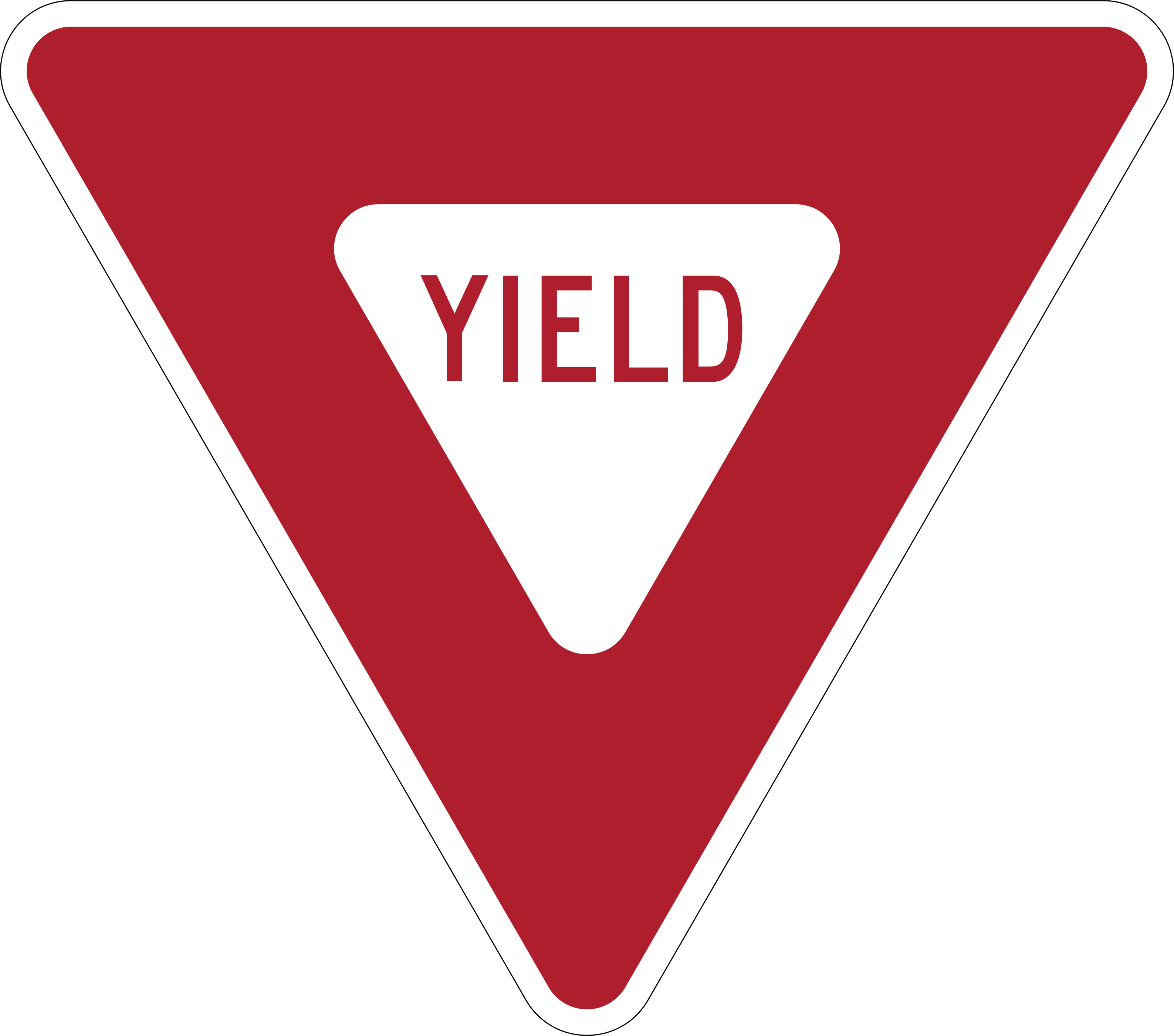
Yield
3 questions from the Kansas practice test
1. A car leaves a private driveway and enters a public street. Which vehicle has the right-of-way?
- The vehicle that is closest to the driveway
- The vehicle leaving the driveway
- The vehicle already on the public street
- The larger vehicle
Show answer
The vehicle already on the public street. Vehicles traveling on a public street or highway have the right-of-way over vehicles entering from a private drive or side road. The driveway vehicle must wait for a safe opening rather than claiming priority because it started moving first. Distance from the driveway is not the controlling test, and vehicle size does not change the rule. The useful cue is to identify who is entering the public roadway: that vehicle yields to traffic already using it. Check both directions, stop if needed, and proceed only after the street traffic can pass without interference.
2. When does a driver facing a Kansas yield sign have to stop?
- Only when another vehicle sounds its horn
- Every time before entering
- Never, because a yield sign forbids stopping
- Only when stopping is necessary to avoid interfering with traffic or pedestrians with the right-of-way
Show answer
Only when stopping is necessary to avoid interfering with traffic or pedestrians with the right-of-way. A Kansas yield sign does not automatically require a complete stop. The driver stops when stopping is necessary to avoid interfering with other traffic that has the right-of-way, including pedestrians. The every-time choice treats the sign as a stop sign. The never choice goes too far in the opposite direction because a stop can be required for safety. A horn is not the handbook's test. Slow enough to assess the crossing, yield to the protected road users, and stop when continuing would interfere with them.
3. What is required when entering a Kansas roundabout?
- Enter first because circulating traffic must yield
- Stop inside the circle before choosing an exit
- Yield to traffic already circulating and travel counterclockwise
- Travel clockwise around the center island
Show answer
Yield to traffic already circulating and travel counterclockwise. Entering traffic yields to vehicles already circulating in the roundabout. Once inside, vehicles travel counterclockwise around the raised center island, then follow signs and pavement markings to the intended exit. Stopping in the circle interrupts traffic and can create a conflict. The entering driver does not receive priority merely by reaching the entrance, and clockwise travel is opposite the handbook’s direction. Slow before entry, select the proper lane, and avoid changing lanes or passing after entering.
Practice this topic
Lock it in with right of way questions from the free Kansas practice test. Every answer comes with a plain English explanation.
Source: the Kansas Driving Handbook, Section 6: Rules of the Road. This lesson is a plain English summary, not the law itself; where it differs, the manual and the statute govern. Last checked 2026-09-27.