
Key points
On a steady green you may turn left only when the intersection is clear, always yielding to oncoming traffic and pedestrians.
Source: Handbook p. 34
“Turning left at a steady green traffic light means you may turn but only when the intersection is clear to do so. You should always yield to the oncoming traffic flow and pedestrians.”
Kansas Driving Handbook, Handbook p. 34A green arrow lets you turn in that direction if the intersection is clear of other road users.
Source: Handbook p. 34
“GREEN Arrow This means you can safely turn in the direction of the arrow, if the intersection is clear of other roadway users.”
Kansas Driving Handbook, Handbook p. 34A steady yellow means the light is about to change to red; slow down and come to a complete stop if traffic behind you allows.
Source: Handbook p. 34
“Steady YELLOW Traffic Light: This means the traffic light is about to change to red. You should slow down and come to a complete stop if traffic flow to the rear allows.”
Kansas Driving Handbook, Handbook p. 34A flashing yellow means slow down and proceed with caution.
Source: Handbook p. 34
“Flashing YELLOW Traffic Light This means slow down and proceed with caution.”
Kansas Driving Handbook, Handbook p. 34A yellow arrow means the green arrow is ending and you should prepare to stop.
Source: Handbook p. 34
“YELLOW Arrow This means that the green arrow is ending; you should prepare to stop”
Kansas Driving Handbook, Handbook p. 34On a steady red, wait behind the stop line, crosswalk or intersection until the light turns green.
Source: Handbook p. 34
“Steady RED Traffic Light: This means stop prior to entering the intersection. You must wait behind the stop line, crosswalk, or intersection until the traffic light turns green.”
Kansas Driving Handbook, Handbook p. 34You may turn right on red after stopping and checking for traffic and pedestrians, unless a sign prohibits it.
Source: Handbook p. 34
“When turning right at an intersection, if there is no sign prohibiting a right turn on a red light, you may turn after stopping and checking for traffic and pedestrians.”
Kansas Driving Handbook, Handbook p. 34Some left turns on red are allowed from a one way street onto another one way street, or from a two way street onto a one way street.
Source: Handbook p. 34
“Some left turns may be permitted on red when moving from a one-way street onto another one-way street or from a two-way street onto a one-way street.”
Kansas Driving Handbook, Handbook p. 34A flashing red means stop behind the stop line, crosswalk or intersection and use the same procedure as at a stop sign.
Source: Handbook p. 35
“Flashing RED Traffic Light: This means you must stop behind a stop line, crosswalk, or intersection before entering and use the same procedure as you would at a stop sign”
Kansas Driving Handbook, Handbook p. 35A red arrow means stop and do not turn that way until a green arrow or light returns.
Source: Handbook p. 35
“RED Arrow This means you must stop, and you may not go in the direction of the arrow until the green arrow or light returns on the signal.”
Kansas Driving Handbook, Handbook p. 35
Recognize these signs
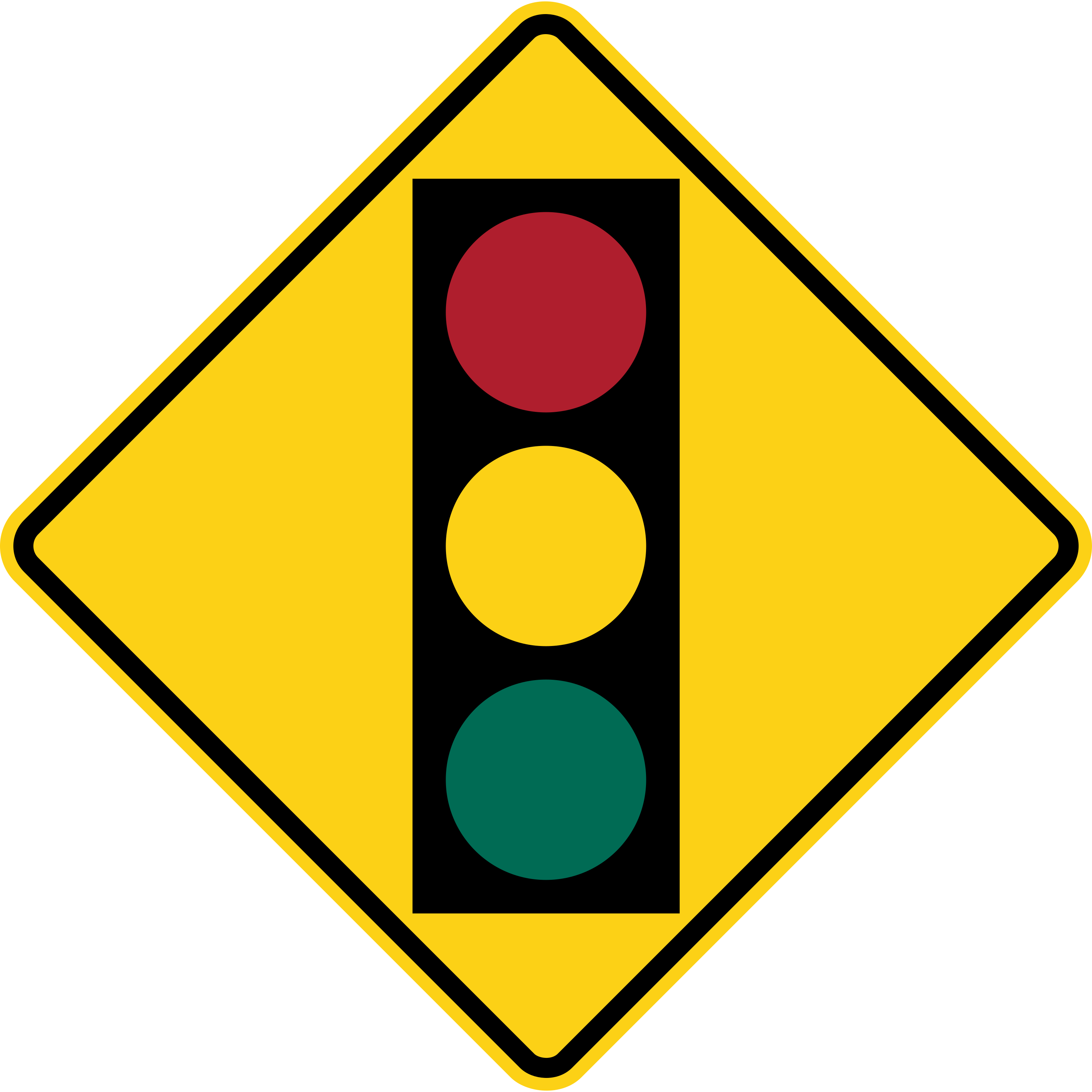
Traffic signal ahead 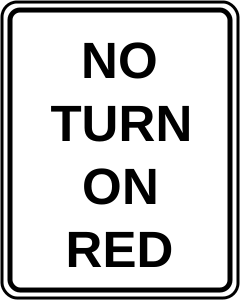
No turn on red
3 questions from the Kansas practice test
1. At a flashing yellow traffic light, what action is required?
- Stop and wait for a green signal
- Slow down and proceed cautiously, ready to stop
- Accelerate before cross traffic enters
- Treat the light as a four-way stop in every case
Show answer
Slow down and proceed cautiously, ready to stop. A flashing yellow light permits movement, but it is a warning to reduce speed and approach carefully. The driver must be prepared to stop if traffic is entering the intersection. Waiting for green would treat the signal more restrictively than the handbook requires, while accelerating removes the time needed to respond. Use the flashing signal as a cue to scan for vehicles and pedestrians before continuing through the intersection.
2. A steady yellow traffic light appears while you are approaching the intersection. What does it signal?
- You must accelerate before the signal turns red
- The light is about to change to red, so stop if traffic behind permits
- Cross traffic must stop and you have an unrestricted turn
- Treat it exactly like a flashing yellow light and never stop
Show answer
The light is about to change to red, so stop if traffic behind permits. A steady yellow warns that the signal will soon become red. The handbook tells an approaching driver to slow and make a complete stop when traffic flow behind allows it. If the vehicle is already in the intersection when yellow appears, continuing safely through is permitted. That exception does not turn yellow into a command to speed up. Check your mirrors, judge the stopping space, and choose a controlled stop whenever doing so will not create a rear-end hazard.
3. What warning does a yellow arrow give a driver who is turning?
- The turn is permanently protected with no need to check traffic
- The green arrow is ending, so prepare to stop and yield
- The lane is closed and reversing is required
- The signal gives priority over pedestrians forever
Show answer
The green arrow is ending, so prepare to stop and yield. A yellow arrow warns that the green arrow is ending. The driver should prepare to stop and yield to oncoming traffic or pedestrians. It does not preserve the protected-turn priority of the green arrow, and it does not announce a lane closure or require reversing. Watch the arrow's color change and decide whether a safe stop is possible rather than rushing through the remaining signal. The key cue is yellow: prepare, stop when appropriate, and yield to crossing road users.
Practice this topic
Lock it in with signals and markings questions from the free Kansas practice test. Every answer comes with a plain English explanation.
Source: the Kansas Driving Handbook, Section 6: Rules of the Road. This lesson is a plain English summary, not the law itself; where it differs, the manual and the statute govern. Last checked 2026-09-27.