
Test 2 of 10 · 20 questions · Free 2026
KS Permit Practice Test 2
Jump to the test ↓A fixed 20 question set from the Kansas bank with answers and plain English explanations. The real KS exam is 25 questions, 80 percent to pass; take the full length version on the main practice page.
Question 1 of 20 · 0 right so far
All 20 questions in test 2
Every question below comes from the Kansas question bank on this page. Open a question to see the correct answer and the explanation. Nothing here is hidden behind a signup.
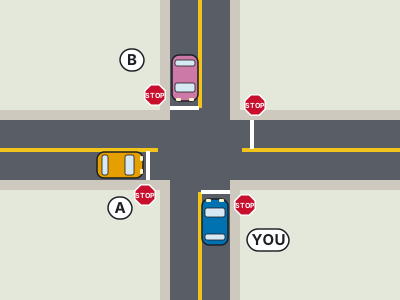
1. At a Kansas four-way stop, which vehicle normally receives priority from the other drivers?
- The vehicle with the loudest horn
- The largest vehicle
- The vehicle that reached the intersection first
- The vehicle signaling a turn
Show answer
The vehicle that reached the intersection first. At a 4-way stop, Kansas says the driver who reaches the intersection first should be given the right-of-way by the other drivers approaching it. If more than one vehicle arrives at the same time, the vehicle on the right goes first. Vehicle size, horn use, and a turn signal do not create priority. A signal tells other road users what the driver intends to do, but it does not erase the arrival order. Approach slowly, stop as required, note who arrived first, and communicate clearly before moving through.
Study this in the handbook: Right of way at intersections
2. A driver entering a main road from a driveway must yield to which traffic?
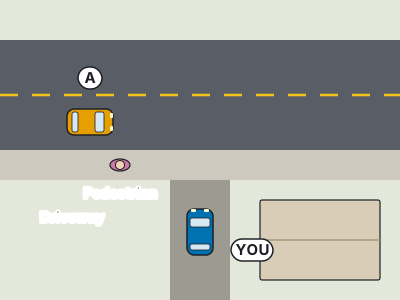
- Vehicles already on the main road
- Only vehicles approaching from the left
- Only vehicles that are turning toward the driveway
- No traffic if the driver activates a turn signal
Show answer
Vehicles already on the main road. A vehicle entering from a driveway, alley, or roadside is joining traffic that is already established on the main road. The entering driver must yield before crossing or merging, regardless of whether the approaching vehicle is coming from the left or right. A signal announces a maneuver but does not cancel the yielding duty. Waiting for a clear gap is the useful cue. Once the path is open, enter smoothly and position the vehicle safely rather than forcing traffic on the main road to brake.
Study this in the handbook: Traffic lights and arrows
3. Unless another limit is posted, what is the maximum speed on a designated separated, multilane highway outside a town?
- 55 miles per hour
- 75 miles per hour
- 70 miles per hour
- 65 miles per hour
Show answer
75 miles per hour. The handbook lists 75 miles per hour for a separated, multilane highway designated and posted by the Secretary of Transportation. The 55 and 65 figures apply to other road categories, while 70 is not the listed maximum for this one. The number is a maximum for normal conditions, not a promise that it is always safe. Reduce speed for weather, traffic, roadway condition, or anything else that makes the posted maximum unreasonable.
Study this in the handbook: Kansas speed limits
4. Why should the gap behind a bus or delivery van be larger than the usual following space?
- Their brake lights are not required to work
- Their drivers are always permitted to exceed the speed limit
- Those vehicles may stop often or make sudden turns
- They must be followed closely to prevent other cars merging
Show answer
Those vehicles may stop often or make sudden turns. Buses, delivery vans, and police cars can make frequent stops or unexpected turns. The handbook advises increasing the following distance behind vehicles with those behaviors, then adding still more space in bad weather. Extra room improves your view and creates time to respond when the larger vehicle blocks sight lines or changes speed. Tailgating does the opposite: it hides conditions ahead and leaves little room for a controlled stop. Treat the vehicle's operating pattern as a cue to lengthen the gap early.
Study this in the handbook: School buses and required stops
5. What does a green arrow above a reversible lane mean in Kansas?
- The lane is reserved for turning only
- The lane beneath the arrow may be used
- The lane is unavailable to traffic
- Traffic must leave the lane immediately
Show answer
The lane beneath the arrow may be used. A green arrow authorizes use of the lane directly beneath it. This signal matters because a reversible lane can carry traffic in one direction during one period and the opposite direction later. A red X closes the lane, while a flashing yellow X limits it to turning and a steady yellow X announces a change in permitted use. Before entering, look overhead and confirm the current indication. Do not treat the lane as permanently assigned to your direction, since drivers from the opposite flow may enter it when the control changes.
Study this in the handbook: Lane markings and special lanes
6. When a vehicle begins to lose traction, what should the driver do first?
- Fixate on the object the vehicle may hit
- Look for open space
- Brake as hard as possible while turning sharply
- Accelerate until the tires regain grip
Show answer
Look for open space. Kansas places visual direction first when a vehicle begins to lose traction. Look toward open space where the vehicle can travel rather than staring at the hazard you are trying to avoid. Fixating on the object can draw the vehicle toward it. Hard braking with a sharp turn can increase the skid, and acceleration can continue overwhelming the tires. Once your eyes are directed toward the intended path, follow the handbook guidance for lifting pedal pressure and steering according to which tires have lost traction. Keep the visual target open and safe.
Study this in the handbook: Emergency braking, skids and vehicle failures
7. What should a driver do when a warning sign announces a possible danger ahead?
- Stop immediately in the travel lane for every warning sign
- Accelerate so the hazard is passed more quickly
- Ignore the sign unless a police officer is present
- Slow down and be prepared to stop if necessary
Show answer
Slow down and be prepared to stop if necessary. Warning signs communicate that a danger, special condition, or roadway hazard may be ahead. The expected response is to reduce speed and prepare to stop if the developing situation requires it. The sign is advance notice, not an instruction to accelerate or an automatic order to stop in the lane. Scan beyond the sign, look for the roadway feature it identifies, and adjust for weather, traffic, and visibility. A controlled approach preserves time to respond when the warning becomes an immediate problem.
Study this in the handbook: Traffic lights and arrows
8. What do two solid yellow lines between opposing traffic lanes mean?
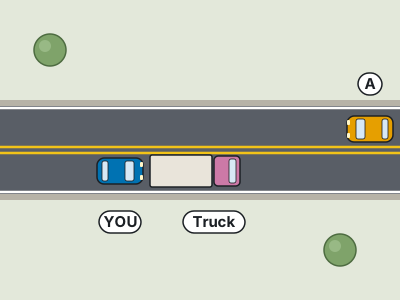
- Passing is permitted in both directions
- Passing is prohibited in both directions
- Only trucks may cross the centerline
- The lane is reserved for left turns
Show answer
Passing is prohibited in both directions. Two solid yellow lines mean neither direction may pass across the centerline. That marking is different from a dashed yellow line, which can permit passing when the gap and conditions are safe, and from a shared center lane used for left turns. The prohibition does not change for trucks or for a driver who is in a hurry. Treat the double line as a firm boundary and wait for a lawful passing section.
Study this in the handbook: Turn signals, U turns and passing
9. How old must the licensed adult in the front seat be when supervising a Kansas instructional permit holder?
- 18 years old
- 19 years old
- 21 years old
- 25 years old
Show answer
21 years old. A Kansas instructional permit holder may drive only with a licensed adult in the front seat, and that adult must be at least 21 years old with at least one year of driving experience. The age choices below 21 do not satisfy the handbook's minimum, while 25 adds a requirement the passage does not state. Do not overlook the separate experience condition: age alone is insufficient. A strong study cue is 21 plus one year, both attached to the supervising adult rather than the permit holder.
Study this in the handbook: Instruction permit, farm permit and the 15 year old restricted license
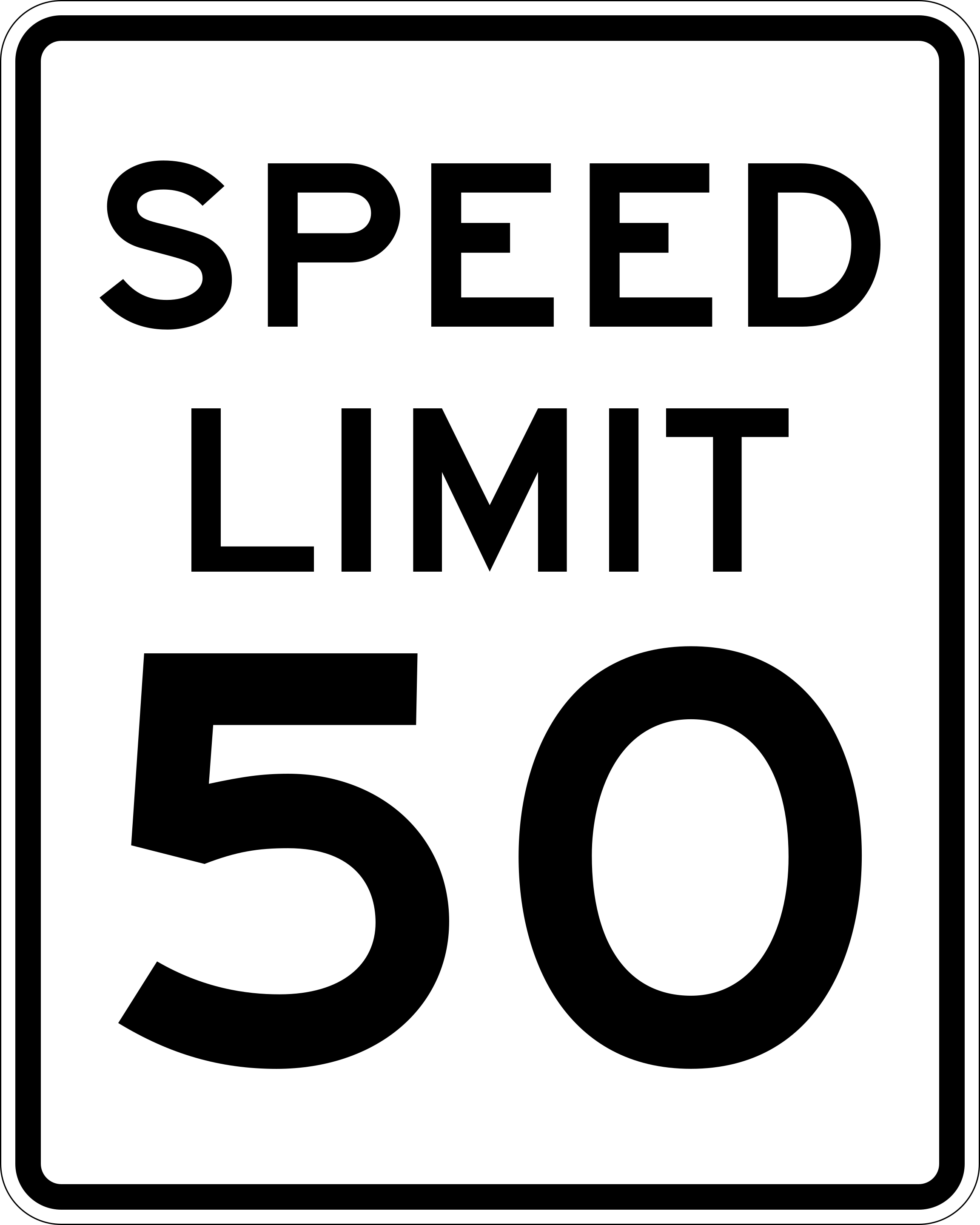
10. What does a black-and-white maximum Speed Limit sign indicate?
- The minimum speed required on every roadway
- A speed that may always be exceeded safely
- The maximum legal speed for ideal conditions
- A recommendation that has no legal effect
Show answer
The maximum legal speed for ideal conditions. A black and white maximum Speed Limit sign sets the highest legal speed for ideal driving conditions. Kansas still expects a driver to reduce speed when weather, traffic, visibility, or the road surface makes that posted number unsafe. The sign is not a suggestion that can always be exceeded, and it is not a universal minimum for every roadway. Use the number as an upper boundary, then choose a lower speed when conditions call for it. Rain, fog, ice, and crowded traffic are practical cues to slow down.
Study this in the handbook: Kansas speed limits
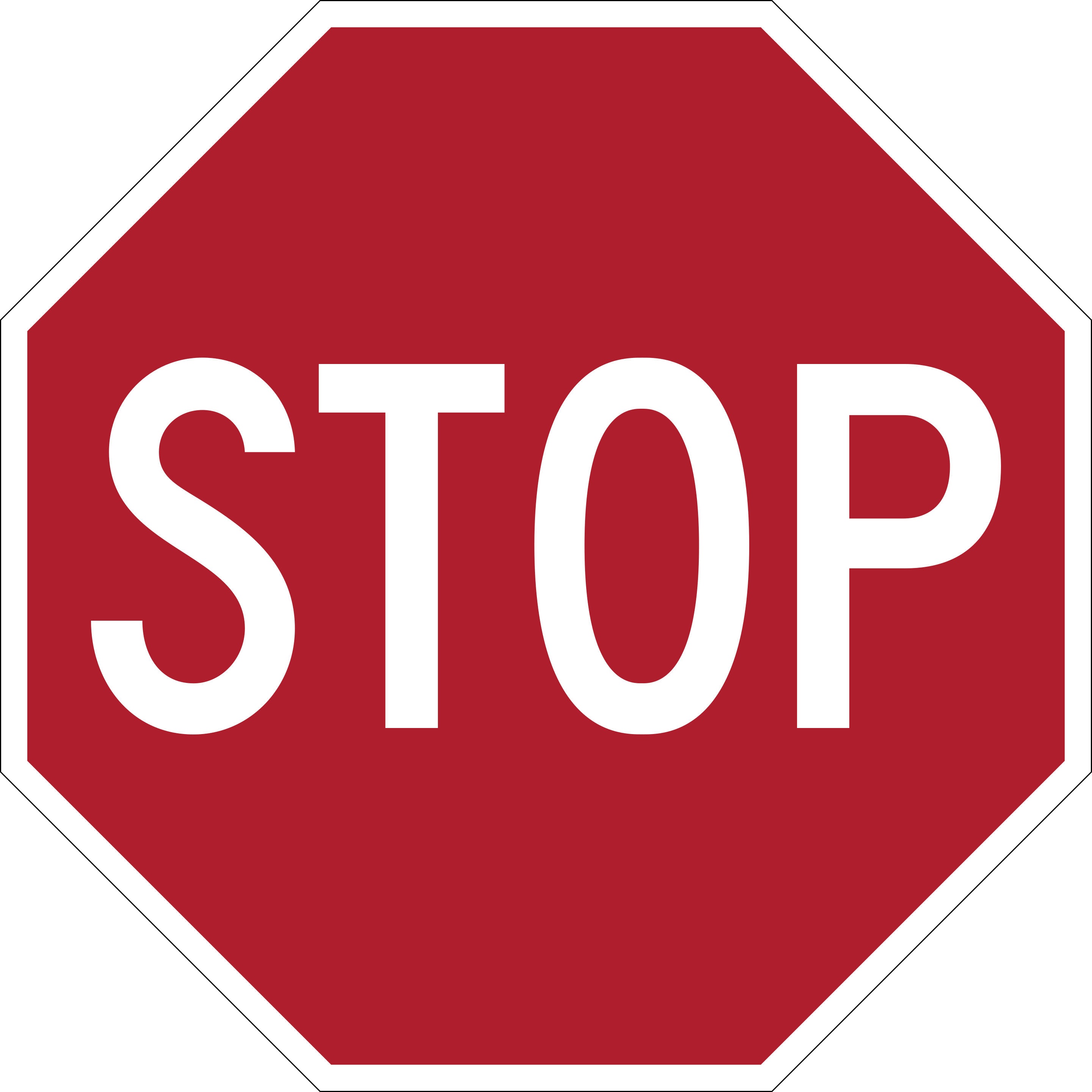
11. At this octagonal sign, where must you stop before proceeding?
- At the next traffic signal instead of this sign
- Past the crosswalk so the front tires reach the intersection
- Only at the curb if cross traffic is visible
- Behind the stop line or crosswalk, then yield before entering
Show answer
Behind the stop line or crosswalk, then yield before entering. The red eight-sided sign requires a complete stop before the stop line or crosswalk when one is present. After stopping, the driver looks for vehicles and pedestrians, yields the right-of-way, and enters only when safe. Rolling beyond the marked stopping point can put the vehicle into the pedestrian area. The sign applies even when cross traffic is not immediately visible, so an empty intersection does not remove the stop requirement.
Study this in the handbook: Kansas speed limits
12. When can a Kansas child usually move from a booster seat to the adult safety belt?
- At age 5
- When the child weighs 30 pounds
- Usually at age 8 or when 4 feet 9 inches tall, riding in the back seat
- At age 12
Show answer
Usually at age 8 or when 4 feet 9 inches tall, riding in the back seat. When children outgrow their booster seats, usually at age 8 or when they are 4 feet 9 inches tall, they can use the adult safety belt in the back seat. Before that, the handbook says children between the ages of 4 and 8 who are no more than 4 feet 9 inches tall should ride in the back seat in a properly installed booster seat. The handbook points to the vehicle owner's manual and the child restraint directions for more specific guidance, and it keeps children in the back seat even after they graduate from the booster.
Study this in the handbook: Seat belts, child seats and air bags
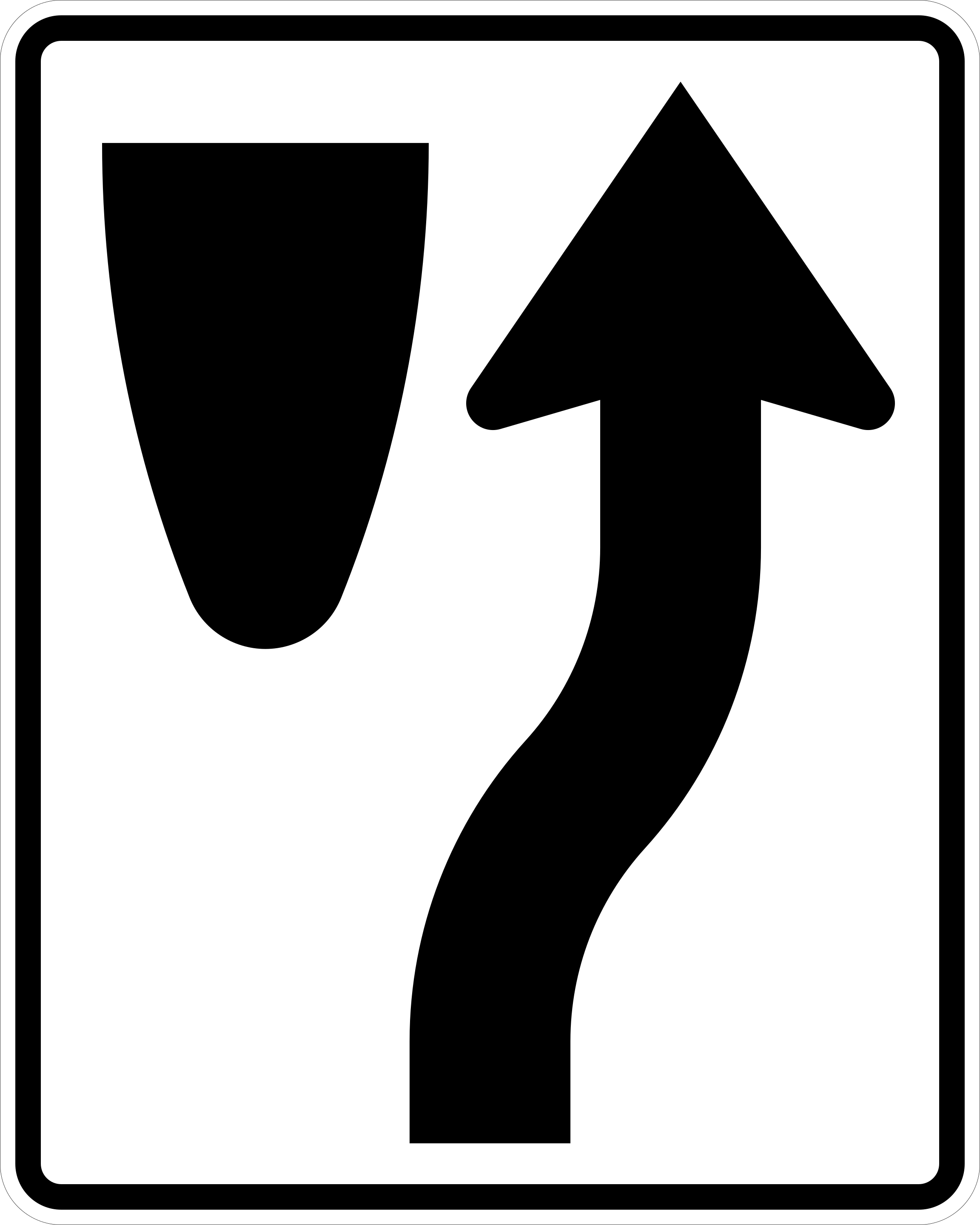
13. What roadway instruction is given by a Keep Right sign?
- Drive on the right shoulder around stopped traffic
- Use the right lane only when preparing to pass
- Avoid all right turns until the next signal
- Stay to the right of the roadway feature or obstruction
Show answer
Stay to the right of the roadway feature or obstruction. Keep Right signs direct traffic to remain on the right side of a roadway feature or obstruction, such as a median, island, or lane divider. They do not turn the right lane into a passing-only lane and do not authorize driving on the shoulder. The arrow shows how to pass the feature safely. Slow and follow the marked channel instead of treating the sign as a general turn instruction.
Study this in the handbook: Regulatory signs
14. What information is shown by a blue service sign?
- The location of services such as gas stations or hospitals
- The maximum speed allowed on the roadway
- A hazard requiring an immediate stop
- The name and distance of the next city
Show answer
The location of services such as gas stations or hospitals. Blue service signs point drivers to facilities such as rest areas, gas stations, hotels, and hospitals. They are guide signs, so they provide location information rather than imposing a speed limit or warning of a road hazard. Green or brown destination signs identify places and distances, while yellow signs alert drivers to possible danger. If a blue panel appears ahead, use it to locate a needed service and continue making ordinary traffic checks as you approach the exit or entrance.
Study this in the handbook: Work zone, guide and incident signs
15. For a driver age 21 or older operating a noncommercial vehicle in Kansas, what is the lowest BAC covered by the general alcohol per se threshold?
- .02 or higher
- .08 or higher
- .05 or higher
- .10 or higher
Show answer
.08 or higher. The Kansas handbook states that a BAC of .08 or higher is a violation of the law. The .02 figure belongs to the handbook's statement that vision is impacted for all drivers, so it should not be substituted for the standard alcohol violation threshold. The .05 and .10 choices do not match the stated number. Keep both figures in their separate contexts: .02 signals an early visual effect, while .08 is the standard BAC level identified as a legal violation. Regardless of the number, the handbook advises against driving after consuming alcohol.
Study this in the handbook: How alcohol and drugs affect driving
16. When approaching a stationary emergency vehicle with flashing warning lights from behind, what should you do on a multilane road?
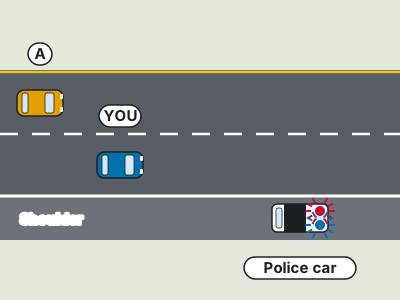
- Move to a lane not next to it when possible, or slow and proceed cautiously
- Stop in the lane beside the emergency vehicle
- Maintain speed because only the stopped vehicle must act
- Pass on the shoulder without reducing speed
Show answer
Move to a lane not next to it when possible, or slow and proceed cautiously. Kansas requires a driver approaching a stationary emergency vehicle from the rear to proceed with due caution and move into a lane that is not next to the stopped vehicle when the roadway provides that option. If changing lanes is unsafe or impossible, reduce speed and continue cautiously. Stopping beside the vehicle creates another hazard, and using the shoulder or maintaining speed ignores the protected space the rule is designed to provide.
Study this in the handbook: Right of way at intersections
17. When must a driver yield to construction vehicles and workers?
- When they are actually engaged in work on the roadway
- Only when they are parked beyond the shoulder
- Only after a construction vehicle enters the driver's lane
- Never unless a traffic signal directs the driver to yield
Show answer
When they are actually engaged in work on the roadway. Kansas says drivers must yield to construction vehicles and workers that are actually engaged in work on the roadway. The rule protects people and equipment occupying an active work area, even when the vehicle has not entered the driver's lane. The shoulder-only choice narrows the rule to a location the handbook does not require. Waiting until a vehicle enters the lane gives up needed reaction time, and the signal choice adds a condition that is not part of the instruction. Reduce speed early, watch the work zone, and give operating crews room to complete the task safely.
Study this in the handbook: Right of way at intersections
18. Who must sit in the front seat beside a Kansas instruction permit holder while driving?
- Any adult, licensed or not
- Any licensed driver
- A parent only
- A licensed adult at least 21 years old with at least one year of driving experience, and no one else
Show answer
A licensed adult at least 21 years old with at least one year of driving experience, and no one else. A Kansas instruction permit holder may only drive with a licensed adult in the front seat. That adult must be at least 21 years old and have at least one year of driving experience, and no person other than the supervising adult may occupy the front seat. Use of wireless communication devices is also barred. The permit expires in one year and may be renewed with testing.
Study this in the handbook: Instruction permit, farm permit and the 15 year old restricted license
19. To prevent a fatigue related crash, which hours does the Kansas handbook say to avoid driving?
- Midnight to 6 a.m.
- 6 a.m. to 9 a.m.
- Noon to 3 p.m.
- 6 p.m. to 9 p.m.
Show answer
Midnight to 6 a.m.. Among its ways to prevent a fatigue related crash, the handbook advises trying not to drive late at night between the hours of midnight and 6 a.m. The morning, afternoon, and early evening windows are not the hours it names. Other advice includes getting 7 to 9 hours of sleep before a trip, taking breaks about every 100 miles or 2 hours, and remembering that the best way to prevent fatigue is sleep.
Study this in the handbook: Fatigue, distractions and driver responsibility
20. How much slower than the traffic flow can a driver go before it becomes as dangerous as excessive speed?
- More than 5 mph slower
- More than 30 mph slower
- Any speed slower is always safe
- More than 15 mph slower
Show answer
More than 15 mph slower. The handbook warns that driving more than 15 mph slower than the traffic flow can be as dangerous as excessive speed, because vehicles bunch up and other drivers take greater risks to pass. Five mph is below that stated figure, and 30 mph is double it. Slower is not always safer. The handbook advises keeping pace with other traffic flow within the legal limits, and a slow vehicle with traffic bunched up behind it should pull over when safe and let others pass.
Study this in the handbook: Safe speed and stopping distance
QualitySpace is expanding to Kansas
We are a California-based independent insurance brokerage working on licensing in more states. We cannot help with Kansas insurance yet. Leave your email and we will let you know when we can.
Every question is written from the official Kansas Driving Handbook. Need paper? Printable KS practice test with answer key.
Last verified 2026-10-05. How we check every question · Study all 211 as flashcards
Frequently asked questions
How many questions are on this Kansas practice test?
This fixed set has 20 questions. It is test 2 of 10 from the 211 question Kansas bank. The real KS exam asks 25 questions and you need 20 correct.
What is the passing score for the real Kansas test?
You must score an 80% to pass the knowledge test That figure comes from the official Kansas source cited on the DMV facts page.
How does this fixed test relate to the full Kansas bank?
Each numbered test is a fixed set of questions in a fixed order, so you can retake the same test later and compare. Every test mixes road signs and the other topics in about the same proportion as the full bank. Tests 1 to 10 together cover 200 of the 211 questions in the Kansas bank, each once. The full practice page mixes the whole bank at random.
Last verified 2026-10-05. See the Kansas DMV facts page for sourced state details.