
Test 1 of 10 · 20 questions · Free 2026
KS Permit Practice Test 1
Jump to the test ↓A fixed 20 question set from the Kansas bank with answers and plain English explanations. The real KS exam is 25 questions, 80 percent to pass; take the full length version on the main practice page.
Question 1 of 20 · 0 right so far
All 20 questions in test 1
Every question below comes from the Kansas question bank on this page. Open a question to see the correct answer and the explanation. Nothing here is hidden behind a signup.
1. How far before slowing, turning, or changing lanes must a driver give a required signal?
- At least 25 feet before the move
- At least 100 feet before the move
- At least 50 feet before the move
- Only after beginning the move
Show answer
At least 100 feet before the move. Kansas requires the signal to begin at least 100 feet before the actual slowdown, turn, or lane change. Waiting until the vehicle starts moving gives people behind too little notice, and 25 or 50 feet falls short of the stated distance. Hold the signal until you are ready to make the actual turn. Before you slow down, turn, or change lanes, make sure you can do so safely, because the signal exists to let other drivers, cyclists, and pedestrians know what you intend to do.
Study this in the handbook: Turn signals, U turns and passing
2. At a flashing red traffic light, what must a driver do before entering?
- Yield only to vehicles approaching from the left
- Slow without stopping if the intersection is clear
- Continue because flashing signals have no control effect
- Stop completely before proceeding
Show answer
Stop completely before proceeding. A flashing red signal is listed among the situations requiring a complete stop. Treat the indication as a stop-controlled approach, checking for vehicles and pedestrians before entering. Merely slowing does not satisfy the rule, even if the intersection appears empty. The signal is not permission to continue through, and priority is not limited to traffic from one side. The practical memory cue is simple: flashing red means stop first, then proceed only when the path is safe.
Study this in the handbook: Traffic lights and arrows
3. A vehicle is tailgating you on a Kansas road with no empty lane. What does the handbook say to do?
- Wait until the road ahead is clear, then reduce speed slowly to encourage the tailgater to pass
- Brake hard once
- Slow down quickly to make the driver back off
- Speed up to open a gap
Show answer
Wait until the road ahead is clear, then reduce speed slowly to encourage the tailgater to pass. If you are being tailgated and there is an empty lane, move over and allow the pass. If there is no empty lane, wait until the roadway ahead is clear, then reduce speed slowly to encourage the tailgater to drive around your vehicle. Never slow down quickly to discourage a tailgater, because that increases the risk of a rear end crash. Speeding up only moves the problem to a higher speed.
Study this in the handbook: Following distance, scanning and space
4. A steady yellow traffic light appears while you are approaching the intersection. What does it signal?
- You must accelerate before the signal turns red
- The light is about to change to red, so stop if traffic behind permits
- Cross traffic must stop and you have an unrestricted turn
- Treat it exactly like a flashing yellow light and never stop
Show answer
The light is about to change to red, so stop if traffic behind permits. A steady yellow warns that the signal will soon become red. The handbook tells an approaching driver to slow and make a complete stop when traffic flow behind allows it. If the vehicle is already in the intersection when yellow appears, continuing safely through is permitted. That exception does not turn yellow into a command to speed up. Check your mirrors, judge the stopping space, and choose a controlled stop whenever doing so will not create a rear-end hazard.
Study this in the handbook: Traffic lights and arrows
5. What size gap should a driver select when merging with other traffic flow?
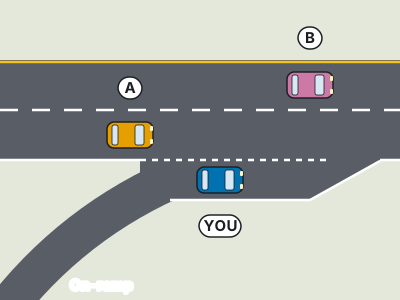
- A gap of 4 to 6 seconds
- A gap of less than 2 seconds
- A gap of exactly 10 seconds
- A gap measured only by one vehicle length
Show answer
A gap of 4 to 6 seconds. When merging, entering a roadway, or changing lanes, the handbook advises selecting a gap of four to six seconds. Moving into the middle of that opening gives both vehicles room to adjust to a three-second following interval. A gap shorter than two seconds can disappear before the maneuver is complete, while ten seconds is not the stated target. One vehicle length changes meaning with speed and does not provide the time-based margin the procedure requires. Scan the traffic stream early, choose an opening with usable time, and move one lane at a time when several lanes must be crossed.
Study this in the handbook: Following distance, scanning and space
6. What movement is prohibited by this red-slashed U-shaped arrow?
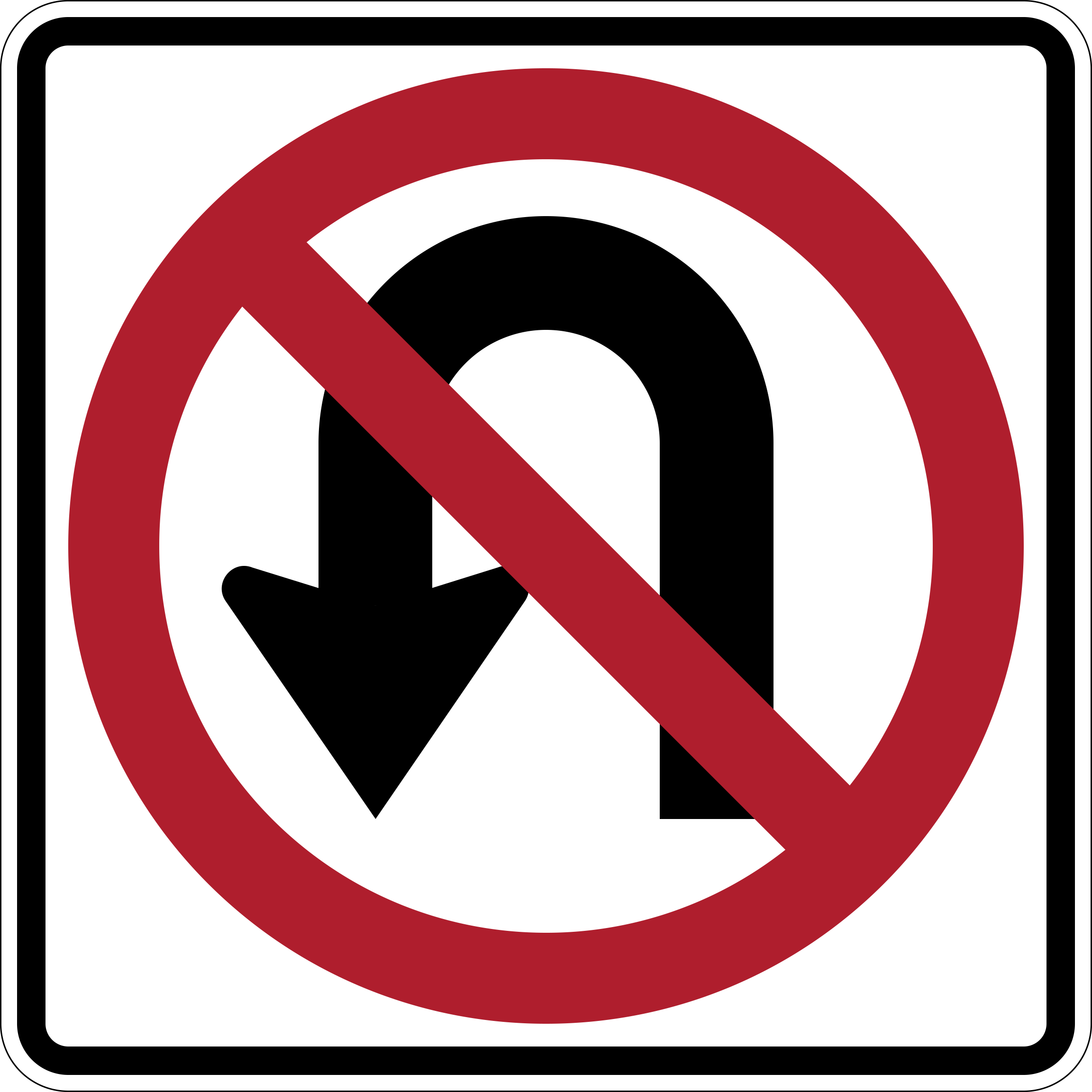
- Turning right at the next intersection
- Making a U-turn at that location
- Passing a slower vehicle on a straight road
- Changing lanes after signaling
Show answer
Making a U-turn at that location. The crossed U shaped arrow is a regulatory sign that prohibits the movement shown by its symbol, which is a U turn. It does not automatically prohibit an ordinary right turn, passing on a straight road, or a properly completed lane change. Other rules still apply, including the Kansas restriction on making a U turn where other drivers cannot see the vehicle for at least 500 feet. When the sign is posted, continue in the permitted direction and wait for a legal place to reverse course if one is available.
Study this in the handbook: Regulatory signs
7. What maneuver is barred by the sign showing a crossed left arrow?
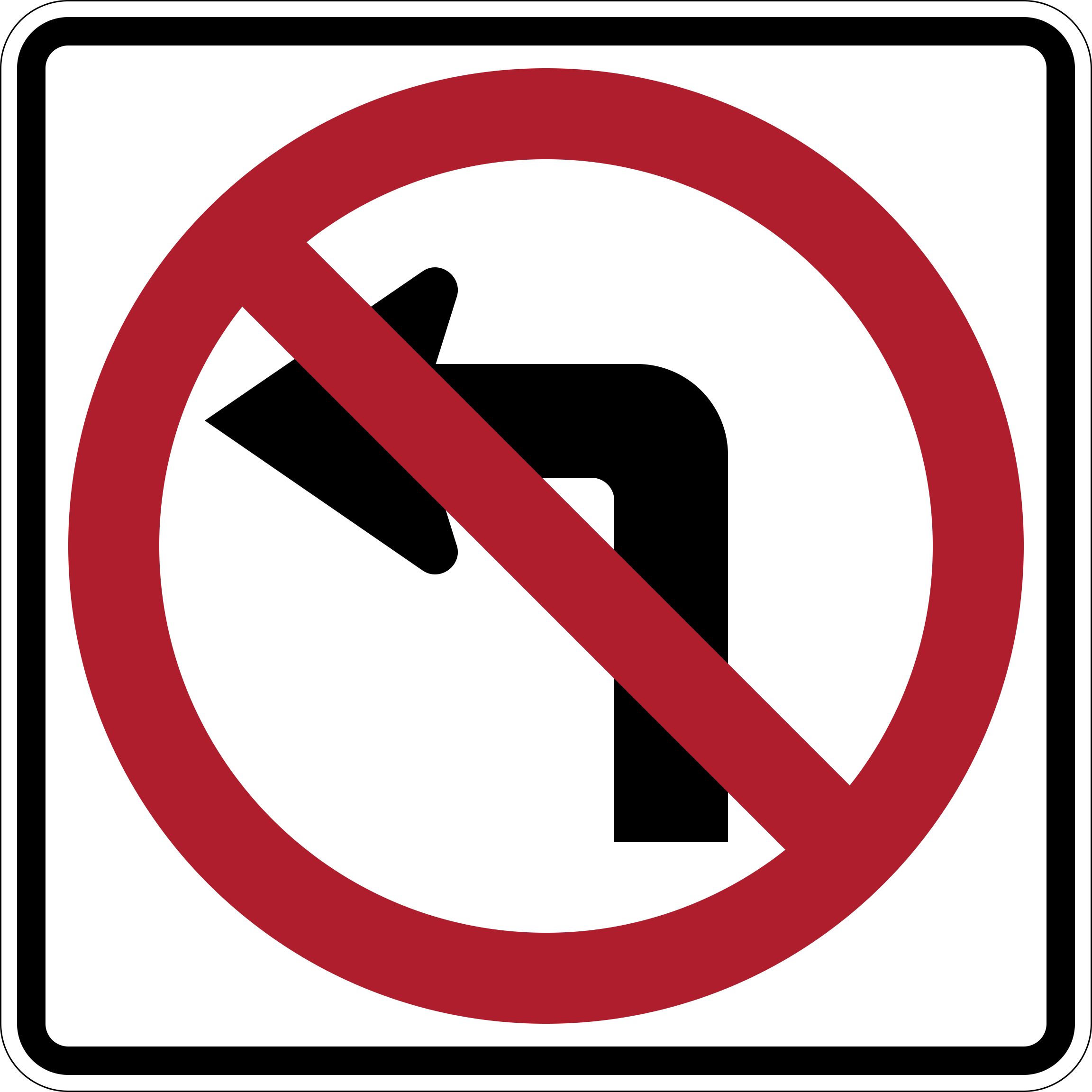
- Stopping behind the marked stop line
- Continuing straight through the intersection
- Turning right after yielding to pedestrians
- Turning left from the controlled approach
Show answer
Turning left from the controlled approach. The red slash is placed over a left-turn symbol, so the prohibited action is the pictured left turn. It does not automatically prohibit going straight, a separate right turn, or stopping at the line. The driver should read the arrow rather than generalize the slash to every movement. Even when a left turn is banned, continue to obey the signal, lane markings, and any other regulatory sign at the intersection.
Study this in the handbook: Kansas speed limits
8. Your right wheels drop off the pavement edge. What speed should you slow to before steering back?
- 45 mph or less
- 25 mph or less
- 35 mph or less
- Keep your speed so the car does not stall
Show answer
25 mph or less. When your wheels leave the pavement, ease off the accelerator, brake gently, steer straight, and slow to 25 mph or less before returning. Hard braking or holding speed makes a skid or overcorrection more likely, and 35 or 45 mph is too fast for a controlled return. Straddle the pavement edge while you slow down. Straddling keeps the inside edge of the tires from rubbing and lets you return at a better angle. Do not jerk the wheel back the moment the wheels leave the pavement, because too much steering before you slow down can cost you control.
Study this in the handbook: Emergency braking, skids and vehicle failures
9. What does a steady green traffic light allow when you want to turn left?
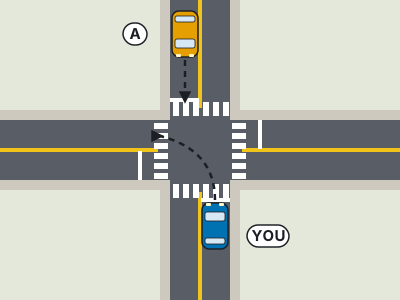
- A turn only after the signal changes to yellow
- An immediate turn without checking oncoming traffic
- A turn that takes priority over pedestrians
- A left turn only when the intersection is clear
Show answer
A left turn only when the intersection is clear. A steady green light permits a left turn only when the intersection is clear. The driver must yield to oncoming traffic and pedestrians, even though the signal is green. The light does not create an immediate path through a crowded intersection, and waiting for yellow is not the rule. Entering while vehicles block the route can leave your car obstructing traffic when the signal changes. Check the opposing lane, the crosswalk, and the intended exit before turning.
Study this in the handbook: Traffic lights and arrows
10. Which electronic-device activity does Kansas law prohibit while a person is driving?
- Adjusting the radio volume
- Checking a vehicle's fuel range
- Listening to a navigation prompt
- Reading a written message
Show answer
Reading a written message. Kansas prohibits using an electronic device to write, send, or read a written communication while driving. Reading a text or email falls directly within that rule. The other activities describe different uses, and the handbook specifically distinguishes GPS devices and weather reports from written communications. That distinction does not make every electronic task safe, since distraction can still create danger, but it identifies the conduct covered by the statute. A practical cue is to treat any message composition, transmission, or reading as prohibited until the vehicle is safely stopped.
Study this in the handbook: Where not to park and parking on hills
11. Unless posted otherwise, what is the Kansas maximum speed on a state or federal highway outside of towns and cities?
- 65 mph
- 55 mph
- 45 mph
- 75 mph
Show answer
65 mph. Kansas sets the default maximum at 65 miles per hour on any state or federal highway, unless another limit is posted. The 55 mph choice belongs to county or township roads. The 75 mph figure applies to a separated, multilane highway designated and posted by the Secretary of Transportation, not every state or federal highway. Forty-five mph is not one of the handbook's listed defaults. First identify the road category, then check for a posted change. A state route alone does not turn into the 75 mph category without the separated, multilane designation and posting.
Study this in the handbook: Kansas speed limits
12. When does a driver facing a Kansas yield sign have to stop?
- Only when another vehicle sounds its horn
- Every time before entering
- Never, because a yield sign forbids stopping
- Only when stopping is necessary to avoid interfering with traffic or pedestrians with the right-of-way
Show answer
Only when stopping is necessary to avoid interfering with traffic or pedestrians with the right-of-way. A Kansas yield sign does not automatically require a complete stop. The driver stops when stopping is necessary to avoid interfering with other traffic that has the right-of-way, including pedestrians. The every-time choice treats the sign as a stop sign. The never choice goes too far in the opposite direction because a stop can be required for safety. A horn is not the handbook's test. Slow enough to assess the crossing, yield to the protected road users, and stop when continuing would interfere with them.
Study this in the handbook: Driveways, yield signs and roundabouts
13. What does the eight-sided red sign at an intersection require?
- A reduction to the advisory curve speed
- A yield only if another car is visible
- A complete stop before proceeding
- A lane change to the right
Show answer
A complete stop before proceeding. An octagonal red sign identifies a stop sign, and Kansas requires the vehicle to stop behind the stop line or crosswalk when one is present. After stopping, scan for vehicles and pedestrians in every direction and enter only when the way is safe. A yield sign uses a different shape and allows a driver to continue after yielding when needed. Advisory curve speeds concern roadway geometry, while a lane change is not part of the stop command. The shape is an important recognition cue when the lettering is difficult to read.
Study this in the handbook: Regulatory signs
14. If you cannot safely change lanes around a stopped emergency vehicle with flashing lights, what must you do?
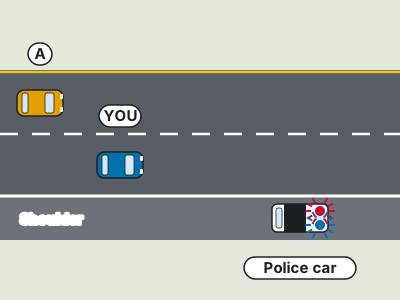
- Stop in the lane beside the emergency vehicle and wait there
- Keep the same speed because the emergency vehicle is off the roadway
- Reduce speed and proceed with due caution
- Pass on the shoulder without checking for responders
Show answer
Reduce speed and proceed with due caution. Kansas gives lane changing priority when it can be done safely, but it also states what to do when that option is unavailable: reduce speed and proceed with due caution. Maintaining speed, stopping beside responders, or using the shoulder creates unnecessary exposure. Check traffic, leave room, and remember that flashing lights signal an active roadside risk. The safe response adapts to the available lane rather than forcing a dangerous merge or shoulder pass.
Study this in the handbook: Right of way at intersections
15. Because of air bag risk, which children does the Kansas handbook say should ride in the rear seat?
- Children age 5 and under
- Children age 12 and under
- Children under 8 only
- Only infants in rear facing seats
Show answer
Children age 12 and under. A deploying air bag can hurt a child, so the handbook says children age 12 and under should sit in the rear seat. Limiting that advice to age 5 or to children under 8 leaves older children in front of an active air bag. Rear facing infants must never face an active passenger air bag, but the rear seat advice covers every child through age 12. Vehicles without usable rear seats often have a switch to turn off the passenger air bag for that purpose.
Study this in the handbook: Seat belts, child seats and air bags
16. What does the plus-shaped warning sign tell you to anticipate?

- A no-passing zone that begins only after sunset
- A hospital entrance with no intersecting roadway
- A crossroad where traffic may enter from more than one direction
- A lane reserved for vehicles turning around
Show answer
A crossroad where traffic may enter from more than one direction. The plus shape depicts a crossroad, so look for an intersection and prepare to search both sides for vehicles, bicyclists, and pedestrians. The warning does not identify a hospital, create a time-based passing rule, or reserve a lane for U-turns. Slow enough to make a deliberate approach, and apply the actual signs, signals, and right-of-way rules when you reach the intersection rather than assuming the warning sign itself grants priority.
Study this in the handbook: Traffic lights and arrows
17. What does an orange road sign indicate?
- A warning about an uncontrolled intersection
- A driver service such as lodging
- A work zone or construction activity ahead
- A route direction to a city
Show answer
A work zone or construction activity ahead. Orange signs are used for work zones involving construction, maintenance, or emergency operations. Kansas says these signs alert drivers to work zones ahead and warn that people are working on or near the roadway. The color does not identify lodging, city directions, or the ordinary yellow warning category for an uncontrolled intersection. Slow down, watch for workers and equipment, and follow temporary signs, barriers, or flagger instructions. Work zones can change lane paths and pavement conditions, so keep extra space and be ready for a sudden stop.
Study this in the handbook: Work zone, guide and incident signs
18. Which conviction does the Kansas handbook list as grounds for revoking, not just suspending, driving privileges?
- Attempting to elude a police officer
- Failing to renew a license on time
- A first seat belt violation
- Parking in a no parking zone
Show answer
Attempting to elude a police officer. The revocation list includes vehicular homicide, failing to stop and render aid after an injury or fatal crash, reckless driving, any felony committed with a vehicle, attempting to elude a police officer, aggravated vehicular homicide, and vehicular battery. Renewing late brings a $1.00 penalty and, after a year, full testing, not revocation. A seat belt violation and a parking violation are not on the list.
Study this in the handbook: DUI law, implied consent and penalties
19. Which of these does the Kansas handbook list as a ground for suspending driving privileges?
- Receiving one parking ticket
- Talking on a cell phone while driving
- Transporting an open container of liquor or cereal malt beverage
- Driving with a dirty license plate
Show answer
Transporting an open container of liquor or cereal malt beverage. Transporting an open container of liquor or cereal malt beverage (3.2 beer) is on the handbook's list of suspension grounds. A single parking ticket is not a moving violation and is not on the list. The handbook states that talking on a cell phone is not specifically illegal in Kansas, although texting is. A dirty plate does not appear among the suspension grounds.
Study this in the handbook: License tests, renewal and losing your license
20. How many hours of supervised driving must a 15-year-old complete before applying for a Kansas restricted license?
- 10 hours
- 50 hours
- 25 hours
- 100 hours
Show answer
25 hours. A 15-year-old applicant must have 25 hours of supervised driving. The full 50 hours with 10 at night applies to 16-year-old applicants, and a 15-year-old who applied with only 25 hours must later file another affidavit for the additional 25 hours before moving to the 16-year-old rules. Ten hours is too few, and 100 hours is more than Kansas requires at any stage.
Study this in the handbook: Instruction permit, farm permit and the 15 year old restricted license
QualitySpace is expanding to Kansas
We are a California-based independent insurance brokerage working on licensing in more states. We cannot help with Kansas insurance yet. Leave your email and we will let you know when we can.
Every question is written from the official Kansas Driving Handbook. Need paper? Printable KS practice test with answer key.
Last verified 2026-10-05. How we check every question · Study all 211 as flashcards
Frequently asked questions
How many questions are on this Kansas practice test?
This fixed set has 20 questions. It is test 1 of 10 from the 211 question Kansas bank. The real KS exam asks 25 questions and you need 20 correct.
What is the passing score for the real Kansas test?
You must score an 80% to pass the knowledge test That figure comes from the official Kansas source cited on the DMV facts page.
How does this fixed test relate to the full Kansas bank?
Each numbered test is a fixed set of questions in a fixed order, so you can retake the same test later and compare. Every test mixes road signs and the other topics in about the same proportion as the full bank. Tests 1 to 10 together cover 200 of the 211 questions in the Kansas bank, each once. The full practice page mixes the whole bank at random.
Last verified 2026-10-05. See the Kansas DMV facts page for sourced state details.