
Test 23 of 25 · 20 questions · Free 2026
NC Permit Practice Test 23
Jump to the test ↓A fixed 20 question set from the North Carolina bank with answers and plain English explanations.
Question 1 of 20 · 0 right so far
All 20 questions in test 23
Every question below comes from the North Carolina question bank on this page. Open a question to see the correct answer and the explanation. Nothing here is hidden behind a signup.
1. A bike lane runs along the right side of the street. When you plan to turn right at an intersection, what crash risk does the handbook point out?
- A cyclist turning left across your path from ahead
- A cyclist going straight beside you as you turn
- A cyclist stopping suddenly in the bike lane
- A cyclist riding against traffic on the sidewalk
Show answer
A cyclist going straight beside you as you turn. When a bike lane or path runs on or next to the road, the handbook asks for special attention at intersections. Because bicyclists ride to the right of motor vehicle traffic, a crash can happen between a cyclist going straight through the intersection and a motorist turning right. Before turning right, look for a bicycle coming up on your right side and let it go through first.
2. On a one-way street in North Carolina, may you park along the left curb?
- Yes, one-way streets are the exception
- No, you must always park on the right
- Only between midnight and 6 in the morning
- If your car faces against traffic
Show answer
Yes, one-way streets are the exception. The handbook says to always park on the right side of the road, except on one-way streets. On a one-way street, all traffic moves the same direction, so parking along the left curb is allowed. When pulling out from a parallel space, you normally check traffic and give a left-turn signal, and the handbook notes the exception when you are parked on the left side of a one-way street.
Study this in the handbook: Passing, backing and parking
3. You are on a freeway entrance ramp and the ramp meter shows a steady red light. What must you do?
- Merge carefully without stopping
- Treat it as a yield sign
- Use the shoulder to pass the meter
- Stop and wait for green
Show answer
Stop and wait for green. A ramp meter controls how vehicles enter a freeway from an interchange ramp. When it shows a steady red, vehicles facing it must stop and wait for green. When it turns green, a vehicle may proceed down the ramp and merge onto the freeway. If the meter is dark, showing neither red nor green, you may proceed without stopping and merge or yield as normal conditions allow.
4. An adult is driving on a North Carolina highway and wants to reply to a text message. What does state law say?
- It is legal for drivers 18 and older
- Texting while driving is unlawful
- It is legal at speeds under 25 mph
- It is legal on a hands-free mount
Show answer
Texting while driving is unlawful. North Carolina law makes it unlawful to use a cell phone for email or text messages while operating a vehicle on a public street, highway, or public vehicular area. The ban is not limited to teen drivers, and speed or a phone mount does not create an exception. The handbook suggests letting messages wait until you are stopped at a safe place, or asking a passenger to handle the phone for you.
5. You are climbing a hill behind a slow truck and can see only about 300 feet ahead. May you pass?
- No, you need to see at least 500 feet ahead
- Yes, as long as you pass quickly
- Yes, if the center line is broken there
- Yes, after honking to warn oncoming cars
Show answer
No, you need to see at least 500 feet ahead. The handbook lists places where passing is always unsafe and usually illegal, including any curve or hill where you cannot see at least 500 feet ahead. With only 300 feet of view, an oncoming vehicle could appear before you finish. You also cannot pass safely unless you can see far enough to get back into your lane before meeting oncoming traffic. Stay behind the truck until the road ahead opens up.
Study this in the handbook: Passing, backing and parking
6. At night on an open highway with your high beams on, you come up behind another car going the same direction. What should you do?
- Keep high beams on until you pass it
- Flash your high beams to get it to move
- Turn off your headlights and use parking lights
- Switch to low beams while following it
Show answer
Switch to low beams while following it. On the open road at night, the handbook says to use high beams unless you are approaching or following another vehicle. When you come up behind a car, switch to low beams so your lights do not shine into that driver's eyes through the mirrors. Flashing your lights to push the driver along is not the advice, and parking lights alone are not enough at night. Switch back to high beams once the road ahead is clear.
Study this in the handbook: Turn signals, headlights and bad weather
7. Why can it be hard to judge the speed of an approaching tractor-trailer?
- Trucks always travel well under the posted limit
- Its lights make it look farther away
- Its large size makes it look slower than it is
- Trucks speed up quickly when going uphill
Show answer
Its large size makes it look slower than it is. The handbook explains several reasons trucks are harder to drive than cars. Heavy trucks cannot gain speed as quickly as cars, especially uphill, yet because of its large size, a tractor-trailer often appears to be traveling slower than it really is. That can lead a driver to misjudge how much room there is before a truck arrives. Trucks also need extra stopping distance when their brakes heat up going downhill.
8. A pedestrian hybrid beacon at a mid-block crosswalk begins flashing red after the walkers have finished crossing. What may you do?
- Keep waiting until the beacon goes completely dark
- Drive through slowly without coming to a stop
- Proceed after first coming to a complete stop
- Speed up before it turns steady red again
Show answer
Proceed after first coming to a complete stop. Hybrid beacons control traffic at some mid-block crosswalks and emergency facility entrances. After activation, they flash yellow, turn steady yellow, then steady red while pedestrians cross. When the beacons begin flashing red, vehicles stay stopped until the pedestrians or emergency vehicles have cleared. Once they have cleared, and after first coming to a complete stop, you may begin moving while the beacons are still flashing red. Waiting for the beacons to go dark is not required.
9. A head-on crash seems likely. What does the North Carolina handbook suggest?
- Steer toward the center line to give the other car room
- Brake and hold the wheel straight no matter what
- Speed up to get past the other vehicle
- Turn away from oncoming traffic, even if you leave the road
Show answer
Turn away from oncoming traffic, even if you leave the road. If a crash seems likely, the handbook says to sound the horn, keep to the right, and turn away from oncoming traffic even if you must leave the road. If possible, drive off the road into an open field. Steering toward the center line moves you closer to the danger, and holding straight no matter what gives up your chance to escape. Speeding up is not on the handbook's list of actions.
Study this in the handbook: Blowouts, breakdowns and crashes
10. Why does the North Carolina handbook tell drivers to give large trucks and buses extra room in a roundabout?
- They always have the right of way there
- They must stop before every exit
- They may need to straddle the lane
- They travel faster than cars do there
Show answer
They may need to straddle the lane. The handbook reminds drivers to give larger trucks and buses extra room in a roundabout because they may need to straddle the lane. Big trucks are meant to use the concrete island in the middle, called the truck apron, to help them get around. Squeezing beside a truck as it circulates puts you in the space it may need. Trucks and buses still travel counterclockwise and yield when entering like everyone else.
Study this in the handbook: Right of way at intersections and roundabouts
11. How should the driver and front passenger seats be positioned to lower the risk of air bag injury?
- Moved as far forward as possible
- Moved as far back as practical
- Reclined almost flat while driving
- Raised to the highest setting
Show answer
Moved as far back as practical. The force of an air bag can hurt people who are too close to it. To help prevent those injuries, the handbook advises moving the driver and front passenger seats as far back as practical, and it singles out shorter people for this advice. Sitting near the dashboard puts you closer to the bag as it deploys. Everyone should still wear both the lap and shoulder belt on every trip, because air bags are supplemental protection devices.
Study this in the handbook: Seat belts, child restraints and window tint
12. Why might a driver who has been drinking take bigger risks on the road?
- Alcohol briefly sharpens reaction time
- Alcohol gives a false sense of driving skill
- Alcohol mainly affects balance, not judgment
- Alcohol affects drivers only above 0.08
Show answer
Alcohol gives a false sense of driving skill. Alcohol is a depressant, and the handbook lists false confidence among its effects. A drinking driver may take greater risks because the driver believes their driving is better than it really is. Alcohol does not sharpen reactions; it slows brain functions so you cannot respond or decide quickly. Balance is affected too, but judgment suffers as well. The handbook also warns that many people are affected below 0.08, so the legal limit is not where the effects begin.
13. You stop at a red light and begin to turn right on red. A pedestrian near the corner starts to cross in front of the stopped cars beside you. What must you do?
- Finish the turn, since you already stopped
- Honk so the pedestrian waits for you
- Turn quickly before the pedestrian reaches you
- Yield to the pedestrian before turning
Show answer
Yield to the pedestrian before turning. North Carolina allows a right turn on red after a complete stop, unless a sign prohibits it. But every driver turning right must yield to other traffic and pedestrians using the intersection, and to pedestrians close to the intersection who are starting to cross in front of the traffic stopped at the red light. Stopping first does not give you priority over the walker. Wait for the pedestrian to cross, then complete your turn.
Study this in the handbook: Traffic signals and pavement markings
14. You pass this round yellow sign on a two-lane road. What should you do next?

- Speed up to cross before any train arrives
- Stop at the sign and wait for a flagger
- Slow down and be ready to stop for a train
- Keep your speed unless you hear a horn
Show answer
Slow down and be ready to stop for a train. The circular yellow sign with a black cross and the letters RR gives advance warning of a railroad crossing. When you see it, the handbook says to slow down and stop if necessary to be sure you can safely clear the crossing. Look both ways and listen, because trains can approach at any time from any direction. The sign itself is not a stopping point, and the absence of a horn does not mean no train is coming.
Study this in the handbook: Sign shapes and colors
15. You are driving 55 mph in ideal conditions when a deer freezes in the road about 150 feet ahead. Can you stop before you reach it?
- Yes, because 55 mph takes only about 100 feet
- Yes, if you brake hard and steer around it
- No, 55 mph takes about 211 feet even in ideal conditions
- No, because it takes about 500 feet at that speed
Show answer
No, 55 mph takes about 211 feet even in ideal conditions. The handbook states that even with ideal conditions, a vehicle traveling 55 miles per hour requires approximately 211 feet to stop completely. A deer 150 feet ahead is closer than that, so you cannot stop in time. The figure is a reminder of how far a car travels before it comes to rest and why you must watch the road far ahead.
Study this in the handbook: Speed limits and stopping distance
16. You come to this sign at a rural intersection with no stop line and no crosswalk painted. Where must you stop?
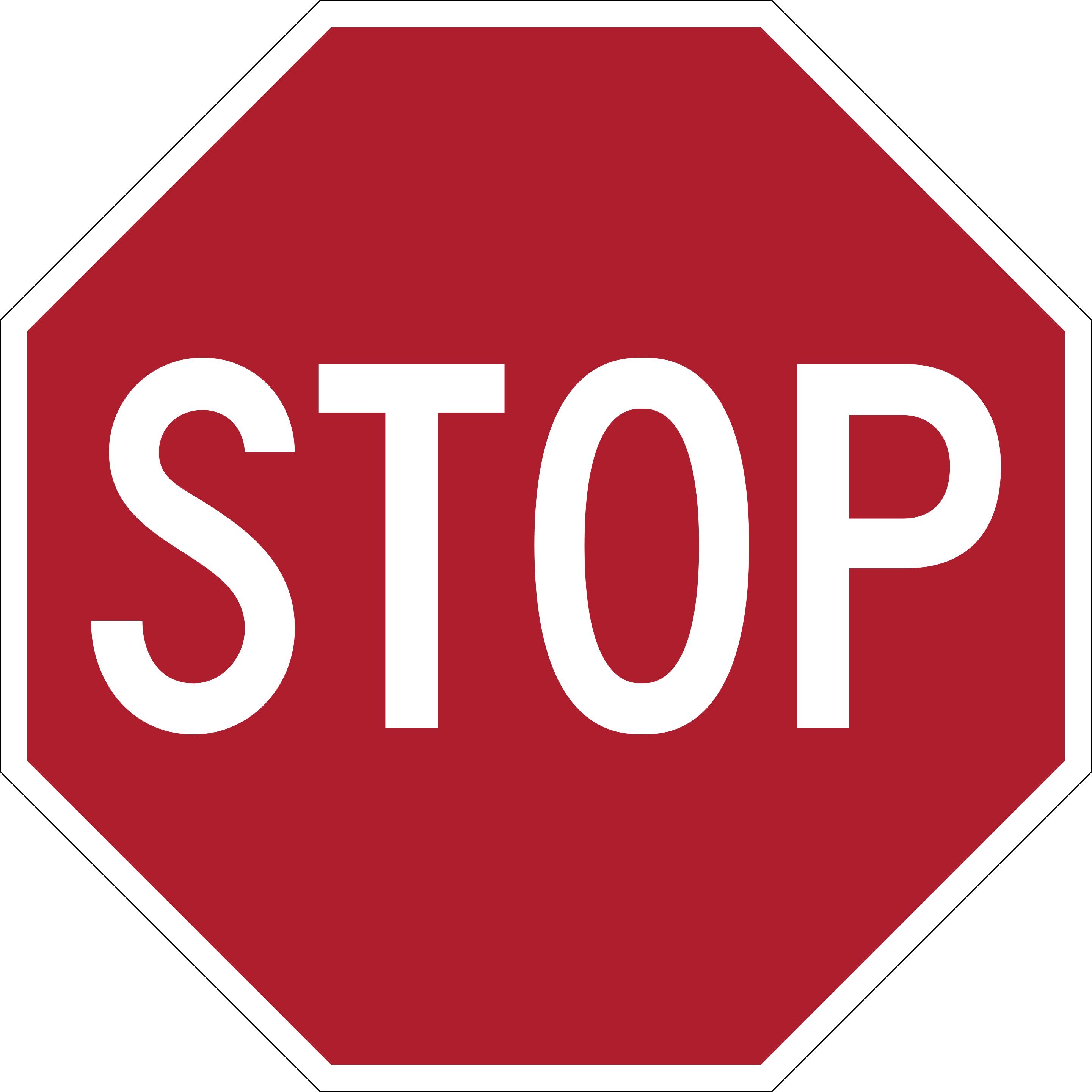
- Before the intersection, where you can see cross traffic
- Next to the sign, even if you cannot see the cross street
- In the middle of the intersection, then look both ways
- About 100 feet back from the sign, to be safe
Show answer
Before the intersection, where you can see cross traffic. When a stop sign requires you to stop, you stop at the marked stop line. If there is no stop line or marked crosswalk, the handbook says to stop before entering the intersection at a point where you have a view of the intersecting street. Stopping beside the sign may leave your view blocked, and pulling into the middle of the intersection puts you in the path of cross traffic. Come to a full stop and go only when the way is clear.
Study this in the handbook: Sign shapes and colors
17. You are approaching a roundabout when a fire truck with lights and siren begins passing through it. What should you do?
- Enter quickly before it reaches you
- Wait and do not enter while it passes through
- Enter and stop inside the circle to let it by
- Follow the fire truck through the roundabout
Show answer
Wait and do not enter while it passes through. The handbook says never to enter a roundabout while an emergency vehicle using flashing lights and sirens is passing through it. If you are already inside, exit first and then pull over to let the emergency vehicle pass. Stopping inside the circle would leave you in the fire truck's way, and following it through is not allowed either. Wait at the entry until it has cleared the roundabout.
Study this in the handbook: Right of way at intersections and roundabouts
18. A driver says only texting and phone calls count as distracted driving. Which other activity does the handbook also list?
- Using cruise control
- Wearing sunglasses
- Rolling the windows down
- Talking to passengers
Show answer
Talking to passengers. The handbook defines distracted driving as any activity that could divert your attention from the primary task of driving. Its list goes well beyond phones: texting, using a cell phone, eating and drinking, talking to passengers, grooming, reading maps, using a navigation system, watching a video, and adjusting a radio or music player. Cruise control, sunglasses, and open windows are not on that list. The handbook says all distractions endanger the driver, passengers, and bystanders.
19. At an intersection with no signs or signals, a car is already crossing when you arrive. What should you do?
- Let it finish crossing before you enter
- Go first, since you are on the right
- Enter at the same time if there is room
- Honk so the other driver stops
Show answer
Let it finish crossing before you enter. At an intersection without traffic signs or signals, the vehicle already in the intersection has the right of way ahead of any vehicle that has not yet entered. Being on the right only matters when two vehicles arrive at the same time. So you wait until the other car clears before entering. Even when you have the right of way, the law requires slowing down at intersections and watching for other vehicles and pedestrians.
Study this in the handbook: Right of way at intersections and roundabouts
20. Under North Carolina law, a train sounding a signal within about how many feet of a crossing requires you to stop if it is an immediate hazard?
- 1,500 feet
- 500 feet
- 1,000 feet
- 3,000 feet
Show answer
1,500 feet. North Carolina's railroad signal law lists situations that require you to stop within 50 feet, but not less than 15 feet, from the nearest rail. One is a train approaching within about 1,500 feet of the crossing that sounds a signal audible from that distance and is an immediate hazard because of its speed or nearness. Lights and gates are not needed for this rule to apply; the train's own warning is enough. Stay stopped until you can cross safely.
Study this in the handbook: Railroad crossings and funeral processions
Every question is written from the official North Carolina Driver Handbook. Need paper? Printable NC practice test with answer key.
Last verified 2026-10-05. How we check every question · Study all 500 as flashcards
Frequently asked questions
How many questions are on this North Carolina practice test?
This fixed set has 20 questions. It is test 23 of 25 from the 500 question North Carolina bank.
How does this fixed test relate to the full North Carolina bank?
Each numbered test is a fixed set of questions in a fixed order, so you can retake the same test later and compare. Every test mixes road signs and the other topics in about the same proportion as the full bank. Tests 1 to 25 together cover every question in the North Carolina bank once. The full practice page mixes the whole bank at random.
Last verified 2026-10-05. See the North Carolina DMV facts page for sourced state details.
Return to the full North Carolina practice test · Study road signs