
Test 14 of 25 · 20 questions · Free 2026
NC Permit Practice Test 14
Jump to the test ↓A fixed 20 question set from the North Carolina bank with answers and plain English explanations.
Question 1 of 20 · 0 right so far
All 20 questions in test 14
Every question below comes from the North Carolina question bank on this page. Open a question to see the correct answer and the explanation. Nothing here is hidden behind a signup.
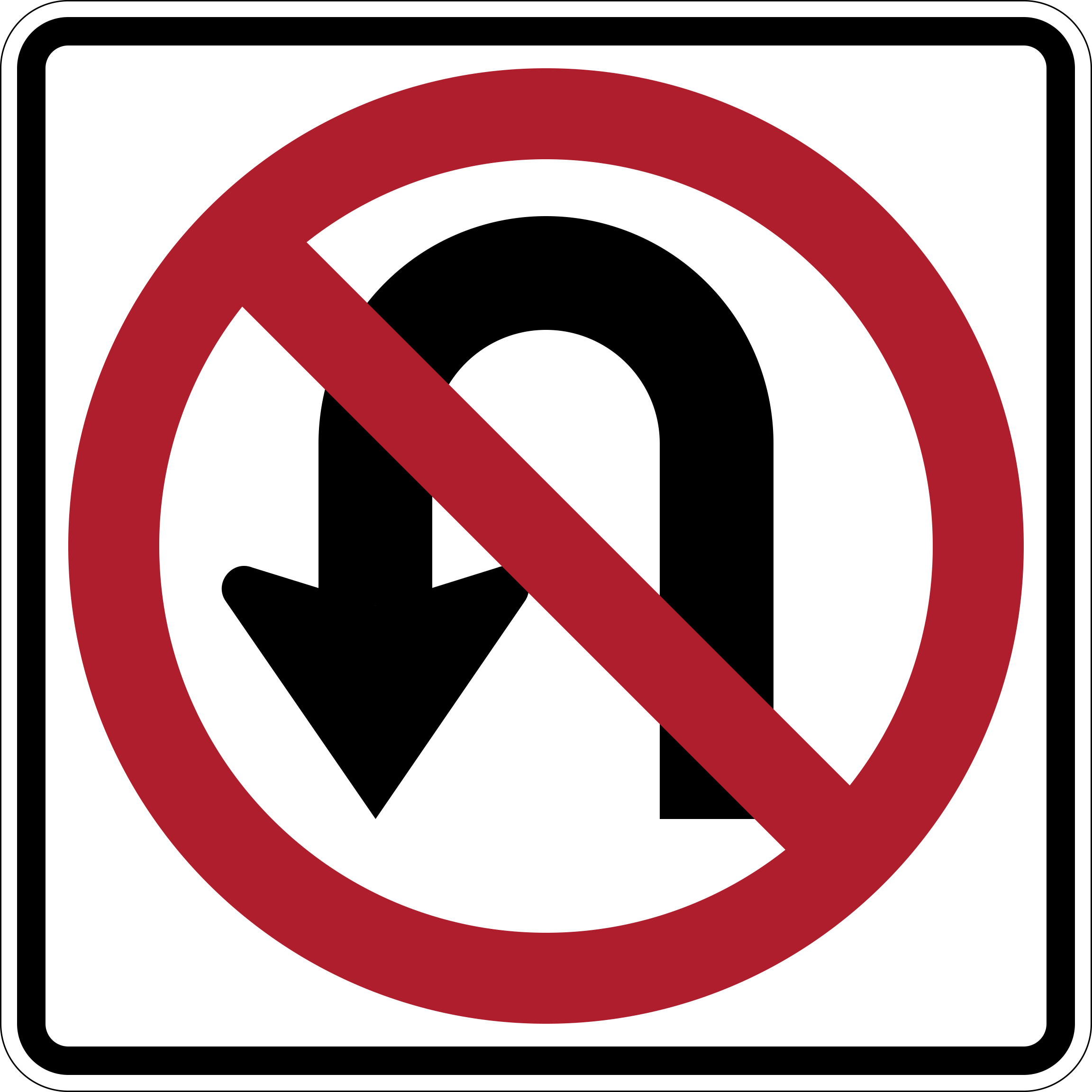
1. This sign is posted at an intersection where you wanted to turn around. What does it require?
- Make a U-turn only after stopping
- U-turns are allowed for cars, not trucks
- Turn left only, then make a U-turn
- Do not make a U-turn here
Show answer
Do not make a U-turn here. Rectangular and square regulatory signs, normally black and white or red and white, show speed limits and other rules. The handbook gives NO U-TURN as one example of these messages, and says failing to obey regulatory signs is unsafe as well as a violation of traffic laws. A red circle and slash over a U-shaped arrow means U-turns are not allowed at that spot. Continue to a place where turning around is legal and safe.
Study this in the handbook: Sign shapes and colors
2. When does a motorcycle usually stop more slowly than normal?
- When it is traveling uphill
- When carrying a second rider
- When the rider uses both brakes
- When the road is dry and smooth
Show answer
When carrying a second rider. The handbook notes that most motorcycles can stop more quickly than cars, but they stop more slowly when carrying a second rider or when traveling on poor road surfaces where sudden braking could lead to a fall. Many small motorcycles also accelerate slowly and may not hold speed uphill or into a headwind. Leave extra following distance when a motorcycle carries a passenger or the road surface is rough.
Study this in the handbook: Bicycles, mopeds, trucks and insurance
3. After a night of drinking, what is the only thing that sobers a person up, according to the North Carolina handbook?
- Several cups of strong black coffee
- A large meal eaten before driving
- A cold shower followed by some fresh air outside
- Enough time passing without more drinks
Show answer
Enough time passing without more drinks. The handbook is direct: time is the only thing that sobers up a drinker. Coffee, a big meal, and cold showers will not work, even if they make a person feel more awake. Alcohol is a depressant that slows brain functions, and none of those tricks shortens the wait. A person who feels alert after coffee can still be impaired. The handbook's advice is to plan ahead, such as riding with a driver who has not been drinking or staying overnight at a friend's place.
4. In many North Carolina school zones marked by the five-sided sign, when is the speed limit reduced?
- During certain school hours
- On Saturdays and Sundays
- Around the clock, year-round
- During summer vacation months
Show answer
During certain school hours. The five-sided pentagon sign warns of a school zone or school crossing, and the handbook asks you to be especially watchful for children there. In many school zones, the speed limit is reduced during certain school hours rather than all day. School buses generally run from about 7 to 9 a.m. and 2 to 4 p.m., so stay especially alert near schools and bus stops at those times.
5. At a stop sign where the cross street has no stop sign, what is required before entering the through street?
- Stop only after another driver reaches the intersection
- Roll through slowly if no vehicle is immediately visible
- Make a complete stop and yield to through street traffic
- Proceed straight without stopping if the through street looks clear
Show answer
Make a complete stop and yield to through street traffic. A stop sign requires a complete stop, followed by yielding to traffic on the through street. A slow roll is not a substitute for stopping, and the duty does not depend on whether another driver has already arrived. Going straight also does not cancel the control. After stopping, scan both directions, wait for a safe opening, and then continue or turn. The key sequence is stop first, yield second, move only when safe.
Study this in the handbook: Right of way at intersections and roundabouts
6. Just past this sign, a person is waiting at the edge of a crosswalk with no signal. What should you do?

- Keep going, since the person has not started yet
- Slow down and be ready to yield to the person
- Honk to warn the person to stay back
- Speed up to pass before the person steps out
Show answer
Slow down and be ready to yield to the person. A pedestrian crossing sign warns that people may be crossing ahead, so watch for them and be ready to yield. At intersections and crosswalks without signals, pedestrians in the crosswalk have the right of way, and the handbook adds that the safe driver yields to a pedestrian whether or not the pedestrian is entitled to it. Speeding up or honking to keep someone back is the wrong response. Slow down so you can stop if the person steps out.
Study this in the handbook: Pedestrians, school buses and emergency vehicles
7. At 55 mph, a driver dozes off for about 3.7 seconds. About how far does the car travel in that time?
- About half a football field
- About one football field
- About two football fields
- About five car lengths
Show answer
About one football field. The handbook says that at 55 mph a vehicle travels the length of a football field in 3.7 seconds. A driver who dozes for that short time covers that whole distance with nobody steering. The handbook uses the example to show that there is no time for a nap at the wheel, and it tells drivers to stay alert and focused.
Study this in the handbook: Speed limits and stopping distance
8. The rear of your car starts sliding to the right on an icy road. Which way should you turn the steering wheel?
- To the right, the way the rear is skidding
- To the left, away from the skid
- Hold it perfectly still and brake hard
- Turn it fully left and then fully right
Show answer
To the right, the way the rear is skidding. In a skid, the handbook says to ease your foot off the accelerator and turn the steering wheel in the direction the rear of the vehicle is skidding. If the back end slides right, steer right. As soon as the vehicle's path begins to straighten, turn the wheel back the other way so you do not over-steer. Steering away from the skid or braking hard is not what the handbook advises.
Study this in the handbook: Blowouts, breakdowns and crashes
9. You have a circular green light and want to turn left, but an oncoming car is coming straight through. What should you do?
- Turn first, since your light is green
- Yield to the oncoming car, then turn when safe
- Honk and make the turn quickly
- Wait for the light to turn red, then turn
Show answer
Yield to the oncoming car, then turn when safe. A circular green signal lets you proceed cautiously straight or make a turn, but turning vehicles must yield to oncoming traffic and pedestrians. So with a plain green light and an oncoming car going straight, you wait for it to pass and then turn when it is safe. A green arrow, by contrast, gives a protected turn. Honking does not give you priority over oncoming traffic.
Study this in the handbook: Traffic signals and pavement markings
10. A protected green arrow has just changed to a steady yellow arrow. Which of these might the signal show next?
- A steady red circle for turning traffic
- A regular green circle, a red circle, or a red arrow
- A red arrow, since the turn phase has ended
- A flashing red light for turning traffic
Show answer
A regular green circle, a red circle, or a red arrow. A yellow arrow warns that the protected green arrow is about to end. The handbook says the signal will turn to a regular circular green, a circular red, or a red arrow, so you cannot count on just one of them. Prepare to stop. The arrow does not mean the turn lane is closed, and it does not lead to a flashing red light.
Study this in the handbook: Traffic signals and pavement markings
11. A train is about 1,200 feet from a crossing, sounding its horn, and moving fast. You are driving toward the tracks. What does North Carolina law require?
- Cross, because the train is more than 1,000 feet away
- Stop only after the gate arm starts to lower
- Stop, because a nearby fast train is an immediate hazard
- Slow down and cross if no other vehicles are near
Show answer
Stop, because a nearby fast train is an immediate hazard. The law requires you to stop when a train within approximately 1,500 feet of the crossing gives a signal you can hear and is an immediate hazard because of its speed or nearness to the crossing. A fast train 1,200 feet away fits that description even if no gate is moving. You must stop within 50 feet but not less than 15 feet from the nearest rail and wait until you can proceed safely.
Study this in the handbook: Railroad crossings and funeral processions
12. Which clue does the North Carolina handbook list as a warning sign of standing water that could cause hydroplaning?
- Visible reflections on the road surface
- Wipers that streak the windshield
- Fog forming on the inside of the glass
- Headlights that look dimmer than usual
Show answer
Visible reflections on the road surface. The handbook asks drivers to watch for warning signs of standing water, which can lead to hydroplaning. The clues are visible reflections on the water's surface, dimples made by raindrops hitting the water, a slushing sound from your tires, and a loose feeling in the steering wheel. Streaky wipers, fogged glass, and dim-looking headlights are visibility problems, not signs of water on the road. Puddles can remain for hours or even days after the rain stops.
Study this in the handbook: Turn signals, headlights and bad weather
13. On a highway with two lanes in your direction, you are in the right lane as you approach an ambulance stopped on the shoulder with lights flashing. What must you do?
- Move into the left lane until safely past
- Stay in the right lane and keep your speed
- Stop in the right lane until it leaves
- Drive on the shoulder to pass it
Show answer
Move into the left lane until safely past. When an authorized emergency vehicle is parked or standing within 12 feet of the roadway with its warning lights on, and your side of the highway has at least two lanes, you must move into a lane that is not the lane nearest the stopped vehicle. Stay in that lane until you are safely clear of the emergency vehicle. Holding the right lane at full speed or stopping in it is not what the law requires.
14. Fog becomes so thick that you can barely see. What does the North Carolina handbook say to do?
- Stop in your lane with your hazard lights on
- Switch to high beams and keep going slowly
- Follow the taillights of the car in front closely
- Pull far off the road, stop, and turn on your flashers
Show answer
Pull far off the road, stop, and turn on your flashers. For ordinary fog, the handbook says to use low beams, slow down, and watch for the taillights ahead and the vehicles behind. If you have extreme trouble seeing, pull far off the roadway, stop, secure the vehicle, and turn on the emergency flashers. Then leave the vehicle from the passenger side and stay away from the road. Stopping in a travel lane invites a crash from behind, and high beams are not the fog setting.
Study this in the handbook: Turn signals, headlights and bad weather
15. At an intersection without traffic signals, a pedestrian holding out a white cane begins to cross. What does North Carolina law give this person?
- No priority unless a crosswalk is painted
- Priority only when a guide dog is also present
- Special consideration, so you must yield
- The same treatment as a person jaywalking
Show answer
Special consideration, so you must yield. The handbook says the law gives a blind pedestrian special consideration where no traffic signals control the crossing, when the person extends a white cane, a white cane with a red tip, or has a guide dog. Either the cane or the dog is enough; both are not needed. A painted crosswalk is not required either. The handbook's broader advice applies too: the safe driver yields to a pedestrian whether or not the pedestrian is entitled to it.
Study this in the handbook: Pedestrians, school buses and emergency vehicles
16. Where should an infant in a rear-facing child safety seat never ride?
- In front of an active passenger air bag
- In the middle of the rear seat
- Behind the front passenger seat
- In a rear seat with a lap and shoulder belt
Show answer
In front of an active passenger air bag. Among its child safety points, the handbook says infants in rear-facing child safety seats should never ride in the front seat of a vehicle with a passenger-side air bag. Small children should ride in a rear seat in child safety seats approved for their age and size, and children age 12 and under should ride buckled in a rear seat. The danger comes from the force of the air bag, which deploys at up to 200 miles per hour.
Study this in the handbook: Seat belts, child restraints and window tint
17. On a four-lane North Carolina road with no median separation, a school bus stops to let children off. Which drivers must stop?
- Traffic behind the bus, but not oncoming cars
- Only the lane right beside the bus
- All traffic from both directions
- Oncoming traffic in the inner lane alone
Show answer
All traffic from both directions. North Carolina's school bus rules depend on the road layout. On a four-lane roadway without a median separation, all traffic from both directions must stop when a school bus stops for passengers. Having two lanes each way does not excuse oncoming drivers when nothing physically divides the road. The stop is limited to traffic following the bus only on a divided highway of four or more lanes with a median, or on a road of four or more lanes with a center turning lane.
Study this in the handbook: Pedestrians, school buses and emergency vehicles
18. When checking your mirrors, how long should your eyes leave the road ahead?
- For about two full seconds
- Long enough to study each mirror
- Until you finish a shoulder check
- Never more than an instant
Show answer
Never more than an instant. The handbook's scanning advice includes checking your mirrors about every 10 seconds, but it warns that while you do, your eyes should not leave the road for more than an instant. The vehicle in front of you could stop suddenly, or wildlife could appear just as quickly. Quick looks, repeated often, keep you aware of traffic behind without losing track of what is happening ahead of you.
19. When does the North Carolina handbook say it is advisable to pass slow farm equipment on a public road?
- Whenever the broken center line allows it
- When the operator waves an arm to signal you around
- When the operator moves off the road for traffic
- After following it for at least one full mile
Show answer
When the operator moves off the road for traffic. Patience is the key to sharing the road with farm equipment. If a tractor or combine is delaying traffic, the operator should move off the road at the nearest practical place and let traffic pass, and the handbook calls that the only advisable time to pass. Farm equipment may be wider than it looks from behind and may need space in both lanes, and it can be hard to see oncoming traffic around it.
20. At night, what speed rule does the North Carolina handbook give for the distance you can see ahead?
- Stay 10 mph below the posted limit at all times
- Keep pace with the taillights of the car ahead
- Use the posted limit, since it accounts for darkness
- Be able to stop within the distance you can see
Show answer
Be able to stop within the distance you can see. Night driving is more dangerous because you cannot see as well, and glare and tired or impaired drivers add to the risk. Among its night tips, the handbook says never to drive at a speed at which you cannot stop within the distance you can see on the road ahead. A fixed number below the limit does not ensure that, and another car's taillights do not light the road ahead of it. With low beams, you should be able to see about 75 feet ahead.
Study this in the handbook: Turn signals, headlights and bad weather
Every question is written from the official North Carolina Driver Handbook. Need paper? Printable NC practice test with answer key.
Last verified 2026-10-05. How we check every question · Study all 500 as flashcards
Frequently asked questions
How many questions are on this North Carolina practice test?
This fixed set has 20 questions. It is test 14 of 25 from the 500 question North Carolina bank.
How does this fixed test relate to the full North Carolina bank?
Each numbered test is a fixed set of questions in a fixed order, so you can retake the same test later and compare. Every test mixes road signs and the other topics in about the same proportion as the full bank. Tests 1 to 25 together cover every question in the North Carolina bank once. The full practice page mixes the whole bank at random.
Last verified 2026-10-05. See the North Carolina DMV facts page for sourced state details.
Return to the full North Carolina practice test · Study road signs